


Life After The Drug Blackout That Ended My NFL Career with Randy Grimes


Born and raised in East Texas, Randy Grimes grew up in church with an older brother and sister and played football and baseball. He attended Baylor University, where he had a strong football career and met his future wife on his first day. They married after his junior year.
In 1983, he was drafted in the second round by the Tampa Bay Buccaneers and moved to Tampa with his wife in a U-Haul. He soon began taking large amounts of opiates from a team drug safe to manage injuries. By 1990, he experienced blackouts during games, including one in Detroit that made him realize his addiction was out of control.
He played ten seasons with the Buccaneers before being told after his final 1992 game that his career was over. He returned to Houston in 1993, where he doctor-shopped for drugs, lost work, and nearly lost his family and finances. After failed detox attempts and benzo withdrawal, his family set boundaries and he entered treatment in 2009, achieving sobriety.
Six months later, he began working with the NFL Alumni Association to help launch the Player Care Foundation, then founded Pro Athletes in Recovery to support former athletes, first responders, and veterans. He co-authored a book with his wife for family healing, has children and five grandchildren, and remains focused on recovery, family, and helping others.
GUEST
Randy Grimes
Randy Grimes, born in East Texas, excelled in football at Baylor University before being drafted second round by the Tampa Bay Buccaneers in 1983, playing 10 years while battling opiate addiction from team-supplied drugs that led to blacked-out games. After being fired in 1992, he retired to Houston, doctor-shopped for years, lost his job, and nearly lost his family until entering treatment in 2009. Now sober, he founded Pro Athletes in Recovery to help former athletes with addiction and mental health.
Learn more about Pro Athletes in Recovery
Learn more about the NFL Player Care Foundation
Connect with Randy Grimes on LinkedIn
Follow Randy on Instagram @sobercenter60
Matt Handy is the founder of Harmony Grove Behavioral Health in Houston, Texas, where their mission is to provide compassionate, evidence-based care for anyone facing addiction, mental health challenges, and co-occurring disorders.
Find out more at harmonygrovebh.com
My Last Relapse explores what everyone is thinking but no one is saying about addiction and recovery through conversations with those whose lives have changed.
For anyone disillusioned with traditional recovery and feeling left out, misunderstood, or weighed down by unrealistic expectations, this podcast looks ahead—rejecting the lies and dogma that keep people from imagining life without using.
Got a question for us? Leave us a message or voicemail at mylastrelapse.com
Find us on YouTube @MyLastRelapse and follow Matt on Instagram @matthew.handy.17
About Harmony Grove Behavioral Health
Harmony Grove delivers outpatient addiction and mental health treatment focused on wellness, creativity, and authentic human connection—providing a supportive space for healing that extends beyond traditional clinical care.
Harmony Grove’s IOP in Houston, Texas, is more than a program; it’s a lifeline for those ready to take the next step in their recovery. We are ready to meet you where you are and find your unique path to change.
If you’re feeling overwhelmed or struggling, you don’t have to face it alone. Reaching out for support is a sign of strength, and help is always available. If you or anyone you know needs help, give us a call 24 hours a day at 844-430-3060.
Host: Matthew Handy
Producer: Eva Sheie
Assistant Producers: Mary Ellen Clarkson & Hannah Burkhart
Engineering: Voltage FM, Spencer Clarkson
Theme music: Survive The Tide, Machina Aeon
Cover Art: DMARK
My Last Relapse is a production of Kind Creative: kindcreative.com
Matt Handy (00:00:03):
I'm Matt Handy and you're listening to My Last Relapse. Okay. Randy Grimes. How's it going? Good. How are you, man? Good, good, man. I'm really good. I'm thankful. It's the best Thanksgiving I've had in a long time. My bet. Congratulations on all that. Yeah, thank you. Okay. So you are probably one of the most unique people that I've had on so far. You've had a really distinguished history in past. You played in the NFL, and then after that, you obviously have a crazy story about all of that and how you ended up getting into what you're into today. So let's start with who you are.
Randy Grimes (00:00:49):
Who I am, Randy Grimes. Born and raised up in East Texas. Football wasn't religion in my family, but it was a close second. And I was fortunate enough to be able to go off to Baylor and play and had a great college career. Drafted in the second round by the Tampa Bay Buccaneers in 1983. I was the 45th player selected that year out of the whole country. And I was excited about it because Tampa Bay had just gone to the playoffs the year before. So I felt like I was going to a playoff team. And little did I know what the next 10 years would be like. But we were excited. I met my wife the very first day, our freshman year at Baylor, and we went out that night and got married after our junior year. So she was destined to be a part of this.
(00:01:50):
And we were excited to be going to Tampa to not only start our careers, my career, but also our marriage, our family in Tampa Bay, in the seaside community of Tampa, Florida. And we loaded up everything we had in a small little U-Haul on the Baylor campus and hooked it up to my burgundy Cutlass Supreme.
Matt Handy (00:02:18):
Oh, nice.
Randy Grimes (00:02:20):
And out I- 10 East, we went to start it all. And I was that guy willing to do whatever I had to to stay out on the field. I was that guy who didn't want somebody else to be in my position. I was that guy that didn't want to let anybody down. I was that guy who wanted to stay off the injury report or not be in line to see the doctor every day because once you get that reputation of always being hurt, you never get away from it.
(00:02:56):
And I was that guy willing to not do that. So what did that look like for me was taking handfuls of opiates every day. We had a drug safe in the middle of our training room. And first of all, it was never locked, but if it ever was accidentally locked, we had three white guys that started on defense and their jersey numbers were the combination of that safe, the whole decade that I was there. So you could just go get whatever you needed out of there, but it was never locked. And that's where the whole addiction thing started. And people asked me, "Well, when did you know that it was a problem?" In September of 1990, I woke up on my couch in Tampa, Florida, and I was all beat up and bruised and fingernails all torn up and dehydrated and everything you are after an NFL football game.
(00:03:59):
And I didn't remember any of it. I played that whole game in Detroit in a blackout and traveled home in a blackout and drove home from where I parked my car in a blackout. And I didn't remember any of it. So that's when I knew that it was out of control. I was taking so many opiates and so many benzos before games that I didn't even remember playing. And really the last two, three years of my career, I don't even remember playing, taking so much stuff. And I looked at it more like a necessary evil
(00:04:38):
Because I wanted to feed my family. I wanted to be all pro. I wanted that next big contract. Those are ways that I justified throwing those peels down every day. And I didn't look at it like it was an addiction. I looked at it like it was something I had to do to be the best that I could be. And that last year, the 10 years that I was there, I had five different head coaches, which is unheard of. You can never get any continuity going when you have five head coaches. I had six different offensive line coaches, which was my position coach. And that last year, and it was 1992, and after the last game every year, if you weren't going to the playoffs, which we never were, then you would come in on that Monday after the Sunday game, you would have an exit meeting with your coach, you'd watch the film from the day before, a game before, and pretty much clean out your locker.
(00:05:43):
And back then, you would leave and not come back till spring. Now it's more of a year round job, but back then you would come back for mini camp. And I can remember standing in my locker after that last game on a Monday, and Sam Weiss was my coach. And I remember him walking behind me, and I had a locker right next to the door that exited the training room or the locker room. And I can remember standing there looking at my locker, and I felt a hand on my shoulder. I felt the breeze of somebody walking by, and I heard the words, "Randy, your services won't be needed here anymore in Tampa." And as I turned to look to see who said that, all I could see was Sam Wise hitting that silver bar in the middle of that door and exiting the locker room.
(00:06:38):
And I'm thinking, wow, not even man enough to look me in the eye and say that I'm fired. All the blood, sweat, and tears that I've left on football fields all over this country and he can't even look me in the eye and say, "We don't need you anymore." And I can remember just raking everything out of my locker into a black trash bag and walking out the back door. And Randy Grimes, the football player, didn't exist anymore. And the reason I bring that up is because I already had this rage and addiction going. And now you throw in this transitional trauma where I don't have a uniform, I don't have a playbook, I don't have an itinerary to go by, then that was just throwing gas on an already raging dumpster fire. And that really set the addiction in motion. I already had these injuries and yeah, they were getting worse the older I got.
(00:07:39):
And the more I needed pills, the more my tolerance got higher, I needed more and more and more. I retired back here to Houston and was doctor shopping all over town. You could do that back then in the 90s. And I was out of control for many years. And yeah, it affected my family, it affected my finances, it affected my work life and everything else. I had a great job and I lost it as a result of the addiction. And I came very close to losing my family, very close. They put up with me as long as they could. And then they finally set some boundaries. And that's when I finally put my hand up and asked for help.
Matt Handy (00:08:29):
So do you think that if the addiction hadn't really taken root during those years that you would've continued to play?
Randy Grimes (00:08:37):
I don't know. I played back in an era where we used to beat the hell out of each other during
Matt Handy (00:08:44):
Practice. Oh yeah. I was born in 89. So I watched ... I'm not really a football. I'm not really a professional sports guy anymore, but all growing up, it was like in the 90s and the early 2000s watching ... Actually, I'm a Raider fan and the only Super Bowl I watched them go to was against the Buccaneers. Yeah. Yeah. That was what? 2002. 2002. Yeah. And dude, they should have won that game and they fumbled four times and through multiple interceptions and they only lost by two touchdowns or something. Yeah. And the Raiders had a center that went
Randy Grimes (00:09:21):
To Tijuana the night before and never came back. You remember that story? Yeah. Craziness. But yeah, I played in an era where we used to beat the hell out of each other. So we had injuries all the time. And it was crazy because that was the mentality back then, that Bear Bryant, if you don't practice hard, you're not going to play hard, that mentality. And a lot of the injuries that we sustained back then was from our own guys. And now it's so different. Now they hardly ever put on pads because the collective bargain agreements have reduced practice time to practically nothing and they don't have as many injuries and guys are having longer careers as a result of practicing less.
Matt Handy (00:10:11):
So I look at basketball and you can see over the decades as the skill has tightened and the game has improved. Do you think that the less practice is improving or taking away from the skill on the field?
Randy Grimes (00:10:24):
I think a little of both. I think guys are healthier now, but maybe they don't have as many ... They don't have the talents and the- The fundamentals. Fundamentals and the repetition that you get in practice. So I don't think they're blocking as well as they used to. They're not tackling as well as they used to. But then again, they're bigger, stronger, quicker, meaner than they've ever been, and that makes up for a lot of it.
Matt Handy (00:10:51):
Do you think that the bigger, tougher, stronger, all that additionally to the pool of who they're pulling from, but do you think the drug testing and the anti-doping and all that stuff contributes to the physical prowess of the players today?
Randy Grimes (00:11:09):
Yeah. And they're not really doing it like they should. They say they're drug testing, but they really don't want to catch anybody. And so either guys are worn beforehand or some things are overlooked, or the testing in the NFL is kind of a joke and always has been. Even back when we knew that we were going to be tested for steroids, then they always gave us three or four weeks in advance, not knowing that they were going to come in and test us. So it was kind of all a joke.
Matt Handy (00:11:52):
Yeah. The '90s were like a steroid era for. Yeah. Do you think that the pool that they are pulling from today is more talented naturally than it was? Do you think that the skill levels have accelerated?
Randy Grimes (00:12:09):
Yeah, absolutely. I mean, guys are so much bigger now. It's crazy. Just going around with my grandson, we were visiting different colleges because he was being recruited out of high school and going up to these colleges and seeing the offensive lineman and the defensive lineman and even some of the skill positions, they're just huge. They're just big kids and that's just corn fed.That's coming out of high school like that.
Matt Handy (00:12:37):
Yeah. Yeah. I remember my dad went to BYU and he was going to walk on and went to whatever it was, however you walk on to the football team. He used to play basketball with a bunch of people for fun, and I guess a bunch of players were like, dude, you should come try out. And he went to this tryout, whatever, and my dad's 6'3", and he was like, dude, I looked like the smallest person on the field.
Randy Grimes (00:13:05):
Wow. I believe that. Yeah.
Matt Handy (00:13:07):
Yeah. And then I've got a cousin who married, he was a linebacker for the Steelers and I think somebody else as well. But now he's coaching for Arizona, like a university over somewhere, but he's Simone or Tongan. This dude, they had like a 13 pound baby. What? My cousin's Tongan and he's Simone, I think.
Randy Grimes (00:13:31):
How does that even happen?
Matt Handy (00:13:33):
It might've been 10, but either way- They still. They had a monster baby.
Randy Grimes (00:13:38):
Wow. Wow.
Matt Handy (00:13:41):
Okay. So what was your childhood like?
Randy Grimes (00:13:44):
I had a great childhood. I had no childhood trauma to speak of. I had great parents. They raised me in church. They raised me on the football field, on the baseball field. I had an older brother and an older sister, both great role models. I looked up to them and we had the classic family life back then.
(00:14:08):
Yeah. And there was no trauma. So there really wasn't anything that I could blame what I went
Matt Handy (00:14:16):
Through on. That's an important piece to put into play because I think there is an understanding that a lot of addiction can be centered around trauma, but they aren't mutually exclusive. It doesn't give a fuck who you are. It doesn't care where you come from, what you look like, what color you are, what your education level is. It doesn't care. If you get that hook in you, it's totally indiscriminate. It could be the president of the United States, it could be a dishwasher at Denny's, doesn't care.
Randy Grimes (00:14:49):
And I can still remember the first time I took opioids that, man, that's what I was missing. That's what I needed.That's what's going to keep me out on the football field and that's what's going to make my career longer. And that's what's going to get me that next big contract.
Matt Handy (00:15:08):
Do you have any family history of alcoholism?
Randy Grimes (00:15:10):
No. No. Well, I take that back. I did have a distant uncle that my father would never let us go around, but other than that, no. No, no history of alcoholism or anything.
Matt Handy (00:15:22):
Isn't that interesting?
Randy Grimes (00:15:23):
Yeah. Yeah, it is.
Matt Handy (00:15:24):
Now, opiates are a unique drug in the world. A lot of other drugs are uncomfortable. Meth, a lot of stimulants are very uncomfortable. Even alcohol gets uncomfortable, but opiates is a very comforting drug. And that's what I did too. I slammed heroin for 15 years, and I did start with pills as well, but this was in 2004, five, six, and my exposure to pharmaceuticals got cut. Basically, as soon as I tried Oxys, they changed the formula and I didn't have access to be able to smoke them anymore. So within three weeks was doing heroin.
Randy Grimes (00:16:05):
That's when they started coating them, right?
Matt Handy (00:16:06):
Yeah.
Randy Grimes (00:16:07):
Yeah.
Matt Handy (00:16:07):
Yeah. They went from OCs to OPs.
Randy Grimes (00:16:09):
Right.
Matt Handy (00:16:10):
Yeah. And yeah, people were still ... This was the mid 2000s, and I had friends that were flying to Florida, flying to Louisiana, going places to doctor shop because in San Diego, it wasn't like a thing. You could doctor shop for benzos, but you couldn't doctor shop for opiates. It just wasn't a thing, at least that we know of. And then we discovered Tijuana and it was over.
Randy Grimes (00:16:39):
And you never knew what you were going to get down there though, right?
Matt Handy (00:16:41):
No. I mean, you can go to pharmacies there. You can go to a pharmacy, like a real pharmacy. And you don't need a prescription. You just go in there and be like, "I want 300 Oxis. I want 200 Xanax. I want this. I want that. " And they literally scale it out. They don't count them. They scale it out and they hand you a big bag of boxes and then you pay them and that's it.
Randy Grimes (00:17:05):
Wow.
Matt Handy (00:17:06):
And you walk across the border that you walk across, you go across the bridge, or if you go the other way, it's like you cross the street and as soon as you really cross into TJ, all pharmacies. It's just a huge row of pharmacies.
Randy Grimes (00:17:22):
So they were ready for you.
Matt Handy (00:17:23):
Oh yeah. Oh yeah. And then you go a little bit farther and you're in Zona North Day, which is all the strip clubs are right there and that's like the war zone in TJ. And it's right there.
Randy Grimes (00:17:38):
Wow.
Matt Handy (00:17:39):
From San Diego in the '90s, you can see the war going on. You could hear the bullets, you can hear the guns, you can see tracers and stuff at night. It was wild. That's crazy.
Randy Grimes (00:17:52):
And I can remember sitting in waiting rooms even here around Houston and I would see van loads of people pull up from Louisiana, from Tennessee, Mississippi, people coming into these because we were one of the ... Other than Florida, especially South Florida, we were one of the doctor shopping hotspots of the country. Really? Was Houston. Yeah. And I always say just by the grace of God that I didn't find heroin because heroin would've been a solution to my problems because it was cheaper, more available. Coming up with three or $400 just to see a doctor and then another three or $400 for the prescription, that was getting kind of pricey. So heroin would've been a solution to it.
Matt Handy (00:18:42):
Yeah. You're very lucky. And maybe not. Maybe it wouldn't ... The reality is you were already involved and you're taking really dangerous drugs because you've got not just the opiates and all the other crazy shit, but I don't know, were you taking Vicodin? What were you taking?
Randy Grimes (00:19:03):
Oh, anything I get my hands on. Every pharmacy gave me something different. And they always threw in Xanax on top of
Matt Handy (00:19:10):
It. Oh yeah. Oh yeah. The amount of asutamedophen that most pill heads take is staggering. It was like when we got into pills, we learned about the dangers of a pseudomedophen pretty quick. And we started looking up ways and researching ways to extract the opiates out of it. And we were doing these ... I don't even know if it worked, but we would do cold water extracts where we'd get these ropes. And first we would break it up, put it in a water solution and freeze it. And then as it was unfreezing, we would spin it with a rope and try to extract it. Oh, that's crazy.
Randy Grimes (00:19:52):
That is crazy.That's scientific there.
Matt Handy (00:19:55):
Yeah. I mean- Y'all were splitting an atom. Yeah. Yeah. And we were kids. I was 16 when I started doing this stuff, right?
Randy Grimes (00:20:01):
Wow.
Matt Handy (00:20:03):
But I knew a guy, he lived across the street. It's funny because in the same house, we would look out the front window and they'd be out there with headlamps at three in the morning cutting their grass with scissors. Yeah. That's awesome. Dude, it was so funny. And then two doors down was the drug dealer and then there was me, I was 17 now, had my own place and was throwing these mad parties. And we would watch ... It was one night, it was probably like two in the morning, all these cops pulled up on the street and everybody came in the house and we're like, "Fuck, fuck, what are we going to do? We're all underage. We're all doing drugs, we're drinking, and they're raiding the tweaker pad." We're like, whoo. Oh, wow. Yeah. Close. Close. That was a class one for sure.
(00:20:58):
I'm always interested to talk to people who have a good childhood that fell into addiction because I had a pretty decent childhood as well. I had good parents, really loving, present, but they had 10 kids. How do you spread your time, distribute your time evenly or effectively with that many kids? By the time I was 13, everybody was born. So they had really, really little kids. And by the time I got kicked out, I was 16, I got kicked out for doing drugs in their house and they were like, "You got to go. " Because they had a three-year-old, a five-year-old, a six-year-old, a nine-year-old. They had really little kids there,
(00:21:42):
So they're like, "You got to go.
Randy Grimes (00:21:43):
" Wow. Wow.
Matt Handy (00:21:44):
But the interesting part of it to me is that everybody who isn't influenced environmentally to do it, how they got into it. Yours is crazy. This is obviously a very unique way to get into. You probably saw this a lot though.
Randy Grimes (00:22:04):
Oh yeah. Yeah. I wasn't the only one doing that.
(00:22:07):
I probably was one of the few that took it as far as I did, where I was playing in a blackout. I can remember once getting knocked out in Detroit, same team, different game, different year, and having a concussion so bad that I walked off and sat on Detroit's bench. Had no idea where I was. And the bad thing is their doctor put me back in the game, but that was the insanity of the league. And like I said, I had no childhood trauma. My marriage was great. I met the girl in my dreams and married her. And so it was all about ... And I don't want it to be the final excuse because I loved opioids once I got into it, but it all started because I wanted to stay out on that field and to play and practice through those injuries. And it wasn't until, even with all that going on, it wasn't until 2009, September, that I finally put up my hand and asked for help.
(00:23:17):
And I'd gone to a couple other detoxes before then, but it never took.
Matt Handy (00:23:25):
What was the final straw?
Randy Grimes (00:23:28):
Well, losing my family That was going to be huge. And they finally, like I said, they finally put down some boundaries that I had to respect or realized or I was going to lose everything. And I was also having seizures like crazy as a result of withdrawal from Benzos. Benzos. Yeah. And so that was an issue too. And back then, there was nothing out there for former retired players or NFL
(00:23:55):
Players.
(00:23:56):
There was no-
Matt Handy (00:23:57):
Or any professional players, right?
Randy Grimes (00:23:58):
Yeah, pretty much. I think baseball might've had a little something, something, but there was nothing out there for former NFL players. And it just so happened that whoever my wife called that day up in New York on Park Avenue at the NFL office, they knew somebody who knew somebody, who knew somebody. And that's how I got on an airplane that evening to West Palm Beach to treatment.
Matt Handy (00:24:28):
So how long after you left the NFL did this happen?
Randy Grimes (00:24:31):
Oh my gosh. I left the league in 93, and this didn't happen until 2009.
Matt Handy (00:24:37):
So once you're up, is that the Players Association?
(00:24:41):
Are you just a part of it forever?
Randy Grimes (00:24:43):
Yeah. Yeah.
Matt Handy (00:24:44):
Okay. So-
Randy Grimes (00:24:44):
Alumni.
Matt Handy (00:24:46):
Okay. So do you work at all with vets? Oh, yeah.
Randy Grimes (00:24:52):
Yeah.
Matt Handy (00:24:54):
This is what blows my mind is these are the people that protect us while we sleep. And the NFL, I get it, this is like everybody loves the NFL. Everybody loves football and they kind of set the bar as far as sports in the United States and what's possible as far as engagement and entertainment and stuff like that. But how come the NFL can have such a rigorous program today around their alumni and their past players, and we treat our vets the way that we do?
Randy Grimes (00:25:29):
There's no excuse for it. I don't think so at all. Nothing. And who do you blame for that? Do you blame the current administration or past administration? Do you blame the VA for not stepping in and creating programs for these guys? Nonprofits do the best that they can to help these guys, but they
Matt Handy (00:25:50):
Don't- But that's them giving back to themself. Right. That's the craziest part is ... And I kind of get it, not kind of, but I do get it because the treatment industry is full of a bunch of addicts that are giving back to other
(00:26:01):
Addicts.
(00:26:01):
So I get why it works out that way, because I don't know if you could put that on the current administration or the ... This started somewhere, obviously, and they inherit a lot of problems. I get that, whatever. But every administration does have the chance to kind of fix problems. I don't know. This is such a big problem though. How do you fix this?
Randy Grimes (00:26:22):
And don't give the NFL too much credit because it's people like me and advocates like me that got the ball rolling. Otherwise,
Matt Handy (00:26:30):
They wouldn't have done anything. Yeah. Yeah. I want to get into that for sure because you are doing something kind of specific now with the Players Association around treatment, right? Right. So what is it that you do?
Randy Grimes (00:26:41):
Well, back in 2009, after I realized that there was nothing out there for former players, I went to the NFL and I went to the Alumni Association and we started a program called the Player Care Foundation where we were reaching out to guys that had mental health and substance abuse issues, and usually it was both, obviously. And after I started going, this is like six months after I got sober. So I didn't know my head from my ass back then, but I did know that I wanted to make everything that I'd went through and everything that I'd put everybody through. I wanted to make it mean something. And so I started going out and sharing my story on the alumni's dime and guys' hands started going up all over the country and guys were willing to come in. They just needed to know that they weren't alone.
(00:27:35):
They needed to know that they weren't the only ones out there struggling like that. And a lot of people wanted to blame it on CTE
(00:27:44):
And all that, but you can't blame it on CTE until you remove the substance and see what the extent of the CTE is. And a lot of that's postmortem anyway. You don't know the extent of the CTE until after you die, unfortunately. But we started going out and sharing our story and at the time I was the only guy out there doing it. Baseball got involved with it because there's nothing out there really former Major League baseball players. Only current, right? Only current. Yeah. And pretty much every sport you can think of that has an organization that supports their former players or riders in the Jockeys Guild, for example, that's who we've been working with. And that's NASCAR, that's golf, that's PGA, LPGF. Gosh, another one that's massive. And like I said, the jockeys, MMA, hockey, the NBA- Oh, that's a big one too. The NBA, we've helped quite a few former basketball players.
(00:28:59):
And so that was kind of God's way of keeping me connected to a game I love so much. And people ask me all the time what I miss most about football, and it's not the game. I miss the locker room.
(00:29:14):
And that camaraderie that recovery has given me, and to stay in touch with the different players and different sports is kind of my new locker room.
Matt Handy (00:29:27):
Obviously you probably paid attention to the whole Aaron Hernandez thing. Right. Did you ever have any interaction with them?
Randy Grimes (00:29:33):
No.
Matt Handy (00:29:35):
Okay. That was a crazy case.
Randy Grimes (00:29:37):
That was crazy.
Matt Handy (00:29:38):
And then when you said postmortem, I was like, oh yeah. Because when they finally got to look, the extent of damage that had been done was, it was like the worst case that they had ever seen, right? Right,
Randy Grimes (00:29:50):
Right.
Matt Handy (00:29:51):
But was there substance abuse there too? I'm
Randy Grimes (00:29:54):
Sure there was. I'm sure. Yeah.
Matt Handy (00:29:56):
I tell people all the time that Mental, people who have mental illness diagnosis don't always have substance abuse, but everybody who has substance abuse has a mental illness issue. Period. That's just how it is. And it doesn't mean that it's a permanent diagnosis. It doesn't mean that it's a lifelong type of problem you got to deal with. A lot of mental illness that goes hand in hand with drug abuse subsides over time. But it's like you said, you got to get off the drugs in order for any of that to be addressed.
Randy Grimes (00:30:30):
Right.
(00:30:30):
And
(00:30:30):
Like you said, what's the extent of ... We don't know the extent of it until we remove the drugs.
Matt Handy (00:30:40):
Yeah. And so today, what are you doing today around all this?
Randy Grimes (00:30:47):
Well, I started a nonprofit called Pro Athletes in Recovery. I continue to reach out to different guys. I don't really address any current players because each team has their own protocols, but I do address all the former players from all the different sports. And we're a nonprofit that just kind of guides people in the right direction, where they need to go. What is it that you need? What's the most appropriate place for you? How do we help your family? And that's the most overlooked part of this is how the family is overlooked. And we support aftercare because that's the most important part as far as we're concerned, the most overlooked part of the puzzle. And so we support aftercare, whether it's sober living, IOP, OP, anything. I mean, we won't pay your bills or anything like that, but we'll certainly help you with aftercare.
Matt Handy (00:31:52):
Yeah. I tell people all the time, there is no medical billing code for family therapy.
(00:31:57):
There is no medical billing code for physical education, for nutritional education. You can't charge for any of that stuff. And so that is a massively, not just neglected, but just kind of skimmed over. They kind of meet the bare minimums. We've got family day on the weekends, but it's like, yeah, but this guy came from New Hampshire. His family's not coming. Or this family is so sick and tired of this person, they just want him in treatment. And it's like if there is no ... I tell people all the time, you can't send a healing person back into a sick situation and expect them to continue to heal. It doesn't make logical sense, but practically it is setting people up for failure. And yeah, I think the way that ... I'm reading a book right now. It's called Slaying the Dragon. Have you heard this?
(00:32:47):
Oh yeah. No,
Randy Grimes (00:32:48):
I've heard of It. Yeah.
Matt Handy (00:32:49):
By William White.
(00:32:52):
Kind of like a foreperson and authority in addiction medicine research. And he was one of the head honchos at the Recovery Research Institute for a long time. But I'm reading this book and I'm going ... I have all these questions. I'm new in the treatment industry and I'm really looking for guidance on how to avoid some of the pitfalls that I feel like a lot of people fall into in the treatment industry. And I have all these questions that I'm asking other people in the industry and I'm getting unsatisfactory answers. I opened this book and I'm like, oh my gosh.
Randy Grimes (00:33:30):
There's all your answers.
Matt Handy (00:33:31):
There it is all right there. And we have the benefit of, he was born in the 40s or something. This guy's old, older. And he watched all the evolution of the privatizing of the treatment industry. He actually, right now in the book where I'm at, he's talking about where it went from the field of addiction to the treatment industry and what that transition was like and how the language changed and how the intention around what people were actually doing in the service side of it, how that changed. And then there was a massive influx of treatment. And they were like, "We don't have formally trained people to fill all the need." So they started hiring people out of treatment. They would have you in treatment and hire you before you left treatment to stay there and work for them. And then it started this whole cycle of really ill-prepared people being in the field of addiction.
(00:34:32):
And now it's becoming an industry where now you're answering to authorities. And it's just super interesting.
Randy Grimes (00:34:40):
And that's how I started in the industry. Like I said, six months sober going out and just sharing my story. At least I wasn't doing any clinical stuff.
Matt Handy (00:34:50):
That's the crazy part.
Randy Grimes (00:34:51):
Or making any advice to anybody.
Matt Handy (00:34:54):
Yeah, that's what they were doing. They gave them these titles. It was these crazy titles. It was like clinical, clinical ... No, client, clinical, client liaison, clinical liaison. And they would do the 12 steps with them in treatment and then they try to connect a clinical.
Randy Grimes (00:35:17):
Is that the beginning of peer support?
Matt Handy (00:35:21):
So it's funny because the Recovery Research Institute, so you know what SAMHSHA is, right?
(00:35:29):
SAMHSA recently, not recently, in 2009 changed their definition of recovery. It used to be a 12-step lingo type definition. And now when you look it up, the highlighted part of the definition is to live a self-directed life. And I'm reading about that because that's really interesting to me too. Why did they change it? Why did they use this wording? And what was the reason why they specifically did it at that time? And it was the peer support movement really kind of guided that language change and also directionally the way that they were trying to push people into recovery. Oh,
Randy Grimes (00:36:08):
Wow.
Matt Handy (00:36:08):
Right now I'm trying to get the head of SAMHSHA to come on the podcast.
Randy Grimes (00:36:13):
Oh, good.
Matt Handy (00:36:13):
Yeah. I don't know if it'll happen because he's a government employee. Right. And so right now where we're at is we're talking to their PR department to see if it's appropriate for him to come on. But I got a couple emails from him that
Randy Grimes (00:36:29):
Were- That's good. That's awesome.
Matt Handy (00:36:30):
Yeah.
Randy Grimes (00:36:30):
You're probably further along than anybody else has got.
Matt Handy (00:36:33):
I don't think anybody else cares to talk about it. Ultimately, this is what I'm doing. I'm trying to get guidance on where to take this company directionally so that 10 years from now, when people talk about Harmony Grove and Matthew Handy, they know that, yeah, I might've made some enemies upfront, but I did it 100% worried about outcomes for people. It wasn't like because I'm trying to spit in your face or criticize what you're doing. I care about what happens to the person on the street that has been labeled treatment resistant or a chronic relapser or basically the people that I was. There was no hope for me. I was living under that bridge. I robbed that bank and I thought I was going to prison for the rest of my life.
Randy Grimes (00:37:18):
Wow.
Matt Handy (00:37:19):
That's just how it was.
Randy Grimes (00:37:20):
Wow.
Matt Handy (00:37:20):
There was nobody out there that I knew that was like, "Matt, there's hope for you. " And I want those people to know that I'm here saying there's hope for you.
Randy Grimes (00:37:30):
That's wild. Yeah. That's great. And a few years ago, in an effort to bring more credibility to the movement that I was starting, and not only that, but to gain more knowledge on the whole addiction thing. And I got to be friends with, this was out at the Super Bowl. I met Jerome Adams, the surgeon general.
Matt Handy (00:37:53):
Wow.
Randy Grimes (00:37:53):
And he was willing to do whatever he had to help us out, to make us more knowledgeable, to do the next right thing as far as the nonprofit and addiction was going. And he was a huge help and still is to this day. He's still behind the scenes helping athletes in recovery. And that was huge. That's amazing. To get his name on there.
Matt Handy (00:38:20):
That's crazy. The head of SAMHSHA, this is the first director of SAMHSHA that's actually in recovery too. Oh, wow. The rest of them haven't been in recovery. Very cool. Yeah. So he's got a really unique lens that he's trying to attack everything against. But the surgeon general,
(00:38:38):
That's a
(00:38:39):
Mover and shaker right there.
Randy Grimes (00:38:40):
Yeah. And he's a big sports fan, so that helped.
Matt Handy (00:38:42):
Yeah.
Randy Grimes (00:38:42):
Do you think that all addiction is based in trauma?
Matt Handy (00:38:46):
No.
(00:38:49):
Look at yours, right? Right, right. I don't think they're mutually exclusive. Because
Randy Grimes (00:38:54):
That's the word on the street, that all addiction is based in trauma.
Matt Handy (00:38:57):
I don't think they're mutually exclusive, but I do think that they are a major driver. I think if you polled 100,000 people, I would venture to say that 999,000 of them have trauma that they can point to. There might be one, there might be two, but look at you,
(00:39:12):
And
(00:39:12):
You're not the only person that I've talked to. But is addiction itself a trauma? I think addiction itself causes trauma, but let me ask you a question. Can you abuse an inanimate object?
Randy Grimes (00:39:27):
Yeah, I guess you could.
Matt Handy (00:39:29):
Right? There are some people that say that you can't abuse an inanimate object. You can't abuse this can. You can't throw this against the wall and then count that as abuse.
Randy Grimes (00:39:40):
But could you worship it?
Matt Handy (00:39:42):
And is that a big- So this is the thing, right? People are saying that drugs are inanimate objects and you can't abuse them. You're abusing yourself. You're abusing the people around you. You're abusing circumstances or whatever, but the use or abuse isn't dictated or predicated on the thing itself. It is an inanimate object and that has nothing to do with what you do with it. I think that trauma really points to a preconditioning towards certain behavioral patterns. But something that I noticed was that there might be trauma, there might be no trauma, there might be an accidental introduction of a substance through surgery or whatever that it leads you down- Or weight loss. Yeah. Weight loss. Dude, there's all kinds of ways that people get introduced to the problematic substance or the problematic behavior.
(00:40:43):
But something that I noticed is that if people have a codependent or an enabling relationship with somebody, they might've been molested as a kid, but somewhere along the way, the crux of the problem becomes that enabling relationship. That is what you can point to to say, "If this doesn't stop, this is going to kill them." The trauma's not going to kill them anymore. They've already gotten to this point, but that relationship, the enabling and the codependency will put parents in a position where they have now taken responsibility from their kids, which means that they've taken responsibility for their kids. And if they don't stop that destructive behavior within themself and the relationship, so if they don't stop the positive reinforcement, a negative behavior, they are responsible to a certain point for the death of their child.
Randy Grimes (00:41:39):
I agree.
Matt Handy (00:41:40):
And so it's really hard for professionals for us. We understand. We can kind of see the force through the trees. Not only that, we're not intimately involved in that situation. It's really hard for us to go to a non-addict parent who really just desperately loves their child and wants them not to suffer and wants the best for them and all this stuff. To go to that parent and say, "If you don't stop, you will be partially responsible for the
(00:42:06):
Death of your
(00:42:07):
Child." Because if they don't accept that, they shut down, and if they do want to accept it, they now have to introspectively look at themself, which they're not an addict, they're not geared for this. Most people don't ever have to look within themself to fix a problem that is external of them. And so in order for them to do that, they have to be able to critique theirself in such a way that says, "I am fucking up." Because really the way that they're looking at it is, "I just love my kid." But you can love somebody to death.
Randy Grimes (00:42:40):
Oh yeah. Yeah. Parents do that all the time. All the time. Working with interventions, the families are sicker than the clients.
Matt Handy (00:42:50):
Yeah. Well, that's like the family dynamic aspect of addiction, right? Because that person, the addict has the black sheep, that is the person that everybody in the family points at. Right. But then you take that aspect of this person away and now they're healing. This is what I see. The addict goes into treatment and then they get sent back into that sick situation and now everybody's just angry. Everybody's just mad at him. And I know for myself, if I am trying to heal, I go back into this situation where historically everybody that just loved me and wanted me to get better and they're encouraging me. And now everybody's mad at me for fucking their wife or stealing all their shit or whatever usually becomes a very viable option really quick. And so the family work is massively important. The family dynamic work is super important.
(00:43:46):
Understanding family roles and who you are and what your role is and how you fell into that, all that's really important. But the trauma work, you know Dr. Shah. Dr. Shah always talks about never do your trauma work in your first year of recovery. It's just not smart because you don't have the foundation in your recovery to be able to scratch these scabs off. And you look at treatment, there's all these buzzwords in the industry. There's like the trauma informed and then the evidence-based and all this stuff. But you're sending somebody to a stabilization facility basically for 28 days and you're going to expect to be able to dig into sexual trauma Or neglect or physical abuse in 28 days with no commitment to aftercare. And what do you think is going to happen? Realistically, you're going
Randy Grimes (00:44:44):
To recommend setting them up to fail.
Matt Handy (00:44:47):
That's all it is. In my head, we've gotten into this situation in December of 2025 where there are normalized practices that when I look at it, I have to ask people, are we intentionally setting people up to fail in hopes that they make it back to treatment? And it's a real question that I have. It isn't to criticize anybody. What I'm asking for is like-
Randy Grimes (00:45:16):
But that's corporate America.
Matt Handy (00:45:18):
Oh yeah. Well, this is where the treatment industry, this is where this language is massively important. We used to be in the field of addiction or the field of recovery. Now it's the treatment industry. Definitionally, that means something.That means that we have industrialized this thing. We're now painting with broad brushes, even though we have individualized care plans and all this stuff, painting with broad brushes. And ultimately, if it's an industry, what matters the most is the bottom line. There's a lot of investors and ownership groups. And you know who the biggest private owner of treatment centers are? BlackRock.
Randy Grimes (00:45:57):
Oh, really?
Matt Handy (00:45:58):
Yeah. You know who also owns insurance companies that pay for ... BlackRock. And so when you look at the 10,000 foot view of what's going on in the treatment industry today, it answers a lot of questions just looking at the situation. You look at reimbursement rates and how it's really hurting the private owner. You've got to charge insurance and then maybe collect money on the backend from the client as well in order to justify the services that you're getting. How did we end up in that situation? Well, BlackRock owns all these places. They're negotiating. This becomes a standardized rate. They're trying to argue that they're not going to negotiate this rate with this treatment center because the treatment center down the road's got a better rate. So now they're sending all their people over there. Little do they know that the same person that owns the treatment center owns the insurance company.
(00:46:50):
So they don't care. They're paying themselves.
Randy Grimes (00:46:52):
What a conflict of interest.
Matt Handy (00:46:53):
Yeah. Huge. Huge. And so this is the 10,000 foot view that I'm really trying to understand in order to take Harmony Grove in a direction that whether it's unique or not, I know there's other people out there. There are pillars in the community. There are pillars in the industry that everybody looks at and says, they do an amazing job. Clinically sound, business savvy, making money and still serving people at a high level.
(00:47:25):
They're out there. Everybody knows them. And people recognize these names across the nation. I remember talking about Jay Walkers, the Hazeldens, the Betty Fords, the one in Arizona. What is it? Sierra ... Yeah. Sierra Tucson. Sierra Tucson, right? People recognize these names. Why is it? It's because they have clinical acumen, they have clinical integrity, their business is on point so that they can market and get client acquisition and really, really pull people in and give them a quality product. But it costs money. It isn't a cheap venture to get into treatment.
(00:48:02):
And it's a high-risk business too. And so when you really look at what's going on and how we ended up here today, really the thing that I point to the most is who's starting treatment center? Addicts, people who enter recovery to start treatment centers. We have no business acumen. We don't really know what we're doing. We just know we have this vision, and if we can implement this vision, we can really change people or we can- Well, and our heart's in it too. Our
Randy Grimes (00:48:31):
Heart chain.That's where it starts.
Matt Handy (00:48:33):
Yeah, absolutely. I tell people all the time, I don't know how you're going to feel about this, but I tell people all the time, if you're going to get clean and then not help people, just stay using because it's fucking pointless for you to ... Well, and that's what's going to keep
Randy Grimes (00:48:47):
You clean. I learned early in my recovery, you don't get to keep what you have unless you give it away.
Matt Handy (00:48:54):
Right.
(00:48:55):
Yeah. I mean, it's the cliches that ultimately people thumb their nose at the cliches the most, but those are the things that work. The program is not in the rooms, it's in the book, but the cliches are definitely in the room and that's definitely what works. So it's interesting. I'm 36. I spent my entire adult life using drugs. I didn't go to college. I didn't get a formal education. My education was literally from prisons in the streets. And I know I'm not the only person that sees these deficiencies, but I feel like I'm one of the only people trying to address them. And I'm not trying to criticize anybody. I'm just using your models to guide me in where I'm going. Well,
Randy Grimes (00:49:48):
And not to keep harping on this, but sometimes I think people use trauma as an excuse. Hey, they like meth. They like coke. They like cradlem. They like using it. But if they're going to use some kind of trauma as some made up trauma as an excuse, then that's a whole nother problem.
Matt Handy (00:50:18):
Yeah, I agree 100%. I think trauma is only ... You can only blame trauma up to a certain point. I had to stop using very normalized terms in the industry for my own recovery, because if I kept using those words, I was going to use again. I had to stop using cravings and I had to stop using triggers. I don't have triggers and I don't have cravings. I wanted to use, so I did. Because otherwise I'm giving a word enough power to justify and point at and be like, well, that's why I did it.
(00:50:53):
Trauma was the same. I was sexually abused as a kid. I'm the oldest of nine kids, so I wasn't traditionally abandoned, but I didn't have the parental oversight that I probably should have. And the parental oversight that I did have was kind of ... My mom was kind of a dictator. She had to be. There was a ton of us and kind of heavy-handed. And so I could point to all this stuff and be like, well, it was because of this or it was because of this or it was because of this. And I've done enough therapy around sexual abuse that at the end of a year and a half of really intense therapy around this, my therapist looked at me and she was like, look, I can't tell you that you're using because of this. It's just not true. And that was a big relief for me because I already knew that I wasn't using because I was sexually abused as a kid.
(00:51:50):
I was using because I really, really liked it. And then I stopped using when I really, really didn't like it anymore. It's just how it was. Most people get rescued from their suffering all too often. They got the kid that's out there, he's homeless or whatever, by choice because he got kicked out or whatever.
(00:52:14):
And now it's raining and it rains here. It really rains here, but they call mom and be like, "Hey, can I come in for the night?" And instead of them thinking and playing the tape through, they let them come in. But you never know if you just robbed them of the experience that could make them come in forever.
(00:52:33):
Jails, right? I'm having this- Best interventionist in the world, jails. I have been to treatment. I've been to seven different treatment centers. I've been to luxury treatment centers and I've been to state funded treatment centers. The most effective treatment episodes I ever participated in, long-term state-funded programs. And that's another thing is the language around the treatment industry. It is strategic. I'll say that. It's strategic because when the term first was talked about, what they said was length of exposure to treatment episodes dictates outcomes. Length of exposure to treatment episodes dictates the outcome. Now they've dropped the length of exposure and it's just exposure to treatment episodes dictate outcomes to justify this 28-day situation that you've been in. And it's like, well, all you got to do is add one word and it completely changes what we're talking about. And so you've got to be really careful around the language that you use.
(00:53:41):
For me at least, I'll talk about myself. I got to be really mindful and conscious of the language that I'm using because I'm a full-blown addict. I can delude myself and believe anything that I fucking tell myself. I could turn a candy bar into a problem. So if I'm not careful with the language that I use, I can fall into these traps really, really quickly because, hey, this is the norm. This is what it is. I had this trigger or I had this craving that I couldn't get rid of. And then Dr. Shah talks about it all the time. He says, "A thought fueled by an emotion." That is where the danger is.
Randy Grimes (00:54:18):
Oh, wow.
Matt Handy (00:54:19):
And so everybody, how long you been sober?
Randy Grimes (00:54:22):
16 years.
Matt Handy (00:54:23):
16 years. Do you ever have thoughts about using?
Randy Grimes (00:54:25):
Yeah, all the time.
Matt Handy (00:54:26):
All the time, right. But it's no longer fueled or powered by an emotion. That's where the danger is. And I tell people all the time, men who cannot control their emotions will be controlled by their emotions and that is a dangerous person, especially if they're an addict because this is where the chronic relapse comes into play. This is where you do not get these parts of the human down and really under control and you still have this ... You might have 10 years of sobriety, zero recovery, and all it takes is that one incident and you're right back out there. And the relapse-
Randy Grimes (00:55:06):
That was the excuse you were looking for.
Matt Handy (00:55:08):
Yeah.
Randy Grimes (00:55:08):
Because you relapse long before you actually pick up the-
Matt Handy (00:55:11):
That's right. What does that actually mean? Everybody typically looks at the relapse as the event. After somebody relapses, that's what they're looking at, is the relapse. But nobody's breaking down in a meaningful way like- What led up to it? ... what led up to it. There might be conversation about it in treatment, but we already know that conversation is only going to be an hour long. There is no depth or weight to the actual digging into it. And so that's where Dr. Shaw really stands apart from everybody else's. If it is true that you have relapsed way before you used, and we all say it, everybody says it. Let's define that. And if we can address what that actually means, then we can prevent relapse in a real way, and we could probably predict it. So you're saying we could spot it. That's what Dr. Shaw's whole model's about.
Randy Grimes (00:56:06):
So how would that happen? Not going to meetings?
Matt Handy (00:56:11):
There's precursors. Yeah. Yeah, there's all kinds of precursors. And so what you would look for ... So Dr. Shah has gotten this down to even physiological things. If we're watching a client and he's walking faster or talking faster than normal, maybe there's something going on. There's a hyperactivity in the amygdala. He's stimulated somehow. But then there's obviously emotional and behavioral things that you can look at too. If this person is participating in an AA program and he stops going, there's a pretty good indicator that something's different. If this person historically has a good relationship with his wife and now he's fighting with her, pretty good indicator that something's going on. But the problem with a lot of this is we're not really looking for that, mostly because there is no oversight in your daily life. And so this is why it's massively important to go from residential into step-down levels is because you're in a bubble.
(00:57:13):
In residential, nobody relapses in residential. I did. I relapsed in residential, but it's a rare thing. You're in a bubble, you're in a safe place. We need to watch you and monitor you while you're participating in the real world, but you're still accessing levels of care so that we can watch you and watch your patterns and recognize things. Self cannot critique self. I cannot look in the mirror and tell myself why I'm fucked up,
(00:57:39):
At least while I'm fucked up. I might be able to dissect it later on, but while I'm fucked up, there is no looking in the mirror and being like, "You are deficient in your spiritual uptake today." It just, it is what it is. And so we've got to have people that they're accountable to. We got to have people that understand what we're looking for to watch for these signals to be able to say, "Hey, come in and do this scale. Tell me where you're at today. Come in and do this. " You've probably heard all this stuff with Dr. Shah, right? Oh yeah. Yeah. So we're going to recognize this behavioral pattern. We're going to come in and sit them down and say, "Hey, come do this really quick and see where you're scoring." And so there's a lot of things that a lot of people are aware of.
(00:58:28):
There's even more that people are not aware of that indicates you are about to relapse. And when you look at Dr. Shaw's model around the hyperactivity and the amygdala, when you really look at the chart and really kind of get conceptually what he's talking about around the mini seizure in the brain and the cycling and the expansion of the signal, I can look at relapse patterns that I've had in my past and be like, dude, I can map it onto what he's talking about perfectly. Have you ever relapsed? Oh
Randy Grimes (00:58:59):
Yeah. Yeah.
Matt Handy (00:59:00):
Really?
Randy Grimes (00:59:00):
Oh
Matt Handy (00:59:00):
Yeah. What was that like?
Randy Grimes (00:59:04):
A lot of guilt, a lot of shame, which just propelled it to get even worse. Oh yeah. I can remember being in one treatment center and I had a whole prescription of pills in my truck that was parked out in the driveway or parked out in the parking lot and that's all I could think about the whole 30 days was that bottle of pills that was out there. And sure enough, as soon as I got in my truck to drive home. And people ask me all the time what was different about the fourth time that I went to treatment. And I can remember falling out of that car. This was out in West Palm, falling out of the car and crawling on all fours. I was so sick, man. I was really sick and I fell out of that car, crawled in through the door.
(00:59:49):
And I remember hearing somebody say, and I didn't know anything about recovery back then. I never really embraced recovery. I would just go to treatment or go to detox And then nothing after that. But I heard somebody say, "Randy, in order to get this, you got to have the desperation of a drowning man." And that's when I heard the word desperation and I was desperate at that point. And that made a huge impact on me that night. And I knew that I was in for the fight of my life. And I think I'm a pretty tough guy. I've been in a lot of battles. You don't get to stay in the NFL for 10 years unless you're winning most of those battles. But I knew that I was in for the fight of my life that night. And I had never had that experience in the other three or four times that I went to treatment before that.
(01:00:39):
So I always credit desperation with the reason that that last time was so successful and accountability because after treatment, I stayed accountable to people and I had never done that before.
Matt Handy (01:00:55):
Yeah. I mean, so four times in treatment. And what were your treatment episodes like?
Randy Grimes (01:01:03):
Well, group therapy, one-on-ones, basic stuff. We never really addressed anything that was ... We didn't really address any real trauma because I didn't have any.
(01:01:17):
And it was basically just babysitting me.
Matt Handy (01:01:22):
Yeah. So as somebody who can't point to trauma ... Okay, I'll ask you like this. Why do you stay clean?
Randy Grimes (01:01:33):
I don't want to disappoint anybody. I've done all that before and I don't want to do that anymore. I don't want to wreck anybody's lives. I want to end the legacy with me and my family. I don't want my children to grow up and be like that or my grandkids. So a lot of it is just the pride in being a sober father and being present. And that's the only way I can do it, is to stay sober.
Matt Handy (01:02:06):
Did you go to college.
Randy Grimes (01:02:08):
Baylor.
Matt Handy (01:02:09):
Yeah. Did you graduate?
Randy Grimes (01:02:11):
Communications. Yeah.
Matt Handy (01:02:12):
Communications. So I think that there's three real human superpowers. It's childbirth, high level math and recovery.
Randy Grimes (01:02:21):
Did you say high level math?
Matt Handy (01:02:23):
Yeah. Yeah. Dude. It's a superpower. Trust me, it's a superpower. High level math has changed the world in more ways than anybody could ever know. And it's also a very small amount of people that can actually do it. Makes sense. And then childbirth, obviously, that is the miracle that introduces every single person to this world. And then recovery. The thing about recovery that I think makes it a superpower is we don't know. We don't know the effect that Randy ... When Randy Grimes crawled into that treatment center for the last time, you didn't know the effect that you were going to have just by virtue of doing that.
Randy Grimes (01:03:04):
No.
Matt Handy (01:03:05):
When I got clean, we still don't know the effect that this is going to have. And so the reason why I say that it's a superpower is because there is something supernatural to what's going on outside of me and you.
Randy Grimes (01:03:20):
When did you start thinking about doing all this? Was it while you were in treatment? Later?
Matt Handy (01:03:25):
My last relapse.
Randy Grimes (01:03:26):
Okay.
Matt Handy (01:03:27):
So I had three and a half years of sobriety.
(01:03:30):
I did not have three and a half years of recovery. And it was really easy for me not to use because I had a bunch of time over my head. And the second those obligations were satisfied with the courts. I started a mental relapse that really set me up to be in the position that I'm in today. And what happened is this, I was working a construction job that doesn't exist in Texas. It exists in California. So I was installing and trenching wet utilities. The water table is such here that they don't trench here. They do directional drilling. So they drill the hole and then put the pipe in it. I was trenching from the top installing and then covering the pipe. So I get here and I'm searching for a job, can't find it. Just one thing kind of stacked onto the other. And it was one excuse after another excuse after another excuse.
(01:04:27):
And I believe in God. So I don't believe in luck. The way that I define luck is preparation, meeting good timing. So my preparation was all negative, and then the timing was still negative. And my luck kind of pushed me into this relapse. But this relapse, and I'm talking about I have been to prison multiple times, been homeless for years, lost a marriage, lost a kid, alienation from my 10 siblings, alienation from society, just all of that. This was the most pivotal moment of my life. These couple weeks really pointed me in the direction that I'm in. So then I go, I get clean and I'm coming up on two years again, but I go and I get clean. And the mindset that I had now at this point was if I want to stay clean, I know that there are a bunch of different pathways to get to the same place and it's ultimately service.
(01:05:29):
If I want to stay clean, I have to help other people, bottom line. It could be through the rooms, it could be through this, it could be through that, but it all goes back to the center of the wheel, which is all service. And so I'm like, how am I going to do this? Start doing all the things, going to meetings, working the steps, working with people.
(01:05:51):
I was sponsored by a guy named Bubba. He lives out in Austin, between Austin and San Antonio. It's like a big deal out there. And so I'm going to meetings and I'm going in and I'm miserable. I'm holding on by the seat of my pants and I'm miserable. And I lost my daughter. I didn't lose her. I gave her away. My parents took her and me and my wife are struggling and we're not struggling to stay clean. We're just struggling to live life now. And I'm desperately trying to find an answer.
Randy Grimes (01:06:35):
Was she using with you?
Matt Handy (01:06:36):
We had relapsed together.
Randy Grimes (01:06:38):
Okay.
Matt Handy (01:06:38):
Well, we were homeless together too. So we've been together for coming up on nine years and we were living under that same bridge together. But when this relapse happens, I meet my mentor and this is amazing man. X Navy SEAL, after he got kicked out of the SEALs for failing a steroid test, he picked up a crazy fentanyl habit, started selling Coke, was pitching multimillion dollar decks for this weed company, found a lot of success, but was fucking miserable. So then in order to discipline himself, he went into the French Foreign Legion for five years.
Randy Grimes (01:07:16):
Oh, wow. You can get kicked out
(01:07:17):
Of the seals for steroids? Wow.
Matt Handy (01:07:21):
Yeah. It's a no tolerance. Zero tolerance. They have a zero tolerance policy, but how often do they test for steroids? Not often. Yeah, I wouldn't think so. But you got to hear this guy's story. It was just one arrest after the other after the other. And the last arrest that he had, he was at a ... Man, I forget what concert, but it's like an old timer country concert.
(01:07:44):
And he steals the securities golf cart and they're chasing him. And they catch him and now the cops are chasing him and they shoot him with the stun guns and he's ripping it off of him and he's jumping fences and they're watching the ... His commanding officers are watching the body cam footage of this and they're going no fucking way. Not a chance because three years before that, there was a big deal. Single punch knocked out some dude at a bar. It was all on footage. And it was like a big scandal where Navy SEAL almost kills this guy, right? With one pun. With one punch. And dude wrecked this guy, hospitalized him, did permanent damage, sued him for half a million dollars, just crazy. And so his commanding officers are going, "You're not getting away with this one. Test him. Test clean." He's like, "Send it to the National Olympic Training Center and test him for steroids." And he said it lit up like a crisis tree.
(01:08:49):
So yeah, they kicked him out. But I meet this guy and he basically tells me, "Everything that you're trying to do right now, stop, go to sleep, wake up in the morning, go to the gym, do 100 pushups at the gym, walk for half an hour, but do it at the gym and then come back and call me. " And that really changed the trajectory of my recovery, just this one, putting this one piece of recovery in place, which was the physical because typically we really address the mental and the emotional and the spiritual, but we're men and there's four parts to us. There's the mental, spiritual, emotional, and the physical. And if you ... I came up with this, and so if this is the goal to be balanced and one of them is lacking, it's got gravity and it will pull the rest of you into it.
(01:09:39):
And that's what was happening with me. I was trying to put all the rest of this stuff in place, but let me show you a picture. This is what I looked like almost two years ago, and then I met Taylor. This is what I looked like. Oh, wow. Yeah. Wow. And so that part of me was suffering
(01:10:03):
And I didn't know it because every time I got into recovery, people would say, "Well, now you're in recovery. You should eat better and work out. " And that's it. That's where it ends. There is no medical billing code for physical training for nutritional education. There is none. And so I hear it universally, "Well, now you're sober, you should eat better and work out. " But nobody really talks about the importance of that. And he really helped me conceptualize and put into place, this is why it's so massively important. He's in recovery too. Picked up a big fentanyl habit, did drugs his whole life, but I got on his program and dude, it works. It works for me.
Randy Grimes (01:10:41):
That's awesome. And we talk a lot about athletes because I was a former athlete,
(01:10:47):
But
(01:10:48):
The work that I do with first responders and veterans, they're the same type. They're in that same classification of transitional trauma and of losing that uniform, of losing that- Their identity. Identity. And so I really, it's like a natural fit. And when I put these guys in the same room together, if I put athletes together with first responders or veterans, man, the clinician might as well leave because they're going to take care of it themselves. That's their mentality. And man, it's like poetry and motion to watch all those groups go together like that.
Matt Handy (01:11:27):
Yeah. Well, you and I have had talks behind the scenes around the direction that we're going with that track because it's going to be a professional's track, but it's going to serve as first responders, vets and professionals because yeah, they do have a lot of the same transitional trauma, but they're also not ... And I'm not trying to say that people are better than other people or whatever, but they're just different than the garden variety where ... Well, first of all, it's really hard to put a first responder, specifically cops, into just a general malie because they don't know if they're going to end up arresting this dude or having to give this dude a ticket or whatever. There's these other things that they worry about and then also being targeted and all that stuff too.
Randy Grimes (01:12:15):
And I think there's a different level of pride and ego that goes with those groups. Right or wrong, it is what it is.
Matt Handy (01:12:25):
So the Houston Police Department, it's either the Houston Police Department or the Houston Sheriff Department, one of those two. They are government departments. And so all of the information that they gather is public knowledge, right? And they released ... Every year they release all these reports or whatever. This is one of the biggest forces in the United States. And they also publicly release statistics around addiction in the force. And this is one of the most heavily addicted forces in the United States that deals with addiction of active duty members.
Randy Grimes (01:13:06):
Wow. Really?
Matt Handy (01:13:07):
Yeah. Really? Yeah. It was really eye-opening because I've been to ... I interact with or deal with or have done work with every treatment center in Houston and everybody talks about their first responder track, but I never see first responders when I go there. And so it's like there's obviously a real need for these services. Now, I don't know if they're going to different states because there are really reputable first responders track programs, but why aren't we offering services here in the level that they need them? And this also just goes back to we do our heroes so wrong. The government does the vets terribly. The VA system is a joke. I've talked to a couple of vets that went into the VA substance abuse program, and it sounds like a nightmare.
Randy Grimes (01:14:04):
Oh, it is.
Matt Handy (01:14:05):
Yeah.
Randy Grimes (01:14:06):
Yeah. And it doesn't matter if you're in Florida or Texas.
Matt Handy (01:14:08):
No.
Randy Grimes (01:14:09):
It's a joke.
Matt Handy (01:14:10):
Yeah. And I mean, if you finally meet the criteria to go to these VA programs, it is like a psych ward from what I hear. A lot of it is just crazy stuff going on. They're not doing the actual trauma work that they need. And these are severely traumatized people. We're talking about vets that are also combat vets. They have a very unique set of traumas.
Randy Grimes (01:14:37):
Oh yeah. PTSD.
Matt Handy (01:14:39):
Yeah. Wartime PTSD or active combat BTSD. How are you going to send a retired active duty combat vet into a mail you where the average trauma is like your dad hit you on the weekends when he was drunk? Dude, there's a disconnect. It doesn't mesh. And so they're not-
Randy Grimes (01:15:02):
But that's what a lot of these programs do that say they have a true veteran or a first responder track. I know. They lump them in there with your regular Tom, Dick, or Harry. And that's such an injustice because I mean, this is life and death, especially for those guys. And if you don't do it right, then you're responsible.
Matt Handy (01:15:25):
So this is the responsibility part, right? Where I always talk about if you take responsibility from somebody, and it doesn't matter if it's the professionals, the parents, friends, if you take responsibility from them, you're inheriting that responsibility. And this is where when something bad happens, part of this is you. If I take responsibility for ... If I got a daughter, let's say 20 years from now she gets arrested and I bail her out and I give her the best lawyer and all this stuff, I took responsibility for that. And if she gets another DUI or heaven forbid gets into a car accident and dies, and she didn't get to experience the full benefit of the consequences of her actions, that is partially on me. And I tell people all the time, my oldest daughter's four, I am thoroughly convinced that it falls squarely on the shoulders of the father to raise a healthy woman.
(01:16:23):
It is my responsibility how that girl turns out. Well, you're the leader of the household. Absolutely. Supposedly. No, I mean, by title-That's the way we're trained as a man. By title, it absolutely is the truth that the man is the head of the household, but in practice, that's not the norm today.That's just not the way that it goes because most households don't have two parents
(01:16:47):
In the home anymore.
Randy Grimes (01:16:47):
True. Yeah.
Matt Handy (01:16:49):
And so typically in just the average American home today, you've got a father who's trying to fill both roles or a mother who's trying to fill both roles. And it isn't optimal. You got to have both. And it's for a good reason. You've got to have both components of those parental figures ingrained into the person to raise a healthy, fully formed adult. But yeah, I think it's men's fault why ... I mean, you hear all these stories, like how'd she end up on a pole? She's got daddy issues. It isn't that she got mommy issues. Never have I heard that. Or how'd she end up on the street? She's got daddy issues. And so I look at all this and I look at my experience and my wife's experience and go, if I'm going to take responsibility for this little girl, then I have to just assume that this is all on me to create the outcome for her that I think is appropriate.
(01:17:53):
So I'm just starting down that road too, and I'm going, God, how do I do this? Well, it's not easy.
Randy Grimes (01:18:04):
And every day's different, that's for sure.
Matt Handy (01:18:06):
So you've got kids, right?
Randy Grimes (01:18:07):
I've got kids. I've got grandkids. I've got five grandkids. Wow. Thank goodness I'm not raising them. And in today's world, social media and everything that goes on, it's a nightmare out there. And I do not envy my daughter and son-in-law or my son and his wife for raising kids in this atmosphere today. It's tough. It is tough. Very tough.
Matt Handy (01:18:31):
Have you heard of this? It's like this naturally occurring phenomenon that's going on with Generation Alpha. We're talking about 12 to two years old. So these 12 to two year olds, obviously not the two year old, but in this generation, you're seeing this thing that these kids are doing where they're making commitments to sobriety and chastity at very young ages. Wow. How do they even know
Randy Grimes (01:18:55):
What they're committing to?
Matt Handy (01:18:57):
I don't know, other than they have more access to information than anybody's ever had. Well, I agree with that. Good or bad. It's good and bad because that can go the complete opposite way. And it probably does more often than not because just the average person has so much access to pornography today.
Randy Grimes (01:19:17):
And you're calling it what? Generation what?
Matt Handy (01:19:19):
Yeah, Generation Alpha. Never heard of it. It's because they're really young still. They're not really on the radar. So we've heard of the millennials, which I'm a part of, and then Generation Z, which we're watching-
Randy Grimes (01:19:31):
And I'm a baby boomer.
Matt Handy (01:19:33):
You're a boomer, right? Well, the generation after that is Generation Alpha.
Randy Grimes (01:19:36):
Okay.
Matt Handy (01:19:37):
And they're two to 12 right now.
Randy Grimes (01:19:39):
Wow.
Matt Handy (01:19:40):
Yeah. But they're these young, young, young kids. And this is what I think's going on. Who are their parents? My generation is their parents. So they're looking at my generation and going, "These people are fucked up." Right? Well, they got that right. No, they do got it right. I used to apologize to people. When I would first interact with people your age and stuff, I would always be like, "I just want to apologize for my generation upfront." And they'd be like, "Well, what generation are you? " I'm a millennial. And they'd be like, "Oh yeah." Yeah. And what scares me is we're about to take control of the country.
Randy Grimes (01:20:14):
I know.
Matt Handy (01:20:15):
That's scary.
Randy Grimes (01:20:16):
I know. You guys are our future. That's scary.
Matt Handy (01:20:19):
That is really scary. And we're in a cycle where this is the cycle. It's hard men create soft times, or soft times create soft men, soft men create hard times, hard times creates hard men. It's this cycle. Right now we're in the soft men part. And in order to make hard men, you got to have hard times. We're heading there. I'm thoroughly convinced of this, and it's going to be my generation's fault that some shit hits the fan.
Randy Grimes (01:20:50):
Yeah.
Matt Handy (01:20:50):
I'm really thoroughly convinced of this.
Randy Grimes (01:20:52):
Well, people, they frown on alpha males now, which is-
Matt Handy (01:20:57):
That's like a bad word.
Randy Grimes (01:20:58):
Yeah.
Matt Handy (01:20:58):
That's a bad word. It's not. Yeah. Toxic masculinity has ... It's so insidious the way that they did this. And I look at the history of how this happened and there's a book called Ocult Feminism, and it talks about first wave feminism and second wave and third wave, and now we're into fourth wave and women's suffrage and how we really were tricked into ... Well, anyway, but downstream from all this stuff is healthy manhood, like healthy masculinity is now demonized. And everybody's being lumped into these, like the red pill. You know what that is? Yeah. The red pill or the black pill or there's all these data packets that are kind of informing people about who or who. And it's like the average healthy man, which is not the average, because right now the average is really unhealthy. No communication skills, no emotional security, no emotional maturity, none of that.
(01:22:02):
That is pretty normal. And so the average healthy male is looked at and demonized because you can't control them. They're going to do what they need to do in order to satisfy whatever it is they need to satisfy.
Randy Grimes (01:22:15):
Well, that's right. You're right.
Matt Handy (01:22:17):
And so that is demonized because you can't put a leash on that. When you look at the '90s and the generation that you participated in, I think about my childhood and the Sammy Sosas and these types of dudes, and we're like, these are some beasts of men that doesn't exist anymore. The ability to stand up for ... And I'm not saying that they were standing up for good things or what they believed in or whatever, but the average ability to stand up for the right thing or the things that you believe in, that doesn't happen anymore.
Randy Grimes (01:22:51):
Wow. Well, you run the risk of being canceled.
Matt Handy (01:22:56):
That's a crazy thing too.
Randy Grimes (01:22:56):
Right, right. So a lot of people don't open their mouth. They stay neutral or they stay frozen in their little zones and they don't come out like they used to. You don't have the guys proclaiming to be the alpha males anymore like they used to. And the John Waynes and-
Matt Handy (01:23:16):
Yeah, the Gary Coopers.
Randy Grimes (01:23:18):
Yeah, those guys because nobody wants to get canceled. And it's so easy to get docs to now. And next thing you know, your whole family's being threatened because you believe one way or you said this one thing or whatever. It's brutal out there. It
Matt Handy (01:23:35):
Is. It's really brutal. My grandpa, he's ... How old are you? 65. Okay. So my grandpa's like 80. I think he's like 82. I was raised ... In his office, he had black and whites of John Wayne. And I went to George Jones' last concert ever with him. These are men. These are people that you look to and it's like, these are some really manly men. That doesn't exist anymore.
Randy Grimes (01:24:03):
No.
Matt Handy (01:24:04):
And in my head, I'm like, how did this ... I think it was an intentional deterioration of what masculinity is. I think it was very intentional. And ultimately what it does is it consolidates power to a very small contingency of people
(01:24:19):
Because
(01:24:21):
If the average man is cowering in the corner, they could do whatever the fuck they want, and we're not going to say shit. No, we're really getting off topic now. Yeah. Yeah. But yeah, I think it's a superpower.
Randy Grimes (01:24:38):
Well, and like I said, that desperation is what made the difference for me. And I can remember as a eight-year-old kid, and I tell the story all the time, I was up in Tyler at Tyler State Park. I was with my family out at a picnic or family reunion or whatever it was, but I can remember being out on those paddleboats that you used to sit on and you could turn them with your legs and all that. I was out on one of those by myself and I fell off of that thing and I got my feet tangled up in something on the bottom of the lake. And I can remember how desperate I was to get back to the surface, how I was clawing out the water, how I was screaming underwater and just desperate to get back to the surface. And that's where my first taste of real desperation started.
(01:25:35):
And I'll never forget that. And that was one of the first things that popped into my brain that night when I heard that guy say that about desperation of a drowning man. And I used to get up every morning while I was in treatment and I would sit at a picnic table and this one particular morning, and I was sobbing uncontrollably because I wanted to make my treatment mean something. I said this earlier, I wanted it to mean something to my family and all that I had put them through and my finances and reputation and all that. And that was kind of the birth of what I'm doing now. I didn't know what I wanted to do then,
(01:26:19):
But I knew I wanted to give back. And I think that that was also a huge part of my recovery. And then just doing the next right thing, working with sponsees, working with the sponsor first, and then working with sponsees. And just the main thing that I would tell them is just to keep recovery simple and do the next right thing because that's all recovery is, doing the next right thing. And you try to make it hard, you try to break it down, you try to put yourself in situations that you don't need to. All you got to do is just do the next right thing. And so recovery's been awesome for me. It's something that I think everybody, whether you're an addict or not, should go through. I think so too. 12 steps is great. Giving back is great, and it's just something everybody should do.
Matt Handy (01:27:19):
I have said it many, many times that I think everybody in the world would benefit from a 12 step month. I agree. Just the amount of introspection that you have to do and really the honest inventories. Most people never have to look at that stuff.You've got high level CEOs, Fortune 500 people that fully qualify to do this kind of work, their own self-work. They never have to because they operate at such a high level. They make the money, they've got the houses, they've got all this stuff, but you always see it. They've always got anger issues or five wives. It's like if you did the self-work, that probably wouldn't be like that.
Randy Grimes (01:28:03):
Right. I agree.
Matt Handy (01:28:05):
But yeah, I think it's where people get lost in the weeds when they try to interpret something that wasn't meant to be interpreted. You just do it how it says it. There's these arbitrary things that get put into place. You go to a treatment center and you do the 12 step packets and it's like, in order to finish this correctly, you've got to have 25 resentments and five people that you got to make amends with. And it's like, if you don't have that number, you didn't finish it.
Randy Grimes (01:28:34):
You didn't do it right.
Matt Handy (01:28:35):
And it's like, where does that ... Show me in the book where it says that. But then you've got these people out there that'll take people through the book to do the work out of the book. And this is like how Bill and Bob wanted it done, right? And
Randy Grimes (01:28:52):
Why they wrote the book.
Matt Handy (01:28:54):
Yeah. I mean, people talk about it's a God-inspired book. Well, then why are we trying to change it? Why is human, why is man interpreting this? It's very plain language. Because
Randy Grimes (01:29:06):
We're always trying to reinvent the wheel.
Matt Handy (01:29:08):
We are. We think we're smarter.
Randy Grimes (01:29:13):
Every generation thinks they're smarter, and that gets us in trouble.
Matt Handy (01:29:18):
It does. I think we're finally hitting that critical mass point where historically there's been that precedent where the child should exceed the station of the father. I don't think that's really possible anymore. I think that a lot of people have reached such levels of success that it's almost impossible for a lot of the generations that are coming after them to exceed that. And then the education quality has dropped significantly. And then how do you expect somebody to excel past the parents when they don't have the parents present? Good point. There's a lot of these things that happened systematically that I think were intentional and it all really does feed back into the addiction climate in the world today. I think all of this really points back to the same thing is the deficiencies in the family.
Randy Grimes (01:30:20):
And it's got so easy for parents to not be present.
Matt Handy (01:30:23):
Oh yeah.
Randy Grimes (01:30:24):
Whether it's work related, relationship related or whatever.
Matt Handy (01:30:29):
Dude, every kid's got an iPhone. Every kid's got an iPad. Every kid's got the digital babysitter.
Randy Grimes (01:30:36):
And the parents do too. And they're learning from parents.
(01:30:39):
They're just as guilty. Yeah.
Matt Handy (01:30:40):
For sure. Because they're seeing mom and dad, they're just on the phone. They're not present with the kid. I mean, I hear it all the time where it's like the mom is in her room upstairs and the kid's in his room downstairs. When I was a kid, my mom would yell and I would have to run to the room as fast as possible. Yes, ma'am. Now they text each other. There is no interaction even.
Randy Grimes (01:31:06):
Well, they don't sit down and eat a meal together.
Matt Handy (01:31:08):
That's another thing.That's huge. Well, okay. My wife's a redheaded white girl
(01:31:15):
And I've seen her burn water. Literally. I come home and there's a smoking pot on the thing. She burned this pot of water. I was like, how is that even possible? But yeah, the family dynamics have suffered so much and all this really does feed into the addiction. I tell people my philosophy around this is the landscape of addiction has changed drastically in the last five years. We've never had a drug hit the market. And within two years of it hitting the market become the leading cause of death for people under 40. In the way that fentanyl did. Fentanyl is in everything now. It's killing everybody. When I started doing drugs, there were people that had been doing drugs for 30, 40 years, probably still out there doing crack and slime and heroin. They'll never die because of it. But you do fentanyl one time and it'll kill you.
(01:32:12):
And you can have a tolerance to it and you get that one batch and it'll kill you. The landscape of addiction has changed. And the thing that blows my mind the most about this is that the way that we are treating it hasn't changed. And I think that we needed to evolve around the addictions evolving as well, and we just kind of got stuck. And you look at the efficacy and the outcomes. Bill and Bob had almost 100% success rate for years. And a hundred years later, it's almost completely flight where it's a 99% failure rate.
(01:32:52):
And this book that I'm reading really kind of answers these questions. It's like, how did this happen? And it's like privatization of treatment, payers incentivize and really set the pace for what treatment looks like. You got to justify why this person needs these services. And then something that I say, we claim to be in the business of saving lives. Something that I've learned is that I think it's half true. I think we're in the business of saving lives, but only the ones that can afford it. Because we're not in the business of saving every life.
Randy Grimes (01:33:27):
Right.
Matt Handy (01:33:28):
We're in the business of saving low lives that can afford it.
Randy Grimes (01:33:30):
Unfortunately, right.
Matt Handy (01:33:32):
And it's just the way that it evolved.
(01:33:34):
And I'm not saying that it isn't an intentional thing to be sacrificing lives to make money, but when you really look at what we're doing, that's really what's happening. And it's unfortunate that we've ended up in this situation. How do you change it? I have no fucking clue. Right. I know that- I don't know that you can. Well, this is the thing. Because you still have to run everything like a business. Oh yeah. But here's the thing. The margins of this industry are insane. High benefit, high risk, very rewarding as far as possibilities. But when you're talking about a 30, 40% margin, what would it actually cost on the bottom line to implement real family services? Maybe you're talking about going from 40% to 38%, 37%.
(01:34:26):
We're willing to take that loss. And so I can't systematically change what's going on in the rest of the world, but I have full control of what's going on in this program. And so a lot of the conversations around, well, what is Harmony Grove going to be and what are we going to do and how are we going to represent ourself? And the initial conversation, I think we talked about this, but the initial conversations with my partners were, we can do this right or we can make money. And if we're going to make money, I'll just do something else and you guys can do this. And so they put me in charge of operations and they put me in charge of making sure that that isn't the case. They're like, "If you want that, then you do it. " And that's fine because this was my idea, this is what I wanted to do.
(01:35:11):
And so you put up a barrier between the financial side of the business and the operations side that does something. You put somebody in charge of the operations and the program management and all that stuff that has nothing to do with the financial side, that does something. You put all of these things in place that says operations has nothing to do with finances and that solves a lot of problems. But when you've got clinicians that are talking to their clients about, "Hey, you haven't made your payment yet,"
Randy Grimes (01:35:41):
That deteriorates- You got to break down. You got to breakdown right there.
Matt Handy (01:35:43):
It deteriorates the clinical alliance. It deteriorates the clinical product that you are offering. So there's all these things that you could possibly do. And really it's conversations like this that's dictated how we're going to operate in this business. And so-
Randy Grimes (01:36:02):
Well, let me ask you the classic question. Where are you with higher power and the importance of it in what we do?
Matt Handy (01:36:12):
Oh yeah. Yeah. So I think the easiest way for me to say this is you either believe in God or you believe in luck. And if you believe in luck, that's fine. I don't believe in luck. And you can point to every step of the way of this treatment center and say, I got really lucky. This was probably the easiest thing that I've ever done. Everything really fell into place. And I tell people all the time, I'm in the backseat of my own life right now. There's something else controlling the direction that all of this is going. And 18 months into my three-year treatment stay is where I had my first breakthrough. And what happened was I ended up staff at a program because I was in this program for so long, they made a deal with me. They said, "You can be here for two years, but you have to work." I was like, okay.
(01:37:05):
So I ended up becoming this supervisor and I ended up leading a Bible study. That was part of my responsibilities. I had to lead a Bible study every night. I'm not a Christian at the time. I'm not a God person. I was raised in a Mormon household. So when I fell away from all that, I was an atheist. There was no God. God doesn't want anything to do with me, all that. And I was leading this Bible study and I heard these two people, these two men, they told these stories and they were telling a story that I had lived exactly like point for point was exactly the same. The difference was they said, "This is what happened and then this happened and then this happened and this was the outcome and this is how God worked in my life." And then the next person, this is what happened and this is what happened and then this and this and this was the outcome.
(01:37:52):
And then this is how God worked in my life. The only difference was I had never given God the proper attribution in my story. And I heard these stories and I said, "Maybe there is a God that knows me intimately." These are literally my thoughts. I'm like, maybe God doesn't know who I am and maybe he really was protecting me. And that was all it took and it completely changed-
Randy Grimes (01:38:20):
Changed everything.
Matt Handy (01:38:22):
Yeah, but that was-
Randy Grimes (01:38:22):
And maybe God was waiting on you.
Matt Handy (01:38:24):
Oh, for sure.That's the thing about-
Randy Grimes (01:38:26):
Not that
(01:38:27):
He didn't know who you were. You didn't know who he was. For sure. And what he was willing to do.
Matt Handy (01:38:31):
I can no longer look back on my life and justifiably or practically say that there is no God because I can look back on my life and say, "I should be dead. I should be in prison for the rest of my life." And if it wasn't for something else that was guiding all of this, I would be. And now I look at, I just had another daughter.
Randy Grimes (01:38:53):
He trusts you with two babies.
Matt Handy (01:38:54):
Two girls. Two girls. Dude. And so there are all these things that I can point to where individually I could maybe justify it away or just kind of be like, "Yeah, it's whatever." But one thing after the other after the other, it's a long line of succession of one thing after another after another where I can no longer look behind me and say, "Yeah, this was all luck." It's not a thing. Right. And so-
Randy Grimes (01:39:20):
But where were you when all that happened? How far along in your recovery did that happen?
Matt Handy (01:39:29):
18 Months after I-
Randy Grimes (01:39:30):
18 months. Okay.
Matt Handy (01:39:31):
And this is what I always say is-
Randy Grimes (01:39:33):
You were deep in your addiction by then.
Matt Handy (01:39:35):
Oh yeah.
Randy Grimes (01:39:36):
You'd already gone through several relapses and-
Matt Handy (01:39:39):
Oh yeah. So the way that it happened was I started sliming heroin at 16 right before I turned 17. This was at 32.
Randy Grimes (01:39:45):
Oh, wow. Okay.
Matt Handy (01:39:48):
And I had exposure to recovery, but the most time that I had put together was 64 days in that 17 years. And so I had exposure to recovery. I had short, short stints of sobriety, but I always was very aware that I wasn't done.
Randy Grimes (01:40:07):
And your family was pretty involved in the spiritual part.
Matt Handy (01:40:12):
Oh yeah.
Randy Grimes (01:40:12):
Yeah. Yeah. So it's not like you weren't
(01:40:15):
Exposed to it.
Matt Handy (01:40:17):
So it's funny, my dad, after I come back to the family, because I didn't talk to my family for over a decade.
Randy Grimes (01:40:22):
Oh, wow.
Matt Handy (01:40:23):
Yeah. That was an intentional thing. I was like, I'm not going to straddle the fence with these people. I watched my uncle destroy his relationship with my family by doing the one foot and one foot out thing. So I was like, I'm not going to do that. I'm going to go out until I'm done and I'm ready to come back. And that's what I did. And I had this conversation with my dad maybe a year ago where I was like, look, I don't believe in the same God that you do, but I do believe in God. And I really know that he knows me and really has guided me. And I can't justifiably look back and say that there is no God anymore. And he was like, "Do you think that all of those years went by and there weren't people praying for you every day?" I was like, okay.
(01:41:06):
And it's like God has, either God is or he isn't. That's just the facts. He's either there or he isn't. It isn't like he's there sometimes and then he's not there other times. He's either there, he's not. And if he's there, he's everything. And if he's not, then it doesn't matter.
(01:41:22):
But as far as the God piece and what we do today, if I'm not spiritually in alignment with what my God needs from me, so I have an agreement with my God and I don't know what to call him. I'm thoroughly convinced I'll never see him or hear his voice because he could probably appear to me and be like, "I'm God." And I'd be like, "Yeah, right." But there's somebody out there. I don't know who this person is. I don't know where they are. I don't know when I'll interact with them. I don't know any of that. I just know that there's this one person out there and I'm supposed to help that person. And if I'm not in a position to help that person when the time comes, then I have completely failed and all of this is pointless. And so I don't know if it's the person that I'm supposed to help or if it's going to be a ripple effect and that it's actually their family or their ... Whatever.
(01:42:18):
And I don't know if I've already met that person. I don't know if I'm going to meet them in 10 years. I don't know if I'm going to meet them. I don't know. And so I have to stay ready for that position to open up for me to fill it and run that play correctly in order for me to really fulfill what I've come here to do.
Randy Grimes (01:42:36):
That's awesome. And how do you know you haven't already heard from him?
Matt Handy (01:42:39):
I don't.
Randy Grimes (01:42:40):
Because you've had this vision- I don't. ... for Harmony Grove.
Matt Handy (01:42:44):
I don't, but that's the whole ... I don't know how this agreement came into where it is today. I don't know if it's already happened, but I have to assume that it didn't because I don't know. So I'm just going to continue down this path until it runs to its logical end, whatever that means.
Randy Grimes (01:43:01):
Doing the next right thing. Yeah.
Matt Handy (01:43:03):
Yeah. What about you?
Randy Grimes (01:43:05):
Me too. I was raised a Christian. We were in church every Sunday. I realized that I wouldn't have got as far as I did in my athletics had it not been for him, got over some of the injuries that I had. I met and married a preacher's daughter. That wouldn't have happened without God. And even in my recovery, that's been the biggest part of it. My mom was such a super Christian and a prayer warrior for me. I've got all kinds of messages that she wrote on a little stickum pad, what she was praying for me that day, and she would put it on the fridge or somewhere in the house, and she kept all those and she gave them to me after I got clean and sober. And those meant a lot to me. So I knew she was praying for me. My wife was praying for me.
(01:44:04):
My children were praying for me. They just wanted their dad back. And that's what I tried to give them. And I try to stay present every day, not only for those kids, my kids, but for my grandkids too, because they've never witnessed me like that.
(01:44:22):
I've got a clean slate with them. But my children, me and my wife wrote a book a couple years ago. We released it at the Super Bowl.
Matt Handy (01:44:32):
I saw it.
Randy Grimes (01:44:33):
Okay. And that was just ... We wrote that to be a vehicle for our family to heal. Everybody had a part in it. My daughter, my son, my mom, my brother, my sister, everybody had a role in that book. And it was meant for everybody to heal in the Grimes family. And it's been so much more than that. It's helped a lot of people and we're really proud of it. But healing was what it was all about. And there's a lot of families out there that need to heal. Sometimes they're too stubborn or too resentful or whatever the reason, pride, ego keeps them from healing. And it's so simple. It's just a little forgiveness and trust and supporting the person to do the next right thing.
Matt Handy (01:45:27):
Yeah. Yeah. I think that a big part of that is that they're not geared for that healing. We're not taught how to be healthy anymore. We're just taught to live.
Randy Grimes (01:45:36):
Especially mentally. Yeah.
Matt Handy (01:45:39):
So the epidemic of silent suffering. You've heard of this, right? Yeah. We're just not taught how to be a healthy, well-rounded human anymore. We're just taught to you live and survive. And if you make it to a level of success where you're living, then you're on this pedestal, but there is no healthy communication anymore. There is no looking at yourself in the mirror and making those self-assessments with a clear head anymore.
Randy Grimes (01:46:04):
Is that a breakdown in the family unit?
Matt Handy (01:46:07):
I fully, fully believe that it was the deterioration of the family, the nuclear family that contributed to all these downstream problems. And a lot of that started with social media and with ... Yeah, I think it became much more pronounced, but I also think that this ... I really think this started somewhere in the '60s with the free love stuff. And there was a breakdown in ... It wasn't even a breakdown. There was a shift in definition of what love was. There was a shift in what people understood familial love to be, and it took hold. There was the summer of love and all that stuff. And I think it also started before that too with when you're talking about, I'm going to get canceled over this shit someday But when you really talk about the first and second wave feminism, first wave feminism was something very specific.
(01:47:03):
They wanted their rights. And then you start getting into these afterwaves of what feminism became and it really ... The productive rights and all this stuff, and it's like you're fighting for the ... Yeah, I'm going to get canceled some ... You're fighting for the right to kill your children.
(01:47:27):
And then so when you take the value of that human being away from the equation and what that does to people mentally and spiritually and all this stuff, there's a lot of ramifications for things that I don't think people equate with the action. And then social media. Social media took old and this shit caught fire and the deterioration and the breakdown of communication. Have you seen that? There's a famous meme. It's like kids in 1995 at a park, it's like a picture and they're all playing on the screen. All over the place, right? And then kids in 2025 and they're all- Staring at their screens. Staring at their screens. Right. That in and of itself, kids don't play the same anymore. Play is massively important for the maturation of a child.
Randy Grimes (01:48:15):
Oh yeah.
(01:48:16):
The development is
(01:48:17):
Crucial to that.
Matt Handy (01:48:19):
The way that bullying has become a thing ... I'm sure when you were a kid, by today's standards, kids would've been going to jail because I know that there was interactions between me and my friends that if people were looking at it today, we would've been in trouble for bullying and hazing and all this stuff. But those things-
Randy Grimes (01:48:40):
But we took care of it ourselves back then.
Matt Handy (01:48:41):
And that's massively important for the development of human interaction is to learn how to deal with these problems. We've taken all that away from these kids. We've put up such big bumpers and put them in such a bubble that it's like they're growing up fully sanitized. There is no falling and scraping your knee and learning not to run down that hill again.
Randy Grimes (01:49:08):
Right.
Matt Handy (01:49:08):
There is no-
Randy Grimes (01:49:10):
That comes back to the lack of consequences. We talked about that earlier. For sure. Lack of consequences out there. And that's a parental problem. It's a society problem. It's a law enforcement problem. It's everywhere.
Matt Handy (01:49:25):
So the law enforcement problem even, right?
(01:49:27):
You look at the stuff that happened in, what was that, 2019 with the defund the police and all
Randy Grimes (01:49:33):
That stuff? Oh yeah. Yeah.
Matt Handy (01:49:34):
Dude, these are the people that patrol our street to keep us safe from people like who I used to be, right? But you demonize them and you treat them like shit and now- You call them Nazis. You call them fascists and Nazis and pigs and all this stuff. There was a time in my life where that was the enemy. I was a criminal. I was criminally minded. I was participating in gangs and the drug trade and all that stuff, right? It was my job to circumvent their job, but I always had a respect for what they were doing and I would never assault a cop or spit on a cop or anything like that because if you caught me, you just did your job right. I didn't do mine right.
Randy Grimes (01:50:15):
Right.
Matt Handy (01:50:16):
But there are people out there who don't have that just fundamental respect for law enforcement that are out there protesting against them, spitting on them and throwing rocks and all this crazy stuff. And it's like, who are you going to call when somebody breaks into your house? Are you going to deal with it yourself? You don't believe in guns.
Randy Grimes (01:50:36):
You going to call a social worker?
Matt Handy (01:50:38):
Right. No, you're going to call on men in uniforms with badges and guns to come and protect you, but you want to defund them and you want to spit on them and you want to curse them out in the streets and make all these ... It's crazy. And this is the deevolution of where our society has come to.
Randy Grimes (01:50:58):
Well, it makes for a good narrative for them.
Matt Handy (01:51:00):
Oh yeah.
Randy Grimes (01:51:00):
And that's all it is is a narrative because you're right, they're going to call them when they need them.
Matt Handy (01:51:05):
Yep. Yeah. And then once again, this goes back to the demonizing of the masculine man or the alpha man. Well, guess who's going to show up when you call the cop? Alpha man. An alpha man. Thank goodness. Yeah. Dude, it's so crazy. But okay.
Randy Grimes (01:51:22):
Well, this has been awesome, man.
Matt Handy (01:51:24):
Yeah, I really appreciate you.
Randy Grimes (01:51:25):
Yeah, we're kind of winning all over the place, but that's good.
Matt Handy (01:51:28):
Yeah, yeah, yeah. I like these conversations. Yeah. Okay. Well, I'm sure this probably will happen again.
Randy Grimes (01:51:34):
Good. Good. I hope so.
(01:51:36):
Yeah.
Matt Handy (01:51:37):
But thank you for your time and thank you for coming in.
Randy Grimes (01:51:39):
Thanks for having me. Yeah. Appreciate it.
Matt Handy (01:51:44):
Thanks for listening to My Last Relapse. I'm Matt Handy, the founder of Harmony Grove Behavioral Health, Houston, Texas, where our mission is to provide compassionate, evidence-based care for anyone facing addiction, mental health challenges, and co-occurring disorders. Find out more at harmonygrovebh.com. Follow and subscribe to My Last Relapse on YouTube, Apple Podcasts, Spotify, and wherever you like to stream podcasts. Got a question for us? Leave a message or voicemail at mylastrelapse.com. If you're feeling overwhelmed or struggling, you don't have to face it alone. Reaching out for support is a sign of strength and help is always available. If you or anyone you know needs help, give us a call 24 hours a day at 888-691-8295.
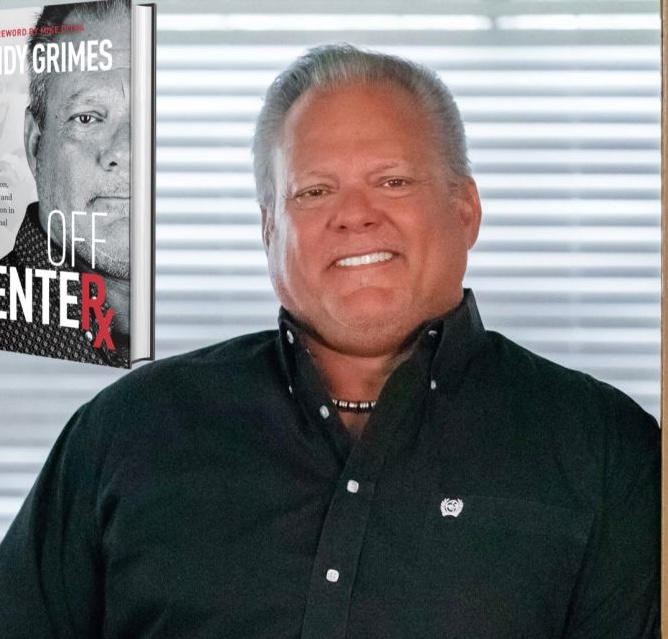
Founder of Pro Athletes in Recovery
Randy Grimes, born in East Texas, excelled in football at Baylor University before being drafted second round by the Tampa Bay Buccaneers in 1983, playing 10 years while battling opiate addiction from team-supplied drugs that led to blacked-out games. After being fired in 1992, he retired to Houston, doctor-shopped for years, lost his job, and nearly lost his family until entering treatment in 2009. Now sober, he founded Pro Athletes in Recovery to help former athletes with addiction and mental health.