


Life After Relapsing To Celebrate My One-Year Chip and Again With an 8-Month Old Baby


Nikki grew up in a small town with a mother who struggled with alcoholism and periods of abuse but was also loving and devoted. As a teen, she began using substances like weed, pills, and whippets. At 19, she sought help from a doctor but felt dismissed, and at 21, she entered her first treatment program.
Three months later, she met Curtis at an AA/NA club. Both had histories of alcohol addiction and drug use, along with legal issues. They married in 2015 and ran several businesses together, including a vape shop, while cycling through sobriety and relapse.
After IVF, Nikki gave birth to their son, Cooper, in 2019. Postpartum depression and loneliness led to relapse and several treatment attempts, including a mother-and-child program in California.
In 2021, after reaching a breaking point, Nikki committed to long-term sobriety on July 4, shortly after Curtis began his own addiction recovery. She rebuilt her relationship with her now-sober mother and became involved with Story of Self, a values-based narrative therapy program. Today, she focuses on family, recovery, and helping others through her experience.
GUEST
Nikki Callaway
Nikki is a mother and recovery advocate whose own journey through addiction, motherhood, and healing inspired her to support others facing similar struggles. After overcoming substance use, navigating treatment, and rebuilding family relationships, she now dedicates herself to helping others create positive change and find hope in recovery.
Connect with Nikki on LinkedIn
Follow Story of Self on Instagram @story.ofself
Matt Handy is the founder of Harmony Grove Behavioral Health in Houston, Texas, where their mission is to provide compassionate, evidence-based care for anyone facing addiction, mental health challenges, and co-occurring disorders.
Find out more at harmonygrovebh.com
My Last Relapse explores what everyone is thinking but no one is saying about addiction and recovery through conversations with those whose lives have changed.
For anyone disillusioned with traditional recovery and feeling left out, misunderstood, or weighed down by unrealistic expectations, this podcast looks ahead—rejecting the lies and dogma that keep people from imagining life without using.
Got a question for us? Leave us a message or voicemail at mylastrelapse.com
Find us on YouTube @MyLastRelapse and follow Matt on Instagram @matthew.handy.17
About Harmony Grove Behavioral Health
Harmony Grove delivers outpatient addiction and mental health treatment focused on wellness, creativity, and authentic human connection—providing a supportive space for healing that extends beyond traditional clinical care.
Harmony Grove’s IOP in Houston, Texas, is more than a program; it’s a lifeline for those ready to take the next step in their recovery. We are ready to meet you where you are and find your unique path to change.
If you’re feeling overwhelmed or struggling, you don’t have to face it alone. Reaching out for support is a sign of strength, and help is always available. If you or anyone you know needs help, give us a call 24 hours a day at 844-430-3060.
Host: Matthew Handy
Producer: Eva Sheie
Assistant Producers: Mary Ellen Clarkson & Hannah Burkhart
Engineering: Chris Mann
Theme music: Survive The Tide, Machina Aeon
Cover Art: DMARK
My Last Relapse is a production of Kind Creative: kindcreative.com
Nikki (00:00:01):
That night, I stood in the driveway looking at the fricking cows, and I was like, if he can do it, maybe I can too. If I can see something on his face that I've never seen since I've known him, maybe there's a chance that I can have that piece too. And so still to this day, I have the videos from that day of him teaching Cooper how to use a scooter, and it was the first time that I think I wanted that life and that love and that family dynamic meant more to me than chasing away my pain.
Matt (00:00:29):
Yeah.
(00:00:33):
I'm Matt Handy, and you're listening to My Last Relapse, I think. When are you trying to adopt ?
Nikki (00:00:40):
A couple more years? I'm not on a structured plan in terms of exactly what I want. What I told the boys was I was going to be very intentional about building what we're building for the next couple of years, but at some point, I'm a 30-year-old woman. At some point I'm going to want another kid. Right.
Matt (00:00:59):
Yeah. I mean, have you had your own kids?
Nikki (00:01:01):
I have one. I have a little boy. He's an IVF baby. So we had him, I mean, it's actually, it all rotates around my story, my addiction. It's a massive part of it. But me and Curtis got married in 2015. We actually met at a NA club. We met at a picnic table at aa. You know how everybody's like, don't do that. Don't do that. So there's this place in Conroe, and they have AA and NA in the same building. And I was like three months out of treatment, 21 years old, and he was pretty freshly out of jail. He had done a prison sentence, gotten out, gotten in trouble again, went to jail, and he was two to four weeks out of jail thinking he was about to go back to prison. And so we're sitting there and all the girls are like, oh, you got to meet this guy. He's so cute. And me at 21 because I'm so smart. I'm like, well, if they want him, I'm going to get him. It was like this weird challenge, this weird game. And then everything kind of shifted, which was, it's just weird. So we met at a meeting, stayed there together. I stayed sober for a year. He did not. And then I remember the day I got my year chip, I was like, okay, I did it. I'm getting high now. So I had done the things because I knew that I had to do the things, but I was so young at that point that there wasn't a lot of internal transformation.
(00:02:38):
So anyway, fast forward. So Cooper was born in, we got married in 2015. Cooper was born in 2019, and I had always dabbled before that. I went to treatment at 21 for Whippets. Right. But then after I remember Cooper was eight months old, and I was writing 'em letters every day. I wanted to be that mom that was doing everything, and I stopped. So people often ask me, do you think it was postpartum? And I'm like, I don't know, because I was too scared at that time to tell anybody that I had any of these thoughts or feelings.
Matt (00:03:17):
What thoughts or feelings?
Nikki (00:03:19):
Just there's so much. Cooper, he was an IVF baby. He actually was our very first embryo. He was two. He was two embryos. One. I don't know what happens with the science fall of that, but one ended up being one baby. So I was the happiest pregnant person. Some people are like, oh, pregnancy is awful. I'm like, no, dude. I loved it. And I don't know if it was emotional because of the gratitude or if it was just how I was pregnant, but once he was born, Curtis went back to working a lot. We traditionally run businesses. It's something we do together. And so he went back to work, but I didn't because I had a baby at home, and I just started getting lonely and depressed and sad. And I had all of these thoughts of, is this what life is? I am supposed to have all of this love for this child, which I do. But the whole time I'm like, how do I feel anything different? This is not what I thought it would be. Right. And so I didn't talk to anybody about it. I didn't go sit down with a doctor, because my history with doctors is you tell 'em what's going on with you, and then they shame you, right?
(00:04:40):
I don't know. I was just scared. And then I did what I knew to do, which was dabble in drugs, but it just got progressive really, really quickly. So that was my last relapse. That was the thing that led me up to who I am today, if that makes sense.
Matt (00:04:58):
No, it does. I mean, so let's get a timeline on it. You met him in 2012.
Nikki (00:05:04):
I met Curtis in 2013, October, because it was at the Halloween party at the club. So
Matt (00:05:14):
Next week.
Nikki (00:05:15):
Yeah. I mean, it
Matt (00:05:17):
Was No, this week.
Nikki (00:05:18):
Yeah, Friday,
Matt (00:05:19):
Right?
Nikki (00:05:19):
Yeah. And we never think about that timeline, but it was right there whenever we had the Halloween party. I remember it was the second time we hung out. He was like, let's go get a Halloween costume. And I was like, I don't really want to dress up. And he was like, but I do. I'm like, okay, sure. So we did that, and then we got engaged August 16th. So do the math on that. Right?
Matt (00:05:45):
It's like 11 months.
Nikki (00:05:46):
Yeah. Not far. And he's got a cool story about that, but I'm sure he'll talk about it. So August 16th, and then we got married September 5th. So we knew each other for two years and we were married. Right. Okay.
Matt (00:06:02):
Do you think that's a long time or a short time?
Nikki (00:06:04):
I don't think it's very long. I mean, I was 21 to 23. Right. I was a baby.
Matt (00:06:08):
I mean, so I was raised Mormon, and most courtships are a month.
Nikki (00:06:14):
Oh, what?
Matt (00:06:15):
And most people have a kid or a two by 23.
Nikki (00:06:20):
See, that's so traditional in movies, right? Yeah. You see that a lot in movies. But we haven't lived that way in a long time. And I mean, I think there's a fine line. I am glad that we don't have to marry people we don't want to marry today. But also, I do think there's a lot of, I feel like Curtis was very intentional with everything he did with me. He was trying to win me over, and I feel like sometimes I'll just use my relationships Before him. It wasn't like that, right? There was not a lot of intentionality. It was like, oh, you're doing this. Okay, we'll do this thing and it'll be whatever, and we'll see how it goes. And I also feel like now sometimes it's related to age. When people get a little bit older, they're like, oh, man, it's ticking. I got to be intentional about,
Matt (00:07:07):
Yeah. Yeah. There's a lot of the hookup culture too, though. Fucked a lot of shit up. Because ultimately back then, it was very unheard of to hear of people having sex outside of marriage. I mean, it happened, but typically that wasn't happening. And so it's like today there is no prize. It's like today we are taught that. Do you know what the red Pill movement is?
Nikki (00:07:37):
I don't. Is it from Matrix?
Matt (00:07:39):
No, it borrowed from that, but it's like dating marketplace rules. Really what the Red Pill is is a data packet that says there's a bunch of data that we base decisions off of. And there's all these red pill figures in the world. Like Andrew, who Andrew Tate is. Okay. So there's this core group of guys where it's like, fuck as many women as you can, be a high value man. Make as much money as you can. Don't show emotion. And so it's like this belief system that is really, it is teaching what traditional masculinity was. But a lot of people would say in a toxic way, a lot of the toxic masculinity has been framed around the red pill movement.
Nikki (00:08:36):
So one of the things we talk about in story, which is aligning to what you're saying is the left brain brain. In such a long time ago, we lived in a place where everything was creativity and what can this become? But then there's also this part of us that's like data, data. I have to do this. Everything's organized, everything's structured, everything. And so there's got to be a balance between the two. And we do live in a society where everything is data, and it sometimes takes away the ability of, the creative
Matt (00:09:10):
For sure is there's the two parts of you that constantly battle back and forth. And especially in recovery, there are people that, specifically men, we are taught not to express feelings or to immediately cut off emotion. It's like, have you heard of the epidemic? Is silent suffering?
(00:09:37):
Yeah. So it's like modern men are taught to suffer in silence rather than be looked at as weak. But the reality is, especially in recovery, men specifically are taught how to have healthy emotion, and they typically are not, I mean, raised that way. And so with my story, I didn't know what emotion really was. I knew that when I was mad, I was mad, or when I was sad, I was sad, but I didn't understand what healthy emotions were. I didn't understand. And I was raised in a two parent home. Both of them were pretty present. I mean, I'm the oldest of 10 kids, so they were spread thin. And then my dad was in school and in law school and all the way until I was 13. But I still wasn't taught what healthy emotions were. Also, my parents were really, really young. Again, my parents were 21 and 19 when I was born.
Nikki (00:10:45):
Wow. Okay. So traditional, you brought up Mormon. Was it like a traditional Mormon courtship and all of the pieces?
Matt (00:10:51):
Wait for me or for them?
Nikki (00:10:52):
For them?
Matt (00:10:53):
No, they have definitely a non-traditional Mormon story. My dad didn't go on a mission. My mom also, I'm adopted by my dad, who is best friends with my biological father.
Nikki (00:11:08):
Oh, cool.
Matt (00:11:08):
And they're still best friends. They live next door to each other still. And so my dad went to Iraq in 91, came back and my parents were divorced, well, or separated. And my parents, my biological parents had me and then a set of twins. And so there was three boys, and my mom and my dad was secretly in love with her since he was 13.
Nikki (00:11:31):
Oh, wow.
Matt (00:11:32):
So came back, I don't know exactly how it went down, but supposedly there was discussions between my dads and my biological dad gave him his blessing to date my mom. And then they were like, they've been together ever since. Wow. But it wasn't like a traditional courtship in any way,
Nikki (00:11:51):
But you got to grow up with both of them. Both of them men in your life. That's
Matt (00:11:54):
Cool. Yeah. There's a funny story. I remember my biological parents being married or being together. I didn't know what marriage was back then, but I have memories to this day of them being together. And my brothers, the twins behind me, they were so young, they had no clue. My dad had been in our lives long enough that they don't remember anything else. And so I was in trouble. I was probably nine or 10, and they were eight or nine. They were like eight. So I was in trouble. I was mad. And I told them that they were adopted, and my brothers were, they flipped out. One of my brothers was asking my mom if she was his real mom. And it was really funny to them. It was tragic,
Nikki (00:12:48):
Devastating, defining moment.
Matt (00:12:49):
Yeah. Oh yeah. Definitely one of those moments. And the weird part, not weird, but well, the whole thing is unusual, but one of the most unusual things is that my biological dad to the rest of my siblings, including my brothers, was Uncle Mark. But all growing up while I was a baby, and then probably until I was five, I spent a ton of time with both of them. They were best friends.
Nikki (00:13:18):
That's cool. That's really cool. I mean, that's special. Most men we're talking about society and how we
Matt (00:13:24):
Become
Nikki (00:13:25):
Who talking about society and how we've become who we are. And most men struggle to have one dad in their life. Right? So that's kind of cool that you got two examples, two people that love you.
Matt (00:13:35):
Yeah. Also, so my biological dad, he was a late bloomer when it came to fatherhood. Obviously he let somebody else take the reins, but my dad, the guy that raised me, I'm not his biological son and neither are my brothers, and he has biological sons. There is no difference. You cannot tell the difference between, most people have no clue.
Nikki (00:14:03):
So I believe that's going back to the adoption thing. I believe some people have that gift. I believe some people have that heart. Not everybody, right?
Matt (00:14:10):
No. Yeah. I was talking to a lady, I was on her podcast recently, and she adopted her sons. And we were having this discussion exactly where I was raised in the inner city of San Diego. And I knew a bunch of people that had adopted parents or stepdads or people who they called their dad, but really it was the mom's boyfriend and it was probably their fifth dad or whatever. And their dads were massively abusive. They did not treat 'em like they were their kids. I listened to one guy specifically, his name is Andrew Wilson, and he talks about outcomes for children a lot. And really what he's tying it to is just how corrupt and perverse the dating spaces today. Because people don't, when they are in the midst of their dating, typically crisises, they're not looking at the outcomes for their children. And obviously the best outcomes for kids is to have both parents in the home. And there are studies that say even if one of the parents is abusive physically or emotionally or whatever, it's still a better outcome than if a stepparent was in just based off statistics, and this isn't true across the board, but based off statistics, it's still better to have an abusive biological parent than to have a stepparent in the home.
Nikki (00:15:43):
Wow. Yeah. I mean, that's crazy. So I'm a big believer in what happens. The first 18 years of our life are really kind of what create us, right? And so when we're young, when we're infants, when we're in that zero to five range, we don't have any ability except for our parents to take care of us.
Matt (00:16:04):
We are dependent on them for survival.
Nikki (00:16:06):
They're gods. Yeah, a hundred percent. And then we start to have these other social cues in the world. But the idea that, I'll be honest with you, I love my mom. My parents divorced when I was really young. I absolutely love my mom, but she was an alcoholic, so she was not, I don't think she intended to ever be abusive. But oftentimes she was
Matt (00:16:31):
Physically and emotionally
Nikki (00:16:32):
Correct. Yeah. Yeah. So I didn't know any different though.
Matt (00:16:38):
Did it have to do with alcoholism?
Nikki (00:16:40):
Yeah, it was when she was drinking. And that's the thing I say about my mom all the time. She raised two daughters by herself. She got married and divorced a few times, never for long, because she was really good about if a man did not treat us well. She was like, I'm done. My kids are first. And so that was her heart from the time we woke up at six o'clock in the morning until she'd take us to school, cheer dinner, she'd do all the things. And she was amazing. And then at seven o'clock every night, she would open up a bottle of wine and she would start to drink. And when she started to drink, then all of these other behaviors came out. And so I had to do a lot of work in separating those two things because the experiences of my childhood were not all good. And some of them taught me bad lessons. I began to believe negative things about myself because, and so I really had to pull that apart. But to date, I will tell you, with the exception of my husband, my mom is the number one person I trust with my child. She doesn't drink anymore.
(00:17:44):
So there's a massive benefit. And my stepmom were pretty absent, which is ironic because he's a great man, and they grew up, they tried to raise their kids in a very value-based system. So it was a yours, mine, and ours situation. He had two. She had two. They had one together. And I love my dad. I think he is 100% one of the best people that I know, but I would never pick him over my mom. I just couldn't do it. And I think it was because even in the midst of some abusive situations, my mom was there consistently. My mom was the person who put the work in day in and day out. So that's as cool that they are doing research, because a lot of people are like, well, if these boxes don't get checked, then I'm going to move on and look for something different or better. And I'm not justifying abuse, but I think there can be work done in those relationships without just being like, okay, throw my hands up in the air.
Matt (00:18:48):
Yeah, they've been collecting. So it's actually, the federal government has a database that collects every bit of data that's ever produced. And so they have the biggest bank of data around outcomes for children. And it all ties to a bunch of different stuff. And this is what you guys talk about is a lot of stuff feed into the outcomes for children. And it isn't just your parents' marital status. There is influence, outside influence areas that you live in, environment as far as, is it inner city, is it? But one of the big data points that they always have emphasized is that when the nuclear family was in place back in the twenties, thirties, forties, fifties, the outcomes for children were magnitudes of difference. Versus today where it's like the norm is a single parent household and then additionally to single parent households, parents in the home. And so they're looking at outcomes from probably hundreds of thousands of data points. And they're saying that regardless of an abusive parent, because of the love for a biological child, and that's inherent, it is a driver that leads parents to, and additionally, a lot of kids outgrow the abuse. There's almost always a point where they're bigger than their parents or it's no longer effective and it stops.
Nikki (00:20:17):
Yeah. And I think a big part of that that I would want to know is define the abuse, right? Because there are some
Matt (00:20:23):
Situations, that's another thing. Yeah.
Nikki (00:20:24):
Some situations I could handle what I went through with my mom. I would never do it to my son. But I didn't tell my dad because I didn't want to lose my mom. And I knew that if I did, I would, right? But there comes a point where we start talking about abuse, where it's like, okay, this is life threatening to the child. And then that's absolutely like you got to get some distance.
Matt (00:20:47):
And the way they define abuse today is very different than even when I was, how old are you?
Nikki (00:20:51):
33. I had to think about
Matt (00:20:52):
That. So when we were kids, you could still spank your kids, and it was okay. Today. It's like if you spank your kids, you're walking a very fine line. I mean, dude, I have
Nikki (00:21:05):
A four
Matt (00:21:05):
Year. I do. Yeah, I do. I don't think that kids should be without discipline though. And it's like, so how do you discipline your kids feeds a lot into the signaling that you give them around what is right and what's wrong. And then there's kids that have no discipline at all. And it's like you can see, and there are those golden children where it's like, you never have to discipline this kid. And it's fine, but I was a kid that needed discipline. I'm a man that needs discipline. It's like discipline is massively important for me.
Nikki (00:21:40):
And there's even some evidence there of there's a point where they need that structure and discipline in order to know that you are going to do what you say you're going to do.
(00:21:49):
It provides a sense of security. Again, discipline is, like you said, one of those things where you can define that in so many different ways, unfortunately. But we have very strict rules. If he does anything that threatens his safety, he knows. He knows he's going to get a spanking, he grabbed a knife, and no, you're going to get a spanking that threatens your safety. But even that, there are rules. We don't ever spank with our hands. My husband is the one because he's the disciplinarian. I get to be mommy. I get to be comfort. And so yeah, we will use a spoon or I dunno, something that is not attached to our body because we want to teach him that our hands are for loving. And so we don't, the hitting, which my husband was rowdy, he was very rowdy. And so a lot of that stuff we're kind of learning as we go. But traditional timeouts don't really work with him. He benefits most from a sit down conversation. He's very emotional, very structured, very sweet. But he probably has some a DD in there, which I will never diagnose him because of my past, because of what I do for a living.
(00:23:04):
Not putting that kiddo on any kind of stimulants, but he'll look at us and it's like a challenge where he does something and then we're like, okay, well now you have a consequence because you knew not to do that. But I mean, it's hard. Learning how to parent today is hard.
Matt (00:23:25):
I don't think it's ever been easy. But additionally, today, we have generations of kids that are stuck with a phone
Nikki (00:23:32):
Or iPad
Matt (00:23:33):
Or iPad. But also abuse has changed. The definition of that has changed. So the night and day difference between what abuse was and what it is today, there is financial abuse in marriages. And I dunno, it's funny how spun off everything is today versus, I don't know, I, I haven't lived a traditional life in, anyway, I was an IV heroin user. But it's funny to, I have two daughters. I'm about to have my second daughter in less than a month, and I want to just send them off to a boarding school, like an all girls boarding school. I know that I'm having these girls at purely out of punishment for the shit that I've done.
Nikki (00:24:27):
Yeah. You think,
Matt (00:24:28):
Oh yeah,
Nikki (00:24:29):
I dunno. Maybe it's a blessing. Maybe it's a, so one of the things I learned early in recovery that totally changed my mind on parenting my son was
Matt (00:24:38):
If you knew my past, you would agree. Yeah. Oh yeah.
Nikki (00:24:43):
Do you think that it's harder to have a daughter than a son
Matt (00:24:46):
As
Nikki (00:24:47):
A man?
Matt (00:24:47):
I think that there's more consequence. The responsibility of raising a healthy woman, I think falls on the shoulders of their father.
Nikki (00:24:58):
Yeah.
Matt (00:24:59):
Yeah,
Nikki (00:25:00):
A hundred percent right. Because you are teaching your daughter how she deserves to be loved. So if you don't model that for her, then she's going to go look for it in all of these other places, right?
Matt (00:25:10):
Yeah.
Nikki (00:25:10):
So it's a lot. But it's also, man, can you imagine? And you seem like, I don't know you very well, but you seem like very value-based in terms of what you believe, what you believe is right. And so if you can model that for her, she's going to get a life that 95% of the other girls out there.
Matt (00:25:27):
Yeah, for sure. I've known a lot of sex workers in my life. I was a homeless drug addict for a long time. And then before that it was involved in gangs and stuff like that. So they all have, one thing in common is they either hated their father or didn't know him. And it was like,
Nikki (00:25:45):
So I actually worked at a home for girls who had been trafficked for a while. It was by far the hardest job I ever did.
Matt (00:25:52):
Oh yeah, I bet.
Nikki (00:25:53):
And unfortunately, in a lot of those situations, most of the sex trade, they were getting sold by a family member. They were getting sold by a father or by an uncle. And so they learned very early that their value from a man was whatever that
(00:26:09):
Figure told her it was. So, yeah, that it was hard. That was hard. But I dunno, I'm maybe an idealist in the way of, we talk about all of these different stages of life and how we begin to believe these things about ourself, which by the way, heroin, I did heroin too. I'm with you on that. And so I learned these patterns in my life that taught me, which was not the fault of the person or the event, it was my fault. I began to believe things about myself. I accepted stuff about myself, which led me to believe that I didn't really deserve to have a good life. And so I just wanted to self-destruct. But I'm an idealist in that I believe that if we can restructure that as individuals, but also as a society, there are new rules that we can put in place to change some of those things. I mean, what you talked about with the girls teaching girls their value from a young age, starting to redefine some of the rap stuff, red, and let me tell you, I'm with you. Did you
Matt (00:27:20):
Say rap as in the music?
Nikki (00:27:21):
Yeah.
Matt (00:27:22):
Okay.
Nikki (00:27:22):
Yeah. I was wild. A lot of people look at me and they're like, I don't believe that you did the things you said you did. And my family life, I was not the traditional person. That should have been where I was,
(00:27:37):
But I was hanging out in crack houses and I was just doing things I shouldn't have done. But I also believe a lot of that is because I didn't have the emotional, I don't know, support, knowledge, growth. I couldn't get there emotionally as a kid. So I think if we redefine some of those things, being a father to a child or not exposing our kids to whatever, I'm an idealist, and I don't like to be that person that's like, Hey, don't do those things. But my kid is pretty sheltered and I have to find the line. He doesn't get to. He gets technology and he gets Minecraft. But even in that, I'm like, okay, but you're not going to use it to kill. If you want to play it, you play it and you build, you do something good with that system. You're not going to use it to run around and blow up people's building just because I want him to understand that the harmful behavior, even in a stupid video game, is not who he should be in his heart. I want his heart to be pure. And then he has to learn to adapt to culture from that. He's in sports, so he's highly involved with a lot of the other kids, but I want him to come at that from a point of love,
(00:28:52):
And I'm sure I mess it up every day.
Matt (00:28:55):
Yeah. I mean, yeah, raising kids is tough. The rap thing though, I talk about it all the time because when I entered recovery, really entered recovery, not just exposed to recovery, but when I was like, I never want to do this shit again. I had to stop listening to rap. I had to stop listening to rap. I had to redefine a bunch of stuff for myself. And it was like what I learned, at least for myself, is that I was inheriting a lot of shit externally, and I was just living based on what other people told me life should be. And so the redefinition of words that I used really changed a lot of stuff for me, because what I realized very, very quickly was that I was living how they told me to live based on language. And then I went through this whole evolution of, okay, what am I inheriting? What else am I inheriting? What am I consuming that is affecting who I am? And then embarrassingly, it's like I have to admit that in my past, I was heavily influenced by the music that I was listening to.
(00:30:08):
And I think a lot of people are, but probably not to the level that I was. I was raised in, my outcomes did not fit the equation. My equation should have been like, I went to college and then went to law school or whatever. And it's like, that is not what happened. And so it was like, okay, well, what contributed to all of this? And obviously I tell people all the time, at the root of all of my problems a hundred percent of the time was girls, I got into drugs. I did all of the dumb shit that I did to impress girls. And it was like, well, I didn't feel special. So I was created a reputation of, okay, Matt Handy always has drugs, and he's always doing something crazy.
Nikki (00:30:59):
They needed to,
Matt (00:31:00):
Well, it was a very specific girl that would seek that kind of behavior. And it was like, I got what I wanted out of that type of girl, so I did what I had to do to attract them.
Nikki (00:31:11):
Yeah. Yeah. So I'm going to say this. I think I'm very impressed with your ability to pull back the things that created those patterns. When you're like school, or you're talking about music, you're talking about these social situations, the things that you've learned. So a big thing that we try, here's the deal, 90% of the world doesn't have access to that knowledge because they're not in addiction. So they don't have to really figure out, okay, what does my recovery look like and how do I begin to heal from these things? And so a big thing that we do is pull back those layers because we are, like I said earlier, who we are based on what we've learned. And those become our known patterns, and then we begin to move forward. So I think it's really cool that you've actually done the work of, okay, what things from my past have created these patterns in my life, right? And how do I undo these
Matt (00:32:07):
Patterns? Okay, so my producers listening, and I'm sure she's going, what does she do?
Nikki (00:32:12):
So
Matt (00:32:12):
What do you do?
Nikki (00:32:13):
Okay, that's a big question. So we have something called Story of Self, which is technically a business, but we are very mission oriented. And so we primarily work with treatment centers or people in recovery to it's narrative therapy, but it's narrative therapy based on science, which is pretty cool. So we'll take them through these different units, and we helped them identify who they are, the choices that they've made, the challenges they face, the choices that they've made, rooted in those challenges. So the negative, most people in recovery are really good at looking at the negative
Matt (00:32:52):
Or good. I think most people are,
Nikki (00:32:53):
Yeah, let me peel back my patterns. Let me figure out what has caused me to be in this place in my life. One of the things that I think that we do that's really cool is we actually flip it to the good. So we'll help them take very specific moments of their life where they have to identify their values and build a pattern from that value so that it's not just the bad, but it pushes 'em towards the good. So previously, what it looks like, traditionally, what it looks like is a six to eight week cycle. So we worked at a facility in Houston for a long time, and the program was the PHP and the IOP. So narrative therapy, a lot of group work. We have a book and a workbook. It's very experiential because it's created to where as you go through the process, you are emotionally aligning to the things that you're doing. So Shaw talks about the brain. And so I'm not a scientist, and I'm not a medical doctor, so I'm going to be careful about how I address this, but I got excited
Matt (00:34:01):
Because you're not a doctor. Correct? You can say it however you want.
Nikki (00:34:03):
Okay. Well, so I got excited when I saw Shaw because I didn't realize, I thought he was, anyway, that's embarrassing. But I thought he was somebody else.
(00:34:12):
And so I started, I listened. You asked what podcasts? I'd listened to that one. And Andy's are the two, because I obviously have a lot of love for Andy. So the way he starts talking about the trauma and the amygdala. So we do that, but we don't necessarily frame it as trauma. We frame it as your experience to the event, because for some people it is trauma. But for other people, it's like, I'll use my husband. For example, one of the events that defined who he believed he was was walking down the hallway. He was on the football team. He was in the pep rally, and he was sitting there talking to his group, the cheerleader and the other football. And he thought he was somebody until that girl made fun of his teeth. And in a minute he was like, I don't belong here.
(00:35:02):
These are not my people. And then that day at the pep rally, he got off the stage and he walked out. And then from then on, he just believed that he didn't belong. And so he continued in these destructive patterns. So we'll do that. We'll peel back those layers where we can really look at the events, whether they're traumatic or not, how is this affecting? How's your brain processing this with the amygdala and the hippocampus and how those pieces are tied together. And then we'll go into the value, the choice, which is a belief system, but we actually it a hidden value because we believe that that belief defines who you are. You begin to live out of that space. So play game real quick. So one of the things I heard you say before, and you're going to have to give me more context on this and clean it up a little bit. You talked about your brothers, and you talked about your younger brother always being better at you. He could flip on trees, he could skateboard, he could this, that and the other. And then I believe what you said, you're going to have to fix this. I think you said I felt I was inadequate.
Matt (00:36:13):
Yeah.
Nikki (00:36:13):
Was that the verbiage? Yeah. Was that your word? So as soon as I heard that, I was like, I wonder what patterns come out of his next 10 years based on the idea that he's inadequate. Do you try to prove that you're not? Do you accept that you, there's so much fun stuff to be done to peel back the layers. Because you just naturally set it so it's living in your head? Yeah.
Matt (00:36:36):
No, no. So that was how I lived in my youth, but that wasn't something that I carried with me. A lot of it really had to do with his relationship with my mom, who adversarial since I was a child. Our relationship has never been a good one, but he is the next child after me, and that is her favorite. And so it was always this, what does he do that I don't do? And then it was like, as we grew up, there was all of this shit that he did that I couldn't do. And then it was very quickly in my teenage years, I realized there's a ton of shit that I can do that he can't Do.
Nikki (00:37:22):
It shifted. It shifted pretty early on.
Matt (00:37:24):
It shifted really early on. But I think my childhood was kind of marked with inadequacy because of the comparison. Additionally, I saw the difference between us. Well, also in my teenage years, it really flipped. He had to come and live with me.
Nikki (00:37:46):
So you kind of gained the power at that point.
Matt (00:37:48):
It wasn't power, but it was a lot of influence. He ended up a full-blown heroin addict because of my influence.
Nikki (00:37:54):
Oh, wow.
Matt (00:37:57):
And so it wasn't healthy influence and it wasn't the best outcomes, but I immediately realized, additionally, I have eight other brothers and sisters that all looked up to me and didn't look up to him. And so there was a lot of things that I was able to pick up on that I was like, okay, I can't flip because I have a block, like a mental block, Because I used to be able to, and I landed on my neck, and now I can't. And yeah, he can skate better than me, but I was born pigeon toed, so I can't do those tricks. And I was like, okay, why can't he do these things and I can't? And it was very obvious why he could and I couldn't.
Nikki (00:38:38):
Yeah. So your brain's answering all those questions for you, right? Yeah. So it'd be fun to figure it out. When we do it, we'll pull five, and it goes back to the brain where we tie in the hippocampus, because the hippocampus is a part of your brain that says, remember this? And it's tied to the amygdala, which is emotion, right? Fight, flight, freeze. And so what does my brain remember? Even if it seems like it's not significant? You know how you have those tapes that just play?
Matt (00:39:07):
Yeah. Do you know what the primitive belief systems are?
Nikki (00:39:10):
Yes. Yes. What we do is a little bit different, but go ahead.
Matt (00:39:15):
So when you're three years old, you know what your name is and you'll correct an authority figure. Yes. That is a primitive belief, I think. So there's a book that I've read. It's called The Three Christ of Ypsilanti. It is the craziest, it was an experiment, really, and a guy wrote a book about it. But what it showed me was that addicts and alcoholics have primitive belief problems because we start associating things that should not be associated. We start defining things in ways that are not correct. We change our primitive belief systems based on our experiences. And so we start to associate love with things that it shouldn't be. And I think the world at large has done this pretty much wholesale. When you look at healthy relationships, and then toxic people love toxic relationships, and a lot of it has to do with the excitement. And you talk about the hippocampus and the amygdala, right? Long pathways and short pathways. What have we built? Do we have strong long pathways or do we have stronger short pathways? Is our fear dominating our thoughts, or is our logic dominating our thoughts? It gets shut down. There is a theory out there where if you have no memories before you're like eight or nine, that you were sexually abused Because your amygdala has shut your hippocampus ability down to record things cuz you're in fight or flight. So your ability to actually make those memories is completely blocked. And so it's like, what pathways have you developed? A lot of addicts and alcoholics have poor prefrontal pathways because first of all, the damage to the brain. But also we are living in an elevated state constantly where we are in fight or flight,
Nikki (00:41:19):
And then all of these awful patterns are coming out of that one of the games we play, and 110% when you have somebody who's gone through excessive trauma, I'm a hundred percent with you on that. But it's funny because when we have people who are in treatment for an extended period of time, we'll start to ask 'em these questions, and then you'll see. They'll wake up in the middle of the night and they'll be like, I just remembered this, right?
Matt (00:41:46):
Yeah.
Nikki (00:41:47):
What street do you live on?
Matt (00:41:49):
Me?
Nikki (00:41:49):
Yeah.
Matt (00:41:49):
Pine Creek Drive.
Nikki (00:41:50):
Pine Creek Drive. So how often do you think about Pine Creek Drive?
Matt (00:41:56):
What do you mean? Think about it? I think about it every day, kind of
Nikki (00:41:58):
When you drive home?
Matt (00:41:59):
No, it's typically, this is embarrassing. I order a lot of shit off Amazon, and so I see it every day.
Nikki (00:42:06):
Okay. Yeah. So it's this thing of, were you thinking about Pine Creek Drive before I asked that question?
Matt (00:42:12):
No,
Nikki (00:42:13):
No. But it lives in your brain. And so what we see sometimes is when we begin to ask them these questions, sometimes their brains will pick the pieces back up because they've tucked it away in this place somewhere in the back, and they're like, why did you ask me this? Now I can't escape this. Right? That doesn't always happen. There are plenty of people who are exactly like you said, who just cannot access certain things. And so we're like, I don't know what's there, but clearly your brain's not ready to let it go.
Matt (00:42:42):
How do you feel about EMDR?
Nikki (00:42:44):
I think it's great.
Matt (00:42:45):
Okay.
Nikki (00:42:45):
Yeah. I mean, I think it's great. Here's my belief. I'm going to sound like an asshole. Here's my belief. I think that there are so many things that happen in our industry right now that are great. I think there are a lot of things that are incomplete, right?
Matt (00:43:00):
Oh, no, that is a very nice way to put that.
Nikki (00:43:01):
Okay.
Matt (00:43:02):
Yeah.
Nikki (00:43:02):
So
Matt (00:43:03):
If you think you are an asshole, you're going to think I'm a total dick. I talk about the inadequacies and the deficiencies in the industry constantly. I mean, I built this company because of that. I mean, I've done a lot of treatment, and everybody that's listening to this has probably heard this a million times, but I've done almost five years in residential total
Nikki (00:43:23):
In 30 day stints.
Matt (00:43:24):
No, I did long-term treatment too. I did a three year, I did a nine month, a seven month, and then a bunch of one months.
Nikki (00:43:31):
I think I heard you talk about your three year one. That was the jail one.
Matt (00:43:36):
That was the Scott
Nikki (00:43:37):
Therapeutic Community.
Matt (00:43:38):
Yeah. That was the very first episode, actually.
Nikki (00:43:41):
So full disclosure, that was the day I was like, Hey, do you want to go talk to him? That's the day I asked my husband, because he spent a lot of time in therapeutic communities. So I was like,
Matt (00:43:51):
Really?
Nikki (00:43:52):
Yeah. I was like, you might actually jive with him on that.
Matt (00:43:55):
Therapeutic communities are very interesting. I think that long-term treatment is way more effective than short-term treatment, but I think therapeutic communities are fucking cults,
Nikki (00:44:10):
And I don't know, it's not my experience, it's just the stories. I've heard some of the things that he had to do that I was like, okay, honey. Oh
Matt (00:44:17):
Yeah, we'll talk about that when it comes
Nikki (00:44:19):
In. It'll be good.
Matt (00:44:20):
Therapeutic communities are, have you seen the Synanon Fix
Nikki (00:44:23):
Uhuh? So full disclosure, again, I'm a weirdo. We don't watch tv. I don't have a tv.
Matt (00:44:30):
Okay. Okay. You can watch it on your phone. Okay. Okay. I would love for you guys to watch it. So it's about, Synanon was the first therapeutic community ever, and it was based in la. It was an alcoholic who experienced aa, and he was like, this shit's fucked up and started his own thing for junkies. And dude, it exploded. It ended up all across the United States. They had their own radio station that was 24 7, and they would broadcast stuff across the United States. It was in different countries, and then it evolved out of that into, it wasn't just addicts and alcoholics anymore. There was normal people participating it. It was all over Hollywood.
Nikki (00:45:19):
Was it healthy or unhealthy?
Matt (00:45:21):
So it started off super effective.
Nikki (00:45:23):
Okay. I
Matt (00:45:25):
Don't know about, well, I mean, okay, how do we define healthy? Right? It got a bunch of people off heroin. It got a bunch of people off alcohol, but it turned into a murderous cult.
Nikki (00:45:35):
Okay.
Matt (00:45:36):
Yeah.
Nikki (00:45:36):
Okay. Alright.
Matt (00:45:37):
So the documentary, it's like a five part docuseries. It was so good. And this was after I went to a Synanon based program and I was like, oh my gosh,
Nikki (00:45:49):
Thank God I'm not there anymore.
Matt (00:45:51):
Yeah, for sure.
Nikki (00:45:51):
That's crazy. Yeah, I don't know a lot about 'em, so I always am in awe when I hear the stories. I'm like, how does any human, I think of this about the prison system too, and the girls who were trafficked that I worked with, how does any human deserve to live the way that other people, nobody deserves that. The therapeutic communities, the jail system, the stories I hear, I'm so grateful I didn't have those experiences because I don't know. Yeah,
Matt (00:46:23):
I don't know. Jail and prison was very important to me. I became very mature in the prison system, the therapeutic community. So the one that I went to has a massive success rate because they are helping. So they helped me get out of a 33 year sentence.
Nikki (00:46:49):
You worked with that government, that judicial system?
Matt (00:46:54):
No, no, no. So I was sentenced to it, and if I didn't get in there, I was going to prison
Nikki (00:46:59):
Because
Matt (00:47:00):
It has such a good reputation of working with people that are socially inept. So the majority of people that are going to these programs are people coming out of a life sentence or people facing a life sentence.
Nikki (00:47:16):
So there's a place in San Antonio that's really, really good about that. They're very good at helping people get back on their feet. But I think that is, they take pride in transitioning to break the system, to break the mold. Whereas most of those systems, again, I haven't lived this, so I'm trying to be cautious about what I say just based on what I've heard from him. What is it called?
Matt (00:47:42):
Recidivism.
Nikki (00:47:43):
Yeah. It's like, Hey, let's do this and let's keep you sick so that you can then come back, which let's be real. The treatment industry does that a little bit too.
Matt (00:47:50):
Oh yeah.
Nikki (00:47:51):
But the prison system is, I mean, some of the things they were doing in there, whatever, I shouldn't be talking about it. It's not my life. I'm just like, at what point do you get to be healthy and make decisions to better your life? And I feel like where he was, there just wasn't a lot of opportunities for that.
Matt (00:48:09):
So where I was at, so the people, it's all participant ran. There is no outside people. And so the people who have been there the longest have been there for 40 plus years.
Nikki (00:48:22):
The therapeutic community or the jail,
Matt (00:48:24):
The therapeutic community, all the jails too. The people who run that shit have been in there forever and they're going to stay in there. But the therapeutic community that I went to, fuck, I forgot, how did I forget his name? Anyway, the guy right now, he's been in the program for 40 something years,
Nikki (00:48:44):
And he's there and he runs it and he
Matt (00:48:46):
Runs it from the headquarters. So his name is John something.
Nikki (00:48:50):
So he's there by choice.
Matt (00:48:52):
Most people, when you're coming out of an antisocial situation, you're criminally minded. You've got social issues coming this way, you got social issues, that becomes a very viable option to live. You can meet your spouse in there, you can raise your kids there, you can have pets, you can make money. It's a whole thing. It isn't just a rehab by far. It is not a rehab at all. Actually, they don't teach you. You can get in trouble for talking about the 12 steps for talking about God, anything like that. Basically, their whole thing is you'll work until you love to work. And then when you love to work, you'll work some more. And most people do.
Nikki (00:49:36):
So let me be super clear with you. I am glad you explained that to me. When he's talking about it, he's not talking about that his is safe, peace style stuff where you are mandated to be there and there's not any opportunity to raise a family. So I think in my mind, I'm mixing two different things.
Matt (00:49:58):
So I was mandated to be there for three years,
Nikki (00:50:01):
But you could have gotten married and had somebody live in that community with you.
Matt (00:50:05):
Yeah. After 18 months, you are allowed to date.
Nikki (00:50:12):
So it's not like a singular
Matt (00:50:15):
Stone. They don't want you to leave
Nikki (00:50:16):
Stone building.
Matt (00:50:16):
No. They don't want you to leave. And most people don't. A lot of people that experience success in that type of environment, they don't leave because you can build a really fruitful life in that specific situation. And you never have to participate in society again. You never have to be an American citizen. Really. You can be, and the thing is, because there is minimums, there's a minimum of two years, then you make recomm commitments, and there's 10 year recommitment where people are recommitting for 10 plus years. I'm going to do this for another 10 years. And then when they accomplish that 10 years, I'm going to be here for another 10 years, or I'm going to be here for another 10 years.
Nikki (00:50:58):
Where was that at?
Matt (00:50:59):
So there is seven facilities. There's one in la, one in San Francisco, one in New York, one in New Mexico, one in South Carolina, one in, there's two more.
Nikki (00:51:13):
Yeah. Yeah. That's very different than what I was thinking about. I didn't realize that. That's kind of like a commune. That's a village. That's like everybody is there too. Yeah. So I think everything I've heard from him is males only, right?
Matt (00:51:26):
Oh, yeah. No, there's males, females. It's the guy that ran mine, the facility that I was at. He was like a golden child. So the lady who started it, it was her and her husband, and they started it in the seventies, and she's still alive. And she rules that program with, she's a very nice person, but nobody crosses Mimi. But the guy that ran my facility was her golden child. And there's departments, there's literally, there's the moving companies, there is the woodwork shop, there is the construction company. There's a bunch of stuff that is components of the program. So anyway, her golden child from New Mexico was a girl, and she put them together and they had their kids in the program.
Nikki (00:52:14):
I, so I think the general idea of being able to provide that to people to change a way of life is awesome. But it sounds like it's maybe, like you said, made into a situation where people don't really have as much freedom as they think that they do.
Matt (00:52:30):
Oh yeah. No, no. When I left, when I walked out of there, I left. I didn't complete it. I got ahold of my probation officer told him how fucking crazy it was and got some options. So when I left, I left. I knew I wasn't going back, and I still felt like I was doing something wrong, the indoctrination.
(00:52:52):
So for the first four months that I was, or three, or it was four months that I was there, I wasn't allowed to talk to people unless they talked to me. There's different levels that you have to achieve these levels in order, you get small freedoms back. But until you're given some of these freedoms, it's like you're not allowed to talk to people. You can't ever go anywhere by yourself. You can't be in a room by yourself. They teach you. You will do what we say, because you've got 33 years over your head and you've got seven in you. Fuck this up, you're going to prison.
Nikki (00:53:27):
Damn.
Matt (00:53:28):
But a lot of people really end up loving it because they are living a life that they've never been able to live before. And additionally, you become someone in that program. And that's one of the hardest things. If you've been there for five years, you have positions of power and influence and all of these things that you'll never get in the real world. So it's really structured to keep people
Nikki (00:53:56):
In there manipulative in a, this whole idea of, I'm going to tell you what you can, and people probably adjust, like you said, adjust to that really easily,
Matt (00:54:06):
Because very easily we love structure.
Nikki (00:54:08):
Yeah. Well, and I don't want this consequence, right? Yeah. I don't know.
Matt (00:54:13):
Well, most people get out of the consequences. I had a long sentence. I mean, I had a long mandated time to be there. I had to be there for three years. Most people, it's like two years. You got to go there for two years. That is a very short amount of time compared to how long they end up there. And so they get taught very Mimi. When she started it, it was with the best of intentions, her and her husband. And one of the core values that she teaches, if you have a skill, no matter if it was criminal or whatever, flip it and use it to your advantage. All of the departments there, the moving company, it was this guy used to break into houses and steal people's shit. And one of their neighbors needed help moving a piano. And the lure is that he moved this piano by himself, but that was the start of the moving company.
Nikki (00:55:06):
Wow. Yeah. I mean, that's good though, from pain to purpose. You're bringing them from the things that have harmed them before to using the things that they have. So it sounds, from an outsider's perspective, it sounds like it could be a good system if it was done right?
Matt (00:55:23):
Oh, the public is a hundred percent sold on it. Kamala Harris had her when she won or when she was nominated for something, because Kamala Harris is a big politician in California, attorney General. And before that, she was just somebody who's side beast. But she had one of her big political parties at the facility that I was at. So Mimi is super connected additionally. So when headquarters was built, it's in San Francisco, there was a bidding war between the San Francisco Giants and her, and she won. That's how connected she is. And she's this little, she's like a five, two little Jewish lady, and it is like big curly hair. When I met her, I only met her once, and it was the day that I got there, and there was a big scandal, but they called 'em scandals. But it was like this guy got caught hooking up with a girl that he wasn't allowed to.
Nikki (00:56:27):
What do you mean he wasn't allowed to? What does that mean?
Matt (00:56:30):
So he hadn't reached that point where he was allowed to date. And so you've got to get it approved. And so what happens is there's headquarters, everything gets ran through headquarters. Every decision that gets made has to be stamped by headquarters. And so there are people up in San Francisco deciding who can date who.
Nikki (00:56:54):
Yeah. That's crazy.
Matt (00:56:55):
It's crazy. It's very, very culty.
Nikki (00:56:59):
Just the fact that they could tell you no, and you have to abide, right?
Matt (00:57:02):
Yeah. I mean, so they might tell you no, but it doesn't mean that you, that's forever. Right? There could be specific reasons why. And the reality is, let's say me and this girl liked each other. We only like each other. We see each other. We're not allowed to have in-depth conversations with the opposite sex.
Nikki (00:57:22):
Okay.
Matt (00:57:23):
So it's like, okay, well, you've got to write to them, ask them for permission. And they're like, no, because they know both of our backgrounds very intimately and know whatever. And so it's like what they'll end up doing is they'll start giving you guys opportunity to talk, or they'll build it up where it's like, if this is really who you want to date, you can do it. It might take a long time, but their whole thing is, if you're going to do this in our program, you're not going to do anything destructive. And so after 18 months, you can get overnights with your person if it's approved. But imagine you have a relationship that falls apart in the program, the destruction that can follow behind
Nikki (00:58:07):
That.
Matt (00:58:08):
So they're very selective and intentional with what they allow and what they don't allow.
Nikki (00:58:13):
Yeah.
Matt (00:58:15):
But it's a whole secret society. It's a whole thing. And when I talk about it now, it's very crazy to think that I could have very easily been one of those people that stayed. And the direction that I going in my life was like, I would have probably stayed if they would've. I had my daughter on July 4th. I got there June 2nd, and they didn't even want to tell me that I had her. And so there was a bunch of things that happened early on where I was like, I don't want to be here. And then it was like Christmas happened, and my girlfriend at the time, now, my wife was sending me cards and pictures of our daughter, and they were not giving it to
Nikki (00:58:59):
Me, but going in there, they knew you had a family.
Matt (00:59:03):
Yeah.
Nikki (00:59:03):
So it was very intentional for them to keep you isolated. Yes.
Matt (00:59:06):
Because they do not want people to have outside contact until they deem you that you are ready because they want you to stay. So
Nikki (00:59:15):
When you're ready is when you've grown accustomed to the life, you enjoy it there, you're succeeding. Well, you have a job, things are looking up. Now you can contact this girlfriend and be like, Hey, not
Matt (00:59:26):
Even then you can see the flip, get switched in people where they buy into the program and then they'll allow you to do it. They want to be represented publicly as best as you possibly can. And it's funny, I watch videos that they post and the language, it's so funny, we all say the exact same shit. We are taught to speak a very specific way about the program. And so every time I watch a video about them, it's like I said the same shit. And it's like videos from 20 years ago, videos from five years ago, video from yesterday.
Nikki (00:59:59):
How often do people get out of the system before the light turns on, before they get to the point where they're like, Hey, I love it here.
Matt (01:00:07):
So this is where their success rate is really iffy, right? Because they claim claim a 95% success rate or something like that. It's like it's a 95% success rate if you do what you tell 'em to do. Otherwise they don't track it.
Nikki (01:00:24):
So when I was 21, earlier, we talked about me going to treatment at 21. I went to treatment at 21. But before that, prior to I'd actually gone to the doctor to tell the doctor, Hey, I'm struggling. I can't maintain whatever a week sober. I could go two or three days.
Matt (01:00:42):
What drugs were you doing at the time?
Nikki (01:00:43):
I mean, okay, so this is a funny story. Whatever weed, I never really drank. I was very weird about alcohol because of my mom and I get really bright red when I drink, so it gets kind of embarrassing.
Matt (01:00:56):
So I'm Vietnamese, and so I have an actual biological allergy to alcohol. I get bright red, puffy, very uncomfortable. I hate the way it tastes too. And so I never mean I have drank, but I hated it, which is why I did a lot of drugs as a kid.
Nikki (01:01:15):
I wonder if there's got to be something there with redheads because when I see redheads drink, and I've experienced it where my body tingles and I'm bright red and I'm like, what is this? But there's also the emotional component of I didn't want to be my mom. So I drank every once in a while, but I couldn't really maintain weed when that was 15, 16, everybody I was around was smoking weed. And then I remember the first time somebody handed me a Vicodin, I remember where it was sitting. I remember who I was with. And it's funny now, there were three of us girls, one of those girls is in recovery in Houston and works with one of the big sober livings around here. We don't necessarily have a relationship anymore, but we're not on bad terms. And then the other one, she's actually dead because of addiction. So we were sitting on my bed and they were both older than me. I was like 15, 16, and then they were each a year older. So we were in high school and they handed me a Vicodin. I remember that. So Vicodin, I think I had taken Xanax a handful of times, but it wasn't like
Matt (01:02:30):
A problem.
Nikki (01:02:32):
I didn't remember what was happening and I didn't, not remembering, especially as a young woman, it was easier for me to maintain Adderall, whatever. So I just dabbled. There was a lot of pills, but whippets were like my consistency. So I go to the doctor and he did the same thing you did. Well, what all have you taken? And so I was like, well, within the last month I've taken this, this and I've taken weed, I've taken Vicodin and I've done whip its, I hadn't done Xanax or alcohol at that point, so I didn't give him that laundry list. Anyway, so he just writes it in my chart. That's his answer, to write it in my chart. Which granted, it's a very small town. I don't don't know. Did
Matt (01:03:13):
This doctor know your mom?
Nikki (01:03:15):
He did not know my mom. He knew my dad. So in small towns, they have family practices and there are two doctors. There's a pediatrician and a doctor that treats the adults. It was one of those practices. So I went there because I had seen them for such a long time. So I was like, well, they can help me. And that wasn't really the case. So I don't know if they ever went to my parents, hopefully not because of HIPAA since I was 19, but they definitely knew my family. They definitely seen me and my siblings many times. So we just wrote it in my chart. I was pissed about it and then actually went home. I'm not even going to say I was pissed about it. I think I was defeated. I think I later got angry. But at the time, as a kid, and I knew I didn't want to be like my mom,
Matt (01:04:05):
But
Nikki (01:04:05):
I didn't know how to not do the things I was doing.
Matt (01:04:07):
Right. Yeah. I'm sure at the time you didn't understand what was going to happen. And I was just saying the access to care in the early 2000 tens was, so my first treatment was in 2012, and we had Kaiser. Kaiser. Do you know what Kaiser
Nikki (01:04:27):
Is? Is this California?
Matt (01:04:27):
Yeah,
Nikki (01:04:28):
I don't think I do.
Matt (01:04:29):
So Kaiser is a medical group. They have a ton of hospitals, but they also have their own insurance. So you have Kaiser insurance and you go to Kaiser hospitals and they had a treatment component thing, but really what it was was you have Kaiser insurance. They don't have rehabs, but they're in network with rehabs. But what you have to do is you go to their IOP first, and then if you can't stay sober, then they'll pay for you to go to treatment. But in order for you to go to treatment, they have to sign off on it. And so they send you this IOP, and this was my experience. It might not be the same for everybody. Not many people made it to rehab. They either were told they were okay by the IOP or they quit going, and then they don't get approved. And so the majority of people that I know that had to go through that process either got semi sober, at least for a little bit in the IOP and then ended up going out and they ended up not making it to treatment through that insurance or this was pre fentanyl. And the majority of them, first of all, when you go to the IOP, they give you Valium to get off of the heroin.
(01:05:56):
So I walked in there desperate to not get in trouble with my family. And so I walk in there, the first thing they do is give me a big prescription of Valium. And I was
Nikki (01:06:08):
Like, did that work?
Matt (01:06:08):
No. I was like, no, I didn't even go one day of the IOPI left with the prescription.
Nikki (01:06:15):
Yeah. I was like, I don't know. As an alcoholic or an addict, how do you maintain that on your own? Even if you were determined to not do heroin and take the Valium, how do you, you'd be taking three pills at a time.
Matt (01:06:28):
Yeah, no, for me at least it didn't. So this is what it said to me was, you are not going to treatment, and if you do, you're not going through Kaiser. That's what it ended up being. And that's what ended up happening was I didn't go through Kaiser. What ended up happening was shit really hit the fan. And my parents were like, you're going to treatment and it doesn't fucking matter what it takes. You're going to treatment. And so they paid for it, and I was just so not ready and didn't want to not do drugs. I relapsed in treatment and then left treatment. Delusively thought the rule was I relapsed there, so I had to leave for a week. And they were like, all you got to do is come back in a week and we'll let you back in. Well, I went to a guy's house that I met at treatment. His sister was the Connect, and so he was like telling me, don't do anything stupid, come back
Nikki (01:07:29):
And leave. He was still there,
Matt (01:07:31):
And it was just like he was trying his best to help me or whatever. But I ended up using drugs the whole time I was there. And then I went back, obviously couldn't get in, and then they called my parents and said, this is what happened. And my parents flipped out. They flipped. And that was when I made those decisions where I was like, I'm not ready for this. I want to do drugs. I don't want to not do drugs. Also, I was on parole and now I'm on the run. And I was like, Nope, I'm not going to, because if I go back to my parents, they're going to basically make me go to prison to straighten all this stuff out. And I was like, fuck all that. So I went on the run, and that led to my second prison term.
Nikki (01:08:20):
Damn. Yeah. Yeah. No, I mean, I think you kind hit it with the whole thing of it was just a very different time. There was not a lot of, mine was kind of similar in terms of it was the right step. It was the first treatment I went to and it was, okay,
Matt (01:08:36):
Wait a minute. What small town were you talking about?
Nikki (01:08:38):
Wim? So I went to two, back to back. I went to the right step, and then I went to a Christian women's one, which is weird. Were you
Matt (01:08:44):
Born, where were you raised? What small town were you
Nikki (01:08:46):
Living? Montgomery.
Matt (01:08:47):
Montgomery. That's here.
Nikki (01:08:49):
That's 56 minutes from where we are right now. Me and my husband moved back there in August.
Matt (01:08:55):
Houston is so weird, the whole small town thing. So in San Diego, it's a big county, but there's small towns I guess in it, but nobody says small town. Right. But in Houston, there's actually small towns in Houston.
Nikki (01:09:11):
Well, and Montgomery's really grown since I was a kid to now.
Matt (01:09:15):
Yeah,
Nikki (01:09:15):
I'm sure. But it was like a two stoplight town back then,
Matt (01:09:17):
Right? Wow.
Nikki (01:09:18):
So there was one doctor, there was Brookshire Brothers was the grocery store. There was no, I remember when they built the Walmart.
Matt (01:09:26):
Wait, so Brookshire Brothers was like literally the brothers from town started a grocery store?
Nikki (01:09:31):
No, it's a chain, but it's a very small chain and it's very unknown. Yeah, I've never heard of it because it's only in very rural towns. Yeah, it's tiny. So yeah, as you can imagine, as a kid in a town like that, what do you have to do? Except for party, right?
Matt (01:09:46):
Yeah.
Nikki (01:09:47):
So
Matt (01:09:48):
Well, I think that's true. So I was raised in a big city, and I say the same thing. It's like, what was I supposed to do? Well, I feel
Nikki (01:09:57):
Your access is so much better in the city. When we were out there, we kind of had to hunt, but it was like everybody was on the hunt. So when one person could find something, they were getting stuff for everybody.
Matt (01:10:08):
Oh, yeah. No, I had heroin dealers attending my high school.
Nikki (01:10:11):
Yeah, yeah. Funny story. I, but I remember when my old high school friend became my heroin dealer, and then I hired him to work at my vape store so I could have access to heroin day in and day out. I was like,
Matt (01:10:27):
Okay, you own a vape store.
Nikki (01:10:29):
So we've always done businesses together. So we did a vape store at one point, as you can imagine, we weren't super healthy. So funny story, Andrea, Andy, that's how we knew her. So she worked with us. Andy worked in our vape store, and so one of the random times where we decided we were going to go and get sober, him and I always had this pattern of he would and I wouldn't, or I would, and he wouldn't, or we both would for a couple of months and then it would blow up. And so we went to
Matt (01:11:02):
How long have you guys been sober now? Do you have the same sober date?
Nikki (01:11:04):
It's a month apart.
Matt (01:11:05):
Okay.
Nikki (01:11:06):
Yeah. That's a fun story too. I'll tell you that one. So he went in June 21, and I went in July one.
Matt (01:11:13):
Okay.
Nikki (01:11:14):
Yeah.
Matt (01:11:15):
What day? July 21.
Nikki (01:11:17):
So his is the sixth and mine's the
Matt (01:11:19):
7th of July.
Nikki (01:11:20):
Correct.
Matt (01:11:21):
So I know exactly what I was doing that day
Nikki (01:11:24):
Because
Matt (01:11:24):
Three days before that I was in that program and I just found out that my daughter was born
Nikki (01:11:30):
4th of July. 4th of July was my
Matt (01:11:32):
Turning point of 2021.
Nikki (01:11:33):
That's the day I committed to going was 4th of July. You want to hear the story? I'll tell you the story. We kind got off track, but that's okay.
Matt (01:11:41):
We'll get back on track.
Nikki (01:11:42):
Okay. So you want the story or you want the other one
Matt (01:11:44):
Story, and then we'll get back on track.
Nikki (01:11:46):
All right. So he has five DWIs, which I don't want to
(01:11:52):
Talk too much about him because I know he can do that himself, but he has five DWIs. This was the one time in our relationship that I was worse than him. Most of the time I was trying to manage him, keep him out of jail, keep him from drinking and driving or getting high and whatever. And this was the one time that I, after I had coop that I went off the deep end. I was doing bad. And so he was running around trying to manage me, and he was trying to get me to treatment, and I had agreed that I would go if they could find me. A mother and child facility went to California,
Matt (01:12:28):
Of course,
Nikki (01:12:29):
For three days. Those people were like, and I want to be clear,
Matt (01:12:33):
What part of California?
Nikki (01:12:36):
I don't remember most of it. It was called New Directions.
Matt (01:12:38):
Oh, yeah, yeah, for sure.
Nikki (01:12:39):
Okay. I don't even know where it was. It is such a blur. But I went there, they told me if I detoxed, their program allowed you to have your child on Sunday. So if a kid was coming to stay, it was on a Sunday. And so they were like, if you do a cold Turkey detox, you can have him by Sunday. And I mean, I was on fentanyl, I was on heroin. I was on meth. I was like
Matt (01:13:04):
A cold Turkey.
Nikki (01:13:05):
Well, I got two Valium, but there was no subs. There was no, yeah, it was just What year was this? 20? No, it was before. No, it was 21. Okay.
Matt (01:13:18):
If you would've done who got you into that program, there are programs in California where you keep your child with you
Nikki (01:13:27):
For detox
Matt (01:13:27):
24 7.
Nikki (01:13:29):
I didn't know that.
Matt (01:13:29):
That
Nikki (01:13:30):
Sucks.
Matt (01:13:31):
And they provide, if you are going through detox, you can still have access to it's unfettered, but they will watch your kid for you while you're going through that, and then give the kid back to you as soon as you're done.
Nikki (01:13:42):
Dude, I remember searching, and that was the one thing I wanted. And so I found two. I found,
Matt (01:13:48):
Actually it's in the name even it's FRC, the Family Reunification Center.
Nikki (01:13:53):
Wow. Well, hopefully I don't ever need to go there again. I mean, especially here, there's so many people seeking that, right? That is something that people definitely need to know.
Matt (01:14:03):
Okay. So Texas is funny about treatment. They're still like Austin, super saturated, some cutting edge stuff going on over there. But one thing that I've definitely learned about Texas is that it is really far behind as far as options, because treatment for mothers is a normalized thing in California. And it's definitely not normal out here.
Nikki (01:14:29):
No, it's hard.
Matt (01:14:31):
And I don't know if there's any female specific facilities in Houston anymore.
Nikki (01:14:37):
What do you mean?
Matt (01:14:37):
So I know that there used to be one in Houston and it recently got shut down, a female specific program with just women.
Nikki (01:14:47):
No, I think there are a couple.
Matt (01:14:49):
Okay. There might be, I don't
Nikki (01:14:51):
Know. Only reason I say that is my loop. Well, no, because they were so, I had a girl, she was a real sweet young girl who I've worked with who relapsed, who was seeking one, and she's 18. Her parents were like, we're only going to pay if it's female only. But you're right, it was at Austin. We were looking at places that, so I don't know. Andrea would be the person who knows that she gives me all of the knowledge with that kind of stuff. But
Matt (01:15:15):
I think Andrea talked about it that it recently. Yeah, she did.
Nikki (01:15:18):
Okay, good. That
Matt (01:15:18):
It recently shut down.
Nikki (01:15:19):
Good. Yeah. I trust her judgment on all of that, because when I'm like, Hey, I have a girl, this is what I need. She'll give me two or three numbers. She's amazing. So, so I was sitting there, keep in mind, I'm struggling. I'm doing bad, so I'm trying my
Matt (01:15:38):
Best. Valium's not going to put a dent on what you're feeling.
Nikki (01:15:40):
No, I think I just wanted to sleep. And so what I would do is I would sleep and I'd crawl over to the bathtub and I'd just lay in the bathtub and they were coming and checking my whatever vitals every 15 minutes because they thought I was going to seize. And I was like, this is awful. But again, I had become my mom. I went through this stuff as a kid. I knew what it was like to have a mom in addiction. I was now doing it to my son who I had wanted and begged for such a long time. And so I had a lot of
Matt (01:16:15):
Internal battling going on,
Nikki (01:16:17):
Just determination. I have to be able to do this. It was, anyway, so I was fighting through my self will for three days, trying to just make it work. And then Sunday rolls around and they're like, well, you're not ready. And I lost it. My little, I grabbed all of my bags filling crap. I grabbed all of my bags and I left. And I remember calling an Uber and getting an Uber back to the place where I had dropped my drugs before I went into treatment. I knew where they were, and I picked them up and I was like, okay. So then the battle continued for a while longer, but that was significant. The mother and child thing, I think is a really big thing that we should maybe be doing more for. It got to Texas. Some people asked me to go again. I went to a place called Serenity. It's since shut Down.
(01:17:12):
And that I had a big aha experience there because I walked in and they stripped searched me, and I've never been to jail. So I was like, what the fuck are you doing? Right? That was a lot. Guess who worked there?
Matt (01:17:30):
Did Candace work there?
Nikki (01:17:31):
No.
Matt (01:17:32):
Who worked
Nikki (01:17:32):
There? I do know Candace for a different reason.
Matt (01:17:35):
Who worked there?
Nikki (01:17:35):
Andy, Andrea.
Matt (01:17:36):
Oh, yeah, yeah, yeah. That's the one that she was saying recently shut down.
Nikki (01:17:40):
So she came back. So she was in our vape store, tried to help us back then. There's a lot. Our sons were actually born a month apart, so our sons have grown up together. And then she came back into my life at that point. And anyway, I did okay for a hot second, and then I called her one day and I was just like, yeah, I can't do this. I just can't do this. Meanwhile, Curtis is still using, right. So anyway, he gets in trouble and he's never been like a, I want to change person. He's always been like a, well, we got to moderate,
Matt (01:18:17):
Right? Yeah. It's like I got to get out of this trouble, and then I got to fix how I use.
Nikki (01:18:21):
Yeah, yeah. And so anyway, he was
Matt (01:18:25):
Five DUIs. Did he go to prison for a DUI?
Nikki (01:18:28):
Twice.
Matt (01:18:28):
Okay.
Nikki (01:18:29):
Yeah.
Matt (01:18:30):
In California. It is a felony. Your first time.
Nikki (01:18:35):
Yeah. I think his,
Matt (01:18:38):
I have a felony, DUI.
Nikki (01:18:39):
It's three here.
Matt (01:18:40):
I don't know what it is, but it's a lot compared to over there.
Nikki (01:18:43):
Yeah, ask him. Well, no, no, no. Let me be clear though. He is a walking miracle Because There are guys who have three DWIs who are in prison, long-term sentences. So when he got this last charge, I mean, we were both fully prepared for
Matt (01:19:00):
Prison term.
Nikki (01:19:00):
I'm going to raise this child without him. And I think that's what it was, is he had accepted that he was going away. And so it was a matter of like, I am still going to be a father in prison or not. What kind of man am I going to choose to be now, even if I'm looking at him through the glass, am I going to be the man I've been my whole life? Where am I going to be the man that kid deserves the man that I want to be? And so he decided to go, I think it was the first time he was convicted. Now, of course, 110%. There's always the,
Matt (01:19:32):
Not legally, but internally convicted,
Nikki (01:19:37):
But I think 110%, there's always the thing of, yeah. So I got stuck there. So he wasn't convicted by the state yet. He was internally convicted, but he still had that mentality of maybe just if I go, this will help. Maybe I can avoid it. But I mean, the attorney, we got an attorney, we got a good attorney, and he was like, man, I'm going to try my best. He was like, I don't know what to tell you, but I'm going to try my best. And in spite of all of that, with all of that on the back burner, he goes to treatment, and I walk in there on 4th of July high out of my mind driving around. I'm there for visitation, and I see a different version of who he is. And it was the first time I had seen that. And so I was like, well, maybe we could do this. I don't know. And then I spent the rest of the night trying to just do simple tasks. It was humiliating. I couldn't make a bottle. I couldn't do anything. And I see him over here. I'm literally standing on the porch. Have you heard of the orchard?
Matt (01:20:50):
Yeah.
Nikki (01:20:50):
So I went to the orchard. We both did. And so it's one of those things of
Matt (01:20:54):
At the same time,
Nikki (01:20:55):
30 days apart. Okay. So yeah. So he was there in the residential program. I came to visit him and Brandy. So Dan's wife, Brandy, she had tried to come get me from Serenity House. And she was like, we can help you come over here. And I was like, ah, okay, whatever. And so we get over there and she's like, are you okay? Are you okay? So they know that I'm out of my mind, but they're trying their best to keep the peace because they want to help me. They're so long story short, that night I stood in the driveway looking at the fricking cows, and I was like, okay, so if he can do, anyway, so then he left. He gave me his bed.
Matt (01:21:41):
No, no, no. What were you thinking?
Nikki (01:21:42):
I was like, if he can do it, maybe I can too. If I can see something on his face that I've never seen since I've known him, maybe there's a chance that I can have that piece too. Still to this day, I have the videos from that day of him, we're teaching Cooper how to use a scooter, just all the things. And it was the first time that I think I wanted that life and that love and that family dynamic meant more to me than chasing away my pain. So we stood out there staring at the cows, and he was like, if I give up my bed, will you take it? And I was like, I still had this thing in my head that was like, I don't know if I can do this, but when your husband says that, you say yes. And so I said yes. And then he came home the next day, and then I went the next day. So it was a series of days later, but 4th of July I think was the turning point for me.
Matt (01:22:44):
I'll never forget that. 4th of July?
Nikki (01:22:46):
Yeah.
Matt (01:22:47):
Yeah. I had been there for a month, and typically there is no outings, but the 4th of July is the only time that they do an outside event. And so we went to this park. That park used to be a zoo, and the zoo enclosures are still a part of the park. And so there's animal cages in the park, and I didn't know anybody, and I was going through all this other shit internally, and I just remember sitting there all day, they're all playing softball and baseball, and I'm fucking miserable. And still no clue that my daughter had just been born and all that's going through my head. And yeah, I'll never forget that day.
Nikki (01:23:33):
Did she come early?
Matt (01:23:35):
She came three weeks early.
Nikki (01:23:37):
Okay, so you knew it was coming, you just hadn't Oh,
Matt (01:23:40):
Yeah,
Nikki (01:23:40):
Yeah,
Matt (01:23:41):
Yeah. Well, also she thought, so we found out she was pregnant the day after Thanksgiving of 2020. I got arrested December 28th, so a month later. And between that time, at some time she thought she had a miscarriage. So when I got arrested, I was like, okay, there is nothing there. I wrote her off, I wrote her and told her in a very, very fucked up way. I was like, fuck you. I don't want to be with you. All this crazy shit. And then March, I'm still in jail, and I get this email, I'm still pregnant, dah, dah, dah. And in my head, I'm like, you're not pregnant with my kid. You're Pregnant with someone. But then we had a series of conversations around it. She was like, no, this is definitely your kid. So I knew that there was a baby about to be born, but because of the situation, they had to tell me that the baby was born because they ordered a DNA test.
Nikki (01:24:43):
Oh, I see.
Matt (01:24:44):
Otherwise, I think they would've not told me.
Nikki (01:24:46):
So
Matt (01:24:46):
They had to take me to get the blood test done, or else they probably wouldn't have said shit.
Nikki (01:24:52):
So was the DNA test per your request? Her request, or was it just a state thing?
Matt (01:24:56):
It was a state thing. Yeah, it was a state thing.
Nikki (01:24:59):
Okay.
Matt (01:24:59):
There was conditions around, so she tested dirty when the baby was born, so they had to figure out what was what.
Nikki (01:25:07):
So
Matt (01:25:07):
The state mandated it.
Nikki (01:25:09):
Yeah. Yeah. Dang. Yeah, to not know. That's the one thing as a man, I've got a lot of sympathy for men in that I obviously will never understand it, but I feel like to not know that you have a kid. Yeah.
Matt (01:25:26):
Oh, hundreds of thousands of kids out there that Yeah,
Nikki (01:25:29):
Some of them want to know.
Matt (01:25:31):
Yeah. Well, it's like, okay, the whole question of paternity tests, right? It's like, should every guy get a paternity test done? Should they, even though they're married and trust their wife, should they still do it? What do you think?
Nikki (01:25:54):
I mean, I've literally never thought about it. I feel like in our situation, we joked about it. Curtis is like, what if they put somebody else's baby in you? I feel like for ours, it was very simple because of the IVF. But I don't know. I think that kind of goes to the whole thing of without getting into politics, people having the ability to control their own bodies. I don't think if a man doesn't want to, I don't think he should be forced to.
Matt (01:26:20):
Forced to what? Get a paternity test.
Nikki (01:26:22):
Correct.
Matt (01:26:23):
Yeah. Yeah. I think personally, I think that everybody should get one done. I just think everybody should, because my daughter looks exactly like me. There is no doubt that that is my daughter. But I just think that everybody should then you know with a hundred percent certainty. And it's like we live in crazy times. That's all I'm going to say.
Nikki (01:26:48):
Yeah. But not everybody. So here's what I'll tell you, and maybe this is why my opinion's different a little bit, which again, not a man. So I've never thought about this. Me and Curtis, the thing about our relationship is we have broken every single rule that we could ever break against each other except one. And it was just this thing of when we both came from broken families, well, whatever drugs, jail, we'll go through the shit. But we just had this mutual, and I believe that for a long time, it's the reason our marriage worked. We just had this mutual thing of we didn't interact with people of the opposite sex. I'm with you, but I don't think I would need Curtis to do that because I don't. That's the one fear I don't have in my relationship.
Matt (01:27:35):
Be offended
Nikki (01:27:36):
If he did. No. And let me tell you why. I know the past he comes from, he comes from a past of inconsistency, and his mom wasn't there for him, and his dad wasn't there for him. And He grew up in the back of, so if he needed one, I wouldn't blame him for that. No, I want him to have that security. I just don't think he would ask. I don't think he does feel like he needs that, because I think that for the past 12 years, we've just, now, here's the thing. Maybe if I had a baby at the end of my worst run, maybe that would be different. And maybe I know I didn't do anything wrong, but I know I did a lot of
Matt (01:28:20):
Other things wrong.
Nikki (01:28:22):
And so if at the end of that I got pregnant and he asked, that would probably be a situation where I was kind of understand why you'd want
Matt (01:28:29):
That. Yeah. So I just told my wife that I'm getting one, and she was like, what? You don't trust me? And I was like, no, no, I definitely trust you, but I'm definitely getting one. And she was like, yeah, I would too. It's like, yeah, I think that too many men out there wonder. It's like, dude, you don't have to. You can just get a paternity test. And I know my wife, she hates anyway. She hates men. It's like, I don't think that off. I don't think that that's anybody else's kid at all. That's not the point. The point is, there is no doubt I got a paternity test that is definitely my kid, my daughter. My wife is a redhead. No, really? Yeah. And I'm going to show you when, because I wasn't there for the birth and I wasn't there for the first basically year of her life, most people thought that that was her babysitter.
Nikki (01:29:30):
Oh
Matt (01:29:31):
Yeah.
Nikki (01:29:32):
They don't
Matt (01:29:32):
Look alike at all.
Nikki (01:29:35):
Maybe you'll get a redhead this time.
Matt (01:29:38):
I don't think so.
Nikki (01:29:40):
Probably not. Your genetics are probably super strong, but I'm still going to low-key. Hope you do. Because there are not enough redheads in this world.
Matt (01:29:46):
I do. I hope I have a redheaded daughter, but at the same time, it's like I want them to look alike.
Nikki (01:29:52):
Have you ever seen a redhead that's tan, that's got a darker complexion? So pretty To me,
Matt (01:29:59):
I like Mexican redheads.
Nikki (01:30:01):
Well, yeah. I mean, it's hard because when you go out in the sun, your skin's going to get lighter or darker, depending on the time of year.
Matt (01:30:08):
I don't
Nikki (01:30:08):
Think super dark redheads would look super great.
Matt (01:30:11):
I dated a Mexican red. She was Mexican, but with freckles and red hair. And she had dark red hair, though. It wasn't like your red hair.
Nikki (01:30:23):
Like ay.
Matt (01:30:25):
Yeah, it was very brown, but bright red at the same time.
Nikki (01:30:28):
Yeah.
Matt (01:30:29):
So yeah, she has no dominant jeans. She has blue eyes, have blue eyes, red hair, and I have completely dominant jeans.
Nikki (01:30:40):
Coup caught my eyes over.
Matt (01:30:43):
What we are hoping is that this one gets colored eyes.
Nikki (01:30:50):
Oh my goodness.
Matt (01:30:51):
Yeah,
Nikki (01:30:52):
I see her too. She's got strawberry blonde. She's bright red hair, blondish. Yeah.
Matt (01:30:58):
So my kids look nothing. So I have a 15-year-old daughter too, from my first marriage, but she was Mexican, and so she looks a lot like both of us. But this kid looks exactly when you see pictures of me when I was that age, and her, we look exactly like
Nikki (01:31:16):
You think she's going to act like you.
Matt (01:31:18):
This girl is a really sweet girl.
Nikki (01:31:20):
Okay.
Matt (01:31:21):
But my wife is convinced this next one's going to be a terror.
Nikki (01:31:25):
It's hard to predict. People say that the second one's harder than the first one. I don't know. I only have one.
Matt (01:31:29):
Yeah. Well, she's comparing that this was a very easy pregnancy, very easy. No morning sickness ever. Very easy.
Nikki (01:31:40):
But couldn't that be related to her stress levels? You're home, you're in her life.
Matt (01:31:45):
I dunno. I stress her out pretty good.
Nikki (01:31:47):
Do you think you stressed her out worse than her feeling she might have to raise a baby by herself?
Matt (01:31:53):
Probably.
Nikki (01:31:55):
I don't know anything. Like I said, I don't know much about this, but I would talk to to Shaw or anybody else you know about it, because I wonder Shaw's
Matt (01:32:03):
Her doctor.
Nikki (01:32:04):
Okay.
Matt (01:32:05):
Well,
Nikki (01:32:05):
So they talk about cortisol and the stress and how the vape,
Matt (01:32:08):
So
Nikki (01:32:09):
There might be something there that's like an emotional connection too,
Matt (01:32:12):
Maybe. Yeah, I'm sure this is a much circumstantially, a much easier pregnancy. But because it was an easy pregnancy for her, she keeps swearing that she has connected emotionally with this baby. And she's like, oh my gosh. She just keeps getting these feelings that this baby is going to be like me. Yeah. I'm like, well,
Nikki (01:32:33):
We'll see.
Matt (01:32:33):
She'll be a killer.
Nikki (01:32:34):
Yeah,
Matt (01:32:35):
Yeah.
Nikki (01:32:36):
Yeah. Okay.
Matt (01:32:37):
Well,
Nikki (01:32:38):
I have a theory just based on my son and my husband. Curtis doesn't want people to know, of course, but he's super sensitive. We talked about earlier, he's been taught that he has to act a very specific way based on his past.
(01:32:51):
But inside he has the same emotions. He's got those things. He's just learned how to cover 'em up. And so now in recovery, and as we go through this and talk about hidden value, the stuff we do in story, he's finally getting to the point where he's talking about what he's feeling. And I'm like, Cooper is just sensitive all the time. And I'm like, oh, so you guys are exactly the same, but the world taught you how to shield it. And we've taught him that it's okay. I kind of believe that the sensitivity aligns a lot with some of the external behaviors. When you have the big outgoing stuff, it's
Matt (01:33:32):
Covering up the emotion. I think boys are just naturally more sensitive than girls
Nikki (01:33:34):
Anyway. Yeah. Yeah.
Matt (01:33:37):
I think little girls have the capacity to be a lot meaner than little boys.
Nikki (01:33:43):
See, and again, I don't have a little girl, so everything I relate to is me as a kid. My life was just jacked up from the get-go. So I was sad all the time, but my family would've identified me as a firecracker. So maybe they did see that side of me.
Matt (01:34:01):
Well, I mean, because boys want to break shit and play in the dirt. Girls want to appear sweet, and they are, a lot of little girls are sweet, but they have this thing where they can be mean. They can be so mean. Little girls can be so mean.
Nikki (01:34:18):
Yeah.
Matt (01:34:19):
Yeah. I mean,
Nikki (01:34:20):
I trust you. I don't have a daughter, so my reference is literally, so Cooper sweet kiddo, he lays in bed with me at night. I tuck him in and he's like, mommy, Emma said this to me today or whatever. This girl called me stupid. And I'm like, why? So I don't know. I would love, I don't know. I would love to have another boy, but secretly I'd really like to have a little girl.
Matt (01:34:47):
I'm done having kids. I know. I'm going to end up with all girls.
Nikki (01:34:50):
Is your first a girl?
Matt (01:34:51):
Yeah.
Nikki (01:34:52):
Yeah. So you have three girls? Yeah. Yeah. That's what my dad had three girls.
Matt (01:34:56):
Yeah, I already know. She was like, let's happen another kid. I was like, Nope, ain't happening. Well, we can adopt a kid maybe, but not doing that. I wanted a boy so bad in to swim, but hey, didn't happen. Okay. I want to talk about story self.
Nikki (01:35:10):
Okay, let's do it.
Matt (01:35:12):
Okay. So how'd you get involved in it, first of all? Okay,
Nikki (01:35:15):
So I'm going to tell this. I will tell you, I'll answer all these questions and you can decide later what you want to use and not use.
Matt (01:35:21):
It's all going on there.
Nikki (01:35:22):
Oh God. Okay. All right. So originally I told you I went to the orchard, right?
Matt (01:35:27):
Bring it closer to you. Yeah.
Nikki (01:35:29):
So I told you I went to the orchard originally. So Aaron, who is my partner, he, my business partner, Curtis does this with us. So he's my romantic partner, and Aaron's my business partner. So Aaron was a high school biology and leadership development teacher, years and years and years ago,
Matt (01:35:47):
Leadership development, that was like a class.
Nikki (01:35:49):
He made it one and high school. And he'll tell the story that they came from a district that had a lot of poverty and the whole idea of trying to sell the kids the American dream wasn't going to work. Telling the kids that you need to go to school to get a job to make good money so that you can buy a house and get married and you'll be happy. He was like, it was bullshit for my kids. I mean, it's generally bullshit because we're selling this external narrative for this internal peace of mind. And so
Matt (01:36:20):
The American dream has fundamentally changed anyway, because the American dream, traditionally the way that it was taught was you have a job. I mean, janitors used to be able to have four kids support their at-home wife and have two cars.
Nikki (01:36:38):
I mean, yeah, that's the whole financial thing. That's like people can't afford to live right now unless you come from a place of means.
Matt (01:36:45):
Yeah. The American dream was based on that financial freedom. There was a lot of other stuff that fed into it, but at the bottom line was you can come here from wherever you're from, be a janitor and own a home, have your kids die, and your kids can then exceed your station in life.
Nikki (01:37:07):
Right? Then maybe they decide they want to go to college or do something different. And so every generation is getting a little bit better and a little bit more secure
Matt (01:37:16):
Until 20 years ago.
Nikki (01:37:18):
Yeah. Okay, fair.
Matt (01:37:19):
And now it's like that. So my grandparents raised their kids to be better than them, and so our parents, the last generations were like, it was possible to do that. Now, it's impossible.
Nikki (01:37:32):
I
Matt (01:37:32):
Mean, people are billionaires now, and most kids are okay with not exceeding their parents' station in life. They can't. A lot of people.
Nikki (01:37:47):
Well, and I think even the goals are different, whereas back then everybody was told, you need to go to college now. People don't do that. They're like, Hey, you can start a business. You can do a trade. You can get on social media and do something you love on the internet. Right?
Matt (01:38:02):
Yeah. Most kids, I don't know. I don't interact with most kids, but the majority of things that I see was like when you were a kid, what did you say? You wanted to be
Nikki (01:38:12):
A teacher? And I did go to school to be a teacher.
Matt (01:38:15):
Yeah. That is not happening anymore.
Nikki (01:38:18):
My son told me he is going to be a Minecraft YouTuber, and I told him The hell you are,
Matt (01:38:21):
Dude. So a lot of the things that I do see is they want to be influencers, whatever that means.
Nikki (01:38:27):
Well, and that brings up the point of value that we talked about earlier. What kind? But yeah, so that's where it originated, because he needed a way to allow them to have an experience because when an adult just goes and tells a kid, this is what you should do, and this is what you shouldn't do, it doesn't work. You can't just tell them. So he wanted to create an experience for them to do their own analysis of who they are and what they believe and what they want, so that they could begin to build a life of meaning, not a life of money. They were seeing that that wasn't working Right. Or their parents were 50 years old and miserable.
Matt (01:39:05):
Where was this?
Nikki (01:39:06):
Detroit.
Matt (01:39:07):
Oh, yeah. Okay.
Nikki (01:39:08):
Yeah. So again, I have lived in Texas my whole life. I'm pretty southern, but the way he tells his experiences is it was a very different place than where I grew up.
Matt (01:39:22):
Well, yeah. Also, Detroit is now a part of the Rust Belt, but Detroit used to be a mecca for industry.
Nikki (01:39:30):
Yeah. Factories and stuff. Blue collar. Yeah.
Matt (01:39:32):
Yeah. Well, that was the epicenter of the car industry.
Nikki (01:39:36):
And
Matt (01:39:37):
So all their streets are like,
Nikki (01:39:40):
Yeah, I think Ohio was Ford and Detroit was, do you remember?
Matt (01:39:45):
I don't remember which ones were which, but that whole Midwest you had, Pittsburgh was the steel. You had Detroit, which was Motor City, and then additionally to Motor City. It was like Motown. The music came out of there, and then the car industry started to deteriorate, and then it just was complete waste. Have you ever been there?
Nikki (01:40:09):
No. I've seen pictures That was, I mean, a lot of the work he did was the kids were doing this and they were like, I got to get out of here. I got to get out of here. And then what was happening was the good kids weren't doing anything to help the town grow, right?
Matt (01:40:21):
They were leaving.
Nikki (01:40:23):
They were leaving. And so some of the kids started to do this work and change the way things were done. So some of his kids, now, they are still in Detroit, and they go and they fight the system and people who are wrongly incarcerated.
(01:40:35):
So there's all kinds of movements of these groups of kids that have grown up, and they know they didn't build a path of, these are the things I have to do to make money. They built a path of these are things I can do to change the way we engage in the world. But no, I haven't been there. I've just seen the pictures and heard the stories and the graffiti art and the stuff that is so natural to that town that anybody else would deem as bad, but has become such so cultural for them. It's so important to them as people love that town because it represents who they are. And so I think they do have a very tight knit understanding of each other and love for each other.
Matt (01:41:18):
Yeah. I've been there twice, and one of 'em, it was like a work thing. The other one, it was, I just ended up there. But you said graffiti, and it's funny because most people don't realize this, but there's three main components of hip hop. Are you a hip hop person?
Nikki (01:41:38):
Maybe? When I was younger, I really tried to, what do you mean music, but not graffiti?
Matt (01:41:43):
No, no, no. So yeah, there's three components of hip hop, break, dancing, graffiti,
Nikki (01:41:51):
And
Matt (01:41:52):
One of the greatest MCs ever to do it came out of Detroit. Right. Eminem.
Nikki (01:41:56):
Eminem,
Matt (01:41:56):
Yeah.
Nikki (01:41:57):
He's amazing.
Matt (01:42:00):
But the graffiti world in Detroit, so I love graffiti. I paint. I'm from San Diego where there's a big graffiti community. I still like my garage. I paint a wall all the time. And one of the things though, about Detroit that you'll always hear is the music and whether it was Motown and the evolution into Detroit hip hop or whatever, but their graffiti world is amazing. They have such a vibrant graffiti. Also, there's different styles of graffiti, and some of the graffiti artists that come out of there are world-class graffiti artists.
Nikki (01:42:44):
And I think those are some of the pictures and stuff. I don't know anything about it. It's cool that you do, it's cool that you've had that experience, but he's just been like, these are the things we're really proud of about. And I know that a lot of the people that he worked with, then he's still close with now, even his past students. So they've really built this community is what it is. This community of people who are on the same
Matt (01:43:11):
Mission. I know that we're pretty far off base, but there's a lot of gentrification of the inner city of Detroit where the hipster movement went in there and they did their thing. But anyway. So do you know the years that he started doing this?
Nikki (01:43:31):
No, not exactly. No.
Matt (01:43:32):
Okay.
Nikki (01:43:33):
No, I would just always say 20 years ago.
Matt (01:43:35):
Okay. 20 years ago.
Nikki (01:43:37):
But he was in Vegas, and then he went to Detroit, so he did some stuff in Vegas first.
Matt (01:43:42):
And has he told you how the evolution of a leadership class came into story itself?
Nikki (01:43:49):
Yep.
Matt (01:43:50):
You
Nikki (01:43:51):
Want to
Matt (01:43:51):
Hear it? Yeah.
Nikki (01:43:51):
So it started as that basis of trying to give them these prompts for them to begin to write and dig into those pieces. And so over the years, he wrote a book. He's done all of this work around it.
Matt (01:44:06):
Is that the book that you gave me?
Nikki (01:44:08):
Maybe?
Matt (01:44:09):
Yeah.
Nikki (01:44:10):
Story yourself.
Matt (01:44:11):
I don't,
Nikki (01:44:12):
Yeah.
Matt (01:44:12):
Red in
Nikki (01:44:12):
Black. Yeah, yeah, yeah, it is. So he started with that and then just continued to try to make it better. And it was what it was. It was a curriculum for kids in high school to begin self-discovery, to build a meaningful life. So I went to the orchard as a resident, as a client, me and Curtis and Brandy and Dan recruited us. They were like, we would really love it if you guys came to work here. So we went back to school and we did the whole LCDC thing, which was cool. It was a really good experience. My thing was, I was kind of weird about it because what I said from the get go is, okay, but I don't want to do traditional treatment. I was just kind of resistant based on some of my experiences. And again, not that they're bad, they're just incomplete. I didn't get everything I needed from that. Whereas when I got to work with Aaron in extended care, we didn't do Story of Self. We didn't have that as a program, but we had his lessons, the things that he taught that he believed in that helped change the way we saw the world change the way we saw ourselves.
Matt (01:45:24):
So how did you
Nikki (01:45:25):
Meet him? He was a teacher. He was the director of extended care. He was literally my teacher, my mentor, and so he was there, and then me and Curtis were clients. And so, okay, let me be clear. Candace was my first sponsor and I 110. I tried to get sober many times before I did Suboxone for a while. I've got some experience there where it worked at one point in my life, and it didn't. At another point in my life, I tried Celebrate Recovery. So I tried these other things, and this experience for me was different, and I attributed it to two things. Number one, Candace was my sponsor, and she is an amazing human being, but she is hardcore when it comes to that kind of stuff. And so I worked the steps with her, and I stayed in treatment, and I did PHP, and I did IOP, and I did an extended stay. And I was learning from Aaron and the lessons he was teaching me, they were different than anything I had seen before.
(01:46:31):
He will challenge CBT right off the bat. He's like, CBT is good for these things, but we're using it for everything. And Shaw talks about the amygdala and the emotions and the trauma. Well, that part of your brain is not a part of your brain that is really affected by CBT. So we have to begin to treat those things with different methods. And there's not a ton of that. EMDR is a good one, but there has to be more emphasis on some of those things, some of the unconscious stuff that we're doing. Anyway, so he would teach me the lessons, and I began to see the world different. That was the first time I realized I knew emotionally that I had become my mother, but he helped. I was so disgusted with myself. He helped me peel back all the layers of it, what I believed about myself, what I believed about the world, what I believed about, what I had become, and then the patterns, how I tried to disprove all of the things. And he never looked at me as an addict. He's a normie. He is not in recovery. He's never looked at me as an addict or an alcoholic. He just looks at me as a human being.
(01:47:41):
And he's like, this is part of your story. This is part of who you are. It's not the whole thing, but we have to peel back the pieces so we can begin to see what's happening where. So after that, we did the counseling thing. They asked us to come back, and I told Brandy because we had to move. We didn't live in Katy, we lived in Montgomery. And I was like, if we're going to shut down our vape stores and move our whole entire life from Montgomery to Katy, leave behind our family and do all of this, we want the commitment to be that we want a commitment. We want to know that we're going to get to work in story, which is what they asked us to do.
(01:48:15):
So we wanted to work in extended care. We wanted to learn from Aaron, and we wanted to be able to stay there for an amount of time with the ability to move up potentially in the future. And so on the front end, that was like, okay, okay. And we did, and we moved and everything was awesome for years. And me and Aaron, he was like, I really want, he was like, I have this thing that I used to do that I really want to do. And I was like, all right, let's see it. And so he pulled it out and he started showing me, and it was clear that over the years he had tried to adjust it from high school kids to how it would benefit people, substance use in treatment. And he had done okay in areas of that, but I think he had a lot of missing pieces because he didn't have that full experience.
Matt (01:49:12):
The lived experience kind of dictates what is needed versus what makes sense, because I tell people all the time, recovery is not a logical process, and it goes against a lot of basic instincts to protect ourself, to do all this stuff. And it's like you have to go against your basic instincts for protection, and it doesn't logically track some of the stuff that we have to do. It's like, doesn't make sense.
Nikki (01:49:37):
Yeah. I don't know why I'm doing this, but it goes both ways. I have these bad patterns. I don't understand why I'm doing, and then all of a sudden I flip it and I'm doing these things that seem to be working, but I'm not
Matt (01:49:47):
Quite
Nikki (01:49:47):
Sure what's happening.
Matt (01:49:48):
I also tell people addiction makes no logical sense either, right? So yeah, keep going.
Nikki (01:49:54):
So I was a teacher in a previous life when I was working at the sex trafficking facility, I was teaching. And so I have whatever bachelor's degree in teaching. And so I had that same common language as him, but I had that lived experience. I knew exactly what it felt like to be sitting in my bathroom on the floor, doing heroin with my kid, crying on the other side of the door. And so we just started peeling it apart. And so he showed me the science that he used and whatever, Campbell, and he pulled back all the people, and he went through the theories and he went through the science, and he went through and I was like, okay, so here's what I've learned and seen in addiction. And so when I had the classes, we did a lot of theories that are used in treatment. So you talk about rational motive, behavioral therapy, you talk about Albert Ellis, there's Viktor Frankl. So there are a lot of things that are taught as methods in our field. And so I got to start in court.
Matt (01:51:03):
Wait, is that the family reenacting stuff?
Nikki (01:51:08):
Victor Frankl is the guy who was in the Holocaust. So his whole thing is they can take everything from you, but they can't take your meaning. You decide who you are. And then, but you mean the one with the scapegoat?
Matt (01:51:23):
No, that's dynamic work. But there's one where you reenact scenes from your past.
Nikki (01:51:29):
Okay. Yeah. So there's a lot of experiential stuff in there, but not in terms of pulling from a theory. We haven't pulled from that.
Matt (01:51:38):
Okay.
Nikki (01:51:40):
Yak, pain s Carl Young. I mean, there's just a lot of,
Matt (01:51:45):
So a lot of philosophy and theory,
Nikki (01:51:47):
And then there's a lot of science. So self-determination theory. So that one is one that you can pull into the studies and the science on. So it's both. It's the theory aspect, but then it's also like, here's the science and here's the evidence. And so each unit, if you will, which we divide 'em up into weeks traditionally. But
Matt (01:52:04):
So you helped him actually develop what story of self became
Nikki (01:52:08):
Sections? So there were a lot of pieces he had in place, but what we called the fall, which is the challenge week, we'll go into the emotion, the hidden value, and then begin to map. So that section, yeah, we got to do all of that together, which is funny. We went through three iterations of it. Of course, the first one was so wrong. And then the second one we did for a year and it wasn't right. And then the rise. So there are a lot of pieces that I got to build with him, but he's always had the base, he's always carried the idea and had the key pieces of the idea. But yeah, we'd sit in the room or he'd come to our house and we'd just have pages covered. The desk was covered. And most people don't argue with Aaron because he's generally pretty wise when it comes to stuff.
(01:52:58):
Yesterday I sat on the phone with him for two hours and I was like, I disagree with you. We're not going to do that. And let me tell you why. And so it's cool because we've built that relationship. I mean, we talked together before we left the orchard. I was the only person in the world who had taught story of self other than Aaron. And so, yeah, it's just, again, he definitely did most of it, but I got to come alongside him at the end and do the stuff that was specific to what we're doing now.
Matt (01:53:30):
Yeah.
Nikki (01:53:31):
So it was good. It was awesome. And we did it at the Orchard for a really long time. So we talk a lot about those hopeless people who come into treatment and you're like, nothing's going to work for that kid. The heroin addict who everybody votes against. And over and over and over again, we saw those people succeed. I can think of a ton of them that are sober today, and they're the people, whatever the 18-year-old kid that nobody thinks is going to make it, or the girl, we pull off the streets. Right?
Matt (01:54:09):
Yeah. I always tell people it's the ones you'd never expect.
Nikki (01:54:11):
And I mean, it's crazy at the orchard, you've got a pretty big range, right?
Matt (01:54:16):
Yeah.
Nikki (01:54:16):
So they're these millionaires.
Matt (01:54:18):
Yeah, the executives and,
Nikki (01:54:21):
And it was just over and over. It was always a choice. So they'd go to residential and then it was, do you want to do story? And they would say yes or no. And if so, they would transition to our program and then we would run 'em through it. And so earlier we talked about success. And the thing that is hard in this industry with the word success is that everybody defines it different. Is it, I'm sober today, is it? I'm sober for a year. I'm sober for five years. We don't have a common law on how that's defined.
Matt (01:54:55):
Correct.
Nikki (01:54:56):
So for us, it's completion. We count the people who start and we count the people who complete, because for us, the completion, they actually have to stand up and do a presentation in front of people. And so that's all we can count is the completion because we've tried to track their ability to stay sober and the data is so skewed because either they don't answer the phone or they move away. And so I don't know how people in this industry count success.
Matt (01:55:27):
I could tell you,
Nikki (01:55:28):
Okay,
Matt (01:55:28):
So if you were going to sell, well, okay, lemme say it like this. There is a specific metric that they use to count success. If you're selling a treatment business, and it's how many people can you keep sober for a year? So in order to get a five x valuation on your business, you have to have a 5% success rate.
Nikki (01:55:53):
But how do they know those people have stayed sober for a year? Dude,
Matt (01:55:55):
This is the crazy part. So from what I understand, they are looking at fiscal years. So if you go into treatment in November and you stay clean until January, that was one client that stayed clean during the fiscal year. So I'm trying right now to figure out how they are determining these metrics. Because ultimately, and to max out your valuation, do you know what kind of success rate you need to get a 10 x valuation? What percent do you need?
Nikki (01:56:32):
Well, ten's high for the treatment industry. So there's no way it's more than that.
Matt (01:56:35):
Yeah, it's 13%.
Nikki (01:56:37):
Okay.
Matt (01:56:38):
So the reason why I really, really want to get to the bottom of how are they tracking these metrics? What are they using? What is the threshold for however they count success? Is it what I recently heard where it's like if they stay clean in that fiscal year, or are they actually talking about from the day that you came in to exactly a year later? What is it? Right.
Nikki (01:57:00):
No, I don't think there's a standard like that. I don't think there's a standard. So when we started doing this, we were researching other curriculums and because technically that's what we are. We're a program based on a curriculum, but it's hard because it's not seeking safety. So when people say curriculum, they
Matt (01:57:19):
Hear it isn't, what is it called?
Nikki (01:57:21):
Well, we actually have a treatment center in San Antonio we're working with, and they have a guy from UTSA who is helping us do the data because we want it to be evidence-based and we've kept our data, but our data is tied to the orchard. And so is it our data or is it the orchard's data? It gets tricky. So
Matt (01:57:41):
Let me tell you this. I'm helping Dr. Shaw develop his curriculum around his model, and we already projected that there's going to be these issues. So we are trademarking, copyright and patenting. We created businesses around it. So we're not going to have to worry about whose IP is this, but as far as evidence-based, so the treatment industry has buzzwords like individualized care, all this stuff, it doesn't mean anything. And for evidence-based, it's funny, like, okay, you would assume that what they're talking about is good evidence, that there's good evidence that this works.
Nikki (01:58:30):
17 people, I think seeking safety was 17 people.
Matt (01:58:33):
Well, okay, there's that too, but it's like, let's look at statistics of success rates in the treatment industry. We just determined, you said 10 is high, right? 13% gets you a maxed out valuation. Really? What kind of evidence is this based on? Because it isn't based on how many people can carry this into long-term sobriety, because when people are relapsing or people when relapsing is a viable option in your life, the last thing you're thinking about is relapse prevention or coping skills.
Nikki (01:59:05):
What
Matt (01:59:06):
Evidence are you talking about when you say that seeking safety is evidence-based? What does that actually mean?
Nikki (01:59:11):
Well, and that's the thing. I think they're just saying that people are getting 1% better. I don't think there's a standard on it. So I would say, have you looked at some of those studies like seeking safety and all? Yeah. Yeah. It's bull crap in my opinion. I don't understand how they're saying that these people have stayed sober, but that's not whatever. I don't know if the seeking safety people actually stayed sober or not. Right?
Speaker 2 (01:59:39):
Yeah.
Nikki (01:59:40):
I know in the places that I've experienced treatment, most of those people weren't sober. But what would happen is if there was no answer, if they didn't know definitively that that person was not sober,
Matt (01:59:51):
They would count them as sober.
Nikki (01:59:52):
They counted as sober.
Matt (01:59:52):
Yeah, there is. So one of the things that Dr. Sean and I are trying to buck is the metrics that they're using. Because the reality is when you get signal, ultimately it's a big signal to the treatment industry that says 13%, that's 87% are not succeeding. And so when you look at failure rates, and what that actually entails is that with the introduction of fentanyl to the drug supply, what you're really saying is that 87% of your clientele can die. And we're okay with that. That means that's what that means.
Nikki (02:00:34):
Yeah, it's bad.
Matt (02:00:36):
It's crazy.
Nikki (02:00:36):
It's crazy.
Matt (02:00:37):
No, we live, and so that's why I talk about evidence-based. What does that mean,
Nikki (02:00:43):
Right?
Matt (02:00:44):
Or what does that mean? It's like you send people to, and this really falls on the insurance industry where it's like they are paying for specific things and you have to check off these boxes. And so in order to check off these boxes, you obviously have to fill a certain amount of time with whatever it is they tell you. They're basing it off of broken data points. So
Nikki (02:01:09):
Right. A hundred percent agreed. There's a new book, it's called Cracked. Have you?
Matt (02:01:13):
Yeah.
Nikki (02:01:14):
Have you read it?
Matt (02:01:14):
I haven't read it, but I've heard of it.
Nikki (02:01:15):
Read it. Read it. Because it's exactly what Aaron and I are studying right now, and it's like the DSMs, whatever. I'm not going to get into all of it, but it's about how we are taking,
Matt (02:01:25):
Well, we're not doctors so we can,
Nikki (02:01:27):
Okay, well,
(02:01:28):
So there's this whole thing with them where when the dsm, one of the DSM came out and they interviewed the people. So the book talks about the people that they interviewed who wrote the DSM, and they were saying this system wasn't meant to categorize people. This was us trying to come together to figure out how to help each other build a system. And so there's a lot of stuff in there where they are saying, we're making choices based on a broken system. Well, now with the DSM five, nobody can get that data because of the book from the last one.
Matt (02:02:04):
Yeah. Yeah. The DSM five was interesting. They added all of the process addictions to the DSM five. So now that porn gambling sex, it isn't just SUD as an addiction, right? They've got all of these subcategories now too, but it still doesn't tell you anything about what's actually going on. It just categorized it.
Nikki (02:02:29):
Yeah. Well, and fact, check me on this, don't take my word for it, but go back and look. What Aaron and I were talking about yesterday in the car is he was like, one of the guys in the book says that autism isn't in there. And I don't know if that's true, but I know that when he said that, I was like, how could it not if we're making all of these choices today based on these things?
Matt (02:02:49):
So I don't know if it's in the DSM five, but from what I've heard since autism, the spectrum is so broad, they've gotten rid of, they've enveloped certain diagnoses into autism, Asperger's and stuff like that. With the advent of autism, they got rid of a bunch of other stuff. And so if it isn't in the DNM five, well, let's find out. You ever use chat GPT?
Nikki (02:03:20):
Yeah,
Matt (02:03:21):
Actually it's
Nikki (02:03:21):
Amazing. Love it. Chat. GPT confirms all of my stuff. I'm like, Hey, I built something and I'm like, can you make sure I don't have spelling errors? Do my points make sense?
Matt (02:03:32):
Okay. Yeah. It's in the DSM five. Okay. Yeah. Yeah. So look at this. It's autism spectrum disorder, and it enveloped into it. Asperger's Child Disintegrative disorder, pervasive developmental disorder, and some other stuff. And the definition is funny. The synonyms is social. Wait, wait. Oh, yeah. The symptoms basically, it's just a bad kid.
Nikki (02:04:10):
So you know how earlier we talked about externals and internals? I think that, again, I'm an a-hole, but I think one of the reasons I say treatment is incomplete is I think it's way too easy for us to throw a diagnosis on somebody and be like, okay, this is what's wrong with you. There's so much mental and emotional stuff happening inside of us that until we clear some of that, even with substances, how do you know if somebody's got an issue? If they haven't been off substances for more than a freaking couple of months? How do you do that? Right?
Matt (02:04:42):
Yeah. So have you heard Dr. Shaw talk about this?
Nikki (02:04:45):
No. I am limited on, maybe he talked about getting 'em off of it for a little while and then monitoring them over a long period of time once a week. And then he talks about his thing where he waits until he sees if they have a specific, isn't that what he's doing is trying to build a system for that with the clinics and the,
Matt (02:05:06):
Yeah, so there's a lot of things that are actually going into it. But the thing is this, when he, when he gives his presentations, ultimately what he's saying is that there is a mechanism for predicting relapse. And there is an assumption that the majority of people who go into treatment come out with all these different diagnoses. It's like depression, anxiety, this and this, and they get a bunch of medication around these diagnoses. Really what's going on is there's a misdiagnosis because how much of it is substance induced and how much of it will subside without the substances? Let's say I'm diagnosed with depression and anxiety. First of all, you can't have depression and anxiety coexist. They're two different things.
Nikki (02:05:56):
Let me ask you this. When he's saying they're getting misdiagnosed, is he saying they should be diagnosed with something else?
Matt (02:06:03):
Yes.
Nikki (02:06:03):
Or they should not be diagnosed until there's more evidence that they have a specific condition? No,
Matt (02:06:08):
There's a separate diagnosis that should be used, but the problem with that diagnosis is typically, and you see this all over the place, typically the diagnosis that he's using isn't diagnosed for 14 years after the first presentation at clinic. So historically, what would happen is they would present to clinic, they would list off their symptoms, they would be diagnosed as X, and then they would go through this cycle of this medication that they'll put 'em on this medication and it didn't work. So they'll change medications and then that didn't work, and they'll change medications. And the average time to work through that process of getting put on the wrong medications is 14 years before they say, oh, you know what? Maybe you have this, and then they give you the right medication and it completely goes away.
Nikki (02:06:52):
See, in what I saw as a client and then as a counselor was a lot of that, yes. But what I liked about our doctor is he was really good about saying, I'm not, unless it was an extreme case, he was like, I'm not putting you on anything. I'm going to let you stabilize, and then we're going to see how your behaviors are.
Matt (02:07:11):
Was he an addiction medicine doctor? He was. Okay.
Nikki (02:07:13):
So I think he actually worked with Shaw at one point.
Matt (02:07:16):
If he's from around here, I'm sure he did. But that's the lens that addiction specialists look through is substances caused the problems, let's get them off the substances and see how they present. After all of the drug-induced symptoms subside, then we can give a much more clear diagnosis.
Nikki (02:07:37):
Well, and it's crazy, right? Because as a client, when you go to a treatment center and they're like, we're taking you off all these meds, you're like, what? But now I'm like, man, it was a good thing they knew what they were talking about, even though my little ass was pissed at the time.
Matt (02:07:52):
Of course.
Nikki (02:07:54):
Yeah. So yeah, I think I did listen to a little bit of what he's saying on that, where he's talking about trying to find the specific, using the scale, he calls it something, right? And when they get to awareness scale
Matt (02:08:09):
One
Nikki (02:08:09):
50 or something, then he's like, okay, not this person.
Matt (02:08:12):
That's the hypomania checklist 32. But yeah, he does a bunch of baseline scales to see where you should be, and then you're constantly getting the aware scale. And then as we also use a mood meter to track, but it's in the escalation so that you give that test to them again when they're in the escalation to compare where their baseline is. So if they're off the charts, then we go into the next phase of the process.
Nikki (02:08:47):
So I think we're trying to tackle the problem from different areas where a lot of what we're trying to do is get Okay, because a lot of treatment, in my experience, guys are
Matt (02:09:01):
Experience. Guys are doing addiction work. Well, we
Nikki (02:09:02):
Work with veterans too.
Matt (02:09:04):
He's a doctor. So Hess doing what he can do. And you guys are doing what you can do?
Nikki (02:09:08):
Yeah, a hundred percent. He's in the medicine phase at the very, very front of it. So a lot of,
Matt (02:09:14):
Well, I don't know if you should say front of it, I think,
Nikki (02:09:17):
Does he get 'em when they come in? Does he get 'em at the beginning in
Matt (02:09:21):
Detox? So his clinic is called Aftercare Doctors.
Nikki (02:09:23):
Oh, okay. Yeah. Okay. So he sees them long term.
Matt (02:09:26):
Yeah, it has to be long-term because anybody that goes into, so it's a very rare specimen that gets re-triggered in treatment. It's a bubble.
Nikki (02:09:37):
So does he work in detox?
Matt (02:09:39):
Yeah.
Nikki (02:09:39):
Okay. Those two separate things.
Matt (02:09:41):
Yeah, that's like the front end of the process, but his clinic specializes in the backend of treatment. But yeah, so he's a neurologist and an addiction medicine specialist. So the way that he detoxes people is special. He doesn't have a typical protocol for suboxone. He doesn't have a typical protocol for the medications that they use for detox. He uses a lot of medications that are super old, really cheap, but just really effective that they aren't traditionally for the thing that he prescribes them for.
Nikki (02:10:19):
Did you detox with him? Okay. And it was a generally good experience. I mean, for
Matt (02:10:25):
Detox, I was the only time in my, I've detoxed, I dunno, I've been arrested 40 plus times. So I've detoxed in jail, I've in treatment, I've done expensive detoxes, and I've done fucked up detoxes. And it's like this was the only detox where I had, it was the most minimal side effects of the detox that I've ever had, and it was the smallest amount of drugs that was used that I've ever seen for myself. At least. Most of it's like, we're going to titrate you up as fast as possible on Suboxone and then let you wean off or keep you on it for the rest of your
Nikki (02:10:57):
Life. Yeah.
Matt (02:10:58):
It's like if you're here for seven days, we're going to give you what you need and we're going to take you off so that by the time you're out of here, you're not leaving with Suboxone.
Nikki (02:11:06):
Yeah. Yeah. So that's kind of how Brown did it for me. It was like five days. It was a taper, and then there were some comfort meds around them. I don't remember what it was. It probably wasn't the same. It was probably a little bit different. But I did the Suboxone thing multiple times in my life, and there was a period of time where I could do it and not overuse it. I wasn't abusing it, and it gave me a life, and then I've done it where I overused it, I think. So what
Matt (02:11:36):
Happened when you overused it?
Nikki (02:11:38):
I mean, I would nod.
Matt (02:11:41):
Really?
Nikki (02:11:41):
Yeah. But I mean, when I did it the way the doctor intended for me to do it, that didn't happen. So me and my husband have had this argument many, many times because his thing is Suboxone gets you high. And I have used it in a way to get me high. That is true. But If you use it the way it is intended to be used, and you are sincerely detoxing from a substance, that doesn't happen. So if I say I didn't do, I couldn't get my hands on any heroin, well, I could go get Suboxone and I could take a strip and I could still feel the effect, really. But I mean, it was again, how I was using it, those strips, you cut 'em in little sections or whatever. So when I did it the way the doctor intended for me to do it, which, so the psychiatrist I saw when I was in that phase of my life worked under the guy who made it or whatever.
Matt (02:12:40):
Really?
Nikki (02:12:41):
So he was big on this two year process. We're going to do it for two years, and during this process, you have to make these changes and these adjustments to your life. And it's actually kind of a weird thing to get.
Matt (02:12:53):
Who's this guy?
Nikki (02:12:54):
His name's Peter Johnson. He's in the Woodlands.
Matt (02:12:56):
Okay.
Nikki (02:12:57):
Yeah, he's great. I mean, I haven't seen him in years, but he was great back then. I'm sure he still is. So he was big on the two year process and changing the behaviors. So you'd still have to go see your therapist, you'd still,
Matt (02:13:07):
Can you reach out to this guy?
Nikki (02:13:08):
Probably.
Matt (02:13:10):
I would love to talk
Nikki (02:13:11):
To him. You want me to see if he can come in here?
Matt (02:13:13):
Yeah.
Nikki (02:13:13):
Okay. Yeah, I have his number. We actually, yeah, I'll talk to you about that later.
Matt (02:13:21):
Two year process
Nikki (02:13:22):
To year process, making sure you're changing all these behaviors, and then it's supposed to be something you taper off at that point. And I think that generally works for some people.
Matt (02:13:33):
How did he deal with the taper?
Nikki (02:13:35):
So I didn't get that far. I didn't get all the way through the two years. I got to 18 months and I decided that I wanted to get off of it myself, and I started cutting everything in half. This was right close to it was when me and Curtis decided we wanted to start IVF. So I did okay for a little while. We wanted to start, so I was like, oh, I'm going to have a baby, so I'm going to do this myself. And it was fine for a while.
(02:14:00):
It was generally fine, at least I thought it was because I had these patterns of life that I was still doing. So there was that balance. Right now, it is possible that that could have worked for me long term. This is not my story, right? Because everything that happened after that, so by that time when I decided to try to do Suboxone again, I was just at a different level of my addiction. And so I wasn't using it the way I was supposed to use it. I was using it the way that I could to turn off my feelings. So just different.
Matt (02:14:37):
So did you ever detox from the Suboxone?
Nikki (02:14:43):
So I don't know if I would've counted it as a detox though, because it was like a taper and it didn't feel bad. I don't feel like I was detoxing off of it. Now have I been in a situation where I did opiates and Suboxone and gone into withdrawal because I was mixing drugs, but the first time when I did it, it didn't feel like
Matt (02:15:06):
Any withdrawn. When you came on, did you successfully come off of it?
Nikki (02:15:09):
Correct.
Matt (02:15:10):
That's amazing.
Nikki (02:15:11):
I think that I had done it for a long time, and I think that it did what it was intended to do, and I didn't feel the whatever. I didn't feel like I needed it anymore, and I wanted to get on with my life
Matt (02:15:25):
And no withdraw symptoms.
Nikki (02:15:27):
I mean, it wasn't enough for me to complain about it. Maybe again, it was a long time ago, so I don't really remember, but I remember every day being intentional about taking a little bit less and a little bit less, and I'm a baby. I don't like to seek discomfort. I like to be comfortable. So what I know about myself is if I was too uncomfortable, I wouldn't have done it
Matt (02:15:49):
For sure.
Nikki (02:15:49):
So I didn't, I dunno. But again, I kind of talked about this a couple of times. I don't think I was as progressed at that point. It definitely wasn't doing heroin. I definitely wasn't doing fentanyl, so I was just dabbling with the pills and it was a little bit easier to adjust. And when I got to the point of heroin, fentanyl, then by that point I was just like, give me more of anything.
Matt (02:16:17):
Yeah, it's a different beast for sure. It opens up a world of options. Did you inject?
Nikki (02:16:24):
I did not. I got lucky. I remember sitting there telling, because I told you the story about my high school friend who came up there to be my dealer. So he would nod off in the bathroom and he was always like, do you want me to shoot you up? And I was like, Nope. That was my one thing. I knew if I did it, I would never stop.
Matt (02:16:43):
Yeah. Yeah. It's a good assumption. Pretty good assumption. Yeah. So my Suboxone story was very different. I ended up on a maxed out dose, and I was like, I'm fucking done with this shit. And then I went from 24 milligrams to two in a couple months really quickly, really easily, and then tried to get off the two milligrams for 10 months.
Nikki (02:17:10):
Oh, wow.
Matt (02:17:11):
And I mean, it was turning into a nightmare where I couldn't do it. So then I started calling doctors and trying to figure out what to do, and all of the suggestions were like, you should just stay on it. You should just stay on it. Also, on paper, I'm really high risk for relapse, so they were just stay on it. And dude, I called, I don't know how many doctors. And so finally I was on a subreddit and I started reading these people's experience and what they did to get off of it. So then I found the solution in a subreddit, and then it was trying to find the doctor that would prescribe the right thing to me, which was Suade. And it was like nobody covered it with insurance. I had to end up paying for it out pocket. I ended up finding a pain clinic that when they're weaning their clients off of pain pills, they put them on Suboxone and then they have this protocol to get them off. And so I had to go to this pain clinic, tell 'em the situation. They had me meet with, they have an addiction medicine specialist, and then they have an LCDC that talks to people about Suboxone.
(02:18:25):
So went in, had this interview with the doctor, had to drive two hours, so drove two hours, talked to the doctor, drove home a couple weeks later, drove up there, talked to an LCDC about what I was going through, drove home. And then when they approved it, I had to drive back out there to get the initial a medical exam. Dude, it was like I had to be very determined to get this done, and then I had to pay for it out of
Nikki (02:18:51):
Pocket
Matt (02:18:52):
And it worked. And I did one shot and I never looked back.
Nikki (02:18:56):
Wow.
Matt (02:18:56):
Never felt any withdrawal symptoms, no side effects, no nothing. And it was like, okay, but why is that not just readily available for people that want to get off of it? Or known? Or known? Right? Yeah. It blows my mind I had to go through. If I wasn't as determined to get off of it as I was, I'd probably still be on it.
Nikki (02:19:18):
Yeah. Because that's just a standard. That
Matt (02:19:21):
Was a suggestion, and it blows my mind too. You talk about the guy that created it had a two year plan, how many people do, they're like, they're on it for years,
Nikki (02:19:31):
Forever,
Matt (02:19:32):
Years and years and years. And then it gets to a point where it's like, I'm never getting off of this. I know people that have consigned themselves to a life of just being on Suboxone.
Nikki (02:19:43):
See, and I think that surprised me because I met him in the Woodlands first. And so I learned about that from him originally. And I remember the first time I heard somebody say they had been on it for seven years, I was like, what are you talking about? It didn't make sense in my head. And then I started to see it happen over and over and over again. And then also in recovery, there's this big resistance to Suboxone because of that, right?
Matt (02:20:07):
Yeah. So that is my story, is that I was told by, I don't know how many times I was told this, but I was told A that I wasn't sober, B, that I wouldn't stay sober, and then all this other stuff, you can't have a spiritual experience when you're on it. You can't participate in meetings, you can't share because you're under the influence. I was like, what?
Nikki (02:20:29):
Okay. So that's kind of weird because whoever said that's putting limits on God or the power that is God, you
Matt (02:20:34):
Can't. Have you seen that short that we posted?
Nikki (02:20:36):
I don't think
Matt (02:20:37):
So about putting God in a box. So I was raised in a Mormon household and I was told my whole life what God will or will not do. And I don't know, I just thought it was normal. And now that when I talk to people, it's like, well, God wouldn't do that. It's like, how do you know what God would do? God told you that he wouldn't do that. And it's like, no, he couldn't do that. It's like the God that made everything and created all the rules or can't do something. It's like that. It sounds so crazy to me.
Nikki (02:21:09):
So what I was taught is there are three things God can't do. He can't lie, he can't. He can't lie. He can't, ooh, what's fail, and he can't be pleased without faith.
Matt (02:21:23):
So those are fundamental to his ontology, though God cannot lie. If he lied, he wouldn't be God,
Nikki (02:21:30):
Right? But my point in that is those are the only cans and it's all stuff that we wouldn't want him to do anyway. Do you want a God that
Matt (02:21:41):
Fails? What was it that you said? The third one,
Nikki (02:21:43):
Be pleased without faith. You have to have the ability to believe it. He wants to be believed in.
Matt (02:21:50):
I don't know if I buy into that one because I did a lot of shit in my life that I'm almost positive God was protecting me the whole time and was happy with me in the direction that I was going, even though it was so fucked up. Because when I look back on my life, it's like I should be dead. I should be in prison for the rest of my life and still I'm here. And how do you define faith?
Nikki (02:22:20):
Well, so that one's pulled from scripture. So I guess it goes to the question of what God, are we talking? Because that's something that's pulled from scripture in terms of how I define my God. But that might not be true for everybody else. Is that fair?
Matt (02:22:34):
Yeah, that is kind of fair. But I do think that this can go way off the rails, but I think that regardless of what you call God, it's all the same person
Nikki (02:22:48):
For sure. I agree with that. I agree with the idea of the being as the being regardless of how humans define that. But yeah, like you said, that gets very controversial. Look, my God story is I grew up in church and I thought Christians were awful people, and so I did not want to be like them. And I went to a church. I told you I went to the doctor at one point. I went to a church and I told the pastor's wife, Hey, I'm struggling. I need help. And she was like, you need to get out of my church. That was her answer to me. So I was very, went into treatment, angry at God, and Candace started asking me these questions, and I remember yelling at her because I did the whole, you don't understand how dare you challenge me that I need to find a God. I just wasn't there because of my experience. And I remember the first time, this is actually part of what we do in story, we talked a lot about the bad. We didn't really talk a lot about the good, but we take real life, meaningful moments to help people understand their value system. And then we help them put that value system into action. Number one thing we hear when people are leaving treatment is, well, what do I do now?
(02:24:06):
So we really want to give them a path forward that's not based out of a victim mode or, well, in order to avoid this, this is built on meaning and purpose. This is how you move forward in a way that's going to be fulfilling to you. Anyway. So one of my stories from that, I remember sitting on a picnic table and my stepmom, who there's a whole lot with, sent me this song. And so Curtis Defiant, he's like, when you, you're trying to explain to somebody your spiritual experience, it's trying to explain to them an acid trip. You can't explain it. It makes so much sense to you because of what you saw and felt, but you can't explain it.
(02:24:42):
But she sent me the song, it was called Fires by Jordan Saint Seer. And again, I want to know part of God, especially not a Christian God. And I sat there and the song is all about the fires that God walks you through and how he pulls you through the flames. The reason it was significant to me is because growing up, because of my red hair, people would pick on me, they'd make little jokes, and my legal name is Heather Burn, so H-E-A-T-H-E-R heat her and then burn. So that's my maiden name. So there were a lot of people who were like, dude, you're going to die in a fire. There's so much reference to fire in my life.
Matt (02:25:19):
Where'd Nikki come from?
Nikki (02:25:20):
Heather, Nicole. So that was a mom versus dad thing. Mom wanted Heather. Dad wanted Nicole. I had a best friend growing up named Nicole, so I became Nikki.
Matt (02:25:28):
Okay.
Nikki (02:25:29):
Yeah. So there was a lot of reference to fire. So that was in that moment, that would not have made sense to anybody but me. But there was so much confirmation from God, and so I became open to the idea of God,
Matt (02:25:42):
But not Heather?
Nikki (02:25:45):
No. Okay. I mean, it's just not me.
Matt (02:25:49):
Okay.
Nikki (02:25:50):
I mean, I'm one of those people. I'm open to whatever you can call me. Hey girl.
Speaker 2 (02:25:57):
Yeah.
Nikki (02:25:57):
Just doesn't feel like who I am. But anyway, so I became open to God in that moment, and then from there, God just pulled me back into, I think it's like Jesus, but it's not necessarily, I still don't agree with the traditions of church all the time, just like I don't agree with the traditions of treatment all the time. I think the systems that we use are generally broken, and it's not about focusing on the place as much as focusing on the heart, right?
Matt (02:26:29):
The broken part is systemic and it's incentivized and there's nothing we can do about it. So it's like you just got to work with what
Nikki (02:26:38):
You
Matt (02:26:39):
Can. The thing about it is you've got to be able to not answer to anybody. The situation that I'm in, I feel like I'm in a unique situation because I'm not married to any given system of recovery. I'm not married to any traditional pathway. And then I met Dr. Shaw, and so we'll be able to say, we don't give a fuck what you think, Right? We are going to do this. And it's outcomes driven. It's like if we have more success than then you do, how can you tell us that we're wrong? But I have a question.
Nikki (02:27:17):
Yes, I have an answer.
Matt (02:27:18):
Okay. I don't know if you do. This is one of those, so when I was an atheist, I would ask Christians like, oh yeah, if God can do anything, can he create a rock so big that he can't pick it up?
Nikki (02:27:33):
Is that, I mean, I think, well, that doesn't work,
Matt (02:27:38):
Right? Why?
Nikki (02:27:39):
Because that goes back to the thing of you're saying he can't do something,
Matt (02:27:42):
Right? So in any answer, there's something that he can do and something that he can't do, whether he can create a mountain so big that he can climb it, or the rocks so big that he can't pick it up, but it's like logically, it's like, oh yeah, he can make a rock so big that he can't pick it up,
(02:28:00):
Right? It's like, okay, but my whole point of this is a prime example. This question frames it really well, where it's like, how do we know? We don't actually know. We don't know what he can do. We don't know what he can't do. It's much easier to explain what he will do by the things that he won't do. He will be dishonest. He will not command you to sin. He will not do anything that would hurt you. So it's much easier to say what God will not do than the things that he will do for sure. But when it comes to addiction or saving lifesaving measures where people are making core component changes to themself, God is able to do all of that. Whether it fits in your box or not, God can do whatever he wants. And so it's like when I talk about people or when I talk to people about God in reference to recovery, I don't know what any given person's God is going to look like, but I know for sure it can do anything you need it to.
Nikki (02:29:11):
Yeah. Okay. I'm going to give you two different things here. Story versus Nikki, me, okay, because of my past, because of the process that it took me to get to the beliefs that I have today, and again, the beliefs are based in what I've experienced, my own stuff. But I remember being the person sitting on the picnic bench that was like, I don't want to talk about God, let alone Jesus, leave me alone. And so we actually really orient Aaron is number one. When we actually get 'em to the rise, we don't make them choose anything,
Matt (02:29:50):
Get 'em to what?
Nikki (02:29:50):
The rise. So we have the negative, which is the moment That Created The belief system which created the patterns. And so the rise is the patterns of the good. And so we get 'em to that point, and what we'll naturally see is they start to express, God, here's what my relationship with God or my belief about God, or Here's the power of God in my life. We use words like purpose and meaning, Because I believe they're all the same, right?
Matt (02:30:24):
Purpose and meaning in as far as synonymous with what.
Nikki (02:30:29):
So I believe that when you have somebody, which has happened many times, when you have an atheist who comes into treatment, which again, that's a whole different discussion, versus we have people who come in apathetic who say nothing in the world means anything. So that process is tricky. You have to get them to agree that something is meaningful. But once you get them to agree that something is meaningful, then science says everything is meaning. You can't, right? There's a lot of, you can't say one thing and not the rest. Either life has meaning or it doesn't. But then as they grow towards meaning, oftentimes they'll orient towards their value system and what they believe their purpose is moving forward, which is coming from some very specific other places in the process.
Matt (02:31:17):
And a lot of that has to do with childhood.
Nikki (02:31:20):
So we actually have different prompts, but what we're doing with the prompts is we're looking for patterns. So we're looking for patterns in body language, we're looking for patterns in the subconscious behaviors, we're looking for patterns and emotions. And so one of the prompts is about childhood, your earliest happiest childhood memory. But there are a lot of em that pile together so that we can see the patterns of what's critical. And it's fun because it's so subconscious. People do it so Subconsciously. And so as an observer, you're like, they're like, why? What do you mean? How do you know that? How did you know that about me? And I'm like, you just told us you literally, but they don't see it, Right?
(02:32:04):
So oftentimes people will automatically orient towards God, but even people who don't want to identify any form of God, we'll identify meaning and purpose. And so that is a power greater than themselves that can move them forward. And so I again, am not ever the person who tells people what they do or do not need to believe, I believe. And what I love about what we do is there's a structure for everybody. Everybody gets to benefit. We work with veterans, we worked with adolescents, obviously substance use because that's where our experience started. And my goal would probably be to work with the trafficked girls if I could, but that's a goal and not there right now. But I would like to be able to give something to that population because the first time I tried, I just couldn't, I was too young and I didn't have it in me.
Matt (02:32:59):
Yeah, that's a rough demographic anyway.
Nikki (02:33:02):
Yeah.
Matt (02:33:04):
You are either hurting or helping.
Nikki (02:33:07):
Yeah, a hundred percent. A hundred percent agree. And a lot of people have good hearts walking into that industry and zero experience and no knowledge of what's truly needed. So I'll say in my experience, one of the reasons, and I didn't know this at the time, but one of the things that was super wrong with what we were doing was there was a lot of talk of like, oh, you're a victim. Poor you. Let's go to a counseling session and let's help you get to school. Let's help get you enrolled so that you can build a better life for yourself. There was no, Hey, let's look at the emotional distress. Let's look at the trauma. Let's look at the belief systems. The other thing is, nobody talked about the fact that they were more addicted to the drugs that they were taking to do those things, right? So in no way, shape, or form, again, it was a long time ago. I'm
Matt (02:33:54):
Sure it transition also, the lifestyle is very addicting.
Nikki (02:34:01):
The fast money, the fast movement.
Matt (02:34:03):
Yeah.
Nikki (02:34:04):
And it's a lot of manipulation in terms of getting the girl to a point where, oh yeah,
Matt (02:34:15):
Deconstructing belief systems that are built on that manipulation is rough because they become accustomed to believing the indoctrination that they go through.
Nikki (02:34:25):
It's like what you're talking about with the cult system, right? Yeah. They are so taught to think and act a certain way,
Matt (02:34:31):
And there's a lot of rewards. They get money, they get influenced, they get power. It might not be healthy, but they still get all those things. And then from the experiences that I had, a lot of them hate men. And so this is their way of taking advantage of them. And it's like, so now you've got this whole, it's a whole hodgepodge of just things that have to be deconstructed to be able to even get them to detach themselves from that world. And it's like, I wonder what success rates are. Probably not good.
Nikki (02:35:03):
Well, where I was at, I will tell you, there was one girl again, I was there for a little under two years, and it was a pretty new space at the time. So that's not a standard whatever standard operating procedure, I'm sure normally there's a lot more people and the team surrounding them has a lot more experience. But I remember one girl and that she came about halfway through. I remember thinking, if she can do what the rest of 'em can, and then it never happened again, and then I left. So I don't know.
Matt (02:35:43):
Yeah, it's a little bit of luck with a little bit of timing. So I used to tell people that luck is preparation meets good timing, but for my recovery, it was a hundred percent because consequences were never enough. I dunno. Consequences were never enough to get me to do what I needed to do. I had to experience all the consequences and then experience 'em again and again and again. For me to be like, fuck, this shit sucks. And then finally facing doubling my life in prison really did it. I was like, okay, okay. I think it's
Nikki (02:36:23):
It's time.
Matt (02:36:24):
It's time. I'm also getting significantly older than my first time I was arrested, I was still a teenager, I was arrested for my first felony as a teenager, and it was like, eh, this isn't that bad. I was like, this is all right. And then also that shut the door. My first felony, shut my door, shut the door on all of my future plans. I wanted to go to law school, got my first felony at 16, and I was like, well, that ain't going to happen. I don't know what's going to happen now, but I didn't plan for this. And then it was just everything was gone
Nikki (02:36:59):
See, and I think that's Beauty of recovery is it's so different for every person who experiences it. Some people will get to a point, and there's a lot of internal that comes with it too. My story is one of very few external consequences, but internally, it got to the point where I couldn't live with who I was. I would rather, and we didn't really talk much about this, but the night I laid there, I was like, I would rather die than continue to do this. And it started a process. So there's, I think a lot of times the external consequences change what's happening on the inside. Right.
Matt (02:37:36):
Did you ever experience homelessness?
Nikki (02:37:37):
I did not. Well, no, I never had to by choice. I ran away at one point, but I always had the option to go back.
Matt (02:37:47):
Okay, alright.
Nikki (02:37:50):
Yeah.
Matt (02:37:51):
Yeah. Life is definitely interesting. It's funny how two people can make the exact same decision and the outcome is completely different. It always blows my mind. Okay. Well, you want me to talk about anything else? I
Nikki (02:38:08):
Don't know what, do you got anything you can think of? No, no.
Matt (02:38:13):
I mean,
Nikki (02:38:14):
What time is it?
Matt (02:38:16):
One o'clock.
Nikki (02:38:17):
Okay. No, it's perfect. I got a meeting at two with this hospital system in San Antonio, so it was
Matt (02:38:22):
Perfect. Okay. You have to drive out there. No, there's
Nikki (02:38:24):
No way. No, no, no. This was my first commitment, so when they gave me the date, I was like, if we're going to do that date, we can do that date, but we need to do it via Zoom. So
Matt (02:38:33):
Yeah. Okay. Okay, cool.
Nikki (02:38:34):
It's perfect timing.
Matt (02:38:35):
Well, thank you for coming. I definitely want to have Aaron and your husband come on, and then I think we could probably set something up where you and Aaron come on and really unload about story yourself.
Nikki (02:38:48):
Yeah, for sure.
Matt (02:38:49):
If you want to do that. Well. Okay. Thank you for coming.
Nikki (02:38:52):
Yeah, I appreciate it. Have a good day. Thanks for having me.
Matt (02:38:54):
Thank you. Thanks for listening to My Last Relapse. I'm Matt Handy, the founder of Harmony Grove Behavioral Health, Houston, Texas, where our mission is to provide compassionate evidence-based care for anyone facing addiction, mental health challenges, and co-occurring disorders. Find out more at harmonygrovebh.com. Follow and subscribe to My Last Relapse on YouTube, apple Podcast, Spotify, and wherever you like to stream podcast. Got a question for us, leave a message or voicemail at mylastrelapse.com. If you're feeling overwhelmed or struggling, you don't have to face it alone. Reaching out for support is a sign of strength and help is always available. If you or anyone needs help, give us a call 24 hours a day at 8 8 8 - 6 9 1 - 8 2 9 5.
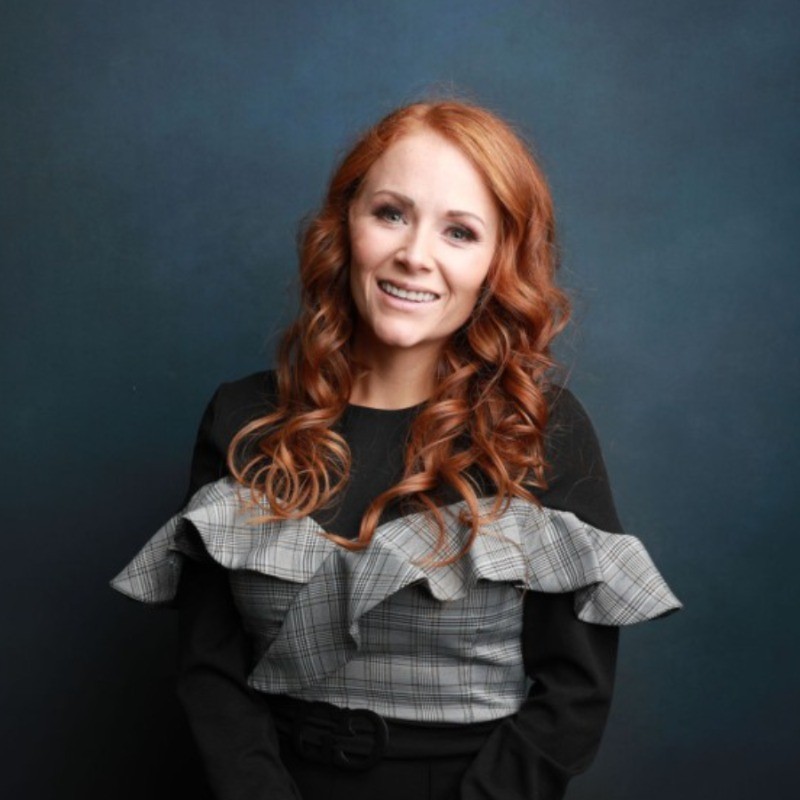
Co-Founder of Story of Self
Nikki is a mother and recovery advocate whose own journey through addiction, motherhood, and healing inspired her to support others facing similar struggles. After overcoming substance use, navigating treatment, and rebuilding family relationships, she now dedicates herself to helping others create positive change and find hope in recovery.