
 YouTube
 Apple Podcasts
 Spotify
 iHeartRadio
 Pandora
 PocketCasts
 Life After Marrying for Bricks of Cocaine, Smoking Meth On My Way to a C-Section & Being Homeless With 2 Toddlers
Kimberley Brooke is 19 years clean from methamphetamine and has spent the last twelve of those years sitting across from people on the worst day of their lives. She got there the long way.
Raised in Amarillo by parents she calls “hippies practicing free love,” Kimberley was molested by an uncle starting at age five and grew up inside what she calls "the land of the great pretenders" — picket fence, two dogs, upper-middle-class home, none of it close to the truth. By middle school she had decided all she had to offer was what was between her legs, and she started running.
At 17 she was waiting tables. At 18 she was driving the getaway car while a friend threw a smaller guy through Toot 'n Totum windows all summer long, the whole crew on acid, the convenience stores eventually putting bars on every window in town. Meth came later.
She married her daughter's father after a quick scan of his garage, used through both her pregnancies, and was smoking on the way to her son's planned C-section — narrowly missing the year Texas began testing newborns.
By her late thirties she was homeless, going hotel to hotel with two small kids in tow. In one moment of clarity she dropped her daughter off with one side of the family and her son with the other, then kept using for two more years.
The arrest that finally caught her in 2006 was the absurd one: a bright yellow shirt fleeing a Walmart shoplifting run in Canyon, Texas, an unlocked back door left open for a dog, a frantic dive under a stranger's bed, and a cop who pulled a shirt out of the closet to make her decent for transport — which is how a shoplifting charge became burglary of habitation.
She did 13 months of a four-year sentence across three Texas prisons, watched women in her dorm act out elaborate make-believe family systems with mommies and daddies and kids in dog-ear ponytails, saw a woman's face slashed open with a razor blade in the shower her first week, and was protected the whole time through one connection.
Her grandfather refused to bail her out and she has thanked him for it ever since. She paroled out December 6, 2007, and never touched meth again. Her sister followed her into recovery a year and a half later after Kimberley stood at a door and refused to let her leave.
Today, Kimberley is an LCDC and Program Manager at Altura Recovery in Houston, where she runs an adolescent SOP for 13- to 17-year-olds and adult IOP groups. She has worked everywhere — a men's prison, a methadone-Suboxone clinic as clinical director for nearly six years, and a luxury women's program that healed her more than any of her own treatment ever did.
She is writing a memoir titled "Fight Bitch," named after the line a man in county jail used to slap her out of her self-pity in November 2006.
KIMBERLEY BROOKE is an LCDC (Licensed Chemical Dependency Counselor) and Program Manager at Altura Recovery in Houston, Texas, where she runs adult IOP groups and an adolescent SOP for 13- to 17-year-olds. She has worked in addiction treatment for nearly twelve years, including roles as a counselor intern inside a Texas men's prison, clinical director of a methadone-Suboxone clinic, and lead counselor at a women's luxury treatment center. She is 19 years clean from methamphetamine and is currently writing a memoir titled "Fight Bitch."
Connect with Kimberley on LinkedIn
Learn more about Altura Recovery at alturarecovery.com
Matt Handy is the founder of Harmony Grove Behavioral Health in Houston, Texas, where their mission is to provide compassionate, evidence-based care for anyone facing addiction, mental health challenges, and co-occurring disorders.
My Last Relapse explores what everyone is thinking but no one is saying about addiction and recovery through conversations with those whose lives have changed.
For anyone disillusioned with traditional recovery and feeling left out, misunderstood, or weighed down by unrealistic expectations, this podcast looks ahead—rejecting the lies and dogma that keep people from imagining life without using.
Got a question for us? Leave us a message or voicemail at mylastrelapse.com
Find us on YouTube @MyLastRelapse
Follow Matt on Instagram @matthew.handy.17
About Harmony Grove Behavioral Health
Harmony Grove delivers outpatient addiction and mental health treatment focused on wellness, creativity, and authentic human connection—providing a supportive space for healing that extends beyond traditional clinical care. Find out more at http://harmonygrovebh.com/
Harmony Grove's IOP in Houston, Texas, is more than a program; it's a lifeline for those ready to take the next step in their recovery. We are ready to meet you where you are and find your unique path to change.
If you're feeling overwhelmed or struggling, you don't have to face it alone. Reaching out for support is a sign of strength, and help is always available. If you or anyone you know needs help, give us a call 24 hours a day at 844-430-3060.
Host: Matthew Handy
Producer: Eva Sheie
Assistant Producers: Mary Ellen Clarkson
Engineering: Chris Mann
Theme music: Survive The Tide, Machina Aeon
Cover Art: DMARK
My Last Relapse is a production of Kind Creative: kindcreative.com
Kimberley (00:00:00):
When he saw me in that grocery store like that, I was homeles. I was just still in some fucking ribeyes to get some dope. I was hopeless. I was helpless. There was no way out. In my mind, there was no way out.
Matt (00:00:18):
I'm Matt Handy and you're listening to My Last Relapse. Okay. Kimberley Brooke, how are you?
Kimberley (00:00:24):
I am well. Thank you for asking. How about yourself?
Matt (00:00:26):
I'm good, thank you. So we met over social media.
Kimberley (00:00:31):
That is correct.
Matt (00:00:31):
Okay. My experience with social media is like, do you remember the top eight? On MySpace, you could choose your top eight and when you changed one, people would get mad at you.
Kimberley (00:00:42):
Oh yeah, yeah,
Matt (00:00:43):
Yeah.
Kimberley (00:00:45):
I think MySpace was popular when I came out of prison.
Matt (00:00:48):
When did you come out of prison?
Kimberley (00:00:50):
2007.
Matt (00:00:52):
So what'd you go to prison for?
Kimberley (00:00:54):
Burglary rehabitation, stolen goods and possession.
Matt (00:00:58):
Okay. How long did you do?
Kimberley (00:01:00):
I did 13 months on a four-year sentence.
Matt (00:01:02):
What? That is amazing.
Kimberley (00:01:05):
Yeah.
Matt (00:01:07):
How does it work in Texas? This is in Texas.
Kimberley (00:01:10):
I'm not sure how it is now. I know that I had lots of misdemeanors prior to. And so I did 13 months on a four year. I came out on three years parole. I made my first parole.
Matt (00:01:24):
Okay. Yeah. My first prison term, it was supposed to be a turnaround. I got a three-year sentence. It was supposed to be a turnaround. And then I ended up doing ... I caught another case two weeks before I was supposed to get out and did another three-year sentence after that.
Kimberley (00:01:43):
Yeah. No, prison scared the shit out of me. That's why I was like, I will never touch methamphetamines again.
Matt (00:01:48):
Really? I'm
Kimberley (00:01:48):
Done. Yeah.
Matt (00:01:50):
So you're like the 1% that it worked as a deterrent?
Kimberley (00:01:53):
For hard drugs, yes.
Matt (00:01:54):
Yeah.
Kimberley (00:01:55):
The whole time I was on parole, I told my family, I told everybody that knew me. I will smoke weed again as soon as I'm finished pissing in a cup for these people.
Matt (00:02:04):
And did you?
Kimberley (00:02:04):
I did not.
Matt (00:02:05):
Okay.
Kimberley (00:02:06):
At the end of the three years, I was like, why the fuck am I going to do that?
Matt (00:02:09):
Yeah. So was it like a recovery journey? Were you now participating in meetings and stuff like that?
Kimberley (00:02:16):
No.
Matt (00:02:16):
Okay.
Kimberley (00:02:18):
I have done this all on my own and I just celebrated 19 years.
Matt (00:02:24):
High five.
Kimberley (00:02:25):
When I went to school to be a counselor though is when I started learning about the steps and I was like, well, that's the fucking shit I do. I mean, it is what I do. I have an accountability, a partner. I have laid all my stuff out. I have made amends. I have done all of those things. I clean my side of the street every day. Those are the things I do to stay clean.
Matt (00:02:46):
Because you work in the treatment industry now.
Kimberley (00:02:48):
I do.
Matt (00:02:48):
Okay. How long have you done that?
Kimberley (00:02:50):
Almost 12 years.
Matt (00:02:52):
Okay. Do you talk about this with clients or do you- About my
Kimberley (00:02:56):
Journey? Absolutely.
Matt (00:02:58):
Okay. How do you- And
Kimberley (00:03:00):
I know that some of that's taboo.
Matt (00:03:03):
I don't have a license.
Kimberley (00:03:04):
Yeah. Well, they tell us that we shouldn't share very much.
Matt (00:03:07):
Yeah. Well, I mean, there's legal parameters and then there's ethical parameters where they're like, "Well, you have this license, you can't do this, this and this. " I don't have any of that. So I tell all my clients exactly what I go through. I have no restrictions on that.
Kimberley (00:03:27):
I don't know that there's a place in my license that says you cannot disclose, but ethically a lot of people say that you shouldn't. For me, it depends. It's all about a feeling. It's energy. I base everything I do off of energy. And if I feel that's a necessity, I'm going to say what I need to say.
Matt (00:03:51):
So I'm a client of the industry. I have no professional claim. I have no formal training. I have no licensure. I have no nothing. I'm a certified peer and family specialist, but I mean, anybody can do that. And there is no rigid, stringent restrictions. I mean, there's hardly any ... There is no oversight. It's like the oversight is organization-based depending on the organization and their policies and procedures.
Kimberley (00:04:20):
And there's been places that I had to be less open.
Matt (00:04:25):
Yeah. But I'm a client of the industry and when it really came down to the most effective treatment or the most effective counselors or most effective therapists or most effective people in the treatment episode, it was the people that I connected with that I identified with that kind of like it's like I get out of a process group and I go talk to the chef because he went through some similar things as me and I know I could talk to him about this stuff. It wasn't the therapist that was leading the group. There was almost a wall up between us because it was like, I don't trust you. I only know you because you teach this clas once a week. There is no alliance that's built. And so I think it's interesting that that is an ethical guideline that they're like, "Yo, you can't disclose." And it's like, "Well, then how do you expect us to connect?"
Kimberley (00:05:14):
But I think ethics is determined by the person, right? I agree. I would definitely agree. I understand that there are black and white things out there that you have to follow, but as far as I'm concerned, I'm here to help somebody and most counselors don't hug their clients either. I do that too. I've been in trouble in a few facilities for doing that. I really don't care.
Matt (00:05:40):
What do you mean trouble?
Kimberley (00:05:42):
Like you're not supposed to.
Matt (00:05:44):
So it's just kind of like a-
Kimberley (00:05:45):
Yeah. You can't do that. You've got to have a boundary. Well, I'm supposed to love somebody. To me, the bottom line is we haven't been seen, we haven't been heard and we haven't felt loved. So why in the hell am I not going to do that? So I just spoke at Lone Star College where I started my counseling classes and one thing I told them is you're going to learn all these theories and I personally think they're all shit. It doesn't matter what theory you use. It's about how you develop a rapport with someone. The relationship, there's study after study after study. It's the relationship that you build that fosters the change.
Matt (00:06:28):
So my executive director, when I first started interacting with him, he started using words like clinical alliance. This isn't something that you learn on the client side.
(00:06:40):
You kind of inherently understand that in order for this relationship to work, there has to be some kind of a mutual understanding around what we're doing. But I didn't understand the clinician's side of it around building that alliance with the client. And one of the things that I, when I started hearing this stuff and I would think back, I would think about certain situations that I had where it was like I had adversarial relationships with my therapist a lot of the time. How are you on the back end, a clinician having conversations with whoever they're reporting to and reporting and nothing ever changed. It was like I'd be there for however long and nothing ever changed. It's like knowing what I know now, how are you going back to whoever you're reporting to and going into these team meetings and going into these clinical oversight meetings and reporting this and not having some kind of course correction?
Kimberley (00:07:36):
It depends on the facility. Like I said, I've been in this a while and I like to call my family the land of the great pretenders. So I was taught very well on how to wear a face that you have to wear in certain realms. And when I have to put that face on because I'm working in a facility that requires it, I do so. Luckily now I don't have to do so.
Matt (00:08:01):
I was about to ask you, do you look for facilities where you don't need to do that now?
Kimberley (00:08:05):
Yes. So the one I'm in now and the one prior to this, I did not have to. I could be authentic.
Matt (00:08:12):
It's crazy to me.
Kimberley (00:08:13):
It is crazy.
Matt (00:08:14):
It really is.
Kimberley (00:08:15):
Was a clinical director of a methadone Suboxone clinic for about five, six years. I was not to tell them that I went to prison.
Matt (00:08:25):
What?
Kimberley (00:08:26):
Yeah, obviously I didn't listen.
Matt (00:08:28):
Okay. Let me ask you, what do you think the harm is?
Kimberley (00:08:31):
That particular program manager said that she didn't feel like people would think they could trust me.
Matt (00:08:41):
She'd never been to prison.
Kimberley (00:08:43):
Correct.
Matt (00:08:43):
Okay.
Kimberley (00:08:44):
Correct. And her master's degree was in theology.
Matt (00:08:48):
Oh, okay.
Kimberley (00:08:49):
And she didn't want the people that I supervised to know because they would look at me differently. Well, I didn't listen. I listened for about the first year and then as part to the course, I am defiant by nature.
Matt (00:09:06):
So how did you get around talking about that? Because obviously it was integral.
Kimberley (00:09:11):
For the first year, it was very difficult. Because how do I not share this? How do I not tell people? I was in your shoes. I've been on the floor like you are right now. I went to prison. I've done all of these things. To me, how am I going to help you to understand that I truly understand? I did not read this in a book. I mean, yeah, I read it in a book, but I truly understand. I've been homeless.
Matt (00:09:38):
I don't get it.
Kimberley (00:09:38):
It blows my mind.
Matt (00:09:39):
Me too. Totally does. Okay. How'd you grow up?
Kimberley (00:09:44):
Meaning?
Matt (00:09:44):
What was your upbringing like?
Kimberley (00:09:46):
So I have two parents in the home. My parents, I've been trying to figure out how to put this out there politely without blowing them up. So we're just going to say I grew up in a home where they were hippies and there was a lot of free love.
Matt (00:10:03):
Okay. All right. Where'd you grow up?
Kimberley (00:10:05):
Amarillo. I was born in Lubbock, raised in Amarillo. So
Matt (00:10:09):
You're a Texan?
Kimberley (00:10:10):
I am a Texan through and through. My dad owned businesses in the irrigation and my mother was a counselor.
Matt (00:10:18):
Really. Okay. So I always find it interesting when people are raised with somebody that is a counselor or a therapist or a psychiatrist or a psychotherapist, something like that. Was your experience around that kind of like, do as I say, not as I do?
Kimberley (00:10:37):
Wow. So my mom always said it's so much easier to clean other people's backyards than it is to clean my own. And I think part of that was because the land of the great pretenders. We grew up in a upper middle class. We had a nice home with a picket fence, two dogs, two kids, the whole nine yards.
Matt (00:11:01):
Yeah. American like apple pie.
Kimberley (00:11:02):
Yeah. Yeah. So looking-
Matt (00:11:04):
And in Texas.
Kimberley (00:11:04):
Looking from the outside, you thought we were the perfect family, but it was far from that.
Matt (00:11:10):
So where are you at in your siblings?
Kimberley (00:11:13):
I'm the oldest.
Matt (00:11:14):
Oh, me too.
Kimberley (00:11:15):
Yeah.
Matt (00:11:16):
I'm the oldest of 10.
Kimberley (00:11:17):
I'm the oldest of two.
Matt (00:11:19):
Okay.
Kimberley (00:11:19):
And my sister ran in the streets with me.
Matt (00:11:21):
Really?
Kimberley (00:11:22):
And she's a year and a half behind me in recovery.
Matt (00:11:24):
Okay. How did she get clean?
Kimberley (00:11:28):
When I came out of prison, we did an intervention.
Matt (00:11:31):
Really. Okay. Have you ever had an intervention done on you?
Kimberley (00:11:35):
No.
Matt (00:11:35):
Okay. So what was interventions like back in the day?
Kimberley (00:11:39):
I mean, I don't know. I mean, we called it an intervention. I don't know that ... We just had her in a room. I stood at the door and wouldn't let her go out and said, either you turn yourself in and handle your legal stuff and get your shit clean or we're all done with you. And surprisingly enough, she was pissed as hell, but she did it.
Matt (00:12:04):
Yeah. It's funny to see the situation that we have today with kids kind of ruling the roost. So the government has the biggest database on outcomes for children. You've probably seen studies around this stuff. But it's funny to see how it has evolved into what it is. You got kids that are going off to college and then coming back and living in parents' basement until they're 40, not getting married, none of that. And then we also have the destruction of the family unit. All of these things where the average person, the average kid is being raised in a single parent household, which I mean, when you talk about outcomes based on statistics, one of the things that I read was that it is better for a child to be raised in a home with both biological parents that are abusive than it is statistically for outcomes than it is to have a single parent.
Kimberley (00:13:01):
Wow.
Matt (00:13:02):
Yeah. Isn't that crazy?
Kimberley (00:13:04):
That's very crazy.
Matt (00:13:05):
Yeah. I mean, these outcome studies have been going for 50 years, 60 years. So they have hundreds of thousands of data sets and points and every individual study is based off huge pool samples. And so they're looking at stuff long-term, short-term, cross-demographic. They're looking at it just like big picture, what is the prime situation to raise kids? And when I read that, I was like, holy ... And the thing is, that isn't normal anymore. Single parent households are pretty normal. And what do they call it? Co-parenting situations are pretty normal.
Kimberley (00:13:48):
Yeah.
Matt (00:13:49):
It's super interesting.
Kimberley (00:13:51):
Neither one of my kids were raised with their dad. I mean, they had relationships on some level, but my daughter is 35. She's also in recovery nine years.
Matt (00:14:05):
35.
Kimberley (00:14:07):
I'm 56.
Matt (00:14:07):
That's crazy. I'm 36.
Kimberley (00:14:11):
Yeah.
Matt (00:14:12):
Wait a minute. When did you go to prison? 37.
Kimberley (00:14:16):
Oh,
Matt (00:14:16):
Yeah. Kind of a late bloomer. Yeah.
Kimberley (00:14:19):
Oh no, I was running the streets doing a lot of crazy stuff. They just never caught me until then.
Matt (00:14:24):
Well, that's what I mean. So you went to prison at 37, first time.
Kimberley (00:14:29):
Yeah, and I was tired.
Matt (00:14:30):
Yeah, for sure. I tell people that my addiction kind of ran to its logical end because I had done a lot of treatment through prison terms. None of that was a deterrent alienation from my family at 19. I didn't say a word to a single one of my siblings or parents for over 10 years, nothing. Then homelessness, all of that stuff, none of that was enough to stop me. And so when it finally ... I got so tired of just doing that and then the being homeless. And then also the last time I got arrested, my max exposure was like 80 something years and the deal was 33 and I was like, you know what? Probably a good time to hang this hat up, put a different one on.
Kimberley (00:15:24):
I really believe if I had gone in my 20s, I would've kept going. I wasn't tired.
Matt (00:15:30):
What did you do before that as far as career?
Kimberley (00:15:34):
Waited tables.
Matt (00:15:35):
Really?
Kimberley (00:15:36):
Yeah. Waited tables, restaurant manager, because you could always get dope in those situations,
Matt (00:15:41):
Right? Oh yeah. Yeah.
Kimberley (00:15:42):
Good connections.
Matt (00:15:44):
So you went to school after prison.
Kimberley (00:15:46):
So I actually cleaned up my act a little bit in the late 90s, early 2000 and I was going to school for occupational therapy and then I ran back into my son's dad and I was going to save him and he took me straight to hell. Dump me off.
Matt (00:16:09):
Later.
Kimberley (00:16:10):
Yeah. Yeah. I went to prison. I never heard from him again until I got out.
Matt (00:16:15):
Okay. My wife and I talk about this all the time. There's an expectation when it comes to relationships that are tied to the streets that the girl waits for the guy and supports him. But if a girl ever goes to prison, just expect it that you'll never hear from me. And that's just how it is.
Kimberley (00:16:34):
That's kind of what happened. Yeah. Yeah. One of those charges was his. But there's no animosity. I mean, he was sick too. He is clean now and he tries to have a relationship with our son. I can't be mad about that.
Matt (00:16:50):
How old's your son?
Kimberley (00:16:51):
22.
Matt (00:16:52):
Okay. So 13 years between them. So 35. What was raising a kid on your own in active addiction like for you?
Kimberley (00:17:03):
It was tough. My sister was in it too. So our kids were raised like brothers and sisters. They played in one room and we did dope in the other.
Matt (00:17:16):
Yeah. Texas is an interesting place to me because I come from California where it's basically legal. For all intents and purposes, it's like legal to do drugs. It isn't legal to sell drugs, but it's legal to do drugs and have drugs on you. And so I think about all the people out here, I would never leave my house. I would never go anywhere.
Kimberley (00:17:42):
I'm so freaking defiant though. I was like, I'm not high. Y'all are stupid, kind of thing. I married my daughter's dad because they had bricks of cocaine in their garage. I was like, yes, I'll marry you.
Matt (00:17:56):
Absolutely. Yeah, of course.
Kimberley (00:17:57):
Of course I'll marry you.
Matt (00:17:58):
Where do I sign?
Kimberley (00:17:59):
Yeah. That lasted a couple years, but-
Matt (00:18:02):
That's pretty good.
Kimberley (00:18:03):
Yeah.
Matt (00:18:04):
A couple of years. I mean, that's a lot of cocaine though. Yeah. Yeah. So what was your drug of choice?
Kimberley (00:18:10):
Meth.
Matt (00:18:11):
Was it? Okay. So your childhood apple pie. And where was it that you started to venture off into your own thing?
Kimberley (00:18:21):
So I believe it all comes back to a family member that took sexual liberties with me at a very early age.
Matt (00:18:29):
How old?
Kimberley (00:18:31):
Five for a few years. And because my parents had the free love thing going on, they didn't really know, or at least I like to believe they didn't know. They say they didn't know. I'm just going to run with that. So I think that they started cleaning up their act when I was probably middle school. And by that time I was so damaged that I just believed that all I had was what's between my legs and so I ran with it.
Matt (00:19:06):
What was the catalyst for them cleaning up their act?
Kimberley (00:19:10):
I can't answer that. I can't answer that for them. I just know that they always kept it separate or at least in their minds. I don't think that they really knew that I saw the things that I saw and I was always very protective of my sister. My sister doesn't remember our childhood at all and I don't know if that's good or bad.
Matt (00:19:35):
You should talk to Dr. Shah. You know who Dr. Shah is, right? I
Kimberley (00:19:37):
Do.
Matt (00:19:38):
Okay. Yeah. Yeah, you do. One of the things that he ... Because we have a live every Tuesday, but we talk every day And we sit, I mean, we have hours and hours of conversation every week. Him and I both have sexual trauma and one of the things that he has kind of put together is that if your first childhood memory is anytime after the age of eight or nine, then there's probably sexual trauma, but there's probably very limited exposure to it because he says the more often it happens, the less your brain has these spikes in cortisol, which allows you to create these memories. But if it's only one or two times spread out, then your brain will just block those memories. So it's interesting.
Kimberley (00:20:25):
Interesting. Very interesting because I believe that on some level that had to have happened.
Matt (00:20:32):
Yeah. I mean, so the person who sexually abused me, I'm the oldest grandchild as well of I think there's probably like 40 of us or something. There's a ton of us. I'm the oldest grandchild. So I was raised in close proximity to my youngest aunts and uncles. And so it was my uncle that molested me and I spoke about it for the first time about two years ago. But when I came back into the family two years ago, that was one of the things that was kind of happening because he had gone on to take his liberties with multiple of my cousins. And so I didn't know that this was going on, that it was a talking point. And then so I relapsed and they confronted me about it like, "Hey, what's going on? " And nobody really knew anything. For years, definitely nobody knew. And it's interesting to look back on the history of how all this happened. I was really raised by a bunch of kids too. My parents were 19 and 21 and they were the oldest of the siblings around.
(00:21:50):
And so it's like all of these patterns that happen over and over. And the scary thing is, to me at least, the scary thing is nobody really knew what was going on with this generation. What do we not know about my generation That moved forward and I hope that it's never anything that was propagated forth, but that's like a scary thing where it's like almost 100% of all people who then go on to abuse children were once abused himself too.
Kimberley (00:22:28):
True.
Matt (00:22:28):
And so it's like-
Kimberley (00:22:31):
In my personal thoughts, you either go one way or the other.
Matt (00:22:34):
Absolutely. Absolutely. It is definitely, there is no middle ground where you're neutral to it. It's either you have that proclivity or you're hypervigilant around it.
Kimberley (00:22:44):
Absolutely.
Matt (00:22:45):
And I think that there are always blessings in every struggle, right?
Kimberley (00:22:54):
Yeah, of course.
Matt (00:22:55):
And so hypervigilance around ultimately, this is what I think is that what we're really talking about around arbitrary ages of consent is what we're doing is protecting innocence of our generations that will then someday control our country. And so when people talk about like, oh, 18 is just a number or 16. In some states, I think the youngest is like 14 in the United States. Anyway, but what we're really trying to do is protect the innocence of our children so that they can be well adjusted. And it's amazing to me how much damage that potentially could have on a person. This is a very normal thing for adults to do. All you got to do is rewind time 10 years and the same thing with the same person and it'll fuck them up for the rest of their life. It's really crazy to me.
Kimberley (00:23:52):
Yeah. It was my uncle as well. And when I finally decided to say, because I had nightmares for years And when I finally decided to say something, I was in my 30s.
Matt (00:24:06):
Who'd you say it to?
Kimberley (00:24:07):
I said it to the whole family except my granddad who was my everything and he was also my major enabler. But I did not say anything to him and my uncle found out that I was saying this and he killed himself because he didn't want my granddad to know he had done that.
Matt (00:24:27):
Yeah. It's a fucking problem.
Kimberley (00:24:28):
It's a fucking problem. But it did a number on me and I can look back at all my relationships and understand why, but I'm not mad about it. People say, "Well, how do you forgive him?" Well, how do you not?
Matt (00:24:46):
Yeah.
Kimberley (00:24:47):
But for me, because at the end of the day, it's all about me anyways. For me, how can I not? Because I'm not going to carry that with me. And not only that, I know the household he grew up in. My grandmother was pretty twisted and she was his least favorite.
Matt (00:25:06):
She was his least favorite and was it the other way around? Yeah. He was her least favorite.
Kimberley (00:25:10):
Yeah. They hated each other.
Matt (00:25:13):
Yeah. Water and oil.
Kimberley (00:25:14):
Yeah. My dad was the favorite.
Matt (00:25:17):
Really? Where did he fall in that sibling?
Kimberley (00:25:19):
Oldest.
Matt (00:25:21):
Okay. Where'd your uncle fall?
Kimberley (00:25:24):
He was second.
Matt (00:25:26):
Okay. That first and second dynamic is so funny to me because my mom's favorite is the second and then there was me who was the least favorite. But I have a weird family dynamic anyway because my biological parents are no longer married. The guy that raised me is my dad, but my biological father and my dad are best friends to this day and they've stayed best friends to the point where all of my siblings called my biological dad their uncle their entire lives. Yeah.
Kimberley (00:25:59):
My daughter's dad, this is his fourth marriage, but wife two and three, I was one. Wife two and three, their kids call me Aunt Kimmy. That's how close we've all ... We wanted to make sure our kids were close.
Matt (00:26:13):
Yeah. They're siblings.
Kimberley (00:26:14):
Yeah, they're siblings. So I'm their aunt Kimmy.
Matt (00:26:17):
So what's Amarillo like?
Kimberley (00:26:20):
You got to do dope. There's nothing else going on over there.
Matt (00:26:23):
Really? How big is it?
Kimberley (00:26:26):
Well, I thought it was a city growing up and then I moved here and I was like, oh yeah, no. So that wasn't a city. I think like around 350,000.
Matt (00:26:34):
Okay. It's decently something.
Kimberley (00:26:36):
Yeah. It's a city for up there. All that's up there is like you blink and drive through.
Matt (00:26:42):
Yeah. So it was the culture?
Kimberley (00:26:45):
Very conservative.
Matt (00:26:48):
Okay. That's Crazy.
Kimberley (00:26:49):
They don't have a problem up there.
Matt (00:26:52):
Really?
Kimberley (00:26:52):
Yeah. I think there's one treatment facility there.
Matt (00:26:56):
Really? Really? Okay.
Kimberley (00:26:58):
Crazy.
Matt (00:26:59):
Yeah.
Kimberley (00:27:00):
Crazy because they got a huge problem.
Matt (00:27:02):
Do they?
Kimberley (00:27:02):
Yeah.
Matt (00:27:03):
Okay.
Kimberley (00:27:04):
Yeah.
Matt (00:27:06):
So I live in Friendswood.
Kimberley (00:27:07):
Okay.
Matt (00:27:09):
And one of the things that has always been weird to me is if there's gatherings of more of than 10 people or something, there's cops there everywhere here. And anyway, my family is kind of made friends with some of the cops or whoever. And when they ask about like, "Well, what are the problems that are here?" And it's like, yeah, meth. Meth is the problem. It's like here?
Kimberley (00:27:39):
Yeah.
Matt (00:27:40):
What?
Kimberley (00:27:40):
Yeah.
Matt (00:27:41):
Yeah, it's crazy.
Kimberley (00:27:42):
What's crazy is when I got out and I was living up by Lake Conroe when I was going to Sam Houston and we were at the Walmart over there in Montgomery and I told my daughter, I was like, "Oh my God, look how high those people are. " And my daughter turned around and looked at me and she goes, "Mom, you used to look just like that. " And I was like, "There's no way I look like that. " She was like, "Yeah, probably even worse." And I was like, "Oh my God."
Matt (00:28:07):
Yeah. Yeah. So where I come from, they're everywhere. I mean, everybody knows and it's like this dude's trying to lick his ear. The other girl's like, "It's just crazy." And they're doing the etherbase shuffle and crazy everywhere. And I don't really see that here. I don't really see homeless people either. I know there's a couple that are under this bridge all the time, but I'm like, dude, a city this big and there's no homeless people.
Kimberley (00:28:35):
There's a lot of homeless people.
Matt (00:28:36):
I know there are, but you don't see them.
Kimberley (00:28:39):
I've been here since December of 07 when I paroled out and I've always lived up in Cypress, the Woodlands, Montgomery. I started working down in Bel Air and yeah, there's homeless everywhere because I didn't know that either until I started working down there. I was like, oh. Yeah.
Matt (00:28:59):
Bel Air is close to, what is that street? What's that street that used to be the host role?
Kimberley (00:29:07):
I don't know. I just started working down there in August.
Matt (00:29:11):
Oh, you're talking about just recently. Yeah. So all that time you didn't realize. Yeah. No.
Kimberley (00:29:15):
And my daughter even said she came to visit us last weekend and she was like, "I'm so proud of you, mom. Now you're going down into Houston and stuff." Because I was like, "Absolutely not. I'm not going down there."
Matt (00:29:25):
Yeah. Houston is crazy.
Kimberley (00:29:27):
Yeah.
Matt (00:29:27):
Houston is really crazy. I watched when I moved here, I just moved here, it'll be two years in January. So two years in January, I used to watch the news religiously in San Diego. I'd wake up in the morning, put the news on here and I'd be like, "Holy shit. Dude, there's people getting killed every day." It's like once a month a new teacher is sleeping with their students and it's all female teachers here. I was like, "This place is crazy." And after a couple months, I was like, I ain't doing this anymore.
Kimberley (00:30:01):
Yeah. No, I don't watch the news anymore.
Matt (00:30:03):
Yeah. Houston is crazy. It
Kimberley (00:30:04):
Is crazy.
Matt (00:30:05):
I didn't realize how crazy it was. The gang situation here is crazy too, because it isn't structured gangs where I come from. It's literally like the wild west here.
Kimberley (00:30:16):
Yeah.
Matt (00:30:17):
They're just doing it to do it almost.
Kimberley (00:30:18):
Well, a couple of weeks ago I was leaving work and my sensor on my tire said low. So I was going to pull up at a gas station to put air in it. And this woman comes running out. It's an African American woman. She has no shoes on. These bandages wrap all around her legs. Her arms are flailing. She's screaming and hollering. This N word just punched me in the face and she's acting all crazy and stuff. I jumped in my car and took off like a bat out of hell. And I told my sister, "That is crazy because I used to be so tough. I'd have been all up on that like, what? " But no, I was scared out of my mind. I jumped in my car, jumped on the highway. I didn't even care if I had a blowout. I was like, "Just get me the hell out of here. Get me back to the Woodlands."
Matt (00:31:00):
Yeah. You always see those. Do you watch YouTube or what social media do you have? You contacted me on ...
Kimberley (00:31:07):
Facebook.
Matt (00:31:08):
Okay. Okay. Not so much on Facebook. On Instagram, which is a crazy app, but unfortunately I started the doom scrolling too, but scroll. It's always these gas stations where the craziest shit is going down.
Kimberley (00:31:25):
No, this woman looked completely out of her mind. I know she was high, pretty sure she had some mental health there too. And I was like, "Nope, not getting involved in this. Let me jump in my vehicle and get the hell out of here."
Matt (00:31:37):
Yeah. So waiting tables. When did that start?
Kimberley (00:31:45):
I started waiting tables at 17.
Matt (00:31:47):
Okay. Until 37?
Kimberley (00:31:51):
No. I mean, I was waiting tables, restaurant manager, all of those things.
Matt (00:31:58):
But working in that industry. I know you have some crazy restaurant stories. You have to.
Kimberley (00:32:06):
Yeah. I don't know. I mean, people are crazy no matter where you work.
Matt (00:32:11):
That's true.
Kimberley (00:32:12):
I know the first time I worked at a Mexican restaurant and I was learning, I use this analogy when I do groups too, is when I'm talking about balance. I had a whole tray full of margaritas and I didn't understand balance at that point and I took one off and the whole tray fell on a baby and everybody was looking at me. I was like, I was completely mortified.
Matt (00:32:34):
Oh yeah.
Kimberley (00:32:34):
Yeah. I was completely mortified.
Matt (00:32:39):
I went to culinary school and I loved cooking.
Kimberley (00:32:44):
I love to cook.
Matt (00:32:46):
And then I went to culinary school and I hate it now. Yeah. And one thing that I learned was that everybody that cooks in a restaurant, everybody that cooks and then by extension, basically everybody that works in a restaurant, it is a breeding ground for alcoholism and drug addiction.
Kimberley (00:33:04):
Oh, absolutely. That's why I stayed there.
Matt (00:33:06):
Yeah.
Kimberley (00:33:06):
Yeah. That's why I stayed. Yeah. And then when I came out from prison, that's what I knew. So that's what I went back to.
Matt (00:33:15):
So what was prison like for you?
Kimberley (00:33:17):
Hell.
Matt (00:33:17):
Really?
Kimberley (00:33:18):
Hell. My very first week there, and I still have nightmares to this day. My very first week there, I was in the shower washing my hair. These two big women with razor blades walked in and said, "If you know what's good for you, you'll get the hell out of here." And clearly I'm not stupid. I leave soap in my hair and this beautiful little white girl, little blonde white girl comes running out with her face hanging off. Blood everywhere. It was horrible. That was my first ... Yeah. The very first day I got there, I was like, "It's hot in here. Do they not have air conditioning?" And they were laughing at me. They were like, "No." I was like, "I don't belong here." They were like, "Yes, you do.
Matt (00:34:05):
Yeah.
Kimberley (00:34:05):
Yeah, you do.
Matt (00:34:06):
Yeah.
Kimberley (00:34:08):
But there was a lot of ... It was bad. It was bad.
Matt (00:34:13):
So 13 months on a four-year sentence. So 13 months. Is there levels of prison here?
Kimberley (00:34:24):
So in classification in Woodman, so I got classified as low risk. And so I was quickly sent to a trustee camp where I worked-
Matt (00:34:35):
Yeah, this is what I'm asking.
Kimberley (00:34:36):
Yeah. Where I worked as a trustee down in Texas City for the hospital. I was an SSI janitor.
Matt (00:34:45):
What hospital?
Kimberley (00:34:45):
I don't even remember the name of it, but it's down in Texas City. I try to block some of that shit out.
Matt (00:34:50):
Wait, is it like a prison hospital. Oh, okay.
Kimberley (00:34:53):
Yeah, it's a prison hospital.
Matt (00:34:54):
Okay.
Kimberley (00:34:54):
Yeah. It's all prisoners that are there.
Matt (00:34:56):
So you lived at the hospital?
Kimberley (00:35:00):
Our metal building was across the street and they had me down there in Houston's hottest time of the year. So I was there May, June, July, August, and it was hot as fuck in that building.
Matt (00:35:17):
Metal building.
Kimberley (00:35:17):
Yeah. And you had to cross the street for everything. You had to cross the street for commissary, you had to cross the street to get your clothes, you had to cross the street to go to work. Well, you have to strip and they have these railroad cars that you go in and there's like 20 stinky women in there and that smell can be pretty bad at that time of year especially. And we're all having to strip all the way down and bend over and cough and all the whole nine yards. And so I didn't go across unless I had to.
Matt (00:35:47):
Yeah. When you say cross the street, are you talking about leave the prison and go into the hospital?
Kimberley (00:35:53):
So the hospital was behind certain fence, barbed wire fence and we were behind a certain barbed wire fence. So yeah, we crossed the street, but I mean there was guards and it's not like we just ran across the street or anything.
(00:36:09):
Yeah.
Matt (00:36:09):
Yeah. There are fire camps in the California prison system where it's exactly what it sounds like. It's a fire camp and there are no gates. It's obviously like it would be the equivalent of an honor dorm situation. Very low level. And I mean, some of the stories that I hear out of there, I always went to ... The lowest level that I went to was a high ... Fuck, I can't even remember what it's called now. It was a medium level two. And so it was an A2B. So we had night yard, but it was still like the whole razor ... I was at Chino.
Kimberley (00:36:56):
Yeah. Yeah. Yeah. Okay.
Matt (00:36:59):
Yeah. But 114 all summer long, there was chicken farms and pig farms right there.
Kimberley (00:37:09):
Yay.
Matt (00:37:10):
Dude, it smelled so bad. It was so bad. Crazy.
Kimberley (00:37:16):
And so for air conditioning, I would be fully clothed, go take a very cold shower and then go lay on my bunk and turn my fan on. That was my air conditioning. Yeah.
Matt (00:37:27):
Yeah. So we didn't have the humidity. It was really dry.
Kimberley (00:37:31):
I'd much rather have the dry heat.
Matt (00:37:33):
Oh yeah. Oh yeah, all day. But so people would put, they would get their sheets wet and then pin it on the wall against the window because our windows could open in the dorm and it would be dry in like two minutes. But it was so hot. It was like 114. I think he got up to like 117. I got transferred to a different prison and I think he got up to like 120. It was fucking hot.
Kimberley (00:38:00):
It's fucking hot in those buildings. In those metal buildings, yeah. Yeah.
Matt (00:38:05):
Ridiculous. Did they have the swamp coolers?
Kimberley (00:38:07):
Yes.
Matt (00:38:07):
Oh dude, those are the worst because now everything is just damp.
Kimberley (00:38:11):
Yeah.
Matt (00:38:11):
Yeah.
Kimberley (00:38:12):
Fuck. Yeah. And then they had fans. I'm only five feet tall. They had fans as taller, taller than I am,
Matt (00:38:18):
Big round fans. Super loud.
Kimberley (00:38:19):
Yeah, super loud. So that they could block out all the crazy shit that was really going on.
Matt (00:38:25):
Yeah. Yeah. What was going on?
Kimberley (00:38:30):
Man, lots of prison rape with broomsticks and stuff.
Matt (00:38:40):
What? Okay. So women's prison. I've only been to men's prisons. Oh
Kimberley (00:38:46):
No, they do that in women's prison too.
Matt (00:38:48):
No, they don't do it in men's prisons. All of these glorified movies and stuff, are they talking about that? I know
Kimberley (00:38:55):
Some men in prison that have had some experiences. Okay.
Matt (00:38:59):
Maybe in Texas. But in California, it's not going down.
Kimberley (00:39:03):
Yeah.
Matt (00:39:05):
It's also very segregated.
Kimberley (00:39:07):
Well, and it also depends on connection, what kind of connections you have.
Matt (00:39:13):
Yeah. So okay, that's going on. Were there substances?
Kimberley (00:39:17):
Oh, absolutely. And I wasn't touching any of that shit. I wanted the hell out of there ASA.
Matt (00:39:24):
How were the guards?
Kimberley (00:39:27):
Hateful.
Matt (00:39:28):
Really? I guess it's hot. Everybody's hot.
Kimberley (00:39:32):
I don't know. You still don't have to be hateful.
Matt (00:39:35):
It's hot.
Kimberley (00:39:38):
Well, I mean, yes, but still the whole system is meant to break you. It's meant to break you. It's meant to mentally break you.
Matt (00:39:48):
Like the Texas system. Okay. Yeah.
Kimberley (00:39:54):
It's meant to mentally break you, period.
Matt (00:39:56):
Yeah. Were you in cells or in a dorm?
Kimberley (00:40:00):
Dorm.
Matt (00:40:01):
Yeah, that for sure will break anybody. But yeah, women's prisons always sound so crazy to me.
Kimberley (00:40:09):
I'm telling you the craziest shit goes on there. So when I first get there too, I'm protected by a certain group of people because I knew somebody that was very high up in a certain gang.
Matt (00:40:24):
Organization. Yeah.
Kimberley (00:40:25):
Organization there. So he made sure that they knew and they protected me. I never had to worry anywhere I went, never had to fight, never had to worry. They took care of me. That was that. I was very blessed. But they have family systems in there and it's the craziest shit. I'm like, "What? This person's the mom. This person's the dad. These are their kids." For real. The kids even had little ponytail, like dog ear ponytail. They acted like the kids. I mean, it was a full on family system.
Matt (00:41:03):
It sounds like a mental institution.
Kimberley (00:41:05):
It was. I was like, "What the fuck is going on here?" You could sit on your bunk and watch this shit and it blew my mind. I had no idea people could get-
Matt (00:41:16):
Okay. Well, that's definitely not going down in the prisons that I was in.
Kimberley (00:41:21):
I don't see that happening in men's prisons, but psychologically speaking-
Matt (00:41:25):
It makes sense.
Kimberley (00:41:26):
Yeah, absolutely. Absolutely. And it was weird because then my mother was kind enough to travel no matter where I was in the state and she would come see me every couple of weeks. My dad, every month he would come see me. So I was very blessed in that way. But I would go to visitation and these people that I just saw doing this over here with their families, I'm like-
Matt (00:41:49):
Like normal?
Kimberley (00:41:50):
Yeah. Weird as shit.
Matt (00:41:53):
Yeah. And then they cross the gate and it's right back into it.
(00:41:57):
Yeah. Crazy shit.
Kimberley (00:41:58):
I'm telling you crazy shit.
Matt (00:42:01):
Yeah. Family units. Was it like a bunch of them?
Kimberley (00:42:07):
A bunch of family units. Mamas and daddies and kids.
Matt (00:42:12):
That sounds so crazy.
Kimberley (00:42:13):
It was fucking crazy.
Matt (00:42:15):
Yeah. Okay. So you were protected.
Kimberley (00:42:17):
I was.
Matt (00:42:18):
So that's good. That's always nice to be connected like that. And you're watching all this stuff go. So you never transferred levels. It was always that same level?
Kimberley (00:42:29):
Yeah.
Matt (00:42:30):
How many prisons were you in?
Kimberley (00:42:31):
Three.
Matt (00:42:32):
Okay. And were they work dorms? They were all work assignment type stuff. So you did one, was that a hospital?
Kimberley (00:42:41):
Yeah, and I was a janitor. They called it SSI at the time. I don't know what they call it now. And then I worked as an electrician in one. I learned how to change the ballast and all of that stuff. Yeah. And then the other one, I was laundry.
Matt (00:42:59):
Dude, laundry sucks.
Kimberley (00:43:00):
Laundry sucked. Laundry sucked. I'd rather clean the bathroom in the hospital than do the laundry.
Matt (00:43:09):
Yeah. Laundry's such a crazy ... And no matter what prison you're in, it always sucks. Yeah. Okay. Did you have those big drum washers? Yes.
Kimberley (00:43:20):
Yes.
Matt (00:43:21):
Those are so crazy. And then the big dryer that's open? Yeah. This is so crazy. It
Kimberley (00:43:26):
Is crazy.
Matt (00:43:28):
So I always wondered how likely is it that someone dies if they get stuck in that dryer?
Kimberley (00:43:34):
I'd say probably pretty likely.
Matt (00:43:38):
Yeah. But it's like, I wonder how many, because it had to have happened.
Kimberley (00:43:41):
Oh, I'm sure it had to.
Matt (00:43:42):
'm sure it's happened.
Kimberley (00:43:43):
There's no way it hasn't happened.
Matt (00:43:44):
Yeah.
Kimberley (00:43:45):
There's no way it hasn't
Matt (00:43:46):
Happened. Did your dryers have the hooks that-
Kimberley (00:43:51):
I was the lucky person that folded.
Matt (00:43:53):
Okay. Dude, how dirty was the clothes going in there?
Kimberley (00:43:58):
Yeah, pretty disgusting.
Matt (00:43:59):
Okay. So I will say this. Men are pretty clean in prison.
Kimberley (00:44:05):
I believe that because I worked in a men's prison when I ... They were the only ones that would hire me with my prison record in the beginning of my career.
Matt (00:44:12):
What'd you do?
Kimberley (00:44:13):
I worked in a safe pee as a counselor. That's where I did my internship.
Matt (00:44:18):
Okay.
Kimberley (00:44:19):
Yeah.
Matt (00:44:20):
Okay. The
Kimberley (00:44:22):
Men's prison was much cleaner than the women's. Women
(00:44:26):
are nasty.
Matt (00:44:27):
Yeah, I know. I know. It blows my mind.
Kimberley (00:44:32):
Yeah, me too.
Matt (00:44:33):
Bless the fairer sex. Yeah.
Kimberley (00:44:36):
I'm just like, what? Where am I?
Matt (00:44:38):
Yeah. So families, laundry. How long are you in the laundry?
Kimberley (00:44:43):
I was only there a couple of months and then they moved me. I have no idea. If I'm only doing 13 months, why are you moving me all over the state all the time?
Matt (00:44:50):
Oh, it's because they get paid for transfers.
Kimberley (00:44:53):
I get it and I get that the prison system is a money making thing. But I mean, my nephew's in prison right now, so I was the first one in the whole family to ever do that. And my nephew's on his second round there. I don't get it. But yeah, they have tablets now. I'm like, dude, you're just living it up over there because I had to have snail mail. We got one phone call every three months for five minutes. I mean, I never went and stood in that line.
Matt (00:45:25):
What year was this?
Kimberley (00:45:28):
2006.
Matt (00:45:29):
We were almost in the prison at the same time. Yeah. I went in 2008.
Kimberley (00:45:35):
I got 2006 and all of 2007, I got out December and they lost my paperwork. I was supposed to be out before Thanksgiving in November. They lost my paperwork.
Matt (00:45:46):
So when did you get out?
Kimberley (00:45:47):
December 6th of 2007.
Matt (00:45:49):
Oh, my God. Yeah.
Kimberley (00:45:50):
So three weeks later, I had already given away all my commissary. I was ready to go and they were like, "You're not going anywhere." I was like, "What do you mean?" Yeah. And they don't tell you shit, so you just sit there.
Matt (00:46:01):
So what was the process like to get your shit back? You just didn't, right?
Kimberley (00:46:04):
I just didn't. I didn't.
Matt (00:46:06):
You can't just take it back.
Kimberley (00:46:08):
Well, and gratitude again. I was protected, so they took care of me.
Matt (00:46:17):
Women are crazy. Yeah. I have a friend. I have a couple friends. I have one that's doing another 40 years. I have another friend. He got caught with an ATM machine in his garage and I was like, "What?" Yeah.
Kimberley (00:46:33):
That's funny.
Matt (00:46:35):
It was funny too, because he got raided on something completely different and they found the ATM machine.
Kimberley (00:46:41):
What are you doing?
Matt (00:46:43):
Yeah.
Kimberley (00:46:43):
Get rid of the evidence.
Matt (00:46:44):
Yeah. Yeah. It was like, what was that show? Was it Breaking Bad where they had the ATM machine? Did you watch Breaking Bad?
Kimberley (00:46:52):
I did not. People keep telling me I should, but I didn't.
Matt (00:46:55):
I don't remember what show it was, but there was an ATM machine situation in one of them. It was all right. I was using when I saw it, so it was great, but now I don't think I'd be able to watch it. But Better Call Saul is even better, I think. And it's the lawyer. It's the lawyer.
Kimberley (00:47:14):
And I've heard that one was better.
Matt (00:47:16):
Yeah, it's better. Do you watch shows?
Kimberley (00:47:19):
I'll binge.
Matt (00:47:20):
Me too. Me too.
Kimberley (00:47:22):
I'm an addict to the core. If there's 15 seasons, I'll have it done in a week or two.
Matt (00:47:27):
Yeah. I don't like to watch-
Kimberley (00:47:30):
That's why I don't like starting them.
Matt (00:47:32):
Yeah. I don't like to watch them as they come out, wait a week for a new episode. So I'll wait till everything's done and then I'll watch it in a week.
Kimberley (00:47:39):
Yeah. No, I do that too.
Matt (00:47:41):
Yeah. Better Call Saul is a good one. I'll
Kimberley (00:47:43):
Have to-
Matt (00:47:43):
You know what else is a really good one is Ozark.
Kimberley (00:47:46):
I watched that. I watched the whole thing.
Matt (00:47:48):
Okay. Better Call Saul is of that caliber, maybe a little bit higher.
Kimberley (00:47:52):
Okay. Okay. Yeah, I liked Ozark.
Matt (00:47:54):
Okay. So Ozark, the depiction of Wendy's brother with his mental health issue, how crazy, how accurate. I feel like they got that. Obviously there's some crazy shit going on around it.
Kimberley (00:48:07):
Of course.
Matt (00:48:08):
So that wasn't the everyday situation, but just the med compliance and then the spiral and I think they got that super spot on.
Kimberley (00:48:19):
It was extremely accurate.
Matt (00:48:20):
Yeah. Did it make you feel like any type of way?
Kimberley (00:48:27):
It makes me feel like, why are we not paying attention to this? It hurts my heart that there's so much stigma around it because it's no different than somebody with diabetes or high cholesterol. It's no different. And it really pisses me off that there's such a stigma around it, kind of like substance use.
Matt (00:48:51):
Yeah. Okay. So the substance use stigma, it hurts more than it does more harm than good for sure. Also though, knowing me and knowing what I ... I feel like in a lot of ways we do that to ourself, but the mental health stigma, that blows my mind. Another thing that blows my mind around this is the level of misdiagnosis that goes on and then the worsening in the symptoms because the medications that you put them on are completely inappropriate. So now you're making this person worse.
Kimberley (00:49:30):
I'll speak on this a little. My son is 22. He's good now, but he did not come back to live with me. So at two years old, I took him to my sister-in-law and said, "We're homeless. He's living motel to motel. We can't quit smoking dope. Will you take him?" So she did. And he did not come back to live with me until he was 10. And that was by his choice. Everybody kept saying, "Oh, you're out of prison. You're clean. Go get your kid." I don't think that's right. For me, that wasn't okay for me to walk in and go, "Okay, I'm clean now. Time to come home." He was in a family that loved him and took care of him. Who am I to walk in? I put you in that place. But at 10 years old, he knew I was his mom. We had built a good relationship. He wanted to come live with me, so he did. At 12 years old, he started trying to commit suicide.
(00:50:23):
Repeatedly, Repeatedly. As a brand new intern working in the prison, within one week I was calling CPS on my daughter because she was in her active addiction and I didn't know where my two granddaughters were and my son was trying to commit suicide and I was putting him in a mental hospital. He went into several hospitals between 12 and 16. The last time he got out was he was 17. I put him in a three-month place in Austin. So my take on mental health, I think they threw a bunch of fucking medication at him and said, "Let's see which one sticks." And I think it made him worse. And like I said, he has no medication now. He's got a great job, same girlfriend for five years. I tell him all the time, I don't know where he came from because he makes such good choices.
Matt (00:51:21):
Don't know if you're willing to talk about this, but what was the cause of it?
Kimberley (00:51:27):
I can take responsibility, but the reality is I don't think we'll ever really know. I do believe I probably played a role I used the entire time I was pregnant with him. I couldn't stop. Before I came on and did this, I've talked to both my kids and I said, "You understand that if I'm saying some of this stuff it affects y'all. How do you feel about it? " And they were both completely supportive.
Matt (00:51:57):
Okay. Yeah. I do think that obviously protecting other people around our stories is massively important.
Kimberley (00:52:06):
Absolutely.
Matt (00:52:07):
I do think that people hide behind that also. And so in a situation like this around your son and your part in the story and all that stuff, it's always interesting to me to hear outcomes around this stuff because this isn't a normal situation where he came out on the other side okay. I think a lot of people, they end up getting the stigma and they end up getting put in boxes and then a lot of the time what ends up happening is that is the box that they stay in and it's almost like they're self, what is the word? They're resigning themself into this, right?
Kimberley (00:52:55):
My son's motto is, "I am not going to be like y'all. I am not going to have a comeback story. Everybody in the family has a comeback story. I want to teach my nieces. You don't have to have a comeback story. You can do it right the first time." And that's his thing.
Matt (00:53:13):
That's awesome. The medication thing is so crazy to me.
Kimberley (00:53:18):
They had him on, I don't know, probably 11 different medications.
Matt (00:53:23):
All at the same time?
Kimberley (00:53:24):
All at the same time.
Matt (00:53:25):
And then just rotating
Kimberley (00:53:26):
One out and went back in. All these different medications, three different times a day, all this stuff. And then it had this cloud around him at school. So they put him in special classes and would never let him out because of his behaviors. So I believe these medications also made him more aggressive. He bowed up to me one time and one time only because mom lived in the streets. I took him down and he was like, "What the fuck? Laying on the crowd." I said, "Yeah, don't do that shit to me. " But I think it made him more aggressive and there was just so much. Yeah, he went through a lot as a kid. Yeah, I used when he was a kid, but I don't think that all those medications were going to do the job.
Matt (00:54:16):
Yeah. What do you think obviously work, there was a lot of work involved. Well, what do you think helped bring him out of that?
Kimberley (00:54:27):
I'm very strong and I believe that he got that from me. I was also a counselor, so I'm all about the positive affirmations and he thought they were stupid at the time, but I would put them in different colors like blue is something physically and then pink is something mentally just positive affirmations and different things. So that way, because in my mind, every time he saw blue physically he would think something positive of himself.
Matt (00:54:58):
It's like associating.
Kimberley (00:55:00):
Yeah. And so I did that with him for years and he'd get pissed off and he'd pull them down and I'd put a new one up and I did that for years, but I truly believe that that helped him.
Matt (00:55:14):
Yeah. So the medication part, especially around SUD, it really blows my mind, the average people leaving with five prescriptions. When you're coming off drugs and alcohol acutely over the next two weeks, if I quit today and I'm sliming heroin or smoking meth or whatever, I'm going to be anxious and I'm going to be depressed.
Kimberley (00:55:34):
Absolutely.
Matt (00:55:35):
And so why are we diagnosing people off the bat?
Kimberley (00:55:41):
Shouldn't be.
Matt (00:55:42):
I don't think so either. Dr. Shah doesn't think so. Dr. Shah is like, "Take them fucking off." It's like we're making this shit worse.
Kimberley (00:55:52):
Agreed. Because you don't really know. I mean, those drugs do all these things to us mentally, physically, whatever. And until we're completely away from that, you can't diagnose something. It makes no sense. Makes no sense.
Matt (00:56:11):
The way that they use diagnose is very loose anyway. It's crazy because it's like you diagnose me off an hour assessment, right 24 hours after I used the last time.
Kimberley (00:56:26):
Exactly.
Matt (00:56:27):
It's like if you talk to me in three days, I'm going to get a different diagnosis. And if you talk to me a week later, it'll be a totally different diagnosis.
Kimberley (00:56:34):
Talk to me later this afternoon. I bet I'm a different person.
Matt (00:56:38):
Yeah. Yeah. So I don't know how we fix that part. I think it's just like a systemic norm that has ... I don't know why.
Kimberley (00:56:46):
Think a part of the problem with all of this stuff and like regulations and treatment centers and all of that kind of stuff is it's people sitting up there saying what we need to be doing that have no clue because they've never walked in these shoes. They've never been on the side of being a therapist or somebody that works in treatment and they've never been on the side of being in treatment. They don't have a clue. They're just sitting up there going, "Okay, well this sounds good. This sounds good." And I mentor a lot of counselors as well and to me doesn't matter what I put on that treatment plan, I'm doing it because the state says I have to do it. I do it how they say I have to do it. That's not what's going to make the person find their way. It's just not.
Matt (00:57:34):
What do you think is?
Kimberley (00:57:36):
Love and understanding.
Matt (00:57:38):
Okay.
Kimberley (00:57:39):
Love and understanding. We want to be seen and heard. Everybody wants to be seen and heard. And when you can sit in a room with somebody with absolutely no judgment, not too long ago I had a African American woman come in to do an assessment with me and she walked in, she looked right at me, she goes, "I hate white people. " I said, "Okay."
Matt (00:57:59):
You're like, "Okay.
Kimberley (00:58:00):
I get it. You have a right to feel how you feel." She probably wanted some kind of reaction or I'm just not that person. She sat down. She was there for almost three hours doing the assessment. By the end of that, she was like my best friend. She was like, "I've never met anybody like this. " And I said, "Because it's not about the color of our skin. It has nothing to do with that. It's whether or not you're truly seen and heard and felt like I'm paying attention to you and that's what you felt in this room." And she graduated the program and she still comes for aftercare because she just wants to.
Matt (00:58:38):
Yeah. It's amazing the things that make a difference. The things that made me turn the corner actually the best treatment that I ever accessed was state funded treatment. There wasn't some resort style treatment that I was going to go to that was going to make a difference. It was work therapy, Bible in the evening, work all day, all that kind of stuff where it was also really long term, which do you know ... Fuck, what is that group called? They do all the addiction studies. You know who William White is?
Kimberley (00:59:18):
Yes.
Matt (00:59:19):
Okay. It's his group.
Kimberley (00:59:20):
Yeah. And I don't remember the name of it.
Matt (00:59:22):
Do you know what I'm talking about?
Kimberley (00:59:23):
I do.
Matt (00:59:23):
Okay.
Kimberley (00:59:23):
I do.
Matt (00:59:24):
So one of the things that they've done or they, the proverbial they, right?
Kimberley (00:59:32):
Those people.
Matt (00:59:33):
Yeah, them. So back in the day, the language around it was outcomes and efficacy are connected to exposure to treatment. And now the language has moved from exposure to length of stay where length of stay is 100% dictated by something very arbitrary. Actually, it's not even arbitrary. It's money.
Kimberley (00:59:59):
It is.
Matt (00:59:59):
Right? Right. But the people who are setting that pace, like you said, they're up in their ivory tower somewhere. We don't even know who they are. But what they used to say and what that group says is that you guys are muddying the water with the language that you're using because it isn't the length of stay, it's the exposure to the treatment, which doesn't mean residential. It's residential, PHP, IOP, OP, SOP. It is the episode. And so when I look at the most effective treatment that I was a part of, it was long term. The last time that I was in treatment was three years. That's what I needed. And it wasn't that they had this stellar clinical team or it was free treatment.
Kimberley (01:00:49):
But I think too is what we don't seem to understand is I spent 21 years in the streets in my addiction. Of course. I spent 13, 14 years being sick and twisted in a bad environment and bad things happening to me and not understand. So all those years and then you expect me to go to treatment for 28 to 30 days and be good to go?
Matt (01:01:14):
Yeah, it ain't going to happen.
Kimberley (01:01:15):
No, it's not.
Matt (01:01:17):
So moving forward with Harmony Grove, the working theory or the working model that we're going to be using is that residential is really a stabilization period where there needs to be commitments to aftercare. 28 days is a stabilization period. I know that there's the one chip wonders out there where it's like they got after years and years of abuse and use and damage and just the whole destruction and all that stuff went to treatment one time. But we're talking about anomalies, statistical anomalies. And so that's why I always ask, what does evidence-based mean? I actually got an answer that was satisfactory to me. I matter. But when this person explained it, I was like, okay, that makes sense. Because if we're in the business of saving lives, what I've really come to know for myself is that we're not in the business of saving lives. We're in the business of saving some lives.
Kimberley (01:02:18):
Very few.
Matt (01:02:18):
Yeah. Some minimal.
Kimberley (01:02:22):
And when I did that talk this morning, that was one thing I had to share with them.
Matt (01:02:27):
Really?
Kimberley (01:02:28):
You have to be prepared, especially when I worked in the methadone Suboxone clinic. I can't even tell you how many clients were lost. And that's just a part of it.
Matt (01:02:41):
So the methadone thing is crazy to me. I tell people all the time that Suboxone very likely saved my life, but that is such a slippery slope too. And I tell people all the time, hopefully famously one day, that you can build a house with a hammer and you can beat someone's head in with it at the same time. The tool is not to blame for whatever the outcome is. Agreed. It's us. But methadone is a really crazy one. I was on methadone once and I'd never been sicker my whole life. The whole time that I was on it, I felt sick constantly and then people get on it. There are people in prison in California that have been on it for 30 years and they'll never come off of it.
Kimberley (01:03:30):
In that clinic where I worked, there were several that had been on it for 30 plus years and blew my mind and the level of their dose blew my mind.
Matt (01:03:43):
Really?
Kimberley (01:03:43):
Who's on 220 milligrams of methadone a day for 30 years? Like what?
Matt (01:03:51):
Drop a horse with that.
Kimberley (01:03:53):
What?
Matt (01:03:54):
Yeah.
Kimberley (01:03:56):
Clearly that person's never coming off.
Matt (01:03:58):
Obviously.
Kimberley (01:03:59):
Yeah.
Matt (01:04:00):
Yeah. I don't actually know chemically what it does to the body as far as saturation, stuff like that. You always hear those street myths around, oh, it gets in your bones and all this stuff. I don't know if it does or not, but I know it feels like it does when you come off of it. Yeah. That is a really crazy one to me because people will stay on it for the rest of their life. Can you imagine being 80 years old?
Kimberley (01:04:21):
And going to the methadone clinic now.
Matt (01:04:23):
Can you imagine that?
Kimberley (01:04:24):
Once a month, go pick up my methadone for the month? No.
Matt (01:04:27):
Or just being 80 years old on it. Okay. One of the reasons why I wanted off the Suboxone so bad is because I was always preoccupied. My mind, there was always a piece of my mind that was worried about my refills or my dose or whatever.
Kimberley (01:04:44):
Of course.
Matt (01:04:45):
And it's like I'll never be able to function 100%.
Kimberley (01:04:48):
When the hurricane comes, what is going to happen if my clinic is closed and I run out of my medication? Yeah.
Matt (01:04:56):
Yeah. No. Dude, I had thoughts about like, oh, if the world ends, I'm going to have to kick. In my head, I'm like, I'm going to have to find a clinic to break into.
Kimberley (01:05:06):
Yeah. Well, I mean, automatically I'm going back to my criminal behavior. How am I going to find what I need?
Matt (01:05:12):
Oh yeah. Yeah. Well, I mean, that is a scary proposition anyway. Yeah,
Kimberley (01:05:16):
Of course it is.
Matt (01:05:16):
Society collapses. What is everybody going to do? Yeah. But then you throw drug addiction to that. Shit's going to get fucking crazy. Yeah. Mad Max.
Kimberley (01:05:26):
Yeah. And I don't think I have it in me anymore to do all that. I mean, I probably do.
Matt (01:05:33):
Yeah. You'd be surprised. Yeah.
Kimberley (01:05:35):
Came down to it.
Matt (01:05:36):
Wake up the dragon. Yeah. The difference is we don't got to use at least. So at least for me at least. So I think if I would've had the same criminal mentality without the substance use, they would've made movies about me. Yeah. But add drugs to that, it's like I'm a fucking mess.
Kimberley (01:05:59):
Yeah. No, absolutely.
Matt (01:06:01):
Yeah. Okay. So when you got into clinical work, you're working for a prison. You're working for a men's prison.
Kimberley (01:06:10):
Yes.
Matt (01:06:10):
And prison is the only one that would hire you.
Kimberley (01:06:13):
Correct. And it took them six weeks to finally approve me, but yeah.
Matt (01:06:19):
Really?
Kimberley (01:06:19):
Yeah.
Matt (01:06:20):
I mean, why? Why six weeks? Were they actually looking through your background?
Kimberley (01:06:26):
Yeah. And my very first charge of shoplifting at 18 hadn't been completely closed properly and I had to drive all the way up to Amarillo. And luckily my granddad knew the lady that was running that part of the records or whatever.
Matt (01:06:45):
Oh, wow. It's like small town stuff.
Kimberley (01:06:49):
Yeah.
Matt (01:06:49):
What?
Kimberley (01:06:50):
Yeah. So she was willing to meet with me and sign off on it and get it done and then they ... Yeah.
Matt (01:06:57):
So what was your experience like doing that kind of work in a prison?
Kimberley (01:07:03):
It was definitely because it was also a special needs. So they all had extreme mental health or medical.
Matt (01:07:12):
Okay. So special needs yard is ... Okay.
Kimberley (01:07:16):
So in that safe P, they have to do nine months instead of six because of the psychological component. On the weekends, if you worked a weekend, you had to go to the psych ward of the prison and do rounds and that was some crazy shit. They would be pleasuring themselves while you're trying to talk to them about therapy through the window and wiping feces on the wall. And yeah, it was super fun.
Matt (01:07:53):
Somebody told me one time, he was like, "Do you know the biggest psych hospital in the world?" You know what it is?
Kimberley (01:07:59):
Mm-mm.
Matt (01:07:59):
LA County Jail.
Kimberley (01:08:01):
Yeah. Well, I don't doubt that at all. Yeah.
Matt (01:08:03):
I was like, "What?" He was like, "Actually, when you look at the overall population and the amount of people that have diagnosis, it's like a 30,000 person psych
Kimberley (01:08:14):
Hospital." I've had a police officer tell me that they feel like they're just a mental, they're mental techs.
Matt (01:08:23):
That is a crazy thing to hear because I've heard the same thing and historically up until maybe a few years ago, none of them were trained to deal with anything psychologically. I know. And so now it makes sense. I don't know who finally was like, "Dude, we should probably train you guys on how to deal with psychological issues." But yeah, now they're starting to really actually train people. Not just like, you got to hold them down like this or whatever. They're getting real trauma-informed care.
Kimberley (01:08:54):
Of course.
Matt (01:08:55):
And then also deescalation stuff. And
Kimberley (01:08:58):
Why did it take us so long to figure that one out?
Matt (01:09:00):
2023, right? Yeah. I think that was when the big Fed movement was around that. Yeah. Yeah. Crazy. Dude, of course, you think that guy that's smearing shit on the wall is here because he robbed a store? No, he's psychic.
Kimberley (01:09:15):
He's got some stuff going on. Yeah.
Matt (01:09:17):
He robbed that store, but that's not why he's here. It's here because he committed a crime, but he belongs somewhere else.
Kimberley (01:09:23):
Right.
Matt (01:09:23):
It's crazy to me. But what was your experience like in doing therapy? What were you actually doing?
Kimberley (01:09:31):
I was a counselor, a counselor intern at the prison and we did groups, we did individual sessions. They had to. I got to give them lots of homework and they had to complete it. So in the private sector, not so much.
Matt (01:09:49):
No. Yeah. Yeah. It's funny, based on my experience and what I've heard additionally, but the prison population is super easy to work with.
Kimberley (01:10:04):
I felt more safe working there than I did in private sector.
Matt (01:10:07):
Really?
Kimberley (01:10:08):
In a few places. Yeah. Why is that?
Matt (01:10:10):
Absolutely.
Kimberley (01:10:11):
Because all I had to do was go guard.
Matt (01:10:13):
Okay.
Kimberley (01:10:14):
Yeah.
Matt (01:10:15):
So that safeguard definitely helps, but what were the men like?
Kimberley (01:10:19):
I will say that there was one time that I was actually scared where an offender tried to attack me.
Matt (01:10:29):
Really?
Kimberley (01:10:30):
Yeah. He was having a psychotic episode and thought I was his wife and was coming at me. The other people in the group were the ones that stood in between me.
Matt (01:10:42):
Of course.
Kimberley (01:10:43):
They protected me before the guard got there. It was pretty scary because you could see in his eyes.
Matt (01:10:51):
He wasn't there.
Kimberley (01:10:51):
Yeah.
Matt (01:10:54):
So working in a prison population and then going into ... What was that process like? Going out of the prison system into private, is that what happened?
Kimberley (01:11:03):
Yeah.
Matt (01:11:03):
So what was that transition?
Kimberley (01:11:04):
Well, I went into work with adolescents and I was like, "Oh yeah, that's not my cup of tea." I made it about eight months and I was out of there.
Matt (01:11:13):
Why?
Kimberley (01:11:15):
Well, for one, they wouldn't pick up their damn pants and that just drove me nuts. But there were a few different reasons. Also, the clinical director was highly inappropriate with me and because of all of the sexual trauma and stuff I'd had in the past at that point in my life, I didn't know how to stand up for myself. Plus I was like, "I'm a convicted felon. He's been working for this company for 20 years. Who are they going to believe? They're not going to believe me. " And then I was offered the lead counselor at the methadone clinic and so I moved. But the adolescents, I work with adolescents now in the facility I'm in, love it, but I think it was just a whole different ballgame at that time. Also, I don't think I was as healed as I am now.
Matt (01:12:12):
How many years ago was that?
Kimberley (01:12:14):
That was in 2017.
Matt (01:12:17):
Okay. Yeah. Somebody said it the other day. They were like, every year of healing represents a big leap. It's a very short amount of time, but it's crazy how much can change in a year.
Kimberley (01:12:33):
Well, and I always said, "I never want to work with women because of my experiences in prison and all these other things." And plus it was too close to my own stuff. And I never ever wanted to. And then at the methadone clinic, I had to get out of there. And my best friend was a clinical director at one of the luxury type places. And so she introduced me to the owner and we got to talking. And so he hired me and he goes, "And you're only going to work with women." And I was like, "Fuck." And I did that from July of 2024 till July of 2025. I healed more in that year doing that and found that that is probably one of my superpowers, empowering women.
Matt (01:13:24):
That is funny that you say superpower. I think there's only three real human superpowers. One of them is childbirth, high level math because that shit's fucking crazy. Yeah,
Kimberley (01:13:35):
It is.
Matt (01:13:37):
And recovery.
Kimberley (01:13:38):
Yeah.
Matt (01:13:38):
Yeah. I think those are actual real superpowers.
Kimberley (01:13:41):
Agreed.
Matt (01:13:42):
Yeah. So what about working with women was so healing to you?
Kimberley (01:13:48):
I didn't recognize how powerful my story was, how powerful what I've been through and been able to do with that and helping people to flip the script in their mind on what happened to them. Yeah, I've been raped and beaten and robbed and left in the street and molested, all these things, but they're just things and I can choose to use those things as something good or something bad. Is it going to hold me down or is it going to propel me forward? And I've chosen to let it propel me forward. And so for me to help other people be able to look at those experiences in that way was very powerful. I tell people all the time, every fucking day all you do is make choices. I make a choice to come out of bed. I make a choice to brush my teeth and people are like, "Oh no, you have to brush your teeth." No, you don't.
(01:14:46):
You don't have to do shit. I brush my teeth because I want to have healthy teeth. I brush my teeth because I don't want the guy sitting next to me to go telling everybody else my breasting. There's consequences. What we don't recognize is every single thing we do all day long is a choice. Well, I don't have a choice. You always have a choice. You always have a choice.
Matt (01:15:09):
Yeah. It really comes down to that.
Kimberley (01:15:12):
It does. And perception. Yeah. What's my perception on what's going on? I can choose to flip it whatever way I want to. We can all sit in the same room and see the same thing and it's whoever walks out of there having a positive experience that's going to do the best.
Matt (01:15:30):
Yeah. I mean, I was always put into these meleus where we would all be sat down at some point during treatment and told, "Look to your left and look to your right." The only one of you three are going to make it. And then I found out later on, I was like, "Nope, probably none of those 30 are going to make it because it's like an 85 to 95%." I was like, "What?" Crazy. But the reframing process around perception, but also experiences and stuff like that, what do you think the hardest part about reaching people and getting them to understand that process is?
Kimberley (01:16:07):
So many people I believe like to feel stuck. It's like that's their identity. I can't take away feeling stuck because that's who I am and helping them to understand that that's not who they have to be. Like I said, I just celebrated 19 years and I posted that on my Facebook and somebody that I dated when I was 18 and we remained friends and I remember him coming up to me when I'm in a grocery store stealing steaks for one of my customers so that I could get dope and he walked up to me and he was like, "I told you, please don't be with that guy, my son's dad." He said, "I knew this was going to happen. Please let me help you. " And I was like, "Yeah, fuck you, dude." And I took off. But he was the first one on that post to say, "It is so beautiful to see where you've come and I love you and I'm glad." And I was thinking, "That's powerful. That's some powerful shit." We don't even realize where ... At that particular time when he saw me in that grocery store like that, I was homeless. I was just stealing some fucking rib eyes to get some dope and I was hopeless. I was helpless. There was no way out. In my mind, there was no way out.
Matt (01:17:31):
Yeah. Okay. So you say in your mind, right? How long after that did it take you to get clean?
Kimberley (01:17:43):
I think it was probably about six to eight months when they finally caught me. I'd been running from probation for a year and a half for the burglary of a habitation charge.
Matt (01:17:51):
Was there people in the house at the time of the robbery?
Kimberley (01:17:56):
You want to hear the crazy story. So I did not really break into a house or steal anything. I was actually shoplifting at Walmart and they were catching me and I was crazy as fuck back then and I was high as a kite, had a bright yellow shirt on
Matt (01:18:18):
No hiding.
Kimberley (01:18:19):
Yeah, no, no. And so I'm running out of the store with my bright yellow shirt on, doping my bra, stolen stuff and I'm running and I'm like, "What the fuck? What am I going to do? " I take my shirt off because I'm thinking, well, if bright yellow shirt, they'll see me. Not that somebody running down the highway in a bra is noticeable, but somebody in a yellow shirt would be. So it's in Canyon, Texas. It's a little town. And so I run down this country road, there's houses. Well, in Canyon, nobody locks their doors, Right? Yeah. So I see through the fence that this door is open so the dog can run in and out while these people are at work. So I run in the back door and I go and I hide under the bed. Well, they surround the house. They pull me out from under the bed and the cop says, "I can't take you to jail without your shirt on. " And he grabs the shirt out of the closet and makes me put it on and I have just now stolen something out of that house.
Matt (01:19:19):
No.
Kimberley (01:19:20):
Yes. And I went to prison on that.
Matt (01:19:24):
What? Okay, hold on.
Kimberley (01:19:27):
Not to say that I hadn't done a lot of crazy shit.
Matt (01:19:29):
Oh yeah. I mean,
Kimberley (01:19:31):
I'd still be there if they'd caught me doing half the stuff.
Matt (01:19:32):
Oh yeah. I always tell people, I didn't go to prison for the things I got caught for. I went to prison for the things I didn't get caught for.
Kimberley (01:19:39):
Yeah.
Matt (01:19:39):
Yeah. So how did they justify that?
Kimberley (01:19:45):
That was the time that my enabler, my granddad, I called him and he said, "Your parents said, I'm killing you and I have to tell you no." And I was so pissed off. I called my parents. I was like, "What the fuck? Mind your own business." But it saved my life, I can't be mad about it, but I had to have a court appointed attorney at that time.
Matt (01:20:12):
So was your grandpa, would he have gotten you an attorney and all that stuff?
Kimberley (01:20:18):
Absolutely.
Matt (01:20:18):
Oh, wow.
Kimberley (01:20:19):
He sold his house in Colorado at one point to help pay for legal fees and stuff.
Matt (01:20:25):
Okay. So hold on. This was your first prison term, but it wasn't the first one that you should have gone to prison for?
Kimberley (01:20:34):
Probably not.
Matt (01:20:35):
Okay. What else did you been caught do?
Kimberley (01:20:36):
Well, I mean, most of them were possession.
Matt (01:20:40):
Possession is crazy here.
Kimberley (01:20:42):
And stealing.
Matt (01:20:43):
Yeah.
Kimberley (01:20:43):
I was a thief and I always used to pride myself and say, "Well, I don't steal from people. I steal from places. They can afford it. "
Matt (01:20:51):
Yeah. It's insured. Yeah. They got insurance.
Kimberley (01:20:56):
Yeah. We were stealing washers and dryers and refrigerators out of Lowe's and stuff.
Matt (01:21:02):
Wow.
Kimberley (01:21:03):
Who does that shit? Crazy people.
Matt (01:21:06):
Crazy people.
Kimberley (01:21:07):
That need dope. Yeah.
Matt (01:21:09):
Yeah. One time we were at a Best Buy. The Best Buy, so it's like the parking lot, Best Buy, giant hill, giant very steep hill. And it was very tall grass on a very tall, steep hill. And one of the guys that I was with was like, he hatched this whole plan where he was going to take this giant TV and run up that hill and we were going to park on the freeway and wait for him. And this dude was like, I don't know, he was probably like 6'3", 6'4", black dude, just biggest dude, like never did a pushup in his life probably and it was just buff without trying. I wasn't in the store when this happened, but so the story was he grabs this giant TV, giant heavy TV and books it out the double doors right behind the double doors is just amaz. And he's trying to get out of this place. And finally, by the time he gets out of the place, everybody in the store's chasing him.
(01:22:21):
And so we're hearing what's going on down there because we can't see all the way down there and we're hearing what's going on down there and we're like, should we just go? Should we just leave? Because also we didn't know this because you can't see it. There's a chain link fence that he had to also scale over. And so he runs up all you hear is him hit the fence and he starts screaming and cussing and then you hear, boom, he throws the TV over, jumps over and you can hear like, we don't know how many people are behind him, but they're after him. So he gets up, brings the TV all the way up there. We get away and we get back an hour and a half home and we open the TV box and it's broke.
Kimberley (01:23:08):
Yeah, I'm sure.
Matt (01:23:11):
But dude, it was like the craziest. Why would you even do that? Why would we say that that's a good idea? I know in my head I was like, "Well, I'm not the one doing it, so whatever."
Kimberley (01:23:24):
Reminds me crazy stuff. When I was 18, I did a lot of acid back then. That was my thing as acid back then.
Matt (01:23:32):
What year were you born?
Kimberley (01:23:34):
69.
Matt (01:23:35):
Okay.
Kimberley (01:23:37):
It was 87, 88. We did a lot of acid and we would always run out of beer. And so we just got to where we just broke in all the toot and totems, which were the convenience stores around Amarillo. And I always drove the getaway car. And we had this one Hispanic guy, real big buff guy and he would throw this smaller Hispanic guy through the window.
Matt (01:24:02):
Oh my gosh.
Kimberley (01:24:03):
So that he could go in and get beer and chips. And we did that all. We were all over the news. They never caught us. We were all over the news. All of those stores then got bars put on all their windows, but crazy shit.
Matt (01:24:18):
How many times did you do it?
Kimberley (01:24:20):
Oh, I can't even tell you. It was the whole summer long.
Matt (01:24:23):
Yeah.
Kimberley (01:24:24):
All summer long.
Matt (01:24:25):
Okay. So what do you do now?
Kimberley (01:24:27):
I am a program manager at an IOP SOP. We also do adolescent SOP. We'll be opening PHP sing.
Matt (01:24:39):
So the adolescent SOP, that's once a week?
Kimberley (01:24:44):
No, it's three times a week, but we only have them for an hour and a half. That's why we call it SOP instead of IOP Because it's IOP technically by state regs is three hours.
Matt (01:24:54):
Three hours. So what age group are you working with as far as adolescents?
Kimberley (01:25:00):
13 to 17. We have an Xbox. They've gotten to where they come early to just hang out. They're not really sitting down being lectured to. It's more of a hanging out kind of teaching skills kind of thing. Yeah, I mean, I played UNO with them last night and I'm not usually the counselor that runs those. The LPC Jason does that.
Matt (01:25:29):
Working with that age group, do you see the difference between that age group now and like 10 years ago?
Kimberley (01:25:36):
Definitely.
Matt (01:25:36):
What is it?
Kimberley (01:25:40):
To me, they have to grow up so fast.
Matt (01:25:42):
Now?
Kimberley (01:25:42):
Yeah.
Matt (01:25:43):
Yeah. Well, also the exposure to information. It
Kimberley (01:25:46):
Is. It is. I think it's social media has a lot to do with it. Yeah. It's crazy the things that they know.
Matt (01:25:55):
Yeah. You know what's interesting about that is they're Generation Alpha, which they are not 13 to ... So the Generation Alpha's max age right now, I think is 12. So they're not a part of that still. I think they're what, Gen Z?
Kimberley (01:26:12):
I think so.
Matt (01:26:12):
Okay. But Generation Alpha, we're talking about they're still being born. It's like still being born, or it's like two to 12 right now. That's how old they are right now.
Kimberley (01:26:21):
Two of my granddaughters.
Matt (01:26:23):
Okay. So these kids, they're being raised by my generation, which really blows my mind because they are making very informed decisions around commitments to sobriety, commitments to abstinence, commitments to no premarital sex and stuff like that. I'm like, what? Yeah.
Kimberley (01:26:44):
I didn't even know if that was a thing.
Matt (01:26:47):
When I'm that age, I'm like, oh, that's all I'm thinking about is like, how am I going to get this girl to take her pants off?
Kimberley (01:26:53):
Absolutely.
Matt (01:26:53):
Yeah.
Kimberley (01:26:54):
Yeah.
Matt (01:26:54):
But there's this whole generation of kids that it's being raised by my generation. That's the part that's craziest to me because it isn't based on good parenting. My generation sucks at everything. It scares me that we're about to be in control of the country, but yeah, it has nothing to do with parental influence. It can't. And so the only thing that I can point to that says that they are so well-informed is because of their exposure to social media. And in my head, the way that I always historically have thought about social media is like, this is going to be the destruction of our society. But now you've got this generation of kids that's being brought up and it's like, is this the other side of the bell curve where they are now using this tool correctly?
Kimberley (01:27:38):
Right.
Matt (01:27:39):
Has to be.
Kimberley (01:27:40):
I mean, for me, it kind of goes back to what my son said. I've seen the destruction all of y'all have ... Yeah, I'm not doing that. He's had the same girlfriend for five years. I actually had their sex talk with both of them when it was time. I'm the one that taught him how to do the condom and all of that kind of stuff. And he's like, "We're not having kids till we're 27. That's not happening." And I'm going, "Huh?"
Matt (01:28:05):
Oh yeah.
Kimberley (01:28:06):
He's like, "I'm not going to be like Sissy, my daughter." He's like, "I'm not having three kids early on and struggle like that. We're going to go and have fun and enjoy our lives and all of that and then we'll have kids."
Matt (01:28:21):
Yeah, it's crazy. And then the generation right above them, this generation Z generation is so crazy to me too because they're not making these commitments to sobriety and chassis and stuff, but they've got some crazy ideas about just political stuff and they're very aware of a lot of things that I was not thinking about any of that stuff.
Kimberley (01:28:44):
Yeah, no, I didn't care.
Matt (01:28:45):
I was like literally, it was like girls and drugs from like 14 till I was 30 basically Yeah, that was it. No good decisions, no smart decisions, no politically informed talks or anything like that.
Kimberley (01:29:02):
No.
Matt (01:29:03):
Crazy.
Kimberley (01:29:04):
I mean, I got SWATs from kindergarten all the way to high school. I got SWATs in kindergarten for playing catch them and kiss them during nap time. So yeah, no, I didn't.
Matt (01:29:17):
You know what? That another thing, right? The discipline situation is so off the wall now. Did you get spanked and stuff. Oh yeah. Did you get beat? Oh yeah. Borderline?
Kimberley (01:29:30):
My dad was pretty aggressive at times. And to his credit, I was quite the wild child. I was pretty fucking fly with my mouth and my mom said I came out of the womb defiant.
Matt (01:29:49):
God, I'm so scared for ... I'm about to ... A week from today the baby is due and our first daughter is like the sweetest little angel. This whole Pregnancy, my wife is like, "This one is going to be fucking nuts. I can feel it. " And I'm like, "God damn." Because I already know I'm having nothing but girls. If I have five kids, they're all going to be girls, so I'm done. And this is all because of how fucked up I was.
Kimberley (01:30:19):
Yeah.
Matt (01:30:19):
Yeah. And so now I'm like, "God damn it, I've got to really fucking try with this one." So I really think that the real burden of raising well-adapted females, that is a father's burden, right?
Kimberley (01:30:36):
Yeah. I think it has a lot to do with that. Absolutely.
Matt (01:30:39):
Yeah. And so now I'm like, "Fuck." And I used to tell people this and be like, "Okay, I'm just going to have this one girl anyway, whatever." Now it's like, God damn it.
Kimberley (01:30:47):
Yeah, no absolutely. I agree with that completely. Just like I believe that it's a mom's duty with her son to make sure he understands how to treat a woman, how to interact with women. I tell my mom all the time, I feel sorry for her because she only had two girls and relationship with a son is completely different.
Matt (01:31:10):
Really?
Kimberley (01:31:11):
And it's not that it's better or worse or it's just different. I have different responsibilities to him than I do my daughter. Like my daughter, I have to make sure she understands how tough she has to be. My son, it's not like that. It's more like I need you to be able to find your soft side because I need you to be able to do this with your significant other. So it's very different.
Matt (01:31:37):
So is one easier than the other?
Kimberley (01:31:42):
Growing up, my daughter probably was easier than my son was, but I was in my addiction with her. With him, he had all the mental health. I don't know if it was boy, girl, or if it was where I was in life or they were ... So I can't really answer that.
Matt (01:32:01):
So do they have different dads?
Kimberley (01:32:03):
They do.
Matt (01:32:06):
And did you use with both of them?
Kimberley (01:32:08):
With my daughter, when I found out I was pregnant, he was like, "You're not doing any drugs." And I was like, "Okay." Well, I started smoking weed again because he was like a week with me without weed was like hell on earth. So I smoked weed with her, but I didn't do anything else. There's also mental health in my family. So was it that I used the whole time? I mean, the year after I had Noah was when they started testing when you
Matt (01:32:39):
Oh, at childbirth. God dodged that boy.
Kimberley (01:32:43):
I was smoking dope on my way to go give birth.
Matt (01:32:47):
Really?
Kimberley (01:32:48):
Mean, it was a planned C-section.
Matt (01:32:51):
Oh yeah.
Kimberley (01:32:52):
I was smoking dope on my way to go give birth.
Matt (01:32:55):
That's crazy. When you look back on it now, do you think that's crazy?
Kimberley (01:33:01):
Oh, a hundred percent. I would never do something like that today.
Matt (01:33:04):
Yeah, for sure. I know that. Yeah.
Kimberley (01:33:06):
But no, but I mean, who was that girl? Who did those things? I call it my one moment of clarity in my addiction is in a hotel room one day saying, "My kids don't deserve to live like this. We're homeless living hotel to hotel if we can get one. My kids don't deserve this. " And that's when I took them and my daughter to her dad's family and my son to his dad's family.
Matt (01:33:32):
Was that a hard decision to make?
Kimberley (01:33:35):
I thought it was the only decision to make.
Matt (01:33:38):
Okay. So it just very obviously was the decision.
Kimberley (01:33:41):
At that moment, I knew they did not deserve to live that way and I knew I wasn't going to stop.
Matt (01:33:48):
Yeah. So this is the second time on the show that somebody said very, very similar things where it was like, "This was going on. I had my kids realized I can't do this to them." And they brought the kids to where they needed to go and she said that it was like a breath of fresh air because she was like, "Okay, my kids are safe."
Kimberley (01:34:10):
Exactly.
Matt (01:34:11):
It wasn't like a, "Okay, now I can just go fucking run wild."
Kimberley (01:34:14):
No, not at all. And every single day it was extremely painful knowing that they were somewhere else, but it had to be that way. It had to be that way.
Matt (01:34:28):
I know this is all speculative and really just kind of almost imbalid to ask, but why do you think there are mothers and fathers out there that just keep their kids in those situations?
Kimberley (01:34:41):
All I can answer for is for myself. I was not raised ... My parents still went to work. Even they had their shenanigans when I was younger. They still went to work and did what they were supposed to do. Never did we have our light bill turned off. Never were we homeless. There was always food on the table. Things were always taken care of regardless of what was going on, all those things were taken care of. I was not providing my family-
Matt (01:35:11):
With the basic needs.
Kimberley (01:35:12):
... with the basic needs. And so for me, that meant they had to go somewhere else. If I can't provide that for them, but I do believe that that had something to do with because I was raised and had my basic needs.
Matt (01:35:26):
Yeah. It's funny generationally, because there are standards generationally and I never really hear those stories of the generation before you where they failed in those basic responsibilities and now it's like my generation almost has no basic responsibilities. I mean, we're living in a time where I saw the statistic where I was like, I don't remember the exact number, but it was like four out of 10 men don't even have sex until they're like 40 now. What? Yeah. It's like there are entire contingency of people out there. They just have no social anything. They're like literally living at their parents' house, never venture out, never do anything. But also what it says is no responsibility. They aren't having kids, they aren't having careers, they're not doing any of that. And they're just ...
Kimberley (01:36:30):
Existing.
Matt (01:36:31):
Existing. Yeah. Not even surviving. No. Yeah. They're just there.
Kimberley (01:36:36):
They're just there.
Matt (01:36:37):
Existing. Crazy. And I don't remember if that statistic is correct, obviously, but it was something crazy. I was like, what? Yeah. And they've got these terminology around this. It's like there are involuntary celibate people, so they call them in cells where they have no option socially. So it isn't voluntarily not participating. It is involuntary and a lot of it has to do with what are their expectations around what a life is. But yeah, you're living in a garage playing video games at 35. Yeah, of course you're not going to have a girlfriend.
Kimberley (01:37:19):
Yeah.
Matt (01:37:20):
Yeah. It's crazy.
Kimberley (01:37:21):
It is crazy.
Matt (01:37:23):
Have you seen that show, that movie Stepbrothers?
Kimberley (01:37:26):
Yes.
Matt (01:37:27):
You remember they went to the interview together?
Kimberley (01:37:29):
Yes.
Matt (01:37:30):
Okay. So there are parents going to their kids' job interviews and sitting in there with them like that. What? Yeah. Going to their job interviews, going to everywhere with them.
Kimberley (01:37:44):
Yeah.
Matt (01:37:44):
And so I'd always heard that helicopter parenting and all that stuff. When I hear like, oh wait, you got them the interview and you went with them, that's helicopter parenting on a whole different level. But then it's like, yeah, I mean, you've got kids that are going off, even the kids that are going off to school most of the time historically it was like you go to school, you get a career, you support yourself and that is not ... You go to school and you move back home and that is normal now. It is crazy, but hey.
Kimberley (01:38:18):
So my son had a car accident in July pretty bad, mangled his little sports car. He travels a lot for work, works in the refineries and he was up in Salt Lake City and coming back. And in Dallas, the 18-wheeler somehow latched onto his car and took him down the highway doing 75. So luckily it was a passenger side, but he's very injured right now. And so he's like, "I have the orthopedic surgeon that I've got to go to. " And I was like, "I'm going with you. " And he was like, "Why?" And I said, "Because every time you come home from one of those doctor's appointments, you're like, Oh I don't know. I'm like, you got to ask questions, dude. This is surgery.
(01:39:03):
I'm going to go with you and if you're not asking good questions or whatever, then I'm going to step in. He was like, I hate when you do that shit. I was like, okay. So we go over there and he's like, okay, yeah, okay. I'm like, okay. So I start asking the questions. I'm like, I need you to fill out this paper for the short-term disability and all this. And the doctor was saying, I'm only going to fill it out for 30 days. And so I'm arguing with the guy. I'm like, you just said two months for one shoulder to repair itself and then the other shoulder surgery and then two and a half months. So why are you only putting 30 days on this? And my son's looking at me out of the corner of my eye. I was like, "Fuck, I got to shut up right now." But I kept arguing with it.
(01:39:47):
So he only signed it for 30 days. As soon as that doctor walks out, my son looked at me and he goes, "You are grounded. You are never coming in here with me again." For sure. I was like, well, somebody, I said, "You're lucky it was for you. " Becau if it had been for me, I'd have gotten a little more crazy than that, but I was trying to maintain myself.
Matt (01:40:03):
Still, it doesn't make sense to me.
Kimberley (01:40:04):
It doesn't.
Matt (01:40:05):
So what was the answer?
Kimberley (01:40:07):
He said, "That's what I'm signing." That's all he kept saying. So I kept repeating what he had just said and I kept telling him, "I need you to help me make sense of this. " Explain this to me. Because 30 days when you just said two months for one shoulder- Five months, basically. Yeah. I said, "That makes no sense to me. " And he was like, "Well, that's just what I do. " I said, "You hear how ridiculous that sounds, right?" So those are the languages I was using. You hear how ridiculous you sound. And my son- So what did he say? That's just what I do. And I'm like-
Matt (01:40:46):
And that's the most sense you got out of them?
Kimberley (01:40:50):
I was like, "You arrogant little fuck."
Matt (01:40:54):
That's what 12 years of medical school does. Okay. Yeah. Do you know how much addiction medicine training a doctor has if they're not going for addiction medicine?
Kimberley (01:41:05):
Absolutely none, probably.
Matt (01:41:07):
Six hours.
Kimberley (01:41:08):
Oh yeah. None.
Matt (01:41:09):
Six hours.
Kimberley (01:41:10):
Yeah. Well, at the school this morning we were talking about LPCs. They have a higher level. They can take the LCDC test and get the credential, but they get one semester. How are you
Matt (01:41:30):
Credentialing and around the substance abuse world and the treatment world, the credentialing, I'm like, "What?" Yeah. None of us have a ton of formal training. The people that have the most formal training, obviously addiction medicine specialists, like doctors that do that and then the therapists and counselors. Yeah, I guess that's all who really needs it, but what about these treatment centers that it's all LPCs, I mean LCSWs, but a lot of them are in recovery.
Kimberley (01:42:10):
And I think that that makes a huge difference.
Matt (01:42:12):
I do too.
Kimberley (01:42:12):
If you've got an LPC or an LCSW or whatever and they haven't been in recovery, they get run over.
Matt (01:42:21):
Yeah. What's your license?
Kimberley (01:42:23):
I'm an LCDC.
Matt (01:42:24):
Okay.
Kimberley (01:42:24):
Yeah. So for me, because I went to school in the early 2000s for occupational therapy. So I completed my associates went on to SAM. I was one semester away from completing my bachelor's and they cut me off funding wise. I owe $85,000 in student loans and you won't let me finish my bachelor's degree.
Matt (01:42:47):
Wow.
Kimberley (01:42:48):
Crazy. So whatever.
Matt (01:42:54):
The higher education system to me is a fucking scam.
Kimberley (01:42:57):
Yeah, it is.
Matt (01:42:58):
Yeah.
Kimberley (01:42:58):
It really is.
Matt (01:42:59):
And that's the only debt that can follow you after you die.
Kimberley (01:43:03):
Forever.
Matt (01:43:03):
You can't get out of it with bankruptcy. That is yours. And if you don't pay it, your kids are. I'm like, what? It's so crazy. Okay. So that's what you're doing today, right? And how much longer do you think you're going to do this?
Kimberley (01:43:24):
Be a counselor. Until I'm dead and buried.
Matt (01:43:28):
Okay. Yeah. A lot of people that, especially with your background and then that get into this, it's like a full-blown calling. This is what is going to do.
Kimberley (01:43:42):
I won't retire. Even if I'm not getting paid, I will still need to give back. I took a lot from society.
Matt (01:43:51):
Yeah. That is still so crazy to me that I think you're the first person that I've ever talked to that said that jail or prison was a deterrent. Most people that it's not the experience.
Kimberley (01:44:04):
And I was 37.
Matt (01:44:05):
Well, also that sounds really fucking crazy.
Kimberley (01:44:08):
At 20 something years old, yeah, I'd have been like, "Fuck y'all, going back out there." But at 37-
Matt (01:44:15):
That's a good point.
Kimberley (01:44:16):
Was fucking tired. I had been doing it for a long time and at that point I was clean enough to go, "What the fuck am I doing? My kids. I need my kids."
Matt (01:44:28):
Yeah.
Kimberley (01:44:29):
Yeah.
Matt (01:44:29):
And they needed you.
Kimberley (01:44:30):
Yeah.
Matt (01:44:32):
Yeah. It's fucking crazy. Yeah. 13 months in a place. Dude, it sounds so crazy. That doesn't sound fun. So I had a blast. My first prison term, I had so much fun.
Kimberley (01:44:44):
Apparently my nephew did too, because he's back in there.
Matt (01:44:46):
Yeah. I mean, I don't know why. I just-
Kimberley (01:44:49):
He said he had a good time.
Matt (01:44:50):
Yeah.
Kimberley (01:44:51):
Yeah. It was just a bunch of hanging out and doing stupid shit. He regrets it now this time. He got a 15 year sentence.
Matt (01:45:01):
Oh, geez. Yeah, that
Kimberley (01:45:03):
That's what happens when you rob the dope dealer.
Matt (01:45:09):
What?
Kimberley (01:45:10):
And you're on parole.
Matt (01:45:11):
How do you get in trouble for robbing the dope dealer?
Kimberley (01:45:13):
Because the dope dealer shot the other guy that he was with and that guy died.
Matt (01:45:20):
Yeah. And so he got some kind of murder or manslaughter charge?
Kimberley (01:45:25):
They tried to. We were able to get it down to aggravated robbery. In Texas, if you're committing a felony and somebody dies, all of y'all are guilty.
Matt (01:45:36):
Everybody. Yep. Did the dealer go to jail?
Kimberley (01:45:39):
No.
Matt (01:45:41):
Oh my gosh, that is so crazy. Yeah, that checks out.
Kimberley (01:45:48):
Again, I go visit my nephew at least once a month. My mom and I are the closest to him because my sister lives eight hours from where he is. So we go once a month and I see a change in him.
Matt (01:46:03):
I bet. That's a good
Kimberley (01:46:04):
I hate that that's what it took, but-
Matt (01:46:08):
How old is he?
Kimberley (01:46:10):
29.
Matt (01:46:11):
That's a good time too.
Kimberley (01:46:12):
Yeah, he's 29. And he's only done four on this 15 and it's aggravated. So
Matt (01:46:20):
What percentage of the time does he have to serve?
Kimberley (01:46:23):
85.
Matt (01:46:24):
Yeah. Did he get strikes? Did they do that?
Kimberley (01:46:29):
So they do that here now because I know somebody said, "I've got nine misdemeanor thefts," and they're like, "Oh, why didn't they raise you up because of the strike thing?" But they did not do that to him at this point.
Matt (01:46:47):
Yeah.
Kimberley (01:46:47):
So hopefully we don't go back out and hopefully he hasn't-
Matt (01:46:52):
It's a good to deterrant. That sounds like a good ... 15 years, that'll put someone on their ass.
Kimberley (01:46:58):
Yeah.
Matt (01:46:58):
For sure.
Kimberley (01:46:59):
Yeah. It's tough. It's tough for the whole family.
Matt (01:47:02):
Yeah, I bet. I got one visit from my parents ever and it was the visit to say, "We're never doing this again."
Kimberley (01:47:14):
Yeah.
Matt (01:47:14):
Yeah. And then they never did it again.
Kimberley (01:47:17):
I was extremely blessed. I was extremely blessed. My mother, every two weeks, my dad once a month.
Matt (01:47:24):
You know what though? That sounds appropriate because you were taking ... I think my parents knew this kid, this is what he's going to end up doing.
Kimberley (01:47:31):
Yeah.
Matt (01:47:31):
So it was very obvious to a lot of people that that was the road I was going down.
Kimberley (01:47:36):
I think, like I said, six months in, I realized I was the problem and I sat down and I just wrote all these letters and making my amends and saying, "I did all this. " And I always make the joke that my parents got the letter and was like, "Who the hell did she pay to write this shit because this is not my daughter?" But I think that that also made a difference too that I think ...
Matt (01:47:59):
It's funny because we work in a field where everybody's sorry, everybody's sorry for something. Everybody's like, "I'll never do this again. I'm so sorry. I'll never." And it's really hard to tell everybody means it too. It's really hard to tell who's never going to go back to stuff, but every now and then you'll see somebody and you'll be like, "Yeah, this person's done."
Kimberley (01:48:24):
Yeah. No, I think more times than not, I can kind of tell. The longer I've been doing it, more times than not, I can kind of tell. But we all said those things. And I tell people all the time, when I got out of prison, I didn't say one word. It took my dad five years to look me in there and go, "You know what? I think you actually got this. " Five years. But I never said a word. I never said, "I'm not going to do this. I'm going to do that. " I just did what I was going to do.
Matt (01:48:56):
Yeah. And then it's always the ones that you never would guess. It's like, wait, what that person? Yeah. I definitely haven't been doing this long enough to be able to point him out, pinpoint it and be like that's the one. But I've seen it a couple times in my life where I was like, okay, I 100% believe it and yeah, they did it.
Kimberley (01:49:18):
Yeah.
Matt (01:49:19):
But still it's ...
Kimberley (01:49:21):
You just never know though. You
Matt (01:49:22):
Never know. I always hear it. It's always the one that you'll never guess they're going to get it right and they got it right.
Kimberley (01:49:29):
Yeah. No, not too long ago, one of the guys that I had in the methadone clinic, he came in 10 times. The last three or four times the program manager was like, "Yeah, no." And I fought for him to come back because I was like, "No, he's going to die. He's going to die. Whatever it takes, he's going to die." And then he got kicked out that last time for shenanigans. About a year ago, one of the interns that I trained called me and she was at a recovery event and she said, "You're never going to guess who I just saw." And I was like, "I don't know. " She put him on the phone and he was like, "Ms. Kim, I'm clean." And I was like, "What? Like you're clean?" And he was like, "Yeah." He said, "You were one of the very few people that never gave up on me. " And I said, "Never was going to. " But I started crying in my kitchen because I was like, I figured he was dead by that point.
Matt (01:50:31):
Yeah, for sure.
Kimberley (01:50:32):
Yeah. Yeah.
Matt (01:50:33):
It's amazing.
Kimberley (01:50:33):
What a beautiful thing. Those one little stories like that is why we keep doing this after 15 to 20, 30, thousands that we don't help. It's that one that keeps us in it.
Matt (01:50:47):
Yeah. And the reality is you're one of them, right? You're one of those stories. I'm probably one of those stories. And yeah, we're just looking for our people. Well,
Kimberley (01:50:56):
And I think it's important that we say those things. I say all the time, I'm an open book. Ask me whatever you want. I hide nothing and I have no problem saying I went to prison. I did this. I used when I was pregnant. I have no problem saying those things because if that saves one person, it's worth every freaking bit of it. I do not care what other people think.
Matt (01:51:21):
Yeah, for sure.
Kimberley (01:51:23):
It's people like us that can prove that it can be done.
Matt (01:51:26):
Yeah. I still don't get it why they don't ... I don't know. Identifying is really what builds that trust. So how'd you get involved in teaching? What do you mean teaching? Or speaking? Whatever you're doing earlier.
Kimberley (01:51:42):
You know what? That was the first time.
Matt (01:51:45):
Oh, really?
Kimberley (01:51:45):
Yeah.
Matt (01:51:46):
So what is it?
Kimberley (01:51:47):
So I met Joni. As a matter of fact, I think she said she's coming to sit with you at some point.
Matt (01:51:58):
Yeah.
Kimberley (01:51:58):
Yeah.
Matt (01:51:59):
Plum Creek?
Kimberley (01:52:00):
Yeah.
Matt (01:52:01):
Yeah.
Kimberley (01:52:01):
Okay. I met her at Spiritual Care Network event. And then we just totally clicked right off the bat. We just knew we were our people and she posted on her Facebook that she needed somebody to come talk at Lone Star. And I said, "Oh, hey, that's where I started." And she was like, "Will you come talk to the class?" And I was like, "Sure."
Matt (01:52:25):
What kind of class is it?
Kimberley (01:52:26):
Where I started.
Matt (01:52:27):
Like LCDC stuff. Okay.
Kimberley (01:52:30):
Yeah.
Matt (01:52:31):
So what were you talking about? What was the assignment? I
Kimberley (01:52:34):
Mean, she just said, "Just come talk to them." And so then last night I was like, "You know what? I haven't even thought about what I'm going to go talk to them about. Maybe I should do that. " And so I came up with, typed up some stuff about things I wished I'd have known in the beginning that I didn't, the different types of treatment that you can work in and I've worked in all of them and then I just whatever y'all want to talk about. I took some bullet points that I was going to do and I'm very ADHD so I have to take a bullet point and I don't even do it. I just set it down in a way I go.
Matt (01:53:12):
So are you going to continue to do that if-
Kimberley (01:53:16):
I will tell you that I believe that my story calls me too.
Matt (01:53:19):
Yeah, for sure.
Kimberley (01:53:21):
I'm also writing a book about my life.
Matt (01:53:26):
What's it called?
Kimberley (01:53:27):
Fight bitch.
Matt (01:53:28):
Okay.
Kimberley (01:53:29):
It's tattooed on my leg.
Matt (01:53:30):
Really?
Kimberley (01:53:31):
So the person that I knew when I was in county that I said sent protection for me. When I was in county, I was crying like a little bitch like, "I don't deserve to go to prison. I'm better than that. " And he just told me like, "What the fuck's wrong with you? Fight, bitch. Nobody else is going to fucking fight for you. Get up off your ass and fucking fight." And that has stuck in my head ever since then. And that was right before Thanksgiving in 2006 and it's now tattooed on my leg and that will be the name of my book. And he knows that that's credit to him.
Matt (01:54:08):
Wow. So that's like now. Okay.
Kimberley (01:54:12):
I'm chapter 16 and I'm 34.
Matt (01:54:15):
No, I mean it's like right before Thanksgiving again.
Kimberley (01:54:17):
Yeah. Oh yeah. No, that's why I said it's like everything came full circle all in one day and it's right at that exact same time.
Matt (01:54:26):
Wow. That's really crazy.
Kimberley (01:54:28):
It is crazy. And 10 days after 19 years.
Matt (01:54:34):
That is really crazy.
Kimberley (01:54:36):
Everything happens for a reason the way it's supposed to.
Matt (01:54:39):
So you got arrested and never used again?
Kimberley (01:54:44):
That arrest, yes.
Matt (01:54:46):
Yeah, that's what I'm talking about. That last time you got arrested.
Kimberley (01:54:49):
Yeah.
Matt (01:54:49):
So in California, in the prisons and jails, I mean, it's in every single one that I've seen. Oh yeah.
Kimberley (01:54:55):
No, it was in there.
Matt (01:54:58):
Well, what was?
Kimberley (01:54:59):
All kinds of drugs.
Matt (01:55:00):
No, no, no. Look it. There's these Bibles and they're only in Spanish and on it, it's like a pair of handcuffs and it's like the chain is broken and in Spanish it says rescued not arrested. And that has always, always stuck with me. Yeah. And it says it in Spanish, obviously. And my Spanish sucks. I sound like a white person. Mine too. Yeah.
Kimberley (01:55:27):
Both my kids are half Hispanic.
Matt (01:55:29):
Really?
Kimberley (01:55:29):
Yeah.
Matt (01:55:29):
So I look, what would you guess I am?
Kimberley (01:55:32):
Yeah, I would've guessed that you have Hispanic in you. Yes.
Matt (01:55:35):
Yeah. So I am Vietnamese. That is the biggest percentage that I am. It's Vietnamese, Spanish, and then a bunch of stuff. Yeah. Yeah, like a bonatis stuff. But that always stuck with me, those Bibles, and they're only in Spanish. None of them are in English. And then finally my last arrest, I was really rescued. And there was no getting out of that any other way other than in a pine box. If I didn't get arrested, there was going to be no redemption story for me. That was the only way out.
Kimberley (01:56:09):
I know that that was the case for me as well.
Matt (01:56:16):
Just based on my story and story like yours, one of the things that I tell parents today is you are, first of all, you're killing your kid, but you are robbing them from the full benefit of their suffering and they'll forever, as long as you continue this pattern, you're going to slowly kill your kid. When you take responsibility for somebody, you take responsibility from them and now it's on you, but cut them off. Let them go be homeless. Let them go do this stuff because that's what I needed.
Kimberley (01:56:52):
True. And I'll say this in recovery, you got to let go of that guilt because I let that guilt eat me alive when it came to my daughter.
Matt (01:57:04):
Oh, for parents?
Kimberley (01:57:07):
So I called CPS on her. Kids were taken away. They wouldn't give them to me because of my criminal history, even though it had been more than 10 years. They didn't care. She went into Santa Maria. She did two years there. But when she came out, she ended up finding out she was pregnant with the third when she was in there. So she had three and she got out and my guilt for not being the mom that I should have been and this guy came in and got her pregnant with three kids. And it was all my fault because I was just a horrible mom and I was the other parent helping her to the degree that I was taking away the responsibility for her. So I was doing cooking and cleaning and taking them here and doing them that. And it's not that I didn't want to. I wanted to do those things, but I did those things to my own detriment and to her detriment until one day my son stood up and said, "That's fucking enough." And he just went ballistic. He was like, "I was very sick. I allowed myself to get sick over doing all of this and running myself into the ground."
Matt (01:58:15):
Like physically sick?
Kimberley (01:58:15):
Physically sick. And my son was like, "We're fucking done with this shit." And that's when it ... But the guilt was eating me alive. And so that's what I did is I just kept giving and giving and giving until it almost killed me.
Matt (01:58:32):
Yeah. The family dynamic part of this stuff is super hard.
Kimberley (01:58:37):
Yeah, it is.
Matt (01:58:38):
Yeah. It's crazy. It is. It is. Oh, it's so hard. Look, trying to, first of all, the parents, asuming that they don't have a problem, they don't have a problem. This is the focus of everything right now and all they want is for their kid to get better. So that's already hard. So then they're trying to love and they don't want to see their kid die, which today fentanyl is in everything.
Kimberley (01:59:03):
Yeah, it is.
Matt (01:59:04):
It's in everything. So it doesn't matter what the kid is doing, there's a high likelihood that he's going to get exposed.
Kimberley (01:59:11):
Of course.
Matt (01:59:12):
And so very dangerous situation. And then you put all these family dynamic pieces into it and it just gets so fucking hard. And it's really hard for people who don't have the problem to look at the situation and say, "I'm contributing to the problem." Because now they got to look at themself and that sucks, but they're also not in recovery and they don't have all of that introspective ability. So it is a really hard thing to tell people like, "Yo, hey."
Kimberley (01:59:39):
And I think too, for them to understand too is when that person does get clean, if they get clean and they make it, right?
Matt (01:59:47):
If
Kimberley (01:59:49):
Your whole family has to change.
Matt (01:59:51):
Oh yeah. Dude, that's another part, right? I tell people all the time, you cannot send a healing person into a sick situation and then expect them to continue to heal.
Kimberley (01:59:59):
Correct. Correct.
Matt (02:00:00):
Because family dynamic work, they have roles assigned to them. You have the scapegoat and the guy and it is very convenient to have that fuck up in the family because now everybody gets the point there.
Kimberley (02:00:13):
Exactly.
Matt (02:00:14):
So now you take that away from them and this is what I tell people. It's like everybody historically, a lot of people have just said, "Well, all you got to do is stop using it and your life will get better." Well, from what I've seen is that is not true.
Kimberley (02:00:27):
That is not true.
Matt (02:00:28):
You stop using and shit hits the fan. And now all these people who historically, they just wanted the best for you, now they're just mad at you because now they're not worried about-
Kimberley (02:00:36):
Because now you've fucked up everything.
Matt (02:00:37):
Yeah. You cheated, you lied, you stole all my shit. You were a fuck up. You weren't the good son or you were the bad husband, whatever. The IRS comes knocking, you lose the job. The car's getting repoed. Now everybody's finding out about all that debt that you incurred and it's like all this shit hits the fan. And I always tell people it's really hard to get to that point to see that it is better. And I'm not saying that it's easy, but it is definitely worth it to make it through all that shit.
Kimberley (02:01:09):
100%.
Matt (02:01:10):
But how many times have we done the injustice of just painting this picture of just quit doing drugs and it'll just get better?
Kimberley (02:01:17):
Yeah. No.
Matt (02:01:20):
It's not how it works.
Kimberley (02:01:22):
I just said my son has this great job and he is my partner in finances. We just had to move in with my mother. I'm 56 years old. We just moved in with my mom because he's my other contributor in the household and he can't.
Matt (02:01:43):
Oh yeah, because of the accident. So
Kimberley (02:01:45):
There goes half my income. And so what choice did we have? I had to go to ask my mom if we could move in and that's not the healthiest place for me.
Matt (02:01:56):
Oh, right.
Kimberley (02:01:57):
But I'm not even mad about it. Life happens and shit happens. I'm the lucky one. I get to have the tools. I get to look at myself and take responsibility for my actions. I get to do those things. Not everybody gets to do that. So I'm grateful. This is a blessing. I mean, it's fucking fantastic to be able to come to this side and reach back into the fire and help other people out. And if you're not willing to look at yourself and your responsibility and the role you play in every situation, because you play a role, whether it's 2% or 98%, you always play a role. Am I willing to take the responsibility for my role? It's crazy. We're the lucky ones. We get to do that. We get to look at ourselves. We get to take responsibility. Other people don't get those opportunities.
Matt (02:02:54):
Yeah. The end result of all of it, it ends up being really cool.
Kimberley (02:03:00):
Absolutely. Yeah. And the camaraderie amongst us all.
Matt (02:03:05):
Yeah.
Kimberley (02:03:06):
We don't even have to know each other and we just know.
Matt (02:03:09):
Well, I talked to somebody about this exactly where I was like, "We are boys forever. I don't even know you. " We have one conversation, but it's the commonality of knowing you've been to those deaths. And this guy had the fucking craziest story. I mean, this guy was like, he was beating Tiger Woods in golf and threw all that away and then just went on this crazy ... It's the Danny Dalton episode is episode number two. Okay. He's got the craziest story. Yeah,
Kimberley (02:03:40):
I'll watch it.
Matt (02:03:41):
Yeah, watch it. But yeah, he was like, "Dude, we'll be boys for life." We could never talk again, but if somebody talks about you or knows you, I'm going to be like, "Oh, that's my boy."
Kimberley (02:03:50):
Yeah, of course. It's so true. It is so true. We have such a connection. It's a bond that people can't even begin to understand.
Matt (02:04:00):
Yeah. Well, hey.
Kimberley (02:04:02):
Yeah. Thank you very much. I appreciate it.
Matt (02:04:04):
I appreciate it too. Yeah,
Kimberley (02:04:05):
Good conversation.
Matt (02:04:06):
Definitely glad this happened.
Kimberley (02:04:07):
Yeah, me too.
Matt (02:04:11):
Thanks for listening to My Last Relapse. I'm Matt Handy, the founder of Harmony Grove Behavioral Health, Houston, Texas, where our mission is to provide compassionate, evidence-based care for anyone facing addiction, mental health challenges, and co-occurring disorders. Find out more at harmonygrovebh.com. Follow and subscribe to my last relapse on YouTube, Apple Podcasts, Spotify, and wherever you like to stream podcasts. Got a question for us? Leave a message or voicemail at mylastrelapse.com. If you're feeling overwhelmed or struggling, you don't have to face it alone. Reaching out for support is a sign of strength and help is always available. If you or anyone you know needs help, give us a call 24 hours a day at 888-691-8295.
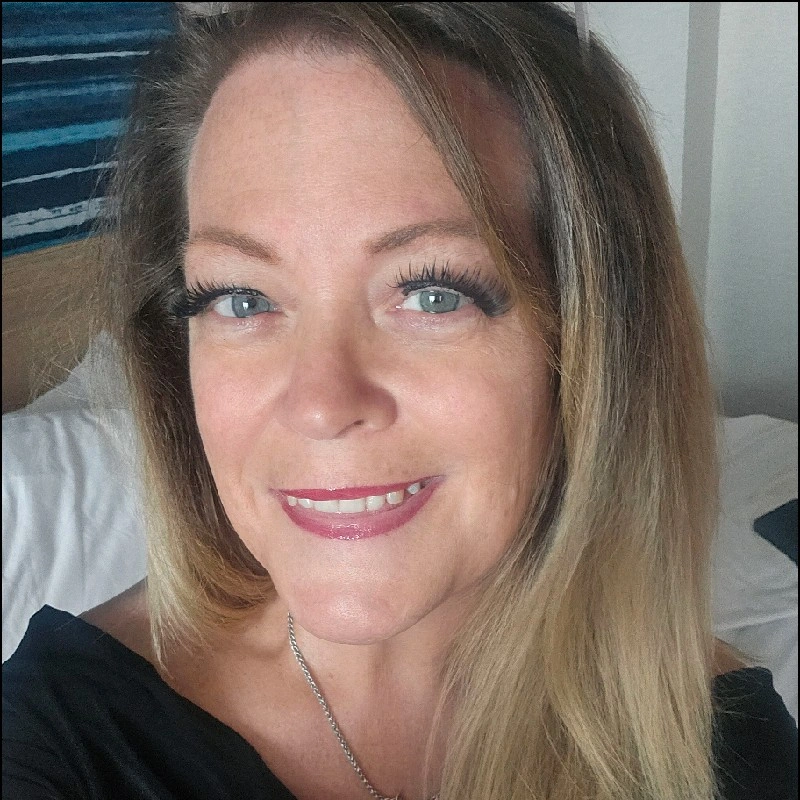
LCDC, Program Manager at Altura Recovery
KIMBERLEY BROOKE is an LCDC (Licensed Chemical Dependency Counselor) and Program Manager at Altura Recovery in Houston, Texas, where she runs adult IOP groups and an adolescent SOP for 13- to 17-year-olds. She has worked in addiction treatment for nearly twelve years, including roles as a counselor intern inside a Texas men's prison, clinical director of a methadone-Suboxone clinic, and lead counselor at a women's luxury treatment center. She is 19 years clean from methamphetamine and is currently writing a memoir titled "Fight Bitch."