


Life After Burning 13 Holes in My Leg & 2 in My Junk, and Escaping a Life Sentence, and Killing Myself in the Hospital


Chris grew up in Odessa, Texas, in a home where alcohol and drugs were part of everyday life. At 15, he altered his birth certificate to work in the oil fields. By 19, he was drilling, and by 25, he was running crews—building a successful career.
Substance use resulted in four incarcerations, and by his last conviction he faced a potential life sentence. In prison, he began seeking faith and direction but his addiction destroyed his family.
When an 86-year-old lawyer offers to take Chris’s case and be paid later, he miraculously gets his sentence reduced to a six‑month state jail deal, which he sees entirely as divine intervention.
After he’s released, rather than changing his life he spirals again, overdosing in a hospital bed. This is when he knew it was time to change.
In 2009, he committed to sobriety and has stayed clean since 2012, but his tattoos and criminal record made it hard to find a job. He earned his CDL, became a truck driver, and saved more than $70,000. In 2016, he invested in Bitcoin and set about rebuilding his family life.
Chris went on to start The Hopper House, a faith-based recovery program, became a pastor, and began speaking in prisons and meetings. Today, he leads a church where people in recovery share their stories and teaches faith and accountability as tools for lasting change.
GUEST
Chris Hopper
Founder of The Hopper House
Chris Hopper is a pastor, speaker, and founder of The Hopper House, a faith-based recovery community dedicated to helping men rebuild their lives through structure, service, and spiritual growth. After overcoming incarceration and personal loss, he turned his life toward ministry and mentorship, inspiring others with a message of redemption and purpose. Through The Hopper House, Chris continues to guide people toward healing, responsibility, and lasting transformation.
Learn more about The Hopper House
Subscribe to Chris’ YouTube channel
Matt Handy is the founder of Harmony Grove Behavioral Health in Houston, Texas, where their mission is to provide compassionate, evidence-based care for anyone facing addiction, mental health challenges, and co-occurring disorders.
Find out more at harmonygrovebh.com
My Last Relapse explores what everyone is thinking but no one is saying about addiction and recovery through conversations with those whose lives have changed.
For anyone disillusioned with traditional recovery and feeling left out, misunderstood, or weighed down by unrealistic expectations, this podcast looks ahead—rejecting the lies and dogma that keep people from imagining life without using.
Got a question for us? Leave us a message or voicemail at mylastrelapse.com
Find us on YouTube @MyLastRelapse and follow Matt on Instagram @matthew.handy.17
About Harmony Grove Behavioral Health
Harmony Grove delivers outpatient addiction and mental health treatment focused on wellness, creativity, and authentic human connection—providing a supportive space for healing that extends beyond traditional clinical care.
Harmony Grove’s IOP in Houston, Texas, is more than a program; it’s a lifeline for those ready to take the next step in their recovery. We are ready to meet you where you are and find your unique path to change.
If you’re feeling overwhelmed or struggling, you don’t have to face it alone. Reaching out for support is a sign of strength, and help is always available. If you or anyone you know needs help, give us a call 24 hours a day at 844-430-3060.
Host: Matthew Handy
Producer: Eva Sheie
Assistant Producers: Mary Ellen Clarkson & Hannah Burkhart
Engineering: Chris Mann
Theme music: Survive The Tide, Machina Aeon
Cover Art: DMARK
My Last Relapse is a production of Kind Creative: kindcreative.com
Matt (00:00:03):
I am Matt Handy, and you're listening to My Last Relapse. If we are not fulfilling our ethical and more importantly moral obligation to our clients, what it translates to is people dying and we're seeing it on the streets. Fentanyl is the leading cause of death for people under 40. It's been around for five years. That blows my mind. And then when do you know what parody laws are?
Chris (00:00:30):
No
Matt (00:00:31):
Parody laws. So the Kennedy family, right? Bootleggers, political dynasty. JFK, Robert, the whole nine, right? All of them. So they have a long history with addiction. Their whole family mental health addiction. They had a sister that she was clinically depressed or whatever. They gave her lobotomy and it fucked her up. And so Patrick Kennedy wrote a bunch of laws that says insurance companies have to offer mental healthcare and substance abuse access to care at the same rate that they do for regular healthcare. This was in 2008. So when in 2008 this happened, Obama sent people to Houston to do a bunch of feasibility studies to find out what was going on. And they found out that in 2008, there was nine residential treatment centers in the greater Houston area. We're talking about the fourth biggest city in the country, which is one of the biggest cities in the world. A thousand people a day. So 365,000 people a year were getting turned away from treatment with insurance.
Chris (00:01:47):
Does that bother you?
Matt (00:01:49):
Dude, that was in 2008. Since then, we've lost two treatment centers and addiction has skyrocketed. So how many people today are going to get turned away from treatment?
Chris (00:02:00):
Okay, so my belief is that that's where we're supposed to step in. And knowing that finance, so I'll tell you with me, I don't want to go too far into the story until you ask me, but I'll tell you this for me, understanding that God, because I call God, God. It's not just good orderly direction. No more, right? I understood that. That's what I understood coming in the program. And if you think about NA's recovery emblem, it's a square. It's a base of goodwill. And how does that prism get built? Well, it gets built by understanding what good orderly direction is. So you got God on your first leg, then you got self, and that becomes a confusion. It's like, how am I going to get better from the same thing that got me sick self? Well, no, because once you learn what good orderly direction is, you begin to love yourself. Who's the first person we got to love ourself? And then if you think about the next leg of that base of freedom, it's service or it's society. Well, once you learn how to love yourself, who do you learn how to love next
Matt (00:03:17):
Others
Chris (00:03:17):
Society. So where are we at? Well, where we're at is the last leg of service. What does that bring you back to God in a different definition. So what we're learning is you learn how to love yourself. Again, fentanyl don't matter. Once I learn how to love myself, fentanyl is not in the equation. Correct? Because the things that I used to do when I was on fentanyl is not the things that I want to do today. I learned that they're not good. Then I'm learning how to love society. Now what does that mean? I'm digging every one of your podcasts equal someone else trying to, trying put a new perspective on what is causing an addict to be an addict. That's it. And how can we as a society service them? And so I'm starting to look at something I'm saying I can't get funding. Okay, God, what is it you want me to do? Because I'm always, as we did before this podcast, I'm going to pray why they say, man, did you pray about it? Yeah, no, you didn't. Did you talk to your sponsor about it or your mentor? Well, this is a misconception because AA and NA is not built on sponsorship. And NA's the only one that says sponsorship is necessary. AA doesn't say that. What AA says is it's one addict, alcoholic. And I say, addict, they don't say it that way, correct? One alcoholic serving another. What are you doing now? You're serving the worldwide internet. We're trying to be of service. You found a new purpose. Here's what I heard from you. Lost sight in prison. Lost sight before Prison.
(00:05:00):
Never understood why I was in prison. I wasn't there because I committed a crime. I was there because I was separated from good orderly direction. I got out and started loving horses. I heard that from you. You know why? Because I started to love something besides me, and that's all I knew. I knew how to love something. God is showing me how to love something, and it's not me yet. And then I don't lose value in the horses, but I start to love myself. Once I start to love myself, I start shifting to the phase of my development. It says that in 83 in Alcoholics Anonymous, we start to come into a new phase of our development. God say, man, prospectively, you have a great grasp on this. Now how can you help somebody else?
Matt (00:05:49):
Yeah, for sure.
Chris (00:05:50):
It's not about the funding.
Matt (00:05:51):
Yeah.
Chris (00:05:53):
So I'll tell you quick story. God told one day I got out of prison. I was in for the fourth time. I should have done life, but I didn't get the habitual. This time. God blessed me through it. Through that 18 months, which I was caught for the fourth conviction, I got caught with six separate felony drugs. When I get into jail, my wife of 16 years comes and says, Hey deuces, this is the only way I can get rid of you. So what she said was, the world has said your piece of crap. Now you're going to spend the rest of your life separated from your children and me. So now you ultimately lost everything, rights restricted, couldn't see my kids no more. I'm looking at the habitual, and I'm saying to myself in that jail cell, I am not going to do this time, Barry. Matter of fact, if you know me in here, you're not going to like me at all leading the wood pile, all the stupid silly stuff we get involved in. A lawyer comes up and he says, Hey man, he's 86 years old. I just get a random visit. I'm sitting there and the lawyer says, Hey man, if I take your case, will you pay me when you get out? I said, sure. 25. Yeah, I'll pay you, man. He's 86, dude, I can do math. You know what I'm saying? I could do math. So I do the math. It just seems mathematically correct.
Matt (00:07:19):
Yeah,
Chris (00:07:20):
I won't have to owe anybody with
Matt (00:07:21):
That. Yeah, not for long.
Chris (00:07:23):
He comes up two months later and he says, Hey man, I need you to sign this today. I said, what is it? He said, I got you six months state deal on my fourth conviction. At then I knew that God had been, he's calling me. I didn't know how and what that looked like. So 16 months, I spent three months in population because I was just unapproachable. I was not a good dude. So I only spent three months of that time. So when I got out, dude, I wasn't right for the next three months. When I got out, 16 months later, I had killed myself again on the hospital bed. When I woke up, it was time to do something.
Matt (00:08:02):
What year was this?
Chris (00:08:03):
It was in 2009.
Matt (00:08:04):
Okay, it,
Chris (00:08:05):
I've been clean since 2012.
Matt (00:08:08):
Okay?
Chris (00:08:08):
11 19, 12 is my clean date. That's complete abstinence. That's because I knew that I can't rely on a horse, I can't rely on the system, I can't rely on my wife. I'm getting my value from all the wrong things. And so God says, alright, fast forward you a little bit. I'm driving a truck. If you can't tell, I got tattoos on half my face. So when they get out of prison, they say, man, you'll never have your license again. You had four DWIs. So okay, I got my license. Right? So man, you'll never be able to get a CDL because your record says that. You got all this weird stuff. I got my CDL. Hey man, you'll never be able to get your hazmat, your endorsements, all of that. I got every single one of 'em. You see, the world continues to tell an addict, alcoholic what they can't do, ex-con, what we can't do, and we keep showing the world we can't. That's where our help comes in. How do we help the next suffering alcoholic drug addict, right here, right now. That's what we're doing through our experience, strength, and hope, right? That's what it says in the preamble of Alcoholics Anonymous, which was formed in 1934, but yet we've strayed so far from the program because we're too busy splitting hairs. So I'll tell you, driving down the road, after 10 years, I have collected $70,000 in my bank account just from working, taking care of my new family,
Matt (00:09:37):
Doing the right thing,
Chris (00:09:38):
Doing the right thing. And I asked God, one day, I say, Hey, while I'm driving, I say, Hey, God, what do I do with this money? Thinking about a trap house, a bag of methamphetamine, and a couple strippers in the room. You know what I'm talking about? And so I'm thinking all these weird thoughts, and all of a sudden God says, invest. I don't know what that looks like, right? I'm a convict bro. Invest in what?
Matt (00:10:03):
Yep, yep, yep. That's a typically not. The investment typically doesn't turn into anything tangible with us.
Chris (00:10:11):
So lemme tell you what happened. I called my little brother, he's my savior, right? I love my brother. He's about six foot 5, 4 50, right? And my little brother. And so I say, Hey, I'm gonna invest in stocks? He said, you're dumb ass. Why? He said, man, I've been doing that my whole life. Ain't never gotten nowhere. He said, but I want you to think about something. It says in 2016. He says, I want you to think about putting some money, not very much. Put some in Bitcoin. And he said, I want you to do some research on Bitcoin today and just research on what it is and see if you see any value to what it can bring in the future. Matthew 6:34 says, worry not for tomorrow, for today has enough problems of its own. That's where we get just for today out of the big book. That's where we get just for today out of na, right? Comes from everything. The big, big book, right?
Matt (00:11:06):
I mean, yeah, those two dudes are, I say it all the time, right? They got two things fucking perfect. They got two things absolutely perfect. They got the book and they got the sponsor Sponsee relationship, fucking perfect. You
Chris (00:11:19):
Know where it came from, right?
Matt (00:11:20):
The Bible?
Chris (00:11:21):
Yes. Yes. But you know where their method came from.
Matt (00:11:26):
I understand how they developed it, but I don't know if they got it from somewhere specific.
Chris (00:11:30):
Oh yeah.
Matt (00:11:30):
Okay. Where'd it come
Chris (00:11:31):
From? So let's think about me and you right now.
Matt (00:11:33):
Okay?
Chris (00:11:33):
You're representing what you're representing. I'm representing what I'm representing. Are they any different
Matt (00:11:41):
In purpose? No.
Chris (00:11:43):
No, no. They're the same. They're a different outlook. They're me and you trying to focus on society and being of service, right? That's all it is. Bill and Bob look at each other, and they're like, so Bill's thinking the neurologist, we ain't going to say his name, the neurologist, Silkworth in the book. That's why that one is compelling to me, is because AA saved my life. I tell you how. The neurologist says, if you are a lawyer and you spent your time making money on saving people's lives from being convicted, all of a sudden you're not saving nobody. Everybody's losing, doc. You are going feel like you are having no value doing what you're doing. What do you think Silkworth was saying? I'm treating these guys every single day and I don't get it. I don't understand. There's something going on in their brain that cannot separate their addiction from reality. What's happening? So how can I fix that? I can't. Is this the powerlessness part? Yep. Is it unmanageable? Nope. Because Dr. Silkworth says this, bill comes in, and it's weird because he starts talking to these stupid dudes on the beds, and all of a sudden he don't want to drink. And then he's on the precipice of drinking again, and he picks up the phone book and starts making phone calls to people. And it ends up because it's a Godsidence, not a coincidence. He ends up talking to people in the Oxford Group. You familiar with the Oxford group?
Matt (00:13:28):
Absolutely.
Chris (00:13:28):
Oxford House.
Matt (00:13:29):
Yep.
Chris (00:13:30):
Wonder parody. Why are we talking about that, right?
Matt (00:13:32):
Yeah.
Chris (00:13:34):
So you start thinking about it. Go ahead.
Matt (00:13:36):
Hey, so what's interesting, okay, so my mentor made a post yesterday, right? And he's talking about a luck, right? And for people like us, and there's a lot of people out there in the world that believe in God. A lot of people say they believe in God, but then they also believe in luck. And it's like those two things cannot exist on the same plane together. You either believe in God or you believe in luck, right? You either believe in God or you believe in coincidences. You either believe in God or you believe in accidents, right? They cannot exist at the same time.
Chris (00:14:12):
What does the big book say about resentment? Resentment and joy. You can't have both of 'em,
Matt (00:14:18):
Right? Right.
Chris (00:14:19):
You're either going to have resentment
Matt (00:14:20):
Or you're going to have joy.
Chris (00:14:21):
Or you're going to have joy. Which one? You can be bitter all day long. I get to the hotel, I'm bitter about a situation last night, okay? I'm not resentful. It's not to the point of unmanageability, but there's bitterness there, of course, because you had an expectation of what something was supposed to provide, and it didn't. Isn't that Our life isn't that life on life terms. Think about that first step for a minute. There's two perspectives to it. What do we have? A two-part disease? What is the two-part? Disease obsession of the mind followed by an allergy of the body anywhere. It doesn't matter what program you're working, those two basic concepts will never be erased from it.
Matt (00:15:05):
And they hold true. Doesn't matter if you go to AA or not.
Chris (00:15:08):
Bitterness has nothing to do with longevity. Resentment will kill you. I can be resentful at you all day long, but you ain't going to die from it. I am. I took the poison and I want you to die. It ain't happening. So if we start thinking back where AA started from, Roland Hazzard was over in Switzerland with another neurologist, page 26 of the big book talks about it. Dr. Jung saying, Hey man, I don't understand why I can't fix an alcoholic drug addict. It doesn't make, I'm going to fix him with drugs. You talked about that in one of your podcasts, right? There are necessary drugs for detoxification. I don't know what that detox looks like. Five days, 15, 55. I don't know.
Matt (00:15:59):
Well, it looks different, right? It does. Everybody looks different.
Chris (00:16:02):
It does.
Matt (00:16:03):
Everybody's doing something different. They're doing it differently, and they're doing different amounts
Chris (00:16:08):
Because you have to have a purpose. When you wake up in the morning, if you're on a prescription drug, you're on a regimen, you wake up or creatine or protein or working, whatever it is, you wake up in the morning, you take that medication, no matter what it is, it's going to be the same purpose your whole life. But which medication are we using? Because Dr. Yung, Dr. Silkworth, both neurologists, brain and doctor, whoever we already know, they know a study about the brain. They're trying to find a solution for different bobbleheads, right? We're all just bobbleheads and this thing. So if they're trying to find a solution, what did they come up with? The first one, addict helping another. Now, I'll tell you, first century Christians, are you familiar with it? Alright. That was where AA started from. So first century Christians was started by Roland Hazzard, who came back to the States and said, Hey man, if we build a fellowship,
Matt (00:17:14):
I thought you meant like Jesus was born zero, died 33 ad
Chris (00:17:20):
That is.
Matt (00:17:20):
And then first century, I thought you were talking about the history of Christianity.
Chris (00:17:24):
No,
Matt (00:17:24):
No, no, no. I don't know the organization.
Chris (00:17:26):
No. It's an organization. So it's one of the first fellowship type Christian Christian perspectives,
Matt (00:17:33):
Right?
Chris (00:17:34):
So you look at it, you know the name Abby?
Matt (00:17:37):
Yeah. Abby Thatcher.
Chris (00:17:38):
Exactly. Bill's what
Matt (00:17:40):
Sponsor.
Chris (00:17:41):
We can't call him that, can we?
Matt (00:17:43):
They're
Chris (00:17:43):
Not working the same program, are they? Lemme explain.
Matt (00:17:46):
Okay. Explain.
Chris (00:17:48):
So you can call it whatever you want, right? Yeah. It's all just a word mentor. You said it.
Matt (00:17:52):
I mean, yeah, because the reality, so look, you probably heard me say this, and I know they have, but when I really got serious about staying sober, I had consequences. And it's easy to try to get away from consequences. Nobody wants to go to prison for 33 years.
(00:18:07):
Nobody. I mean, nobody in the right state of mind wants to, right? I looked at, and this goes all back to society and all that too, right? It's like as addicts and alcoholics, we inherit guilt, we inherit shame. We also have our own guilt and shame. But we have the world telling us that we're this and that, and then we believe that we're this and that. And then all of that combined, it's just a fucked up recipe between what they think about us, what we think about us. And then now you put that together and it's just all negative. So I had to take words. I had to go down with a piece of paper and a pen and write down words that I had problems with. Addict Recovery. Yes. Triggers.
Chris (00:18:48):
I understand
Matt (00:18:49):
Cravings. A whole list of words that I had to redefine them, me too. Redefine them for myself. And then I realized there are two words that I cannot use these words anymore in my recovery. And it was triggers and cravings.
Chris (00:19:03):
Me neither.
Matt (00:19:04):
I had to get rid of 'em, because every time I depended on that definition that they had given me, it was just a bullshit excuse.
Chris (00:19:11):
That's right.
Matt (00:19:12):
Just a bullshit excuse. Okay, now keep going.
Chris (00:19:14):
You think about what we're doing right here. It's one out of addict, alcoholic, and we can just keep up. Infinite.
Matt (00:19:20):
Yeah. Extrapolate that out. There's probably a lot of similarities.
Chris (00:19:22):
There's a lot. So we think about, alright, first century Christians, they just labeled themself as a group. And I just want to acknowledge this, that this is just my perspective view, and that's what this podcast is about.
Matt (00:19:36):
All it is, is perspective, different
Chris (00:19:37):
Perspective on recovery. And mine is very similar to the first century Christians. Why one addict helping another one, Christian helping another. So that's what they came together. They did, right?
Matt (00:19:51):
First century Christians, what do they actually do? What is their mission? We're getting into that.
Chris (00:19:58):
Our mission is to discuss recovery, their mission. Because remember back then if you claimed you had an alcohol problem, you were separated from society
Matt (00:20:10):
For sure.
Chris (00:20:10):
That's why anonymity was such a big deal back then. A lawyer. Your doctor, and you're an alcoholic dude, you ain't touching me, bro. Right? For sure. Now it's like, oh, you're an addict. So you'll be very meticulous in what you do then, right? Yeah. So we look at it completely different today. Back then they said, oh, you're an outcast from society.
Matt (00:20:32):
So a hundred years ago, there was two options. You go to prison or you go to insane asylums or death, right? Those three things, a hundred years later, we've got social awareness that has grown immensely. We've got scientific advances, we've got social advances. And now I heard something crazy the other day, and I know it's true, it's got to be true. But they said every person in the United States is either one or two degrees away, like separated from an addict who's suffering. Everybody's touched by addiction. Everybody.
Chris (00:21:10):
Oh yeah. Your addiction's not mine. Mine s not yours, but it's still the same. So we are talking about evolution of processes here. You just said it 100. Fast forward, here we are, and now we've got technology. So if we use it for more than PornHub, imagine how many lives can be changed by you getting a new phase of your development. That's why I'm here in support, is because your new phase, you are excited about this new phase of your development. That's where your text messages come from right now, I don't think you get It.
(00:21:44):
I want you to understand what this podcast is about. Why? Because it's a new phase of my development and God wants me to put this together like this, and more shall be revealed to me. But that's my disclosure, not yours. Okay, I get that. I understand that. Why? Because I appreciate the new niche or the new phase of your development, the new purpose that God has given you. I get that, man. It's eggs tree. You know what I'm talking about?
Matt (00:22:09):
Yeah. Hell yeah.
Chris (00:22:10):
So first century Christians come together and they say, Hey, look out, dude, I got a problem holding my penis all the time. Oh, but you're a Christian. That's right. Well, lemme tell you what I do see. So they just meet together in the Oxford College building. So they're meeting together, they're discussing principles of the Bible. They're understanding that they're Christians separated from some small addictions in their mind. They're not recognizing a one disease. They're not putting it into a single perspective. They're saying we all suffer from a seemingly hopeless state of mind and body.
Matt (00:22:51):
Okay.
Chris (00:22:51):
Alright.
Matt (00:22:52):
Okay. So have you heard Mike talk about boxes?
Chris (00:22:57):
Yes.
Matt (00:22:57):
Okay.
Chris (00:22:58):
God's in a box.
Matt (00:22:59):
Everybody puts everything in a box, right? We are taught today that everything can be categorized. Everything's got a label, everything. And when I said that about God, that a lot of people put God in a box, my experience was people always tell me what God will or will not. Do. You have that experience?
Chris (00:23:23):
Okay. So your specific question is, do I experience that people tell me what God will and won't do?
Matt (00:23:28):
Yes.
Chris (00:23:29):
The world will continue to tell me what God won't do for me, And I continue to show the world. I just made that statement
Matt (00:23:35):
Over for sure. So a big problem that I have with organized religion, which I'm not bashing organized religion. I see all the value in it, and I see that it does a lot of good, and there's been a lot of good, there's been a lot of bad, but there's been a lot of good. And a lot of people need that, right? But you go to X religion and say, God did this for me, or I think God's going to do, and they're always going to say, God won't do that. God can't do that because he said this, this and this. But how are you going to tell me that the God, the creator of everything, will or will not do something or can and cannot do something? How do you know? Well, it says it over. No, no, no, no. That's what it says right there in a given situation about what he will or will not do. But he never said that. I can't, the whole question about can God build a rock so big that he can't move it?
Chris (00:24:34):
Yeah.
Matt (00:24:34):
Can he build a rock so big that he can't move it?
Chris (00:24:39):
We're talking about the creation, not the creator.
Matt (00:24:43):
Right. The reason why I asked that question is because whatever answer you give me, you're going to say that he can't do something. That he either cannot build that rock or he cannot move the rock.
Chris (00:24:59):
I'm listening.
Matt (00:25:00):
So the whole thing is that is just a thought experiment about an omnipotent, omniscient, omnipresent thing that we just don't understand our finite minds. We are constrained by this body. We only understand what this body can experience. Who knows? Because supposedly this thing that we call God is outside of time. It's outside of all of the realms that we can comprehend. This thing might be so big that we don't even see it. Have you ever seen those pictures of, it's like somebody zooms into God's Zion. It's like the universe.
Chris (00:25:39):
Yeah.
Matt (00:25:40):
It could really be something like that,
Chris (00:25:41):
Right? I haven't seen it, but I understand.
Matt (00:25:42):
So the bottom line is we don't know what God can or cannot do, and we don't know what he will or will not do. But I know one thing is that he's done things for me that seem miraculous, that seemed to be impossible. I think about this program all the time. It's like I could not have done this. I know with my history, my proven track record that if this was just up to me, I'd have fucked it up already.
Chris (00:26:10):
Yeah.
Matt (00:26:11):
And that's just a fact.
Chris (00:26:12):
Yeah. That's why we prayed before, right?
Matt (00:26:15):
Yeah.
Chris (00:26:16):
Because so something that I understand is I won't understand, do I have to?
Matt (00:26:20):
Okay. See now that right there, knowing that you will never understand is a freeing thing. But you got all these people that is like, they want to convince you of what they believe so bad that they will start.
Chris (00:26:35):
What does that point to?
Matt (00:26:37):
Self control. Self control.
Chris (00:26:42):
What step is that? I don't know. Step six and seven.
Matt (00:26:46):
Okay.
Chris (00:26:47):
Defects in shortcomings. So the book says in alcoholics, I stand on it. Am I an alcoholic? No. I can't stand getting drunk. But I'll tell you what I do do when I need the courage to go smoke crack, when I need the courage to go cheat on my wife when I need courage to go beat that dude up, sure is nice to take me Awo guy alcohol. And whenever I go to the dope house, or I do what damage I'm done, then I need to have something to soothe the pain when I'm done. So I always fall back to it. I know. And I'll sum up the first century Christian thing because it's irrelevant, right? Why? Because it's an evolution is all we're getting to.
Matt (00:27:32):
When were they established?
Chris (00:27:34):
Don't ask me timeframes. You know what I'm saying?
Matt (00:27:36):
Okay. Okay. Okay.
Chris (00:27:38):
But you think about if 1934, so you're thinking somewhere in the 19 hundreds to 1934.
Matt (00:27:43):
Yeah, yeah, yeah.
Chris (00:27:44):
Okay. First century Christian turns into Oxford Group.
Matt (00:27:48):
Yeah.
Chris (00:27:49):
Eby got clean in the Oxford Group. Roland Hazard got clean and started Chris Ascension. Cery. You get it? Yep. Alright. And my fangs are tangling up. Then what happens? Bill comes in, gets baptized by the Oxford group because it's a break off of the Christian group who says, just believe in Jesus Christ, you'll be healed. Alright, bill comes and he says, I just got baptized Pimp. I'm still drunk. I don't get it right. So Bill says, I'm going to pick up the phone book and call another dumb ass and we're going to have some dumb ass stories together. And then we're going to get to the solution of them dumb ass stories and figure out my story. Don't look as bad as yours. So why do I want to keep going to make my story end up like yours? No. And what does that turn into? It turns into na. In 1954, Jimmy K, Jimmy K got cleaned from Alcoholics Anonymous. Bill got cleaned from Oxford Group. Oxford got group. You see how that evolution came about?
Matt (00:28:51):
For sure.
Chris (00:28:52):
And if you are like me, then I don't want to go to the middle man. When I get my dope, I want the plug pimp. I want to go and knock on the door and say, look dude, I want the best deal for the lowest money and you got it. I want to go to the group that started this thing. I always want to get my point of reference from there. And then I think, well, where's that point of reference? And that's the God of my choosing. So now that I've picked the God, I start researching things that I pick. I'm arrogant, I'm pretentious, I'm cocky. I love to fight spiritually, mentally, physically. I love to hurt myself. I broke my own nose three times. I split my own eye. I stabbed myself multiple times. I've been shot twice. I mean, I'm telling you the things I like to do to myself. Why? Because I've lost my value. I don't have a purpose. The horse gave me purpose. Then I start gaining purpose from self loving myself again. Then I start loving society and saying, we have these streets full of homeless. Why?
Matt (00:30:01):
Oh my God,
Chris (00:30:02):
You see now start thinking about the service. Okay, streets full of people that I know I can help. Why am I not, am I going to let it be separated by funding? No. God says, invest in Bitcoin. Chris Hopper, study it up. God said that to me loud and clear. I was driving my truck. See, I don't get very many. Just open the cloud Paul moments where God slaps the issue out of me and says, you're going to do this bitch or you ain't. But this time God did. God said, boom. I called my wife, called wife, said, babe, I'll fix it and put everything in Bitcoin. You're going to do what? Yeah. She said, no you ain't. I said, okay. I got home. Dude.
Matt (00:30:42):
2016. Yeah, we're talking about, it was like 65 grand, right?
Chris (00:30:46):
No,
Matt (00:30:47):
A Bitcoin?
Chris (00:30:48):
No.
Matt (00:30:48):
How much was it?
Chris (00:30:49):
30. I mean 3000
Matt (00:30:51):
In 2016?
Chris (00:30:53):
Yes.
Matt (00:30:54):
Jesus. That shit took off
Chris (00:30:55):
In Bitcoin. I dumped $70,000.
Matt (00:30:59):
Okay, so in Bitcoin you got like 13 Bitcoins.
Chris (00:31:03):
Nine.
Matt (00:31:04):
Nine
Chris (00:31:04):
Ended up with nine because I was chasing it up.
Matt (00:31:06):
Okay,
Chris (00:31:07):
Okay. Okay. But here's what I realized, because you can't dump it all in at once. Back then you couldn't just, it was not as easy to do as it is today. Okay? Right. So you can't just get on Cash app and say, I want $15,000 in Bitcoin.
Matt (00:31:19):
Right. You had to go to Bitcoin ATMs and
Chris (00:31:22):
Nope. You didn't even have them.
Matt (00:31:24):
Really?
Chris (00:31:25):
Nope. You didn't have them.
Matt (00:31:26):
Let's see. I was messing with Bitcoins in 2000, the late 2017.
Chris (00:31:31):
You lived in a big city though.
Matt (00:31:33):
I did.
Chris (00:31:33):
So possibly there was ATMs
Matt (00:31:34):
There.
Chris (00:31:36):
I live in San Angelo, Texas about,
Matt (00:31:38):
Okay, that's a good point. So how'd you do it?
Chris (00:31:41):
Coinbase,
Matt (00:31:43):
Right?
Chris (00:31:44):
Coinbase was around, but that was right after Mount Gox.
Matt (00:31:49):
What is that?
Chris (00:31:49):
Mount Gox was the only exchange you could buy Bitcoin from. And my brother mined them. So my brother, he mined them all,
Matt (00:31:58):
Which was way easier back then.
Chris (00:32:00):
Yeah, immensely
Matt (00:32:02):
Easier.
Chris (00:32:02):
Yeah. And the work effort that the computer had to take, it was nothing. I say all that for this. Where's Bitcoin today?
Matt (00:32:08):
Yeah, 105,000.
Chris (00:32:10):
And we're not talking about the financial value, we're talking about societal value.
Matt (00:32:16):
Oh yeah, yeah, yeah. No, they're looking at it as a viable platform for the money exchange.
Chris (00:32:22):
Cross exchanging. You're looking at the world now saying this is a part.
Matt (00:32:28):
As a matter of fact, before Bitcoin, and actually up until very recently when you had to exchange money, you had to go to a money exchange. You had to pay money to it now. Oh. And to send money from country to country, it took forever. Now you could just do it instantly. Instantly.
Chris (00:32:47):
So I called my wife and told her, I said, babe, I just put in all our money.
Matt (00:32:52):
What'd she say?
Chris (00:32:53):
All about five. Oh yeah, that's it. My wife loves me unconditionally, And she trusts me no matter how much she talks. Shit,
Matt (00:33:02):
Dude. My wife is the same way.
Chris (00:33:04):
It don't matter. You know what I mean?
Matt (00:33:05):
Yeah.
Chris (00:33:05):
But she's 10 years in recovery. I'm 14. Right. So,
Matt (00:33:11):
Okay, so at the time, how long you had four years, she had just got clean.
Chris (00:33:16):
Yeah.
Matt (00:33:16):
Okay.
Chris (00:33:16):
Yeah, the day before.
Matt (00:33:18):
Oh, wow.
Chris (00:33:19):
Yeah, because my wife, so I got custody of my kids 14 months after being clean
Matt (00:33:25):
Yo. Which they always tell us we won't.
Chris (00:33:27):
We won't. I told you, the world will keep on telling you that God will. God won't God. Okay. I don't care what you say. It's irrelevant to me. God is not talking to me like he's talking to you. So let him keep talking to you however he is, and I'm going to keep following him.
Matt (00:33:43):
People in recovery have a different level of connection, a different level of awareness, a different level of accountability, A different,
Chris (00:33:51):
Yes.
Matt (00:33:52):
And we have to,
Chris (00:33:53):
Infant
Matt (00:33:55):
We have to as well. We have to. Because if we don't, we go right back under the bridge.
Chris (00:34:01):
So you have, Amy was on here, awareness, acceptance, action. Okay. Each podcast take a little bit from it, right? Knowing this, I didn't have to get to those levels.
Matt (00:34:17):
Andy.
Chris (00:34:18):
Andy. Yeah, yeah, yeah. I said Amy, sorry,
Matt (00:34:20):
Amy's coming on though,
Chris (00:34:21):
Right? So let's think about for a minute. Did it take what it took for you? For me? No.
Matt (00:34:28):
No. Yeah,
Chris (00:34:29):
It didn't take that. I didn't have to live homeless. I didn't have to do none of that. For me to understand. It can get there. I know that. But my bottom don't look like yours. But they're the same.
Matt (00:34:41):
They're the bottom dude. I tell everybody, and you probably heard me say this, if you listen to all the episodes that everybody's a, this is why we don't talk about the war stories. Well, there's multiple reasons. But the reason why is because if you've been there, you know, don't need to hear these stories. And a lot of these recovery podcasts where that's all they talk about, they're doing that for views. But here's what it is. This is how addiction goes. You're a kid, maybe something happens, maybe it doesn't. You make some fucked up decisions, your life gets really fucked up. At some point you don't want to deal with it anymore, and your life gets better. And that's the baseline of everybody. So it is all the same. And I always tell people, you think you hit a rock bottom?
Chris (00:35:23):
Oh no,
Matt (00:35:23):
You think you hit a rock bottom. But wait till your addiction throws a jackhammer at you and tells you to keep digging. You can always go lower.
Chris (00:35:31):
Always.
Matt (00:35:32):
And every time you go lower, you go, Fuck, I didn't think I would be here.
Chris (00:35:35):
Yeah.
Matt (00:35:35):
Right?
Chris (00:35:36):
Oh yeah, we it all the time.
Matt (00:35:37):
Yeah, all the time.
Chris (00:35:40):
Here's what I tell. Here's a trick that I throw in everybody when I chair a lot of meetings. I go into prison every week. Amazing. We go into
Matt (00:35:46):
Salvation Army. Been trying to get into that.
Chris (00:35:48):
All you got to do is keep connected with me. I'll get you in there.
Matt (00:35:51):
Okay, let's do it.
Chris (00:35:51):
Anything I do, I'm on the Emmaus. I'm a pastor at a church, right? These are all things that people say God won't do.
Matt (00:35:58):
Yeah. That you can't do
Chris (00:36:00):
That I can't Do.
(00:36:01):
And guess what? I'll show you a picture where my church is completely overfilled. You know who preaches at my church?
Matt (00:36:09):
We do
Chris (00:36:10):
Drug addicts. People that they said won't be able to do it, you're not going to do it. Alright? These are not, you were talking about statistics a minute ago. I don't need your statistics because you foul 'em however you want to.
Matt (00:36:24):
Yeah, that's a crazy that. So look, the thing about statistics, especially in this industry, is half of it's fucking bullshit.
Chris (00:36:33):
It is.
Matt (00:36:34):
Right? And it's never bullshit to the negative. It's always bullshit to the positive. They're always making it look better than it actually
Chris (00:36:39):
Always.
Matt (00:36:40):
If they tell you that 99.99999% of the time it fails, believe that it's 9, 9, 9, 9, 9. 9% of the time it fails.
Chris (00:36:48):
Lemme tell you something that I did the other day. I was going on a different, I do a lot of stuff, man. My mission field now is doing what I'm doing here today. And I brought those men because I love them.
Matt (00:36:59):
No, I would like to have them come back.
Chris (00:37:02):
Yeah, I love them. They both have an intriguing story, man. John. He did four year, 39 months in fed. Would you think that looking at him and hearing him, no,
Matt (00:37:14):
No, no, no.
Chris (00:37:15):
He did it. Stone cold sober. 15 years in clean time. You see the disease can become unmanageable without
Matt (00:37:25):
Drugs and alcohol.
Chris (00:37:26):
Drugs and alcohol.
Matt (00:37:28):
I told you my best friend, they caught him with an ATM machine in his garage. And he was sober.
Chris (00:37:35):
John and then Ryan, he was spitting on six foot five people that just got fresh out of prison. He ain't never been to prison. He didn't care who you was, how big you is or none of that. He spit it on their face. That's one of the facilitators of my facility, John, program director. You're thinking about the worst of the worst that people said, God will never be able to use you this podcast if nothing else is to give you hope.
Matt (00:38:09):
That is really, really what it's, so here's the thing. We already talked about this a little bit, but there is a lot of claims that are made and there's a lot of buzzwords that are had. And they always say, we're in the business of saving lives. And you always see those dope dealer to hope dealer shirts.
Chris (00:38:30):
Yes.
Matt (00:38:31):
And I get it that a lot of people's heart is in the right place, but the way that we live our lives is going to dictate whether or not people have any trust in what we're doing. And so when I look at people and look, people say we shouldn't judge. People say Christians shouldn't judge. That is not true. God says, use discernment, right?
Chris (00:38:55):
Discernment and awareness are two different things.
Matt (00:38:58):
But I'm talking about when I see people that claim to do something and they don't actually care about the outcome, that is when the action speaks louder than the words. So when it comes down to, so I looked into your program, I got on there, I saw what was going on. So I'm not a Christian. Where the aha moment happened to me. I was staffed a faith-based program, and I'm teaching Bible studies. I was raised in a very Christian situation.
Chris (00:39:36):
I selected that
Matt (00:39:38):
I know a little bit. And so I can speak the language and I do understand what's going on. And I do believe in God. At the time, I didn't, at the time, I told people I was an atheist because that was the only way to shut down the conversation around what happened. But the aha moment came to me when I'm in the middle of teaching a room full of Christians a lesson. And this guy said, this happened, this happened, this happened. And this was the outcome. And this is how God worked in my life. And I said, I mean word for word, the exact same story. My story, his story, exactly the same. And at that moment when he said, this is what God did for me, I had this wave of thoughts that said, I went through that exact same thing, except the only difference was he gave the credit to God and I didn't. And all it was was maybe God does look out for me. And that caused a cascading effect that translated into all this. That was the moment.
Chris (00:40:47):
Yeah. Okay. So without getting this into a Christian geared, aimed discussion,
Matt (00:40:56):
Look, that's who you are. That is, they can go whatever, Whatever direction you go.
Chris (00:41:00):
I don't have to though.
Matt (00:41:02):
Okay?
Chris (00:41:02):
Because they should know you by your fruit.
Matt (00:41:04):
Okay.
Chris (00:41:04):
Alright. So when we talk about God, I want to talk to an infant because here's what I know about talking to an infant, an infant doesn't know. And when you start pressing these conceptions or however you want to say it, you start imposing your growth to an infant, they become an atheist. That's a reason why they put agnostic in the book.
Matt (00:41:34):
We agnostics.
Chris (00:41:34):
Okay? There's a reason why they put that in there. Why? Because if you're agnostic, you've got to recognize there's a power greater than you. Here's what I'm saying. People love to misconceive this. They love to misconceive. Step two, I am a firm believer of counseling through the steps. I don't need to counsel you through the Bible. I said, I need you to understand the steps. I don't need you to get confused about what we have recovered means that don't matter right now. We don't want to teach you that. You don't understand that. I didn't understand that, and I shut off when you said it. If you told me those word plays that you try to play me with to try to push your agenda, which is ultimately going to be mine anyway. But in my infant stage, I'm saying, saying words right now, I don't understand. And no St. Peter's, St. Paul. That's not my view on Christianity. That's not my outlook on life. You can just stop talking to me right there. And I'm from prison. So if I say it to you, I'm ready to back it up with some potential of reinforcement. You know what I mean? So I say this, let me talk to you from good orderly direction. Let your understanding of God manifest. I don't want to be that one. Here's what I say. I want to look at a Muslim. I want to look at a Christian. I want to look at whatever belief or religion you have, and I want to watch you.
(00:43:05):
You just said that a minute ago. I want to watch you and I want to see where your life goes. If your life is going in a way that I want mine to go, or I believe mine can go, I'm going to grab a hold. So why do I follow Jesus? I follow Jesus because I see a convict that wasn't scared to hold down the wood table. Huh? I see someone who ain't scared to tell you, Hey man, I don't care what you look at and what you see. If you don't like what you have right here, you can go ahead and persecute me if you want to. But I'm still going to walk and talk the same. I don't care what your beliefs are. I don't care where you came from. I don't know what your background is. I don't care what your background is. My beliefs are right here and I stand on them. What's prison built on? What do you stand on. If you stand on that? I'm going to follow that guy because that guy is not scared and I don't want that guy who's willing to back down. Peter Paul, they backed down when confronted
Matt (00:44:03):
All 12
Chris (00:44:04):
With their beliefs. Here's your beliefs. Now show me because you're fixing it last for it. They ultimately died for their belief,
Matt (00:44:11):
Right? Later on. Yeah.
Chris (00:44:13):
They ultimately died
Matt (00:44:14):
Upfront, especially during that hell storm that was happening around the garden. Yeah. They were all like, I don't even know that guy.
Chris (00:44:21):
Yeah. And that's it. How many times you been in prison and seen that?
Matt (00:44:26):
Oh, too many.
Chris (00:44:27):
Yeah,
Matt (00:44:27):
Too many. And it, man, that is crazy. Yeah.
Chris (00:44:30):
It's the same thing. I've got to put it into infant terms. I got to make you see it. People say, man, I love how you explain things, Chris, because you touch on my mentality. You touch on where I'm at, what I'm doing, how I can perceive it differently. I want you to know, man, when I first started talking to God, it was like, look out, Doug, if you don't like the way I am, I really don't give a fuck right now. I don't use those words today. I don't believe that they're necessary anymore. But when I started,
Matt (00:44:59):
It's evolution,
Chris (00:45:00):
That's what my words were. I was full of it. I got a recording. I'm big on journaling. What do you do in recovery? You journal. Every time I journal, I put a happy emoji. This was before emojis. I put a happy emoji. I'd put a mug piece and lightning bolt on it. You know what I mean? Every time I'm done, I'm writing how I feel. At the end of it. Now I record. So I do the same thing. I got my own YouTube channel as well. You've seen all that. And it didn't go the way that I thought it should. So if you've seen my YouTube videos, it went from I do music videos. I like to do music videos. It went to daily devotions trying to find out, okay, guys, I don't understand exactly where you want me to be, but I'm willing, I'm aware I've accepted, and now I'm putting action in. Right? I love that Andaid that because it makes sense, right? It's got to make sense or I'm not going to do it.
Matt (00:45:56):
For sure.
Chris (00:45:57):
And then now, what is my YouTube channel? It is live meetings. Live church. Is that working? It is right now,
Matt (00:46:04):
Yeah.
Chris (00:46:05):
We're getting more viewers. I'm getting more. I've had my channel for 10 years. I've got 300 subscribers. That's nothing, dude. You know what I mean? It ain't do it. One day. God's going to multiply that because I found the niche.
Matt (00:46:21):
Yeah. That's what we're doing.
Chris (00:46:24):
And I heard you get your inspiration from Joe Rogan. I got that right. I collect it. And if you didn't get your inspiration from him, you acknowledge that you like that, that he does that or Russell Brand. Right? I see that. That in you, you get that. You acknowledge that it's needed, it's necessary. But is it where God wants you to be? I don't know. I don't care. I know I found purpose in it
Matt (00:46:45):
For sure.
Chris (00:46:46):
And if I found purpose in it, I'm going to do it. Why? Because it, I mean, it makes me feel good.
Matt (00:46:52):
Yeah. Yeah. Yeah. What's crazy when it comes to the inspiration, so this whole thing was a marketing strategy. Right? At first it was like I got tricked into doing this. They said, you should go on people's podcasts. And I said, okay. Went on a couple people's podcasts and they're like, you should start your own podcast, basically is how it went. I was like, to God day. Yeah. I was like, I don't really want to. They were just do it and see if you like it. And I fucking love it. I've talked to people that have friends in the industry that they've known for 15 plus years, and I know them better than their friends do.
Chris (00:47:33):
Yeah,
Matt (00:47:33):
Right. This conversation right here, well, probably not this one. You are very open about who you are and you talk like this all the time, right? But I will know you better in these next couple hours than we ever would in 10 years of texting each other and hanging out.
Chris (00:47:49):
Yeah. Yeah. So I'll tell you something. AA saved my life. It started having people that wanted to hug me, wanted to shake my hand, and they were loving me. Say, Hey, look out, man. Is this hug for you? See? Because I wouldn't hug, right? Just get off me, man.
(00:48:09):
Yeah.
Matt (00:48:09):
Not a hugger.
Chris (00:48:10):
Yeah, yeah, yeah. Not a shaker. Not don't touch me. Prison taught a that. And so, because we're aware, not judging you, I'm aware that there are snakes in sheep clothing. I get that. I seen them all the time.
Matt (00:48:22):
You got to be close to someone to stab in the back.
Chris (00:48:24):
That's right. And so one time, this lady, she was a nice looking lady. She was an older lady, and she come up to me probably about two years of my recovery. No church, no, none of that. I'm just good orderly direction. God. That's it. Right? Not the joy God, not the lucky God, right? Because it's all a God. It's all what you are finding purpose in. That's a God you said admit and minute ago, it's a power. You've given it power. Love is power. So it's now your God.
Matt (00:48:47):
For sure.
Chris (00:48:48):
You've adopted it. Atheism is adoption. You've adopted a God. Agnosticism. You've adopted a God. Whether you want to say it or not, that's what it is. So I'm standing there and the lady comes up and she goes to grab me, and I said, whoa, I don't do hugs. She looked at me and goes, you're still the same selfish that you were whenever you started. And I said, what do you mean by that? She goes, maybe that hug wasn't for you. And that slapped me like a ton of bricks, bro. Yeah, because I realized something right then is that how selfish am I to not give something to someone that they needed more than I ever would. I don't need your hug. Now guess what, dude, come here, man. Everyone that's at my place, dude, we are hugging. I mean, I'm hunching on him every now and then. I mean, I'm just telling you, it opened up a new thing. So I'm in sober living San Angelo, fresh out of the hospital.
Matt (00:49:43):
I mean, and look, Dr. Shah says it right? Dopamine comes from I, oxytocin comes from we.
Chris (00:49:50):
Yes.
Matt (00:49:51):
Right. And the quiet eating of the amygdala comes from the oxytocin.
Chris (00:49:55):
Right. I do believe some of that and I don't. Okay,
Matt (00:49:58):
Well, that's perfectly fine.
Chris (00:50:00):
Yes. And it is. This is a perspective view on it, right? And this is about my perspective on it, my opinion.
Matt (00:50:06):
But it still fits. It still does. It still totally fits
Chris (00:50:10):
For my group, for my herd,
Matt (00:50:12):
For every herd. And it doesn't matter what herd it is,
Chris (00:50:15):
Right?
Matt (00:50:16):
You build a place of safety. Yes, you open your ability to rebuild prefrontal cortex. You cannot rebuild your brain if you're in a state of fight or flight. You have to be in a safe place, and you have to trust the people that you're with in order to get what Dr. Shah needs from you.
Chris (00:50:32):
So we have a how building, HOW. Both books talk about it. AA talks about it. Na talks about it. What does it stand for?
Matt (00:50:43):
Honesty. Open. Open-mindedness and willingness.
Chris (00:50:45):
That's right. So if you're not honest, first of all, that's the first principle. Let's think about them. 12 steps. There's three repeating principles throughout them whole steps. They repeat themselves four times. 1, 2, 3. HOW, 4, 5, 6, HOW. Alright? If you answer question number one, step number one, honestly, You'll never use again.
Matt (00:51:12):
Okay?
Chris (00:51:13):
You'll never use again. Here's what I know about honesty. Let me give you some honest truth. I
Matt (00:51:18):
Know. Wait, wait, wait. Hold on. Let's break that down a little
Chris (00:51:24):
I am
Matt (00:51:24):
Okay.
Chris (00:51:26):
If I go up on your balcony that you just described, they put handrails on it. I go to the edge of that balcony, and I say this, if I jump off here, I'm honestly going to die probably
Matt (00:51:39):
For sure. So you're going to get really Hurt.
Chris (00:51:42):
I have honestly admitted,
Matt (00:51:44):
Yes,
Chris (00:51:44):
There is a consequence of death if I jump off of this building.
Matt (00:51:49):
Yes,
Chris (00:51:49):
I've admitted that. Honestly, here's the manipulator in me. If I jump off this building, possibly I could do, what do you call that? They do all the jumps and flips, parkour. I could do a parkour flip off of the handrail. I could jump sideways and bounce off the wall, do a double flip into a triangle and land on the ground. Hey, that's what I'm going to do. That's dishonest. I'm not honest in that. I know that
Matt (00:52:17):
For sure.
Chris (00:52:18):
Here's what I do as an addict. If I only get a 20 and I go to a hotel for one night, and I get the lady friend for the one time, I'll be good tomorrow. That's why I tell myself,
Matt (00:52:33):
Yeah,
Chris (00:52:33):
That's not honest.
Matt (00:52:34):
Totally.
Chris (00:52:35):
I'm lying to myself or I'm just going to get a Beer Because I don't want to be drunk anyway. I'm going to take one shot. I don't want to be drunk anyway. And after I take that one shot, I'm going home and I'm going to bed. Unfortunately, I slapped the shit out of two people after four drinks. And then I went to the hotel room in the trap house and bought a bag of dope. I'm telling you what I do. It don't have to be what you do.
Matt (00:53:03):
No, but that is typically how it goes.
Chris (00:53:06):
Right? Because I'm being honest with myself, I don't do it if I admit the two part disease, which is an obsession. You said craving. No, that should be a substitution. Here it is. The doctor said it. I have an obsession of the mind. It's not a craving, it's an obsession. I have an obsession,
Matt (00:53:27):
Man. Okay, so you know this, right? They're looking for outcomes. Insurance companies are looking for outcomes, and you are tracking triggers and cravings.
Chris (00:53:37):
Yes.
Matt (00:53:38):
It's like, so what happened was the medical industry labeled things with things that can kind of be the same, but they are. They're not the same. They're not. And then what it does is it gives words power over your decisions. That's why I had to stop using them. I mean, yeah, it can, right? I did. I gave that all to it. So I just had to stop using them.
Chris (00:54:05):
Exactly. I never use recovered. I don't use it.
Matt (00:54:08):
Okay. I
Chris (00:54:09):
Understand it.
Matt (00:54:10):
Okay. What do you use in substitution?
Chris (00:54:12):
I'm in recovery.
Matt (00:54:13):
Okay. But
Chris (00:54:14):
Have I recovered? Of course.
Matt (00:54:15):
Yeah. Today, right? Today, you're recovered, right?
Chris (00:54:18):
I'm recovered. If I break my arm and it heals, it's recovered.
Matt (00:54:23):
You're right.
Chris (00:54:24):
But if I do a similar action, it could be broke easier than it was the first time.
Matt (00:54:29):
For sure.
Chris (00:54:29):
I know that. So here's what I know about the two part disease and the two part step. That's a two part step.
Matt (00:54:35):
Yeah. Yeah. One and two
Chris (00:54:38):
Step one is a two part step. So if I obsess in my mind long enough about that craving, it's a thought, it's a craving thought. I start obsessing on it. It turns into an action
Matt (00:54:52):
For sure.
Chris (00:54:53):
When I take action, I've lied to myself again And I break out in handcuffs or whatever. So I think about all that stuff. I don't make that decision based on honesty. That's the first principle. Now, think about the two part step. We admitted we were powerless over our addiction. We're going to use simple terms, and that our lives had become unmanageable. This Is talking about salvation. Think about that. Why do I say that? Salvation covers you before your sin or repentance during your repentance and after.
(00:55:30):
So let's think about that. Step one, powerlessness when I come in as an infant means this. When I was using, I was powerless over it. When I used my life became unmanageable during my addiction. Is this powerless on the other side of my addiction, in my powerless over that specific drug? Yes. Does it get unmanageable? No. Why? Because honestly, I realize I'm powerless over it and that my life doesn't get unmanageable if I don't use it. So I recognize honestly that I have a problem with crack. And if I pick up a 20 piece, I'm going to look like Charlie Sheen with HIV. I promise you that real
Matt (00:56:22):
Quick
Chris (00:56:23):
Because I get real weird when I get, I'm telling you, I'm not the same dude. Then I go living life and I say, okay, life after my process of elimination, it's no longer a craving. It's no longer an obsession. It's a thought. Always. 14 years. I still think about a bag and a whore. It's just part of it. Hey,
Matt (00:56:45):
Let's talk about that for a second. A lot of people think that you'll stop having those thoughts
Chris (00:56:52):
Never.
Matt (00:56:53):
Right? And I don't know if it's a comfort thing or if, once again, this is something that's way over promising and underdelivered or whatever, but the thought just stops Having weight and the ability to play the tape through really becomes a skill. And thinking about a drink or a drug is way different than wanting a drink or a drug.
(00:57:19):
And I feel like when people come into early recovery and they think like, oh, I can't even talk about these thoughts that I'm having, that is not right. Right? Talk about it. Because the more you talk about it, you're going to work through this stuff. You're going to realize real quick, oh yeah, that dude that's got 30 years, he still thinks about doing a drink. Having a drink, or doing a drug. They still think about, we still think about it. It is such a core piece of who we were. Of course, we're still going to think about it. It's how much power does it have over us today?
Chris (00:57:53):
None.
Matt (00:57:54):
Zero, right? And so it can come in and go out without really causing any upset. Why? Well, there's a lot of reasons why,
Chris (00:58:02):
But we can just see, because we complicate stuff. That's what addicts alcoholics do, Is We rework it in our head. Over over. We play the tape. We try not to get to the end of institutions and death. We try not to get to that end, but we just keep reworking it. What did that dude just say to me? And we work it.
Matt (00:58:24):
Okay,
Chris (00:58:24):
So what did that text mean?
Matt (00:58:27):
Oh yeah,
Chris (00:58:28):
We'll work it. And then what do we do? Say, okay, this is becoming a miscommunication. Give me a call, bro. Right? I do that all the time. They say, when I start to sense, my batty sense says they've misinterpreted it. That's actually called hermeneutics. Did you know that hermeneutics is the interpretation of texts? They use it in a Christian perspective, but it's not Christian perspective. It's actually dictionary language. So hermeneutics only means you can interpret the text contextually, right? So how many times do we misinterpret our wife's texts, exclamation point, capital word I'm getting? They say, okay, what is you talking about? You Know what I'm saying? So we got something wrong here. You know what I mean? So here's what I know. I don't need recovery. I Don't want recovery. Wait a minute. I need recovery. I want recovery. It don't matter what you need and what you want. Okay? What are you willing to put the work in
Matt (00:59:32):
For? Yeah.
Chris (00:59:33):
This program is not for people who need it. It's not for people who want it. It's a confusion in the program. You hear it all the time. Oh yeah, I need it. No, I want it. No, no. You're confusing yourself. You're making it more complicated. This is for the ones who are willing to put the action in. Homeless. Man wants, needs dope. He don't have to go get it. What does he do for it? Whatever It takes. Anything. He does the action for it. It's not that he needs it or he wants it, it's that he's willing to go to any length for it. So let's think about that two part solution. Step one, honesty. Here it is. HIV is in the world. I know that
Matt (01:00:15):
Rampant in Houston.
Chris (01:00:16):
Okay, so here's what I know. If HIV is a real thing, am I powerless over it? Yes. Is it unmanageable?
Matt (01:00:26):
Not if we don't participate.
Chris (01:00:27):
Not at all. Right? Okay. Now let's think. Okay, I have HIV. Am I powerless over that?
Matt (01:00:34):
Yeah.
Chris (01:00:34):
Yes. Is it unmanageable?
Matt (01:00:36):
No,
Chris (01:00:37):
Not at all. You see where I'm getting at?
Matt (01:00:39):
Yeah.
Chris (01:00:39):
You can sum up the life problems with the step processing that bill in the first 100 set forth in 1934.
Matt (01:00:50):
Yeah. And
Chris (01:00:51):
Then you think about in 1950s, they brought NA in. Okay, here's what a A said. You don't explain this disease well enough for us. I want to explain it better. Nothing wrong with that. There's no differential there.
Matt (01:01:07):
That is actually, that is still going on today.
Chris (01:01:09):
It is. And there's nothing wrong with it because you speak to your own crowd.
Matt (01:01:14):
And also it's more will be revealed, right?
Chris (01:01:17):
More will be revealed.
Matt (01:01:18):
And it constantly is if you're doing the right thing to put you in the right place, to have that revelation.
Chris (01:01:24):
So God is a manifestation of experiments. I would love to experiment with God a lot more than my disease.
Matt (01:01:32):
Okay?
Chris (01:01:34):
So you see, I'm continuously experimenting with my disease.
Matt (01:01:37):
How old are you?
Chris (01:01:37):
How old am I?
Matt (01:01:38):
Yeah,
Chris (01:01:38):
I'm 47.
Matt (01:01:39):
Okay?
Chris (01:01:40):
So I'm experimenting with God, like I experimented with my disease. It's a process of elimination in addiction. I've noticed a lot. I'm not addicted to heroin. I'll do Suboxone. Okay, cool. I'm not condoning it. I'm not addicted to Suboxone. I'll do methadone. I'm not methadone. I'll do C, B, D, Delta eight. I'm not this, so I'll do cradle. Okay? So all I'm doing is I'm pushing. I'm experimenting. Now, hopefully prayerfully hope is a false sense of security. Prayerfully, the disease doesn't kill you before the experiment fails. So disease didn't kill me before my experiment fell.
Matt (01:02:21):
Yeah. Which
Chris (01:02:23):
Let me ask you this. How many times have you experimented with God in some form and it been a consequence? Oh,
Matt (01:02:34):
You want to know the truth?
Chris (01:02:35):
Yeah.
Matt (01:02:36):
I've experimented with God a lot. The consequence came when I didn't like the answer.
Chris (01:02:42):
That's it.
Matt (01:02:43):
Right?
Chris (01:02:43):
That's the only consequence.
Matt (01:02:45):
The honest truth is, if I would've done what I was taught to do, I Wouldn't be in this room.
Chris (01:02:50):
Okay?
Matt (01:02:50):
Right? I wouldn't be here right
Chris (01:02:52):
Now. It's a mis teaching.
Matt (01:02:53):
Yeah. Well, so look, lemme continue with this. I wouldn't be here right now, but what I've learned for myself is that it doesn't matter if I would've done everything that I was taught to do. It doesn't matter if I had done exactly what my parents wanted me to do, I would've ended up here. It doesn't matter,
Chris (01:03:09):
Period.
Matt (01:03:10):
And so when I think about my experiments with God, I look at it as building blocks, stepping stones, right? Experiments, right? Yes. Because it doesn't matter what the outcome of any given experiment was, I still would've fucked it up.
Chris (01:03:24):
Yes,
Matt (01:03:25):
I still would. And I
Chris (01:03:26):
Had in your old state.
Matt (01:03:28):
Well, and this is the evolution. I am still all of the benefits of my suffering. Every painful moment, every lesson that I had to learn, every prison term, every dude lost a kid, lost a marriage, all of that. They all contributed to the person that's sitting right here right now.
Chris (01:03:48):
I'm agreement. Here's the problem with that belief.
Matt (01:03:52):
What?
Chris (01:03:53):
Once an addict always an addict.
Matt (01:03:55):
You agree with that? I don't believe with that. No.
Chris (01:03:56):
It's truth. Why? There's two ways. Step three is about this. We admitted. Okay. Okay. So what is step three? What is it?
Matt (01:04:07):
I don't remember.
Chris (01:04:08):
Made a decision to turn our, will. What does will mean? My wants and my life, my action. Right? That's all it is, right? I'm admitting I need to turn my will and my life over to the care of God that I understand. Okay? Alright. So made a decision. I made a decision now to turn my life over to God. It means I'm turning my wants and my actions over to what? Good Orderly direction. That's it. That's as simple as it's got to be. Now, what does God want us to see with that step? It's not Bill and Bob. Bill and Bob came together with 100 addict alcoholics who said, we're in agreement with you. Now put it on paper. Bitch, right?
Matt (01:04:52):
Yeah.
Chris (01:04:53):
Alright. So 100 alcoholics and addicts said this, without a commitment and without accountability, you don't have good orderly direction. Okay? Whoa. So now honesty, step two came to believe that a power greater than our self can restore sanity, which we don't get sanity back until step 10, right?
Matt (01:05:16):
And so one of the things that blows my mind, and this is not to disparage anybody, but the people that go into the program and then they get stuck on step four for five years.
Chris (01:05:28):
That's not the program,
Matt (01:05:29):
Dude. Okay? So another thing that I say, right, is that Bill and Bob, they used to have six steps. It was six steps, and you do it in 15 Minutes.
Chris (01:05:39):
Six conceptions,
Matt (01:05:40):
Three steps. Then you,
Chris (01:05:42):
Where'd those come from?
Matt (01:05:43):
Immediately. the Bible
Chris (01:05:44):
Oxford group.
Matt (01:05:45):
Oh yeah. Basically carbon copied off of it, and then they expanded it after. Yeah, but look, 15 minutes, you would come to me from your hospital room, you'd come to me 15 minutes later, we're going to the next room. And that's how that worked. And the success rate was almost a hundred percent
Chris (01:06:07):
Yes.
Matt (01:06:07):
I mean, but it was new. It definitely held a lot of weight. Also, that's why you're doing so many podcasts right now. Also, the options. The options. Back then, there were no options.
Chris (01:06:18):
It's new. It's new. It feels good. This feels good. You see, we just start losing that. So my perspective and perception on step three is that God wants you to realize something. You get married. These are so single-minded. It's not very open-minded. And I'm not willing, right? Honestly, open-mindedness and willingness. 1, 2, 3.
(01:06:41):
I'm not willing to commit. I'm not willing to be accountable. See, God wants you to know something. If you're not willing to commit to good Orly direction, how can you ever be accountable for it? How can I be a responsible dad? How can I be a responsible brother, husband, son? I can't. How can I be a productive member of society? I can't. Why? Because you cannot commit and you cannot be accountable to those commitments. Or you make many promises, commitments that are never fulfilled. Hey, we're a product of dad. Hey dad, can we go swimming? Well, first of all, I'm not your dad, right? Your dad put you in, your mom ran off.
(01:07:28):
So you're not, I got three dads. Or you should be grateful you had three dads, right? Okay. I learned from a lot of dumb asses, right? I get it right. So I got three dads, cool. But how many times did they promise us something? All when we get this income tax, we're going to go do this great amazing thing. And then they come home with a boat and you're like, dude, I thought we were going to Disneyland. You know what I'm saying? So God wants us to realize something in the first three steps. If you cannot admit your powerlessness, if you cannot understand that you've been the power in your life forever, and you're not willing to commit or be accountable, none of the rest of the house cleaning will ever work.
Matt (01:08:14):
Okay? Let's go back. Step one, you said, if you do it
Chris (01:08:18):
Honestly,
Matt (01:08:18):
And they always say, you got to do step one, perfectly,
Chris (01:08:20):
Honestly,
Matt (01:08:21):
Right? You said that if you do it, honestly, you'll never use again.
Chris (01:08:27):
Never use again.
Matt (01:08:28):
Okay? Now, what about people that did it honestly and then used again?
Chris (01:08:32):
They didn't do it honestly.
Matt (01:08:33):
Okay? Why is that?
Chris (01:08:34):
Why is it?
Matt (01:08:35):
No? I'm asking you. Why is
Chris (01:08:37):
That? What do we do as addicts?
Matt (01:08:39):
Justify
Chris (01:08:39):
Manipulate the situation. Now, I'm not trying to go biblical on you, but in the beginning, in Genesis three, God said this. God said, why did you eat of the fruit? She did it. What did she say? He did it. They lied to me. So here's what God said in the beginning. You'll be banished. You'll have hostility in your marriage and relationships for the rest of your life. You can no longer have a peace. It will be just confusion and chaos because of the
Matt (01:09:11):
Fall. Sweaty your brow, the whole thing. I
Chris (01:09:13):
Believe that. Why? Because I lie to myself. I'm not honest. I'm lying to myself every time I use. I'm not honest.
Matt (01:09:24):
No. For a hundred percent, a hundred percent.
Chris (01:09:27):
How do we get to the honesty is the key. Well, because if you honestly say you're powerless over your disease and that your life becomes unmanageable every single time, does that mean every time I used, they ended in misery? No. I had some good sex on it, and then it ruined the rest of my sex because now I want to have sex on everything else, but just normal sex Or painting a fence. Something as easy as painting a fence or the podcast, man, I got to take me, I hit it off this Delta or C, B, D or Kratom. I got to have this to go enjoy my time here, dude. I won't take an aspirin. I've had major surgery on my neck. I've got vertebrae. I cage fought for two years with drug down road, hit two cars, head on my motorcycle. I am a consequence of my behavior. Like you just said. Here's the problem. I didn't have to go to all of that to get where I'm at.
Matt (01:10:24):
You think?
Chris (01:10:25):
I know why God wanted to use me at the age of nine? How do I know that you just said it yourself? How do I know that? Mom woke me up in the morning and said on Sunday morning, son, vi an OT outside for what? Take you to church. Okay. Cookies, ice cream, Kool-Aid, and some coloring pages. Cool. So I go, I'm getting manipulated by God. It don't have nothing to do with my mom. My mom don't go. But she's pushing me out the door. She's showing Christian action. She's still showing the principles. She's giving me that foundation. Now, what happened in that church? Nothing. According to me, Kool-Aid, ice cream cookies in the coloring page. That's it. I didn't like the music. Nothing. Then the pastor says, Hey, we're going to baptize you. I'm like, cool, whatever that means. It's a part of it, right? We understand that after I moved out of my mom's, I didn't revisit the churches, holidays, kids went every now and then, special occasions, blues, whatever have you. I found a reason to go in there. Here's what happened that day. God put a dedication on my life. I didn't know about you. See, if it wasn't for that, I don't know if I'd be where I'm at today. See, God called me at that moment, but I didn't hear the calling.
Matt (01:11:48):
Right? But it doesn't mean it didn't happen.
Chris (01:11:50):
Doesn't mean it didn't happen.
Matt (01:11:51):
Okay. Let me ask you this though. I needed to go through all that to get to where I'm at today. I believe that. I believe that you might've, I mean, because I couldn't do this if I didn't go through all
Chris (01:12:02):
That. The saying in AA and Na is this. It takes what it takes
Matt (01:12:06):
For sure.
Chris (01:12:06):
Okay. Does it mean it had to take it?
Matt (01:12:10):
I mean, it takes what it takes. So in the It
Chris (01:12:12):
Takes what it takes.
Matt (01:12:13):
Yeah.
Chris (01:12:13):
It takes what it takes. So it takes what it takes. I don't know if I needed to get hit on by two cars and drug down the road. I don't know if I had to get shotgun blasted inside of my face. I don't know if I had to have two years fighting in the cage or four or six years in the, I don't know. I know it took what it took.
Matt (01:12:33):
Yeah. Do you ever look back on your life and be like, so this is what it comes to? People ask me all the time, regret, do you regret anything? And I tell 'em, there were times in my life where I lived in regret. But now, especially sitting here, I don't regret any of it. And I would do it all again if it meant that I got put in this position again. But I do say that I wish it didn't have to be so painful. I wish I didn't have to go through every single thing, but if I had to than I would.
Chris (01:13:08):
So another person said something that was very pivotal in my life in third grade, never forget her ever. Her name was Mrs. Lyon. She said, if is a huge word, son, stop using it. Nah. And I started thinking about that, what you just said. Everything was on a if who gives a care, I don't care. Alright. I know I'm where I'm at, where I'm supposed to be doing it. That's spirituality where you're supposed to be doing what you're supposed to be doing when you're supposed to be doing it. That's what I know.
Matt (01:13:40):
Yeah, yeah, yeah. I mean, spirituality is so, look, I look back on all that stuff.
Chris (01:13:46):
Tell me conceptually what spirituality means to you.
Matt (01:13:51):
So because of the situation that I was raised in, and then because of all the experiences that I had, spirituality to me and my relationship with my God looks very different than the rest of everybody else. And that is spiritual to me because it is literally what developed out of my experience that God put in front of me that I either walked through or avoided that put me in touch with him on the level that I'm at today. So my spirituality and the way that I conduct my spirituality might look different. And it all started a lot similar to yours. A lot of it was bargaining. A lot of it was, God, get me out of this, please. I swear to God, I'll never do that
Chris (01:14:30):
Again. God, box.
Matt (01:14:31):
Yeah. Right. And so when people look at my spirituality today, I'm sure a lot of people would say, that doesn't make sense,
Chris (01:14:41):
But I want to know something. I'm asking you conceptually. You're telling me about your spiritual, I want to know. Let's see. We define things. Webster defines it. The definition doesn't have to be what it means by definition. Spirituality is what it is. But the programs are based on spirituality. Why? It's a scare tactic.
Matt (01:15:04):
Look, subjectively, my definition of spirituality is having, so having an open flow between you and whatever it is that you consider God, okay?
(01:15:18):
Both ways, not just from him. To me, it's got to be from me to him
Chris (01:15:22):
Alright? Right now it's still in this room. You agree?
Matt (01:15:26):
Yeah.
Chris (01:15:27):
No air movement. If you turn on air, where does air come from?
Matt (01:15:32):
The ac.
Chris (01:15:33):
Alright, cool. So we can define the components of that ac. Spiritually, we're trying to help people find their spiritual God or guidance. So spiritually, if I'm looking at that fan or that AC blower prospectively, I want to find out where the spirit or the soul of that thing comes from. Spirituality is all about an evolution of what you believe. At first, here's what people say. Here's a misconception in aa, which is great because infants need to hear this, even though it's not true. Your God can be this chair
Matt (01:16:14):
Or a doorknob,
Chris (01:16:15):
Or it can be the doorknob or
Matt (01:16:16):
The monster can or all
Chris (01:16:17):
That. So here's what I go, okay, good enough. Now, where'd the doorknob come from? What's the components of the door? Knb, right? The whole process of spiritual growth, which AA is alluding to, na is alluding to, is that now you're starting to want to learn where everything is coming from. And ultimately it ends up being the creator, not the created everything that we have. Fentanyl, drugs, microphones, YouTube, internet, all of it is creations by the creator. Period. The creator puts creations in our life, took what it took for us to get to the creations. We're going to evolve and make. So the creator is ultimately where the spiritual journey ends. So it's no longer spirituality. Yes, I'm spiritually invested, but I've found my ultimate God.
Matt (01:17:24):
Okay, let me ask you this. If there's many paths to get to the same destination, and spirituality is a very slippery slope for a lot of people. I know personally, people that went down a spirituality road and ended up fucked off because for whatever reason,
Chris (01:17:46):
Whatever.
Matt (01:17:50):
So spirituality can be defined very easily. I'm sure that there's a dictionary definition, right? They're looking it up now. Yeah, I'm sure they're, but subjectively, everybody's spiritual journey is different, but not all of them have the same quality. Your spiritual journey might have a better quality than mine. My spiritual journey might have more of a quality than somebody else's, right?
Chris (01:18:17):
Without a play on words. Yes.
Matt (01:18:19):
Yeah. I mean, no, no, no. Without a play on words. Literally, we're all different. We all have different experiences and we all have different qualities of life. We all have different qualities of spirituality.
Chris (01:18:28):
Okay?
Matt (01:18:29):
Okay. Do you think that all spirituality leads you back to the same God?
Chris (01:18:35):
It should.
Matt (01:18:36):
Okay. Why is that?
Chris (01:18:38):
Well, if you think about Allah, what does that mean?
Matt (01:18:40):
Okay.
Chris (01:18:41):
It means God. Okay. So define it how you want. I don't care. I'm not interested in that. But if you don't find purpose for that Gods shaped hole, you'll keep filling it with something else.
Matt (01:18:53):
That's funny. That was literally one of the, I kept, so that conversation that I had where I was teaching that class and I said that thing, I said, you guys all have a cross shaped heart, a cross shaped hole in your heart, and you're filling it with drugs and alcohol
Chris (01:19:10):
And women.
Matt (01:19:11):
And women
Chris (01:19:12):
And lifestyle and money.
Matt (01:19:14):
Yeah.
Chris (01:19:15):
Here's what you'll hear from a lot of addicts. I don't like alcohol. Okay? I don't like drugs. Okay. What do you like?
Matt (01:19:22):
Lifestyle. Yeah.
Chris (01:19:24):
Yeah. What comes with it? I mean,
Matt (01:19:25):
Yeah, yeah, yeah, yeah.
Chris (01:19:27):
What comes with it, dude?
Matt (01:19:28):
The lifestyle is a harder thing to shake than the drugs I tell people
Chris (01:19:32):
Because we're not willing to build a new lifestyle of this dude. I am not a boring person, bro. I don't know if you can tell.
Matt (01:19:39):
Yeah, I can't tell.
Chris (01:19:41):
When I am passionate and I'm in the spirit and I'm out moving it when we, I walk, dude, we spent five hours having Bible study all the way down here finding the words. See, because we play on words
Matt (01:19:55):
For sure.
Chris (01:19:55):
We want to use your words against you. That's what we want to do. When I'm listening to your podcast, I'm trying to get your perspective view on your podcast, and I'm trying to put together what your life consisted of that brought you to this point. Alright? I get it. It looks similar to my molestation dysfunction, same road. Did they get to the same place? They did, but right here. So I understand that every little word means something.
Matt (01:20:26):
Not enough people put the right emphasis on that. We all speak. Communication is a core part of being human. But because of the situation that we were not supposed to have technology this fast, evolutionarily, we were not made to have this shit happen that fast and our communication has broken down in the last a hundred years. Our communication's broken down in the last 10 years. In the last five years, it just keeps getting faster and faster. Our communication is lacking. And then also on the back end of that, it means that we don't understand each other, but we also don't understand what we're saying to each other in more and more meaningful ways. We don't understand it. And so this whole thing about me having to redefine words in my recovery, I had to do
Chris (01:21:15):
That. Yes, you do.
Matt (01:21:16):
I did. I had to.
Chris (01:21:17):
We all do.
Matt (01:21:18):
I don't know if I can tell people that they have to do that.
Chris (01:21:23):
You can't.
Matt (01:21:24):
Right?
Chris (01:21:25):
Here's what I tell them. I say, does it make sense? I say that all the time When they say no, I say, how can it make sense to you? Because it has to make sense to you. I can say it however I can rephrase it. I'll say the same thing three different ways. There was another example in the Bible that did that. Right? His name is Jesus. He would say things in different ways for the multitudes of people that he was dealing with,
Matt (01:21:53):
Right? Depending on who he was speaking to.
Chris (01:21:55):
You have to do the same thing as a recovery coach. We'll just label ourselves recovery coaches. That's what we do. We're teaching people how to understand the language. When people see my tattoos, my fangs, my record, my painted nails, they know I'm not homosexual. They know I'm not in the disease, or they believe I'm not in the disease. I'm saying it, but I'm finding just as much excitement out of life as someone who's in their addiction. And I'll remember it tomorrow.
Matt (01:22:23):
Yeah. I think we get it is a better quality, right? We already talked about this, right? But Oh, it was John, but I did have good times and I had fun times, and I had memorable times.
Chris (01:22:38):
Yes.
Matt (01:22:39):
But it does not compare to what I've got going on today.
Chris (01:22:41):
The disease is due in exercise when you are not.
Matt (01:22:45):
Yes.
Chris (01:22:46):
That's why they say you must be in fit, spiritual condition. So my exercising, my purpose is not to exercise in the gym. Does that give me value? Yes. If something gives me value, it sets off those, whatever. We're not going to speak about their terms. We'll let them speak on it. However, I'm not statistical, and I'm definitely not a neurologist. Don't claim to be. I come from the school of hard knocks. I learned the hard way. Here I am. Okay. So I'm going to tell you how I understand things. It don't have to be their way. So I know that if I get value from doing this podcast, I'm going to drive five hours and talk about what got me to this podcast. Not the mistakes that I made to get me in the car to come here. Not the mistakes that it took me to use for an example, because the book says clearly that we don't talk about the war stories. It says that we use them to help another addict.
Matt (01:23:41):
Right. Experience, strength, and hope.
Chris (01:23:44):
That's what it is.
Matt (01:23:44):
Right? Okay. What I said before about, do you listen to other recovery podcasts?
Chris (01:23:52):
Nope.
Matt (01:23:53):
Okay. Why?
Chris (01:23:55):
I can't stand hearing people talk.
Matt (01:23:57):
Okay.
Chris (01:24:00):
I believe there are very few I can listen to. I can listen to 'em. I will start their recovery. Now, I listen to a lot of information. You can Tell. I speak about information. So I collect information, but you have no value in your story. How many times have I ever read the stories in the book? None. But can I tell you what the first 164 pages talk about? I can tell you a little bit from every chapter, and I can always point you back to where it talks about it at. Okay, John. They call him big book, John. Why? Because he can take you to whatever page, whatever word you want, and you just like, okay, dude,
Matt (01:24:38):
Paragraph letter number.
Chris (01:24:40):
Yep, I'm good. Did you see the exclamation point and the ceramics in it? And I'm like, no, dude. I never saw that bow. So when John talks, I can't listen. I love him. He's a part of my recovery. He's been there since I was talking to the man in the mirror. And dude, I was on seven meds because they labeled me as a hazard to society. I was in prison facing more time because of the amount of people that I harmed. I couldn't live with people. I can't stand who people are, especially in prison. And so when I get out here, it's the same principle. I listen to you and then God gives me discernment, right? Corinthians 12, one Corinthians 12 talks about some spiritual gifts that we have. And some of those are, I can hear you, and God used to give me colors. So biblically colors mean something. So if you're out there and you're seeing colors in people, it's because God's trying to show you that you can see their Spirit. Alright? So you're talking about spirit and souls and stuff like that. Well, man, God is calling you so many things, and you keep pushing it off to spirituality. No, don't. You need to get with the program and start letting God work and work some things out. So I'll tell you, when I see their spirit, it shuts me off or turns me on. So not many times, Russell Brand can't listen to him.
Matt (01:26:04):
Yeah.
Chris (01:26:05):
Joe Rogan,
Matt (01:26:07):
I've listened to a few. So Russell Brand has some politics stuff that I've listened to. I've listened to some of his clips. And then, yeah, Joe Rogan, I have watched a lot of his podcast, but I've listened to it. His guests, some of his guests are amazing.
Chris (01:26:25):
Yes, yes,
Matt (01:26:26):
Yes. I agree with that. Some of his guests are amazing. Some of his guests are crazy as fuck. And I do not listen to any of the comedians. If it's ever a comedian, I'm like, eh,
Chris (01:26:35):
Lemme ask you this. If you knew that I smoked weed before I came in here to talk about your recovery podcast, would my words have any value to you? To me, they wouldn't mean anything to me
Matt (01:26:52):
So look, value, right?
Chris (01:26:57):
Okay. Play on words.
Matt (01:26:58):
No, no, no. Not play on words. Right. What are you going through? This would be a totally different conversation. I wouldn't accept this conversation from that. It would be a totally different conversation.
Chris (01:27:10):
Right. There you go. And that's what I'd be alluding to is that don't, a lot of the things that I see podcasters do, the one that we're mentioning I hate names on. You know what
Matt (01:27:21):
I mean? Yeah, I get it. I get it. I get it.
Chris (01:27:22):
So they believe in marijuana maintenance.
Matt (01:27:25):
Yeah.
Chris (01:27:26):
I don't, it shuts me off.
Matt (01:27:27):
Yeah, yeah, yeah. No, I totally get it.
Chris (01:27:30):
And from a medical perspective, I was on seven meds. So I understand the value of meds for detoxification. That detoxification doesn't have to be classified in a length of time.
Matt (01:27:43):
It shouldn't be.
Chris (01:27:45):
Right. I was on meds for three quarters of my life. I didn't get relieved until God said, put 'em down. And I detoxed, chewed my tongue into, I did all kinds of strange things coming off of them. But here's what God said. You're going to have a hard time. It's going to be challenging. You're going to struggle. It's
Matt (01:28:04):
Not going to feel good,
Chris (01:28:05):
But you lean on me now.
Matt (01:28:06):
Yeah. Yeah.
Chris (01:28:07):
Oh,
Matt (01:28:08):
Hey, medications is a slippery slope. Right. We're not doctors, so we can say whatever we want. And so that's really what this is. We're just saying whatever we want, the way that medications are used today is fucking crazy.
Chris (01:28:24):
It is.
Matt (01:28:26):
You just said three quarters of your life.
Chris (01:28:27):
Yes.
Matt (01:28:28):
Most of those medications weren't designed for to be on more than a year.
Chris (01:28:31):
Yes, exactly.
Matt (01:28:32):
And they got people living their life on these things.
Chris (01:28:36):
I was on a thousand milligrams of Seroquel.
Matt (01:28:39):
God, I've never even taken it. I've seen the drooling and the shuffling. I've seen all that.
Chris (01:28:45):
Dude. Milligrams can actively whoop your ass on It. And I don't mean that toward you. I just mean that.
Matt (01:28:50):
I get it. I get what you're
Chris (01:28:51):
Saying. I actively live life. Why? Because every time that I would get into a whatever, they would come and say, okay, we got to something because S ain't working. Nothing's working with you. And If we don't give you a life sentence or more time in here, we're going to have to, because lost everything. And I was in Sanchez State Jail that last time. So that means I had no consequences to my behavior. I didn't have, didn't nothing. I had no visitation, no commissary money, no family. They all said abandonment. I mean it just have nothing left.
Matt (01:29:27):
Yeah. Sanchez is a higher level.
Chris (01:29:29):
Well, it's state jail.
Matt (01:29:30):
Yeah.
Chris (01:29:31):
Yeah.
Matt (01:29:31):
So in Texas, you guys got, what are they called? They're called, they're like people's names, right? Sanchez, you got Sanchez and all the prisons are named after somebody. Right.
Chris (01:29:44):
I've never dug into it that deep. So you'd be giving me a piece of knowledge.
Matt (01:29:48):
Yeah. Anyway, I don't
Chris (01:29:50):
Care.
Matt (01:29:51):
So do you guys have levels?
Chris (01:29:53):
Oh, yeah. See, back when I was doing time, I did my first bid in Wichita Falls as a kid,
Matt (01:30:01):
Not in Texas.
Chris (01:30:02):
Yeah, yeah, yeah. It's in
Matt (01:30:03):
Texas. Wichita Falls is in
Chris (01:30:04):
Texas. Wichita Falls is in Texas. All my time has been, when I was 13, I burnt the school up. So they knew that something was wrong with me.
Matt (01:30:15):
Well, it's not normal.
Chris (01:30:16):
And I started Octane Booster because your show's about my last relapse. Right. So I can tell you that my last relapse, I burnt 13 holes in my leg and two in my penis, and then had sex with the woman I was with after doing that because of the level of pain that I enjoy.
Matt (01:30:38):
Yeah.
Chris (01:30:38):
I did these tattoos on my face.
Matt (01:30:40):
You did 'em?
Chris (01:30:41):
Yeah. In a mirror, because my life was so painful and I knew something. Right. My last relapse was 13 holes in my leg, and I had used, I couldn't hold the pain in no more. I wasn't on my meds anymore. God had delivered me, or so I thought at that time I knew it was a deliverance. So I just didn't know when I was going to get relief. So I just kept burning myself, punching myself, just beating. I'm missing 16 teeth in my mouth. I'd have women that I was with pull my teeth
Matt (01:31:13):
Pliers.
Chris (01:31:14):
Nah, fish and string.
Matt (01:31:15):
Oh my gosh. And yank It.
Chris (01:31:20):
Yeah. Yeah. So I was sitting in the sober living house. She wouldn't give up on me. Right. This lady we connected when I got there, her name is Gloria Neumeyer, Adams house, San Angelo, Texas. Very bare minimum recovery. It's just, here's what you should do, but we're not here to enforce you to do it. Okay? So I'm sitting in this room, it's a hood rat room. I'm grateful for it. Don't get me wrong. And I'm sitting there in such pain. I've already had my last relapse. I already know that everybody in the house don't like me. I already choked one of them. I choked one guy, so they won't put nobody in my room anymore. Both of the managers won't say nothing to me anymore because they already know that Gloria has already connected and bonded with me and is enabling me. So she's giving me money every time I relapse. Right. She believes in me. Now, I don't consider that enabling at that moment. I believe she saw something in me and she knew where I'd be right now, where we're at. She knew that she believed she had faith in me when I did say, Hey man, borrow my love for you until you can get love for yourself. That's a part of my service back to you until you learn how to love yourself. She did that. And it wasn't enabling. And I say that because, yeah, I messed it around the first year Of my recovery. But I'm sitting in that room and I'm saying, I don't have nobody in here to beat up in my room. There's a lot of people out there I could beat up, but that's not what I want to do. And I'm in such pain in here, no medication. I don't have any purpose yet because I don't know this life. I'm just, the dysfunction of the past is what I'm comfortable
Matt (01:33:01):
That is your normal,
Chris (01:33:02):
That's our norm. And so we want to go back to it. We want to fall back to it, but we're saying, I know what that road looks like.
(01:33:09):
Yeah.
(01:33:10):
I don't know what this one looks like. So I'm at this confusion. The disease is the author of Confusion, or Satan, you can call it Whatever. I'm sitting here in confusion and I'm thinking, what can I do? Because I don't want to use, I got money. I got a job. I got all that. I say, you know what, I'm going to put tattoos on my face. So I call my brother six foot four, 300 pound my brother, and I say, Hey, I'm going to put tattoos on my face. Boy, you're retarded. You're going to put tattoos on your face. Do you not realize you're already an outcast to society? You've already, and he just gives me his side, Which I knew that was coming.
Matt (01:33:51):
The logic of it.
Chris (01:33:52):
I wanted that. I needed that. Needed to hear that. To make sure I wanted to make that decision.
Matt (01:33:56):
Yeah. Yeah. For sure.
Chris (01:33:57):
30 minutes later, I sent him a picture.
Matt (01:34:00):
You did that in 30 minutes.
Chris (01:34:02):
Oh, I did part of it.
Matt (01:34:03):
Okay.
Chris (01:34:03):
No, this is like 60 sessions.
Matt (01:34:05):
60.
Chris (01:34:06):
Yeah. Yeah, yeah. I've done a lot.
Matt (01:34:08):
Okay. Did the face hurt?
Chris (01:34:09):
Man, I love pain, so it's hard for me to sit and tell you that it hurts. Right. I'll tell you, the only pain that hurts me is internal pain.
Matt (01:34:20):
Oh, yeah.
Chris (01:34:21):
That's the only thing that made me cry. It's like my wife, man, the other night she told me, I made her felt some kind of way. And I'm always asking her, what can I do to help her job? And the other day I told her, I called her and I said, Hey, what can I do to help you today?
(01:34:41):
I was off and I had a few things. I was going to take my grandson out riding, riding dirt bikes. And so I said, before I do that, she said, yeah, can you take this alcoholic, this drug addict and this? And I snapped at her and I was like, look, if you don't realize something, there's no way that you're going to be able to manage your job, your life, and your freedom running after every single alcoholic drug addict because you believe that your heart is to help them in every impossible way. There's no way we're ever going to get anywhere in our life. And that night when we're having our mom Paul moment, she says, you always tell me that you want to help me, but I ask you to help me. And you didn't want to do it, man. I just started crying, dude. And I'm like, man, I didn't realize it came out like that because I wasn't putting myself in your shoes. And see, what she had did is a step three. She made a commitment to that person. That person hadn't been calling her and leaning on her to do it as expectations. I didn't know that. And I shouldn't know that. All I should know is if my wife asked me to do something, I should put on my happy, joyous free suit, and I should put my cape on and fly over there and do it.
(01:35:57):
I shouldn't put on these unreal expectations, and I want to be explained to, and I want to know why. And they may be like that, but I don't got to be like that. And so that hurt me, man, inside. So that pain sucks. But as far as putting a knife in my skin, I mean, this shit went through my hand the other day. Nine staples through my hand trying to fix my garage door and that thing. And I texted my wife. I was fixing go riding my one wheel. You know what the one wheel?
Matt (01:36:28):
Like a unicycle?
Chris (01:36:29):
No, no.
Matt (01:36:30):
Oh, I do. You go like
Chris (01:36:33):
Skateboard
Matt (01:36:34):
With a
Chris (01:36:34):
Go-kart wheel in the middle. Dude. I broke both fingers riding it. But anyway,
Matt (01:36:39):
Dude, that shit's scary. Love. I see people flying down the street on that.
Chris (01:36:43):
I love it, bro. It's that adrenaline rush, right?
Matt (01:36:45):
I don't even know how to get it. No, no, no. I take it back. I've ridden one time and stopping is not logical. It doesn't make sense how to stop on that thing,
Chris (01:36:57):
Dude. I love it. So I just take my grandson and we'll go do some weird stuff together. You know what I mean? My grandson's nine, and so I'm teaching him the qualities of life that I didn't get. I didn't have that dad. So I'm able to do that with him. I got a son, he's a plumber. My daughter's a doctor. I got another daughter who's training under my other daughter who's a doctor. And my kids are amazing. Yeah. My daughters, one of my daughters is struggling with alcoholism, experimenting, and it's failed every time. But what can you do other than love them through it? That's all I do is just love 'em. Just like, okay. Did it work? Nope. Okay. Sorry. You going to do it again? Well, I don't believe I have a problem. Okay. Until you realize you have a problem. There's nothing I can do. But I will tell you this, I'm not going to be the financial backing to it.
Matt (01:37:49):
Yeah, yeah. See, you understand the boundary though, right? Not a lot of people understand that boundary.
Chris (01:37:57):
I understand it, but do I always do it
Matt (01:37:59):
Now? That's the question, right?
Chris (01:38:00):
I don't,
Matt (01:38:01):
Yeah,
Chris (01:38:02):
I could tell you all day long, but I just spent $10,000 redoing a house for her, and then I justify it by saying My grandkids.
(01:38:11):
Yeah.
(01:38:12):
Because my grandkids, I've already bought her two cars. I've done bought her two houses, and then this time when she came back up, I was like, I'm not doing anything for her. And then the grandkids come to mind. And it guy like, Hey man, I got a mobile home. You want it? I'm like, okay, dude. It's real cheap. And then before I know it, I've done put $10,000 in it and it's nice and livable. And she's like, I'll pay you dad, but haven't gotten a payment yet.
Matt (01:38:38):
Yeah. I'm about to have my second daughter, man. It's like, my wife's like, are we going to have more kids? I'm like, Nope. I know I'm going to have more daughters. I was like, gosh, I got a 4-year-old. And then the one's about to be born, and I'm looking forward to the first 13 years.
Chris (01:38:58):
Yeah. Yeah. I enjoy my kids, man.
Matt (01:39:03):
Oh Man.
Chris (01:39:03):
Even in the trials and tribulations. Why? Because I'm free today.
Matt (01:39:08):
Yeah, you can face it clear minded.
Chris (01:39:09):
Yeah, dude. And it's easy really to say, okay, well that sounds stupid and you're going to do it again. Alright, well, what can I do about it? Don't bring it over here.
Matt (01:39:20):
When this podcast started and the whole My last relapse thing, I thought it was going to be something I thought I had a very clear plan about what I thought it was going to be, and I called it my last relapse. My last relapse was the most pivotal moment of my life. I've gone through a lot of shit. None of that shit mattered as much as my last relapse because of the lessons and the direction that it pointed me in. And originally I thought it was going to be okay, we're going to talk about their last relapse forward, and that's it. I don't think I've ever done it. I never heard one of 'em. Not one. Right. I mean, it just did not work out that way.
Chris (01:39:59):
Yeah, yeah.
Matt (01:39:59):
But it turns into this.
Chris (01:40:00):
Yeah. Yeah.
Matt (01:40:01):
Right. And that is the whole my will versus his will. Right. I thought this was going to be something very specific. Not once. Not once did a Duke,
Chris (01:40:13):
Now that I explained that to you about my youtube channel, if you ever go back and look
Matt (01:40:17):
At it. No, I get it. You'll see it. I get it.
Chris (01:40:19):
It started with, you go to my playlist. I got some music on now. Or we just did some, like the guys at the facility. I'll just go out and hang out with them, and I love to make music. So I'll tell you before I lose sight of this, you said something about manipulation. Okay? I forget exactly, but I want to tell you how God manipulated me. You're talking about that. I forgot what you had said, but you had said that somehow you got manipulated into
Matt (01:40:53):
Yeah, I got tricked into this. Yeah.
Chris (01:40:54):
Okay. Alright. When I was walking down the church, I know I was baptized saved at nine. Right? All that. It didn't mean anything anymore. God's in the box.
Matt (01:41:04):
Hold on. Shout out Aaron McCall for tricking me into this.
Chris (01:41:09):
So I'm walking by in sober living. I got to walk everywhere. I still got my lightning bolt chains on. Walking through town, got my Mohawk up, half tattooed face. It was crummy because it wasn't all wasn't done. Just sketch pad. So I'm walking down the road, dude, and I like to, I don't know if you've seen how I've dressed, but I love to dress weird Or different. Just whatever you thought, man.
Matt (01:41:32):
I don't know how weird, but
Chris (01:41:33):
Different. I'm a pastor wearing clown stuff and weird socks. So like
Matt (01:41:39):
That from that perspective.
Chris (01:41:41):
Okay. So I'm walking down the road and there's two churches on east side. One of 'em is a Baptist, the other one's a Methodist. And I never see the Baptist church. I'm walking by and God says it's going in that church. And I'm like, no, dude. I don't believe in it. Them people see me first sight, they see me, dude. I was missing all my teeth, all that stuff. And I'm walking and God says this numbers a time. Every day I'm walking to that meeting and I never change roads. I always, you already know you're comfortable with the pattern. You keep going that way.
Matt (01:42:09):
Creatures of comfort.
Chris (01:42:10):
One day I walked by that church and God said, go in that church, and here's what I said. I started plea bargaining with God, of course. Said, okay, God, you want me to do that? Alright. Then next weekend I'm going in there. So what did I do on Saturday night? I painted my fingernails all exciting weird colors. Dude. I wore my most stretched out pants, cut holes in them. I mean, all the weirdest stuff you could think about. Mohawk was standing up about six inches. You saw me with my dreads or braids the other Day. Usually it's standing up. If I preach my Mohawks standing up or if I'm on a podcast or something. If I'm not, it just,
Matt (01:42:49):
Man, I wish you would've done that.
Chris (01:42:50):
Right? Right.
Matt (01:42:51):
Yeah.
Chris (01:42:51):
But I'm walking down and I go in that church and I say, okay, God, I'm going to show you why I didn't want to do this. As soon as I walked in. Is the biggest Methodist church in San Angelo, Texas,
Matt (01:43:01):
They went like this
Chris (01:43:02):
Traditional? Nope. That's Exactly what we think. Right?
Matt (01:43:06):
Yeah.
Chris (01:43:06):
That's why I didn't go in there. Every one of them started hugging me. What? Rubbing me, loving me, and it overwhelms my spirit. Right? This woman, hold on. This woman comes up to me in the midst of all this, the commotion. I'm just, I'm already overwhelmed. She touches my tattoo of my hair and she says, I want you to know that God loves you. She looks me in my eye. She said, I want you to know that God loves you with all those tattoos on your face and that mohawk and those beautiful clothes. And then she walked away.
(01:43:37):
I keep getting consumed by more and more people before service starts. Right? It's before the fellowship starts. This big guy would steal a spiritual mentor to me. He comes up to me and he shooks his hand. He introduced himself, give me a hug and says, Hey man, did you see that little old lady? Did she introduce herself? I said, yes, sir. He said, I want you to know she's blind. At that moment, I knew I belonged there because God just showed me something that sometimes some of the best things in your life, you can't see. Oh. Oh man. Stayed at that church for seven years, bro.
Matt (01:44:14):
Hey, San Angelo, Texas. Where is it?
Chris (01:44:17):
Okay, so if you go to San Antonio, of course. And you go to Junction?
Matt (01:44:24):
No. So
Chris (01:44:25):
Junction's on the interstate 10.
Matt (01:44:27):
Okay.
Chris (01:44:28):
All right. So Junction's about two and a half hours from San Antonio headed west.
(01:44:32):
Okay.
(01:44:33):
If you turn back north for about another hour and a half to you end up in San Angelo. Okay?
(01:44:39):
Okay.
(01:44:40):
It's in between Abilene. You know where Abilene is?
(01:44:43):
Yep. Yep.
(01:44:43):
It's between Abilene and Junction.
(01:44:46):
Okay.
(01:44:46):
It's just, dude, when they told me San Angelo's where I was going to sober living, I'm like, is there oil field there? I started Roughnecking at 15. I altered my birth certificate. You know what roughnecking is? When I altered my birth certificate, my stepdad, I had three dads. One I never knew, haven't even seen a picture of him. Matter of fact, John was just asking me, do I want to meet him? I'm like, no, not really. What for? Right. He abandoned me. Why would I want to know that line? Who gives a shit? Right? So the other dad, not the one that taught me the abuse and all of the drugs and all that. This dad taught me alcohol and functioning alcoholism, meaning get up, you go to work every day. I get out there at 15, I roughneck. I started drilling at 19, started pushing tools at 25.
(01:45:33):
Damn.
(01:45:34):
So I'm pushing tools, addiction's out of control. I'm raising my, I'm a functioning alcoholic addict. So on paydays, I smoke crack, dodo, don't go home, mess with whores, hotel rooms. And then the next day I go home and I'm the dad. But I've been raised in so much dysfunction that that was just normal. That's what my dads did. That's what my examples did. Everybody in our family, that's what they did. They got high and drunk throughout the week, and then on payday they did a little extra. All of my family, they have Hispanic men, so hey man, ounce cocaines, literally pennies on the dollar. You Know what I mean? So it's great to get started. When I ended up out of prison for that fourth time, went to San Angelo, Texas.
Matt (01:46:27):
Where were you raised?
Chris (01:46:28):
Odessa, Texas.
Matt (01:46:29):
Oh, okay.
Chris (01:46:30):
Okay. In the middle of the oil field.
Matt (01:46:31):
Field. Yeah.
Chris (01:46:32):
And so what I asked her was Gloria, the first thing I asked her, she lied, dude. I said, is there oil field there? She said, yeah. So I get there and I say, where's the oilfield? She goes, oh, it's everywhere. You just got to find it.
Matt (01:46:47):
Oh my gosh, that's so funny.
Chris (01:46:49):
And it wasn't there.
Matt (01:46:50):
Yeah.
Chris (01:46:51):
So what do I do? That's my old comfort. That's all I know.
Matt (01:46:54):
Yeah.
Chris (01:46:55):
So you know what my first job in San Angelo was, because I'm being open-minded and I'm confused, and I'm not sure what to
Matt (01:47:01):
Do. Subway?
Chris (01:47:02):
Nope.
Matt (01:47:02):
What
Chris (01:47:03):
Waving a sign for Liberty Tax. Make it $7
Matt (01:47:06):
An hour. That is so funny. So is it as humid out there as it is here?
Chris (01:47:10):
It's dry heat.
Matt (01:47:11):
Okay. Okay. Alright. Dry heat. That's better than, yeah, the Houston humidity is something I've never experienced before. Shit is something else.
Chris (01:47:21):
Yeah, yeah, yeah. Well, I got a lot of weird things to say about humidity and what it does to a man's body, but we'll just save it.
Matt (01:47:29):
No, no, you don't have to. Trust me. The beginning of this summer, I didn't leave my front door for three weeks.
Chris (01:47:35):
Yeah, yeah, yeah.
Matt (01:47:38):
Okay, so keep going. You're in Odessa.
Chris (01:47:41):
When I get to San Angelo in that sober living
Matt (01:47:42):
House. Yeah, I mean San Angelo.
Chris (01:47:44):
Yeah. I started Roughnecking again. Right. I started putting my life together. I'm not using, I did have four relapses the first
Matt (01:47:51):
Year. So where in San Angelo? Where in proximity? How far are you driving?
Chris (01:47:56):
About two and a half hours every day to the rig
Matt (01:47:58):
A day. Oh,there just two there.
Chris (01:48:01):
Oh yeah.
Matt (01:48:02):
Are you living on site?
Chris (01:48:03):
Oh no.
Matt (01:48:05):
So you're driving there and then driving back?
Chris (01:48:07):
Yes. Yes. Because back in the day, oil field wasn't what it is today.
Matt (01:48:13):
What do you mean?
Chris (01:48:14):
Alright, so oil field is a lot. It's technological
Matt (01:48:17):
Now. Oh yeah.
Chris (01:48:18):
You got a lot of 12 hour shifts on onsite living. Did I do that? I have done that, But It wasn't as prevalent as it is now. That's Basically all the companies now you go to work on a rig, you're going to work
Matt (01:48:29):
And machines do a lot of
Chris (01:48:31):
It does. So roughnecking is not typically what it used to be. What used to when I started out, right?
Matt (01:48:35):
Yeah.
Chris (01:48:36):
Throwing chains and all of that Stuff.
Chris (01:48:38):
Old school, rotary rig, stuff like that. They're still there, But they're very few and far in between. So I go to work for them three months after drilling for this I'm not using, and the tool pusher comes out and screams at me drunk two times. I have a three in prison. I learned the three step system. You got three chances. Two of them I'm going to forgive you for, but the last one I'm going to show you why you shouldn't have done it. Okay. So the tool pusher come up twice and I'd already warned him, and the third time I just went ahead and did what a normal person like me would do. And I got fired. Well, I got fired, but didn't go to prison because he was drunk. And so I beat up a drunk man who was insulting me all good enough. So that was my first clue.
Matt (01:49:27):
I mean, they didn't call the cops or nothing.
Chris (01:49:29):
No. I Mean, what can you do? He's drunk. I make the call the next day. I say, Hey man, I want you to know the dude was drunk. I put the rig on circulation. Dude was drunk. I beat him up. He's in his trailer. Alright, so they go up there. No problem. I can't work for that company now. So now there's no companies in San Angelo, and I just ruined the only one that I had the opportunity with. So I make a call to Hobbs, New Mexico and hire out for another company about two weeks later, and I'm fighting with God. I say, okay, God, I changed everything. Location. People, places, things. Don't say jobs, right? They Don't say jobs,
Matt (01:50:09):
Which is crazy because a lot of the scene of the crime a lot of times at home and at work.
Chris (01:50:14):
Yeah,
Matt (01:50:14):
Yeah.
Chris (01:50:15):
It don't say jobs though, right?
Matt (01:50:16):
It doesn't.
Chris (01:50:17):
So I go to Hobbes when I get there, I pass the drug test and everything. They're like, Hey, no problem. You drove four hours to get here. We'll call you next week. Everything should be final background, all that. You can go to work next week in Big Springs, which is only about two and a half hours from San Angelo on a job you're talking about. So the rigs on site seven on seven off. Awesome. I mean, sober living back to Roughnecking again. They call me on the way back home and they say, Hey, I need you to show up at the rig tonight. So now I got to drive four hours left, four hours early, two hour process, four hours back home, get things together, drive back to the rig. Now mind you, I've had three relapses up to that point. Well, four relapses. It only took four relapses when I started recovery. My recovery date and sobriety date are two different
Matt (01:51:08):
Dates. Yeah,
Chris (01:51:09):
My recovery date's 11, 19, 11.
Matt (01:51:12):
Okay.
Chris (01:51:12):
My last relapse is 1119. 12,
Matt (01:51:15):
Okay.
Chris (01:51:16):
Okay. Alright. So now I'm at the 23rd. So you're not
Matt (01:51:18):
Like a year.
Chris (01:51:19):
Yes,
Matt (01:51:20):
Exactly a year.
Chris (01:51:21):
Yes.
Matt (01:51:21):
Okay,
Chris (01:51:21):
So I'm right at the 23rd. I'm three days past my relapse. Now I can relapse or whatever. I got a job. And So I'm headed in. I go collect my things and then I decide, go ahead and get a little nap and then head to the rig. I get out to the rig. I'm already tired, dog. I mean, it's been a long day and I got 12 hours to work overnight. Night shift is when the creepy crawler come out, right?
Matt (01:51:45):
Yeah.
Chris (01:51:46):
That's why our curfew is 10 o'clock, 11 o'clock, right? Because you ain't got no business being out
Matt (01:51:51):
Passing away. Nothing good happens after 12, nothing good after 12.
Chris (01:51:55):
So I go, as soon as I step on the rig floor to introduce myself to the driller. He's burning a joint
Matt (01:52:02):
On the rig. On the rig?
Chris (01:52:03):
Yeah.
Matt (01:52:04):
They got OSHA safety standards where they're testing people.
Chris (01:52:08):
Yeah, yeah. You're an addict.
Matt (01:52:10):
Does that matter?
Chris (01:52:11):
Alright. Okay. And that was also 2012, So That's 13 years Ago. So you think about evolution of rules and things we're the reason why they've made more rules, right?
Matt (01:52:23):
That's funny. That's funny. They don't got to make rules for stuff until we fuck it up.
Chris (01:52:28):
Book starts like this, ends like this as a whole book of insurance, right? Insurance. So I get out there, he's smoking and he says, Hey man, you want to smoke a joint? And I'm like, yes, but no dude. I'm an addict, bro. If I smoke that, I'll be the most useless hand on this rig. I promise you. Like, okay, no problem, man. Go down on the pumps and help on the pits and help the derrick can mix mud. So I go down there, the Derrick can comes out of the mud house, I'm mixing mud and it's got a flask sipping on, Hey man, you want, and he's a big fella too. So now he's drinking. He's a big fella, intimidating already. And he looks at and says, Hey man, you want to swoop? I'm like, hell yeah, I want swoop, but I can't do it bow, I can't do it because I'm an addict and if I pick that drink up, man, I won't be here long.
(01:53:20):
I'll be the most useless person on this rig. So I'm mixing mud. I've done refuse to. Good job, right? This is the first day, Doug, what's God telling me, right? I'm not hearing it yet. Mixing the mud. All of a sudden the hopper spits back up on me and I get dirty. So I said, man, I got to go to the dog house. So I tell him, Hey man, I'm going to go to the dog house and change real quick and I'll be right back. I open up the doghouse door and the lee to hand is breaking up an ounce of crack on the beach. I'm looking at it and he goes, Hey bro, you want to hit? And I said, yes, I want hit. Problem is I'm an addict if I pick that up. See, the mind frame has already shifted. It started to Shift Because I know honestly that I'm powerless over that disease and it's starting to affect me now. I've got all this inside bottled up. That's why they say, confess yourself to God and to another piece in step five, confess, call your sponsor, pray. That's why, right? So I'm sitting there, I'm in confusion. The Derrick King comes out and yells at me. I'm already in my head already. I look at him, I say, look out, dude. I'm going to give you this first warning. You don't yell at me like that no more. Alright. Couple hours go by. He yells at me again. He's getting drunker val, so I'm telling him, I'm saying, look, dude, I'm giving you your last warning, Doug, do not yell at me like that again, Val.
(01:54:50):
We're up on the rig floor days breaking company, man. Tool pusher supervisor. The whole floor is full of people. We're making up tools to go in the hole out of the hole. The details are getting shady. Now, as time's going by, here's what I don't forget. I get up on a collar clamp and I'm six feet above the floor. I'm tired, Doug. I've got mental frustration going on. Dude been yelling at me. Drugs all over this rig. I'm not finna tell nobody about it. I'm conflicted inside. I don't want to be there. I'm ready to go to bed. I'm screwing in this nipple and this big fella, intimidating already and drunk, looks up and says, bitch, I told you, see, back in my day in prison, if a man called you the B word or the P word, there's no questions.
Matt (01:55:41):
Yeah.
Chris (01:55:42):
So as soon as he said that, dude, I came off of the nub with my elbow down the side of his face, and I split his face open from here to here. When I got him on the ground, I was in my red zone, right? You red out, not a blackout. It's a red out. I'm holding him and all I can hear is I hear my whole intentions was kill. And I'm holding him right here and all I can hear is all them men saying, get off of him. Now, God stepped in. It's daylight now breaking. There's no reason why I should have felt this. All of a sudden my face started burning. There's a rig light on the side of the floor, and that rig light in daylight started burning my face. You see, God stopped me from doing something that would've separated me from his path.
Matt (01:56:30):
In a real way.
Chris (01:56:31):
In a real way,
Matt (01:56:32):
Yeah.
Chris (01:56:33):
When I realized what I was doing, I stepped back and I said, oh my God, dude, life in prison. This is it. Okay? They filed charges. It didn't stick because he's drunk.
(01:56:44):
Yeah,
(01:56:45):
Didn't stick. Okay, so here's what I did. I know I'm going to prison, right? I told you the after know I'm going to prison. I'm tired of it Anyway, dealing with this emotional stress, damage, it's tearing me up. I go down to the doghouse, I load up my stuff. I already know I ain't got a job. First day done oil rig over there, done this career field done. I know that. I Realize that. My life just came to a halt again. I throw my bag in the back and guess what else? I grabbed. I grabbed a piece of rope. It's called the cat line on the rigs, and I threw it in the back of my truck and I tied one end of it on my hitch, and I put the rest of it in the back, and I block the steps where they have to come down so that when that man came down,
Matt (01:57:29):
He trip on it,
Chris (01:57:30):
Uhuh, I was fixing to wrap it around his throat.
Matt (01:57:33):
Oh my God.
Chris (01:57:33):
And dragged him down the road. And I'm not kidding to you. When I tell you I hurt myself, what makes you think I won't hurt you? And so as soon as he come down off of that step, I was going to wrap his rope. They're all up there looking, wondering what I'm doing. I'm just waiting. I'm a snake waiting. I'm sitting there in my truck. You remember that guy told you to come up? He's my mentor in the church.
Matt (01:57:54):
Big dude.
Chris (01:57:55):
I'm becoming, they're family, right? I don't realize family yet. I don't understand that term yet.
Matt (01:58:00):
Weird concept for people. Yes. Yeah, yeah.
Chris (01:58:02):
Yes. I don't get it yet. And so all of a sudden at six in the morning, I get a phone call, I answer it, and he says, Hey brother, how are you? And I said, funny, you should ask. So here's what I'm doing. And they said, whoa. Hey man, lemme pray for you real quick. And then after he prayed, he said, Hey man, do me a favor. He said, drive off of that Rig. That moment I had a decision to make. Do I want to stay there and pursue my thoughts? I didn't know how it was going to end up, right? I already knew I did all that and everybody saw it. There's no way out of it. So I didn't know how it was going to work. I was just going to be handcuffed from there. Anyway, he said, man, just drive off. So I get outside and I drive about five miles, and he said, okay, you're away from there. What's your plans? Here's my plan. I've been five days since I relapsed last. I'm going straight to San Angelo, I'm going to Pinky's. I'm getting me a bottle of crown royal, and then I'm going to do whatever I want to do From that point on, he said, oh man, that's a great idea. He did. I mean, he was just going along with me and he said, but would you do this for me before you do that? I said, yes. He said, will you pull over and call somebody from the program? I don't know how to respond right now. And I said, yeah, I will. And so that was the day that it all started to make sense. This recovery thing is starting to make sense.
(01:59:31):
I'm starting to get adapted to leaning on someone other than myself. I made that phone call to two people that I don't like, and they said, Hey, man, no, that's a great idea, dude. They were hyper about it. They were like, yeah, no, it sounds good. Oh, but you did what? Oh man, cool. No problem. They made it all seem like it wasn't nothing.
Matt (01:59:52):
Yeah.
Chris (01:59:53):
I'm like, dude, you didn't hear what I said. You know what I mean? You don't know me. And they knew what I said. I'm a typical addict. Alcoholic, say, Hey man, it's a great idea. We support it, but here's what we asked you to do. If you'll just do this before you do it. I said, what is that? They said, if you'll just stop by and I'll just say the group name, Sherwood group, before you go, you can do whatever you want to When you leave, just hear what we got to say. I say, you know what? That's a great idea. I'm going to stop by there and I'm going to continue on my path. I stayed there two hours, dude, I've never drank since then. I've never drank, never picked up, never used again, because I realized something and that moment as that God was doing for me, what I couldn't do for myself, it may not happen for someone like it happened for me, but I only tell you because that's my gods. It's not a coincidence. It's not luck. You don't just luckily get burnt by a light in the daylight. You don't just by chance or luckily end up in your truck fixing to kill somebody and end up with a phone call from a pastor. I mean, it don't happen, bro. It's not luck. It's a Gods sentence. It's a God wink. Right? Somebody is looking out for you and you can't look out for yourself. And so here I am, a bunch of stuff later. I'm right here.
Matt (02:01:12):
Yeah. Did you get in legal trouble?
Chris (02:01:16):
Nope.
Matt (02:01:17):
Okay.
Chris (02:01:18):
Nope. Because when that man got up, he was drunk. So now it brought awareness to what he was doing, and then the domino probably started. I didn't know. I didn't look back. I love to say this. In recovery, good is only good as long as it's good. At first, when I get in recovery, bad is good, but the further I get in recovery, the less I see the bad in the mirror. Now everything starts to change. Now Bad is bad. Good is good. And if I don't keep backing up to see that old picture back in step four, if I don't keep backing up to see that, then I lose sight of the bad. And now I'm just aware. I don't judge it. I don't judge the homeless. I don't judge you or anybody else. I'm aware of what you are.
(02:02:17):
The snake said this, right? Hey lady, look out. Take me across the river. Dude, I got some stuff to do. Family's over there. Kids are dying. She said, no, dude, I know what you are. She says, nah, I don't think you do. My family, my mom, I'm a snake. But if you just take me across the river, I promise you, I got no reason to bite you. You haven't done nothing wrong to me. I'll get over there. I'll do what I need to do. You can do what you got. She says, no, man, you're a snake. He says, look, my grandma's dying. My son's got scoliosis, whatever. Said, just take me over there. I need that. And she says, you know what? I'll take you across there. She takes the snake across, drops him on the ground, and he bites. Her lady looks down and says, why'd you bite me? He said, bitch, you knew who I was when you picked me up. See, her honesty didn't play in. She was powerless over that snake, but it wasn't unmanageable.
Matt (02:03:11):
For sure.
Chris (02:03:11):
It became unmanageable
Matt (02:03:13):
Because she participated.
Chris (02:03:14):
There you go. So as long as you honestly admit you're powerless over your disease and that your life becomes unmanageable every single time, despite how many good times you've had in it, you know where it ends up playing the tape out,
Matt (02:03:27):
You
Chris (02:03:28):
Will not pick up and put in again. It's never a solution.
Matt (02:03:32):
Yeah, man, recovery is complicated, but it's so simple, and I tell people all the time, the hardest part is not quitting. That is you do that every day. The easiest part of getting clean is stopping. The hardest part is staying stopped.
Chris (02:03:53):
What does the book say about it?
Matt (02:03:55):
What does it say?
Chris (02:03:56):
It says you can't stop starting, and once you start, you can't stop.
Matt (02:04:00):
Can't stop. Yeah.
Chris (02:04:01):
That's all it is. You go back to our predecessors and they love to say, go back to the predecessors. They've carved the pathway for you. You Just won't use it. Right? You don't use the spiritual toolkit that God gives you. You don't use it. I didn't have to stop and pick up the phone. I could have kept on in self will, self will run, riot, right? All those stupid slogans, we
Matt (02:04:22):
Prime examples.
Chris (02:04:24):
Yes. If we just go back to the beginning, it's just me and you sitting here talking about one another. What's happening in our life and how we're overcoming it, and most of the people watching this, it's a lazy way to get your recovery. Zoom meetings. Zoom church. It's a lazy way to get your, okay. It's necessary for the ones who need it, not for the ones who are just sitting there wondering, should I go or should I? Oh, I'll just put on Zoom.
Matt (02:04:53):
Yeah. Look, there is, I always go back to Dr. Shaw, right? You saw his podcast and it's right. If you need it, do it. But if you can go in person, right?
Chris (02:05:08):
Yes.
Matt (02:05:09):
There are things that you get out of everything in person that you'll never get from stuff over online.
Chris (02:05:16):
What does the emblem say? I always go back to aa. It's my point of reference always. It's a circle in a triangle. Recovery, what does recovery represent? 12 steps. Unity. What does unity represent? Traditions, principles, and then service. Service. What does service represent? Fellowship. Being with together, helping one addict and another.
Matt (02:05:43):
Yeah. You can't do that on Zoom.
Chris (02:05:44):
You can't, don't get that connection. So what happens? You've isolated yourself. Again, you're making this bubble and you get to interpret that word, however,
Matt (02:05:55):
Which word?
Chris (02:05:57):
Whatever word's being spoken about on that zoom.
Matt (02:05:59):
For sure.
Chris (02:06:00):
I get to tell you my opinion. And you didn't hear it.
Matt (02:06:03):
Yeah,
Chris (02:06:03):
You didn't get to respond. How many addicts want to be heard, but don't, I mean want to speak, Want To talk over you and never want to listen. You know what the first thing I have my sponsees do, it was done to me. Old dude walked in recovery fresh out of recovery. And mind you, that fresh out of recovery, I just beat someone half to death. So I'm on deathbed after beating someone half to death, I've already killed myself and almost someone else. I'm on the death bed, angry, mean mad and miserable. Lost wife of 16 years. Kids are gone, just got out of prison. All of those weird things are happening to me. I'm miserable. Sponsor comes in and I'm debating in my head, well, I ever let someone mentor me. Dude walks up to me and says this, Hey, you're mad, ain't you? I said, yes, sir. Say you want to hurt me right now. You said, yes, sir. And he said, here's what I need you to do and I'll be back tomorrow to get it. Write me 150, I don't know shit. And 150, do the next right thing and I'll see you tomorrow with it. When he walked away from me, dude, you realize what I was going through in my head. You do know who I'm He don't. And he don't care. What he cares about is, is me loving myself again, because obviously I don't. Yeah.
(02:07:23):
Remember this, when you realize you don't know anything, you've now opened yourself to learn. How many times have you worked for somebody that you build cars? That's what you do. All of a sudden you don't have a job, your shop went under, whatever have you. All of a sudden you say, man, I got to go to work for Nick's auto Plex, whatever. You get to Nicks and Nick says, Hey man, we got a diagnostics and I need you to do it. And you're like, okay, I know how to do it right. In my head, I'm thinking, I know how to do it. I get over to the hood and Nick comes over and says, okay, I need you to take that wrench and put it on that bolt and do this thing. And you're like, dude, but I know, okay, I know you know your way. I know that I got faith in that, but I want you to do it my way. Nobody's willing to do it your way. It doesn't matter if you're skilled in that profession. Time will show, but you've got to learn how to put mud on this sheet. Rock the way this man wants it done. Not the way you know how to do it, because obviously the way you know how to do it isn't working, working. So now you need to be open-minded. That's where HOW comes into play. If you're honest, you're willing to learn and do anything.
Matt (02:08:43):
Yeah. Yeah. I always tell people, if you can learn, you never got to lose.
Chris (02:08:49):
You don't have to.
Matt (02:08:49):
Right? Yeah. I mean, fuck the fact that we've been in places. So look, we got a lot of similarities. We got a lot of differences. We've got a lot of similarities. The thing that I try to really focus on, because I learn a lot from these conversations and I get to learn people that I would've never interacted. I mean, we met at tap, but if I didn't have this podcast, that's exactly what it would've been. We would've met at
Chris (02:09:21):
Tap, passing, relationship,
Matt (02:09:23):
Passing relationship. Even in recovery, there is opportunity and depth that is missed even in recovery. And so it's like what I try to keep at the forefront of my mind or in these conversations is my life just expanded. I now know somebody in San Angelo, Texas, I didn't even know that was a place. I now know people in San Angelo, Texas, and who
Chris (02:09:52):
Knows Recovery, what thats going to Recovery is so big there.
Matt (02:09:55):
Really? Yes. How big is the town?
Chris (02:09:58):
The town is about a hundred thousand people
Matt (02:10:01):
And just a big recovery community,
Chris (02:10:03):
Man and church.
Matt (02:10:04):
Houston is the fourth biggest city in the country, And It's one of the biggest cities in the world, and there's a lot of recovery, but per capita, there is not that much recovery.
Chris (02:10:15):
Dude, we're coming here. You know that.
Matt (02:10:18):
Oh yeah. I'm telling you. Oh yeah. I'm telling you. Well, my hope is that it explodes here.
Chris (02:10:23):
Oh, we're coming here.
Matt (02:10:25):
Yeah.
Chris (02:10:25):
You know why? Because God says in the scriptures,
Matt (02:10:28):
Hopper house is coming here?
Chris (02:10:29):
It Is.
Matt (02:10:29):
Okay.
Chris (02:10:30):
God says this in the scriptures. He said, don't muzzle an ox for sure. Why? Because they're broad. Because they're powerful animals. You use them to plow your lung. God wants to use you. Wow.
Matt (02:10:45):
When are you guys coming?
Chris (02:10:48):
I can't give you.
Matt (02:10:48):
Yeah, that's a good point. That's a good point.
Chris (02:10:50):
I just know this here lately. See, I'm on the mission phase of my development. It's like when people see Ryan and John with me, it's easy for you to lean toward them as representation of what I represent.
Matt (02:11:06):
Okay?
Chris (02:11:07):
It's easy. We go to Taps. First person. You want to lean on Ryan, right? Why?
Matt (02:11:13):
What do you mean?
Chris (02:11:15):
He just fits that protocol when somebody sees if I take someone with me, alright. Without getting into depth of what
Matt (02:11:24):
I think, I see what you're saying.
Chris (02:11:25):
Yeah.
Matt (02:11:25):
I don't, I'm not that
Chris (02:11:27):
Right.
Matt (02:11:28):
Nah, but I get what you're saying,
Chris (02:11:30):
Right?
Matt (02:11:31):
The
Chris (02:11:32):
Majority of people look and see what they see. They don't see the truth. That's why people tell me all the time, you're a pastor, but you wear horror stuff. Okay? That's your idea. See, mine is, I love art. I have a whole room full of masks and clowns, nothing about, I bless them every day I take my wife, I go in my room and I got so many clowns in there, right? Dude, I just, man, I love the art and I love, I just love it, dude. I got fangs in my mouth, bro. So I take, yeah. So I'll take, because I want you to know that God wants you who you are, man.
Matt (02:12:10):
Yeah.
Chris (02:12:10):
That's what's going to save lives of people that they can't touch.
Matt (02:12:14):
Dude, I wear this to events where everybody else is wearing suits.
Chris (02:12:19):
You saw what I wore to the event?
Matt (02:12:21):
Yeah. Oh yeah. Yeah. Look, you, you'd never know. It is what it is, right?
Chris (02:12:26):
You'd never know who I am unless I tell you, you got no reason to, unless I can benefit your life. I have no reason to explain to you who I am, what I do or where I'm from. This is why I told you on that. Absolutely not. I don't think you understand my representation. I represent recovery and what can happen to you if you change your life and you see your people that are watching this, until they know who I am or what I do, they'll just know it's one person who told this story of overcoming and don't know the rest. Because remember what page 58, the big book says, we're going to tell our story of what it was like,
Matt (02:13:08):
What happened,
Chris (02:13:08):
What happened, and what it's like. Now you see, you've heard a little bit of the story. You've heard about what happened, but what it's like now, you have no clue. The doors of just this God thing straight blew up.
Matt (02:13:25):
Yeah. I tell people that life, all of this is happening to me because I don't deserve this. And I talk about the debt of recovery. When I was out there doing my thing, my thing, I was incurring debt and then I entered recovery, and then I really piled on the debt. I don't deserve any of it. I deserved that prison tense. I did what they said it. They said, I did it. I did it right. And so when I look at what God did for me, God let us not have to deal with the consequences of our actions. But he said, my relationship with God, I tell people I'm never going to hear God. I'm never going to see God. Because Even if I saw him, I wouldn't think it was him. That's just where I'm at. That's the way that my life is right now. I think that if God showed himself to me, I wouldn't recognize him for who he was.
Chris (02:14:25):
You're looking at him
Matt (02:14:27):
Right now.
Chris (02:14:28):
Yes.
Matt (02:14:28):
So what do you mean
Chris (02:14:34):
Charles Manon, right? No. How does God talk to you?
Matt (02:14:40):
No. Okay. Okay. Okay. Now look, I was freed from myself, and now life happens to me and I'm just here for the ride and I'm just doing, and
Chris (02:14:52):
God's revealing himself to you.
Matt (02:14:53):
For sure. In ways that I didn't think were possible
Chris (02:14:57):
From a tattoo face guy right now.
Matt (02:14:59):
For sure.
Chris (02:15:00):
Yes,
Matt (02:15:00):
For sure. But look, I don't look at the tattoos. See the tattoos? You don't have to,
Chris (02:15:06):
But you're not majority.
Matt (02:15:07):
And I don't look at the teeth and see the teeth, and I don't hear the stories and see the
Chris (02:15:14):
Story. Yes.
Matt (02:15:15):
Right?
Chris (02:15:15):
Because God gifted you with discernment.
Matt (02:15:18):
Okay. Yeah. And what the reason why I continue to stay true to this is because this is who I'm talking to.
Chris (02:15:28):
Yes.
Matt (02:15:29):
I'm not talking to the people that, look, I'm definitely not talking to the people that they fucked up their life. They got clean. They went through treatment one time and got clean. I'm not talking to
Chris (02:15:38):
That's amazing.
Matt (02:15:38):
Dude. I'm very happy for them.
Chris (02:15:43):
But what if that was us and we were talking about it. It took what it took for them.
Matt (02:15:48):
Hey, look, I'm not knocking it.
Chris (02:15:50):
Yeah, you ain't me neither.
Matt (02:15:51):
I'm very happy for this. Yes, but that's not who I'm here to talk to.
Chris (02:15:55):
That's right. Because
Matt (02:15:55):
They're already doing their thing and I'm happy for them, and I want them to help other people. What I'm here for is for people like me that ended up under the bridge after experiencing recovery that still decided to go, it is a choice after you get clean, it is a choice.
Chris (02:16:12):
You do have a choice.
Matt (02:16:14):
Still chose that less worn path, right? The
Chris (02:16:19):
One we know.
Matt (02:16:19):
The one we know. Right? Okay. So the reality is, I am who I am. God made me how I am, and I'm not going to change that just because I got clean. I'm going to continue with this as best as I can because this is who I am.
Chris (02:16:36):
Is it working
Matt (02:16:37):
And it's working?
Chris (02:16:38):
Yeah. Yeah.
Matt (02:16:38):
And it's working. Right? See this? That's a big deal. And I see this right? I hope that this podcast doesn't go out there and people talk about it, and it just doesn't help anybody. What I'm really hoping is that there's somebody in a gutter somewhere that hears a clip and then goes to the full one and watches the whole three hours, and they go, you know what? I can be in recovery today.
Chris (02:17:06):
Yes,
Matt (02:17:07):
I could be in recovery. And I got tattoos on my face. I've been to Prison. I've fucked up my life. I've done all this shit. But if those guys can make it, well, then so can I too, because that's all it took for me. The guy, look, the guy that when that aha moment happened, tattooed his face, bald head completely tattooed all the way to his fingers, all the way to his toes, and this guy was talking about something that was just impossible for me to grasp until he told me his story. And because it was exactly the same, I was like, okay, maybe that's all it took was maybe God knows me and cares about me, and it changed everything.
Chris (02:17:50):
Yeah.
Matt (02:17:52):
This isn't supposed to talk to the guy that's in that law firm that did all the right things.
Chris (02:17:56):
It could though.
Matt (02:17:57):
I mean, it can. Yeah. I mean hope it could, because
Chris (02:18:00):
Remember what the book says that some people who are not considered alcoholic could benefit from this life as well.
Matt (02:18:07):
I am almost positive. It doesn't matter if you're an addict or not, it doesn't matter if you are on the right track or not. Everybody could benefit from working 12 steps
Chris (02:18:18):
Always.
Matt (02:18:19):
Everybody
Chris (02:18:19):
Living the 12 steps,
Matt (02:18:22):
Well work and then live them.
Chris (02:18:24):
Yes. That's exactly
Matt (02:18:25):
Right. And look, I'm very vocal about this because I'm not trying to confuse people about what I am and who I am. I'm not a 12 stepper.
Chris (02:18:34):
Yeah.
Matt (02:18:35):
Do I believe in the 12 steps? Absolutely.
Chris (02:18:37):
Yes.
Matt (02:18:38):
And do I understand where they came from and the purpose and the mission? Absolutely. My journey took a turn and it went the way that it went. And this is all a result of that.
Chris (02:18:50):
It's necessary.
Matt (02:18:52):
It took what it took, right?
Chris (02:18:53):
Yes.
Matt (02:18:54):
And now we're talking from completely opposite ends of the spectrum. You're talking about from God, 12 steps, God, 12 steps. And I'm speaking from my corner of something completely different, but the purpose is the same.
Chris (02:19:06):
It is. And reaching the masses is where our, I love to say that differences don't mean what it means, but it does. It's where your different perspective, and that's what trying to get John and them to understand coming down here was this is a perspective podcast.
Matt (02:19:25):
Yes.
Chris (02:19:26):
It's to see recovery from a different lens. When you put the God lenses on, you get to see things different.
Matt (02:19:32):
Yeah.
Chris (02:19:33):
You didn't see 'em. You've seen them one way before. And now we're starting to learn a different way. Doesn't matter. Your way is necessary for your herd. That's why I said that to begin with your herd. It doesn't mean it's not my herd. Na, AA is going to navigate to aa. It's just how it works. But it doesn't matter, denominational. Think about it. It's all, it's all for the same thing. It's different hermeneutics. It's different interpretations.
Matt (02:20:06):
Hermeneutics going to
Chris (02:20:10):
It is the same concept. You're all conceptually looking at the same texts, the same reason. We can all perceive it differently. You can all understand it differently, but it's all the same message. It's that you don't have to live enslaved. If you think about the books of the Bible, most of the epistles and all of the letters all say this, Paul, a slave of God, James, a slave of God, Peter and Apostle for God, all of these, what are you an apostle for? What do you send out for? What do you send out to? What are you a disciple of? What are you giving yourself to? All it does is it says, I've got to give my meaning and purpose to something other than me. And if that works, that's our experiment. You're here to experiment with God. I can show you what God of my understanding looks like. Okay. It's my job as a disciple of Christ to get disciples of Christ through me. One Corinthians 11, one says, imitate me for imitate Christ. So my object is for you to imitate Christ through my behaviors and to look at my life and how in this bubble of life I'm living, it could work for you.
(02:21:27):
And so that is an experiment. You're here to teach them an experiment of God from your perspective. And if it works for them, then they adopt it.
Matt (02:21:37):
Something beautiful too. My executive director, he didn't go to meetings for the first nine years of his recovery.
Chris (02:21:44):
Awesome.
Matt (02:21:45):
But it led him straight into the rooms
Chris (02:21:50):
Because the book talks about it.
Matt (02:21:52):
Well, and this is what happened. It wasn't enough. It got him to where he needed to be, and then he needed more. And that's exactly where he found it.
Chris (02:22:00):
I agree.
Matt (02:22:00):
And I believe that if you do recovery in a productive way, there's no right way to do recovery. But if you do it in a productive way, it almost always leads back to the same places.
Chris (02:22:12):
Yeah. Think about what you said about being dry. There are many people that are just miserable, being clean, being dry. And if you're miserable right now, you're probably going to get high.
Matt (02:22:24):
It is. It's just how it a hundred percent.
Chris (02:22:27):
Or you're going to do something to ease the pain. And for me, it was tattoo my face the last time,
Matt (02:22:33):
Which is less destructive than picking up, but it's a little bit more permanent.
Chris (02:22:38):
What Satan meant for evil, God turned it to good. Lemme tell you what happened yesterday.
Matt (02:22:42):
Go ahead.
Chris (02:22:43):
We're walking on the Riverwalk. I got my
Matt (02:22:46):
Down in San Antonio.
Chris (02:22:48):
Yeah. We're walking because we stopped and we just spent some time with each other. You know what I mean? That's what we do. Not homosexual, just, you know what I mean? Playing with each other's butts, Flapping. You know what I mean? Good game. Talking about God, talking about God enjoying life, and we're on the Riverwalk and we're going to go to the rainforest. They'd never been there. And I'm like, dude, lemme go show you. You know what I'm saying? Let's go take a look at it. We're walking, and this lady, she's an older lady.
Matt (02:23:12):
What's the rainforest? The cafe.
Chris (02:23:14):
The Rainforest Cafe.
Matt (02:23:15):
Okay. Okay.
Chris (02:23:15):
And so we're walking and this lady just looks at me and she says, Hey, the zombie clown posse events going on tonight. You going to be there?
Matt (02:23:24):
The zombie, the ICP, whatever.
Chris (02:23:26):
No. I don't know what the exact Label, It's crumble zombies or something, or having a count. Is that why you're here? She stopped me while I'm walking. And in my moment I can think this dumb ass really, really just judged me for the
Matt (02:23:42):
Put that on you because of the way you look.
Chris (02:23:44):
And you know what I did? I took off my glasses and I witnessed to her about Jesus Christ.
Matt (02:23:48):
Get it.
Chris (02:23:50):
In my clown posse outfit and my zombies and my tattoos and my mohawk up everything the way I am. And John looked at me and said, man, you took that and used that as an opportunity to minister to that lady.
Matt (02:24:07):
Yeah. I mean, that is your job.
Chris (02:24:09):
Our job is to show people that you can stop judging those that you see based on a belief that you've learned that needs to be unlearned.
Matt (02:24:21):
It's preconceived notions that lock us in boxes, right?
Chris (02:24:25):
Yeah.
Matt (02:24:26):
And I always talk about this. We put people in boxes. We put God in boxes, we put ourselves in a box, we put our abilities in boxes. We say we can't do things. Well then guess what? We can't do them
Chris (02:24:37):
Can't. Never did anything.
Matt (02:24:38):
Right? And so part of my recovery has been not putting the restriction on myself and let God just do whatever it's going to, because I'm telling you, I know for sure that if I was the one leading driving this ship, I would've fucking crashed it. A long time ago.
Chris (02:25:00):
Jesus said in Matthew 25, when he spoke about the good stewards, he gave them bags of money. Two of them did well with him. Talent. One of them didn't do so well with it. He buried it selfishly because he wanted to give back, but he lost money in the time. God said this, if you're a good of what I've given you, you will gain interest on your investments, whatever that investment is, we have a two part investment. I love two parts, right? Allergy obsession, all that. We have a two part investment. You're investing eternally. Right? You might want to go to a Valhalla. I dunno. I'm just saying, You Are going to go somewhere when you die from here. If you don't, but you live according to the scriptures or God of you understanding good orderly direction. You leave with a legacy. If you leave here from homelessness, from suicide attempts, from manipulation, your families, you're leaving in good riddance. I'm grateful he is gone. If there's a heaven or not. Does it really matter if there's no heaven? If I left a good legacy?
Matt (02:26:11):
Yeah.
Chris (02:26:11):
Does it?
Matt (02:26:11):
That's a good point, right? It
Chris (02:26:13):
Doesn't.
Matt (02:26:13):
I used to. Do you know who Richard Dawkins is? Richard Dawkins is a biologist and an atheist, and he goes around and talks to Christians, and in one of his books, it's called the God Delusion. He said two things that are profound to me. There's no such thing as a Christian child. There's such thing as children raised by Christians who think that they're Christian. And then he said, if there is a God, wouldn't he rather me do good things for the sake of doing good things instead of out of fear for punishment?
Chris (02:26:47):
Yes. Right. Alright. So that fear, it says on page 64, the big book, that fear is an evil corrosive thread that is worse than a thief in the night. It will steal and destroy everything that you have and everything that you're going to. Matthew 6 34 says that we're about tomorrow, don't worry about tomorrow. For today has enough worries of its own fear can be healthy or unhealthy.
Matt (02:27:19):
Yeah. This wasn't talking about the fear of God healthy. This was talking about fear of punishment.
Chris (02:27:24):
Okay. So
Matt (02:27:29):
What it's specifically saying is your intention is not to be punished, and that's the only reason why you're doing good shit.
Chris (02:27:36):
Maybe from his perspective. But that's not mine.
Matt (02:27:39):
No, no, no, no. I'm not saying you. He's saying he posed a Question. Wouldn't God, be happier with me doing the right thing for the right thing's sake then out of fear of the punishment of doing the wrong
Chris (02:27:50):
Thing. But if I'm doing the right thing from moment to moment, should I worry about that anyway?
Matt (02:27:55):
I don't know. I think it really depends on intention. If you are doing it, not because it's good, but just, okay, there's still always benefits to doing the right thing Always. But I think ultimately, what is the intention? Because if you want to do bad shit, but you're not only because you don't want to go to jail, well, you're going to stay out of jail. But where is the change happening? You still want to do bad
Chris (02:28:19):
Shit. 90 meetings in 90 days.
Matt (02:28:21):
You think? So
Chris (02:28:22):
Listen,
Matt (02:28:23):
What does
Chris (02:28:23):
That mean?
Matt (02:28:24):
What does it mean?
Chris (02:28:24):
Think about step three in a big perspective from not in the box. Because everything, I love that you love the box simulation. So let's just think about it from out of the box. Big picture, step three, commitment, accountability, 90 meetings, 90 days. Does this mean anything? Yes. What does it mean? It doesn't mean I have to make 90 meetings in 90 days to live clean. It's not what it means.
Matt (02:28:49):
What does it mean?
Chris (02:28:50):
What it means is it's going to take 90 days for me to start building a habit. So I only went to an NA room because there was a big booty girl there.
Matt (02:29:00):
Good Reason.
Chris (02:29:00):
I only went to parole. I only went because parole gave me an orange card to sign. My intentions or not. You see, you said earlier that God manipulated you into wherever you are or whatever your form, the way you said it. Okay. So does it really matter in the beginning why I start anything? I start doing the good thing just because I'm in fear of the consequence. Of course. But over time I realize something.
Matt (02:29:27):
But what if that doesn't h
Chris (02:29:28):
appen? If it doesn't happen, then you were never there to begin with.
Matt (02:29:31):
Right? Right. So that is the question, right?
Chris (02:29:35):
But it's not really a question.
Matt (02:29:37):
Okay. The thing that he's posing is if there is no change, then what is the point? But there is for a lot of people, and the hope is that it happens for everybody.
Chris (02:29:47):
The ones that it matters to.
Matt (02:29:49):
Yeah, for sure. For sure.
Chris (02:29:51):
The rest it doesn't. just like recovery. I can want it for you all day long, but if you don't do it, does it matter?
Matt (02:29:59):
Yeah. No,
Chris (02:29:59):
It don't. I can sit here and preach in the podcast all day long. They can rewind it, play it over 1500 times. If your mind is closed to it, it's closed to it. The book says this, I must cease fighting anything and everything. Even addiction.
Matt (02:30:13):
Yes.
Chris (02:30:14):
If I'm always fighting, I'm always in collision.
Matt (02:30:18):
For sure.
Chris (02:30:19):
What does page 68 58 say? It says that we're always trying to run the show.
Matt (02:30:24):
Yeah,
Chris (02:30:24):
Always.
Matt (02:30:25):
Yeah. The ringleader, or what does it say?
Chris (02:30:29):
The ship rudder. You're talking about the ship. Just like a ship of a great liner. You are always trying to run the show. You always want to put the boat where it needs to be. We're always experimenting. I say this, man, if your experiment fails and you keep doing it, that's the insanity of the disease. So it's to dichotomy what you just said, right? I am going to worship a God and do good, but I have evil intentions. Well, no, you can't do the same thing. That's resentment and joy at the same time.
Matt (02:31:00):
Yeah. You cannot serve two masters.
Chris (02:31:02):
You can't. Yeah. That's Matthew 6 24. You can't serve two masters. You're either going to serve dope or you're going to serve God. Which one? I know that nothing good comes out of me in dope.
Matt (02:31:14):
Okay.
Chris (02:31:16):
Nothing. That's fair. And that's the road. So isn't it smart for me to make a decision? It is. And of course, we don't make smart decisions a lot of times.
Matt (02:31:26):
Right?
Chris (02:31:27):
Right. I love to tell people this. Say, do you always know the wrong thing to do in every situation?
Matt (02:31:33):
Yeah.
Chris (02:31:33):
Do you always know the right thing to do in every
Matt (02:31:35):
No.
Chris (02:31:35):
Yes, you do. And when you're an infant, the right thing to do is just not the wrong one.
Matt (02:31:41):
Dude, you know what? So in the Dr. Shah episode, I talked about primitive beliefs.
Chris (02:31:46):
Yeah.
Matt (02:31:46):
Right. Do you know what a primitive belief
Chris (02:31:48):
Is? Uhuh.
Matt (02:31:48):
So I read a book, it's called The Three Christs of Epsilon. And this psychologist, he worked with schizophrenics. And what happened was he had two patients that had the same delusion. They both thought they were something, and then they met each other. And one of 'em realized, well, if that guy's, that then I can't be any. He let go of the delusion. So then he tried an experiment, he put three people together that thought they were Christ. And through this, it was like a couple of years experiment. And what he actually learned was that, well, okay, it doesn't matter what he learned. That is a really tragic book. There's some really funny stuff in there, but extremely sad stuff in there too. But what I realized is that somewhere along the way, I started associating the wrong thing. So a primitive belief is this. When you're three years old, your name is Chris. And you could tell an authority, a 50-year-old, if they called you Christian, you'd be like, no, my name's Chris. And you know it it but an addict. Me. I started associating because of the decisions, because of the pathways, because of the experiences over and over. I started associating things that shouldn't be associated together.
Chris (02:33:06):
Yes.
Matt (02:33:07):
Love, comfort, peace. There's peace. It is not correct. And my admissions director, he's a devoutly religious. I have a mad respect for how he handles his walk with religion. It is, he's serious about it. But for me, it was like I was associating crazy shit with crazy shit that shouldn't be associated. And I had to relearn how to associate peace with what actually pieces instead of I don't have to deal with the chaos because I got high. That wasn't peace, although it was peaceful sometimes. Now I've redefined all this. It all goes back to the redefinitions, right? And so primitive beliefs, I believe that addicts have primitive belief problems Because We start associating things with things that shouldn't be associated with each other. And it rewires how we think about things, define things, feel about things. Everything our whole life gets, we mask it with the complete inversion of what it actually is. There's a lot of inversion in religion. When you look at satanism and Christianity, it is the literal perversion of Christianity. They've got a Eucharist, they've got the sacrifice, they've got the sacraments, they desecrate the sacrament. They do all that complete opposite side of it. And one of the things that we're told all the time is that the opposite of addiction is what they say. It's connection. But I had connection in my addiction. I had serious connection in my addiction. I had relationships that had Meaning, But the way that I was associating stuff was completely perverted. You agree with that?
Chris (02:35:03):
I agree with a lot. You said because the scriptures say it.
Matt (02:35:08):
Okay.
Chris (02:35:09):
God says, if you plant a seed on unworthy
Matt (02:35:14):
Rocky ground, yeah.
Chris (02:35:15):
It's going to be an unworthy seed. It's going to be an unworthy belief. It's going to be an unworthy relationship. It's going to be an unworthy walk with God. It's going to be unworthy, everything. And if I think about your box perspective, I have learned something. Words mean something to you.
Matt (02:35:31):
Yes.
Chris (02:35:31):
Okay. We used to have word Sunday. Word Sunday meant that we came to the table at Denny's, didn't have nothing to do with recovery. And all we would do is we'd talk about what word you had going through your mind all week. There'd be one word, this all week long, you spring to the table. And let's talk about that one word, what your word was. Well, my word was how I dictated how I perceived it. And it was a great
Matt (02:35:58):
Time. That's fucking awesome,
Chris (02:35:59):
Right? Was we called it Word Sunday. We met at Denny's and we ended up with 30 something people at that group. And it was just, didn't have nothing to do with an AA meeting. It was just some dudes coming together to say, Hey man, here's how my week was. This is the word that's been on my mind all week. And so we just discuss it and talk about it. And it actually went on and went on. And then in COVID, I ended up starting the hopper house because of the need.
Matt (02:36:27):
So that's when you started? It was,
Chris (02:36:28):
Yes. August 4th. August 4th, 2020. And so because I saw a need, and God put me in the middle of a trap house and said, turn it around,
Matt (02:36:40):
That really, that's how it went.
Chris (02:36:41):
God turned it around. Yeah.
Matt (02:36:43):
Yeah.
Chris (02:36:44):
What's crazy about that, and I'm going to get, lemme get to this fifth, you said it's perspective. That's what we're talking about. Yep. Let's think about that box for a minute. If I look at once an addict, always an addict from a box. If I use that, I'll justify my use for the rest of my life.
Matt (02:37:05):
Absolutely.
Chris (02:37:08):
Here it is. I am here today because I'm an addict. I'm helping those men. There an addict. I'm showing up to the meetings an addict. I start meetings and podcasts an addict. I started being a pastor because I'm an addict. I started doing these things to continue to remember that I'm always an addict. And if I stop doing those things, then bad starts to look good again. And so I don't want to use, see, an addict is always a victim.
Matt (02:37:39):
Oh yeah.
Chris (02:37:40):
Always Remember Adam was a victim. Yeah. Adam was a victim and so was Eve. I'm a victim of him. So we're always pointing the finger back at somebody else. So it's easy for me to say, Hey, the book sat down once an addict, always an addict. That's why I put the needle in. I'm always going to be an addict. Yeah. That's not what it means, but I get it. Okay. So let me give you a out of the box perspective. We don't have to be single-minded about it anymore. You're becoming open-minded to these things. Am I recovered? Yes. Am I actively in recovery? Yes. Why? Because I've recovered the moment. I'm not working recovery. I'm back to not being recovered. I'm sick again, and I'm in the sickness instead of the
Matt (02:38:23):
And it doesn't mean that you had to pick up
Chris (02:38:25):
It. I never have to pick up.
Matt (02:38:28):
So I mean, you don't have to pick up to not be recovered anymore either. No Shit gets sick before you pick up.
Chris (02:38:35):
Yes. Your relapse starts in your mind.
Matt (02:38:38):
Yeah. Most of the time. A long time before
Chris (02:38:41):
They say it. You talked about motives and intentions. Look, dude, here's something I know about me. When you said that, it's kind of offensive when you texted me that. Right? That's why I called you.
Matt (02:38:52):
Yeah.
Chris (02:38:53):
Because upon first Hermeneutically looking at the value, I see where you're going with it. It's like, no, dude, I think you got me confused with what we're trying to do here.
Matt (02:39:03):
Yeah.
Chris (02:39:04):
No, not at all. I can talk about recovery without including anything that we're discussing on that text. I can talk about recovery all way. You know why? Because I'm an addict and I believe that we can change the world. That's why. And it doesn't take your facility to change the world. It takes all of our facilities to change the world. And by your perspective, my perspective and the continuing perspectives after ours, whether we believe in them or not, we know it's for the same purpose. There's probably nine sober living facilities in San Angelo, Texas.
Matt (02:39:41):
Really?
Chris (02:39:41):
The hopper house is the biggest.
Matt (02:39:43):
Okay.
Chris (02:39:44):
80 beds. I got 80 beds there. And with all of them, they're all different approaches to sober living. Do I agree with them? I don't. I don't. That's why I got my own.
Matt (02:39:58):
Yeah. Yeah.
Chris (02:40:00):
Right. They say all it takes for an AA meeting is a resentment in a coffee cup. How many addicts have ever came up to you and tell you, Hey man, this is how your program could work better?
Matt (02:40:11):
Yeah. A lot.
Chris (02:40:12):
And you're like, man, you have some great ideas. You should have used them before you got here.
Matt (02:40:15):
Yeah.
Chris (02:40:16):
Right. Or start your own. That's exactly the reply, right. Is say, okay, well that should be fuel and motivation for you to be the difference.
Matt (02:40:24):
Yes.
Chris (02:40:25):
See, because that's what I call what we have. We're the difference. What is the difference? Oh, what is your program? Okay. Well, mine's different. It's the same.
Matt (02:40:37):
Same purpose. What is different purpose? Same purpose.
Chris (02:40:38):
We're all driven to do the same thing. But I have a different lens on, and no matter how much someone else bad talks us or it's going to happen, Jesus said it, they're going to come against you. The better you do, the more they're going to come against you. They hated me first, and I was sinless. Oh, okay. Why do I believe that? Well, because three saw him resurrected and 500 saw him. It's just historical facts. I mean, these are books that are historically correct or they would still be here. I do not believe in a Protestant, Lutheran Orthodox. I don't believe in their perspectives because hermeneutics mean something to me today. And my lens, I don't have to be indoctrinated. I'm Not here to do that.
Matt (02:41:24):
Indoctrination typically breeds dogmatic belief systems.
Chris (02:41:28):
That's what turns a lot of people away.
Matt (02:41:30):
For sure.
Chris (02:41:31):
Have you ever seen the Tree of Denomination?
Matt (02:41:36):
I know what you're talking about.
Chris (02:41:37):
Alright.
Matt (02:41:38):
Yeah.
Chris (02:41:38):
Look at it.
Matt (02:41:39):
How it starts here, and then it just
Chris (02:41:41):
Branches out
Matt (02:41:42):
And there's hundreds, Lutherans,
Chris (02:41:43):
Protestants, Catholics, are they all necessary?
Matt (02:41:48):
Yeah, I guess. Yeah.
Chris (02:41:49):
Yes. Let God be the judge. Yeah. Who cares? I'm reading what I see. Hermeneutics means something. Words mean something. So if words mean something, then read the words.
Matt (02:42:04):
Yeah.
Chris (02:42:05):
Read the words in every book that you read. Do your God experiment and let God show you the truth. Because Jesus said that He is the way truth in life. Alright, so since following him, my life's done nothing but get better.
Matt (02:42:20):
Isn't that crazy?
Chris (02:42:21):
Nope. It's what he said.
Matt (02:42:23):
Yeah. Well, I mean, that's the crazy part.
Chris (02:42:27):
Follow me.
Matt (02:42:28):
Yeah.
Chris (02:42:28):
That's all he said, dude. All he told Matthew in the stand, if you watch the Chosen, which is a oppositional movie, right? To some different denominations. Why? Because they include from a Protestant perspective, they start to introduce Orthodox views or Catholic views. Why they refer. Think about the book of Jude. It refers back to the fallen ones. They didn't want to put Jude in Jude's Jesus', brother. They didn't want to put Jude in there. Why? Because it's referring back to the book of Enoch. The book Enoch refers back to Jubilee and some of the old texts that were taken out of the Bible.
Matt (02:43:06):
Wait, chosen? That was the movie
Chris (02:43:08):
Of Jesus.
Matt (02:43:09):
Or it was like a series of
Chris (02:43:10):
Movies or something. Yeah,
Matt (02:43:11):
I never saw it.
Chris (02:43:13):
Dude. It's a great lens on Christianity.
Matt (02:43:15):
Okay.
Chris (02:43:16):
It's just a great view. Is it true? Well, I don't know. What I'm looking for is context.
Matt (02:43:22):
Yeah.
Chris (02:43:22):
You're watching me and you say, Hey man, by looking at this dude, just the freeze clip, just looking at the Thumbnail.
Matt (02:43:29):
The thumbnail.
(02:43:30):
Yeah.
Chris (02:43:30):
You're going to have me and you talking. And when people see me, first thing you're going to say, Hey, I want to hear what this dude's got to say. Tattoos are attractive right? From looking at the thumbnail. And then you hear me and I start preaching and talking about Jesus, and you're like, oh, goodness.
Matt (02:43:47):
Yeah. I don't know if they'll have that reaction,
Chris (02:43:51):
But they have to get to the context to see the truth.
Matt (02:43:54):
Yeah. I don't think the people that watch this are going to be like, oh yeah, it's tattoos. Good. Yeah,
Chris (02:43:59):
It's attractive.
Matt (02:44:00):
Yeah.
Chris (02:44:00):
Yes. It'll attract them. It attracts people. When people ask me, why do you wear a clown stuff? Why do you have tattoos on your face? Because I break walls. People that wouldn't talk to you, guess what? They'll come up and tell me their horror stories. And then at the end of our conversation, I'll say, I'm a pastor and I'd love to baptize you in the name of the Father son, the Holy Spirit. And they're like, dude, that's new. Right?
Matt (02:44:26):
Yeah.
Chris (02:44:27):
From someone that looks like you, bro, you just broke my walls, dude.
Matt (02:44:30):
Yeah.
Chris (02:44:31):
You just changed the way I look at Christianity. You changed the way I look at God. I don't look at God the same no more. Because God wants to reveal to us what he means to us. Even Jesus Christ has a different meaning to you than he will me. But here's what I need to know. He came to bore my sins. Step four on the cross of salvation. Because now you have a new altar. It's not an altar anymore. It's a cross.
(02:44:59):
The cross is God's altar. No longer do we have to sacrifice animals, which Satan is, people do anyway. You're always sacrificing something. You're shedding blood for something to give life to something new. I'm asking for something to die to bring me to life. You're sacrificing who you used to be to give life to the new being. Jesus Christ wants us to be in my belief in what I understand. So watching the chosen just gives me a contextual view of what society looked like back then. That's all I need to see. I don't care about the details and all that I'm looking at. I'm not trying to tear it apart. I'm just looking at the context and the settings. And they did a very great job. Really. And they start portraying other books so they're not taking a direct stance. So it's not a Protestant view on it. How do you know that? Well, they're referring to books in the Bible that aren't in your Bible.
(02:45:59):
You wouldn't know that if you were single-minded and you're in a box. We got to open our mind. Have you ever read the book, Enoch? Dude, if you're like me and you, bro, the book of Enoch is like, Hey dude, this is the book I should have been in a long time ago about. It talks about Genesis six. The sons of God who came down to Earth started having sexual in adaptation with the women, talks about it. Jude refers back to it. Well, that's a whole book we don't have in a Protestant Bible. Why? Dude? It's mystical.
Matt (02:46:33):
Yeah. Do you know how many books? The early church,
Chris (02:46:37):
80 something.
Matt (02:46:38):
Dude, it was like there was hundreds. They all had different, there's all kinds of
Chris (02:46:42):
Scrolls. And then they started approving and disapproving. And this can go in, this can go out
Matt (02:46:48):
Counsels.
Chris (02:46:49):
So all that doesn't matter. But I'm looking at the Bible, contextually origins, and I start to look at life and I can go back and dig the nuggets out. I'm like, dude, God said that in the beginning. He said that from God, from a non Trinitarian perspective, Trinitarian being father, son, holy spirit. So from a non trinitarians perspective, God is saying all these things he said in the beginning was heaven and earth. God created heaven and earth. It was good. Now of a sudden he flooded his shit. It wasn't good. No more.
Matt (02:47:26):
Yeah. Of us.
Chris (02:47:28):
No, because of the fallen ones who mixed and mingled with the angels.
Matt (02:47:31):
Well, I mean, we had a part in it,
Chris (02:47:33):
Right? We did. Well, I mean, I don't know. That's just a part of the understanding.
Matt (02:47:38):
That is a good point. We don't know.
Chris (02:47:41):
It's the misunderstandings. But here's what I do know. God said this, the first scripture in the beginning, God created heaven and earth. You only know about earth. That means there's another realm we have no idea about. Bro, you got no perception. You say, understand, you ain't never going to understand. Do I have to? Nope.
Matt (02:48:03):
Yo, this is what I mean, right? Is we are constrained by what we perceive.
Chris (02:48:08):
Indoctrinated,
Matt (02:48:10):
Indoctrinated. There's a lot of that going on.
Chris (02:48:12):
You've got to use your, there's a good one on YouTube, I'll tell you after the show. And what he does is he's a ProSite. You know what that means? It's convert. So we're always spinning our life, converting from one belief to another. Why you're experimenting with it. You're seeing if it fits in why you're doing a trial and error thing. God, I don't know if this is a thing we prayed before we started. I don't know if this is a thing, dude, but if it is, show me. If it ain't show me. So your podcast turns out from my rash, relapse to my last sit down and bull crap session. I mean, it becomes a conversion always. So your face is always going to be getting better. So when I say, do you know the right thing to do? Never. But I know what not to do that makes it the right thing to do. So as long as we don't do the wrong thing, we're always headed in the right direction. And there's a saying that goes around the room that says it's never wrong to do the right thing.
Matt (02:49:21):
Right's
Chris (02:49:22):
Never wrong.
Matt (02:49:23):
Yeah. My life, a lot of it is guided by what not to do.
Chris (02:49:29):
Exactly. And so that's the right thing to do
Matt (02:49:32):
Because I don't know what to do. I just know what not to do.
Chris (02:49:36):
That's it. That's the right thing to do. I love recovery and my story goes on for a long time. Oh, I'm sure. Just like all of our stories does. I never try to put myself above anybody else's story. I just tell you that it took me a lot to be where I'm at today, and it's all by choice. I made a choice. God started at the age of nine trying to show me what Christianity looked like from someone else's perspective.
(02:50:06):
I was being indoctrinated and I didn't understand it, and it took 30 something years. See, I got clean at 32. So dude, I'll tell you the manipulation part real quick. I didn't go back to that story. We do a walk to Emmaus. You know what that is? Luke 24, you can read the story in the Bible. All it is is Jesus showed himself to two of the women and then he disappeared and he walked with the two followers who understood the story. As they were walking, Jesus revealed himself to him. Awesome story. Right Now they've got a simulation of that and we believe in it. It is a ecumenical practice or Catholic. Right. Catholic only means universal. So when people see that word, they get scared. I did. Because Catholic just means universal. That's why they named it that.
Matt (02:51:04):
Is your church theologically, is it in line with anything or is it you're just your own thing?
Chris (02:51:11):
I read I'm a hermeneutics, remember?
Matt (02:51:13):
Yeah.
Chris (02:51:14):
I interpret the scriptures for what they are.
Matt (02:51:16):
Oh, so that's what you do. You do hermeneutics. So it is based on your interpretation.
Chris (02:51:21):
Yep. All denominations are,
Matt (02:51:24):
Yeah. Yeah. For sure.
Chris (02:51:26):
Every single one of them. When you go to theological school, it's going to be based
Matt (02:51:30):
On your subjective interpretation. Yeah.
Chris (02:51:34):
I'm not going to your college. I don't want you to gear me toward your belief and your perspective. Hey, I feel you. Okay. Because what does it do? It turns me off to
Matt (02:51:46):
Religion. Well, and you are now inheriting somebody else's beliefs.
Chris (02:51:50):
Exactly. And so now I'm just a follower who, God says this. See, I let the scripture talk, says Paul, think about who Paul was in the Bible. Paul was me and you.
Matt (02:52:01):
Paul was a gangster.
Chris (02:52:02):
Yeah. He's me and bro, no matter what his life looked like, he would come up as a Jew in a Roman citizen type setting. He got the best of both worlds. He was a Pharisee who judged everybody for their practices and when Jesus come along, it's like the email that came along, email came along and you're like, dude, I'm not emailing you, Val, maybe before your time. How old are you?
Matt (02:52:26):
I'm 36.
Chris (02:52:26):
Okay, so you understand when email came in, everybody was kind of oblivious to it, right?
Matt (02:52:30):
Dude, I was telling somebody the other day, I was like, literally, it was one of the last high schoolers that didn't have a phone in high
Chris (02:52:38):
School. There you go.
Matt (02:52:39):
Yeah.
Chris (02:52:40):
So we know when technology comes in, you see, Jesus came in, they've been waiting for the Messiah for how long?
Matt (02:52:45):
Thousands years. Jesus
Chris (02:52:46):
Comes in and says, I'm the Messiah now you got all these people starting the way. That's what they called it the way, because Jesus believed he was the Messiah and then his followers believed he was. Then they saw him dead. They saw him raised, and they saw him walk around witnessing for over 40 days. That's where their beliefs come from. It's historically correct. Been proven time and time again. Even the Quran and other people say, amen, refer to it. It's historicity. You should be listening to it. You should be watching it. They all say that, but we get it all mixed up and confused. Who was Paul? He was just like us. He was on his way to do what we do. Going to the dope house baby.
Matt (02:53:26):
Right? He's
Chris (02:53:27):
Going to the dope house. What happened? Spiritual awakening,
Matt (02:53:31):
Massive.
Chris (02:53:32):
He never called. He never seen. He's the only apostle who was called an apostle of Christ and was never actually a witness of his death. Burrow and resurrection. Neither are you. Neither am I, but I believe in it. Why? Because the moment that God had awoke me, you see my spirit been asleep. It can't awake unless it's asleep. The moment my spirit became awake, I'm now aware of what things actually mean. It's not evolving around a dope house, a dope sack and a dope world. It's now evolving around service maximum. You see, he blinded Paul, right? And through prayer for someone who was scared of him, it released him. He could see again, it took someone else to pray for Paul, for him to be seen again. Yeah. Someone else who was connected to God. You said, I can't see God or what the wording,
Matt (02:54:31):
Whatever. Yeah,
Chris (02:54:32):
I'm right here. I don't believe I'm God, but Ananias didn't think he was God either. This dude convicts Christians, dude, you was a dumb ass bro. I ain't Finn to do that. And he says, bitch, I told you to go over there and pray for him right now. I'm just using words we listened to, right? Yeah. He walks over there, prays for the man, the man's released and set off a phenomenon for Paul. Missions and prisons and just think about it, dude. You're going to be persecuted for the rest of your life, for your beliefs. Now, make it worth it. Dig into it yourself. Figure out how it can work for you.
Matt (02:55:12):
It's crazy how it applies right to everybody.
Chris (02:55:15):
Yeah,
Matt (02:55:15):
It can.
Chris (02:55:16):
It can.
Matt (02:55:17):
If you let it,
Chris (02:55:18):
You let it.
Matt (02:55:18):
Yeah.
Chris (02:55:19):
Yep. Dude, we could talk for hours. You can end this whenever you want to though. Yeah,
Matt (02:55:23):
We got to go. But yeah, man, I appreciate your time.
Chris (02:55:25):
Yeah.
Matt (02:55:27):
How can people find you? Get ahold of you.
Chris (02:55:30):
I'm going to tell you that I'm not here to promote or build anything up. I do want to tell you this. If you'll follow Hopper house on Facebook, I know a lot of people have Facebook. It's very prevalent. If you look into our Facebook, it's Hopper House. If you look into Facebook at Hopper House and you start seeing how we mix and mingle with the community, it will start giving you a motivation to find out more. And if you're inspired to do more, follow Facebook, it'll tell you everything you need to know.
Matt (02:56:02):
Alright, man. I appreciate your time. Thank you.
Chris (02:56:04):
Alright brother.
Matt (02:56:08):
Thanks for listening to My Last Relapse. I'm Matt Handy, the founder of Harmony Grove Behavioral Health, Houston, Texas, where our mission is to provide compassionate evidence-based care for anyone facing addiction, mental health challenges, and co-occurring disorders. Find out more at harmonygrovebh.com. Follow and subscribe to My Last Relapse on YouTube, apple Podcast, Spotify, and wherever you like to stream podcasts. Got a question for us? Leave a message or voicemail at mylastrelapse.com. If you're feeling overwhelmed or struggling, you don't have to face it alone. Reaching out for support is a sign of strength and help is always available. If you or anyone needs help, give us a call 24 hours a day at 8 8 8 - 6 9 1 - 8 2 9 5.
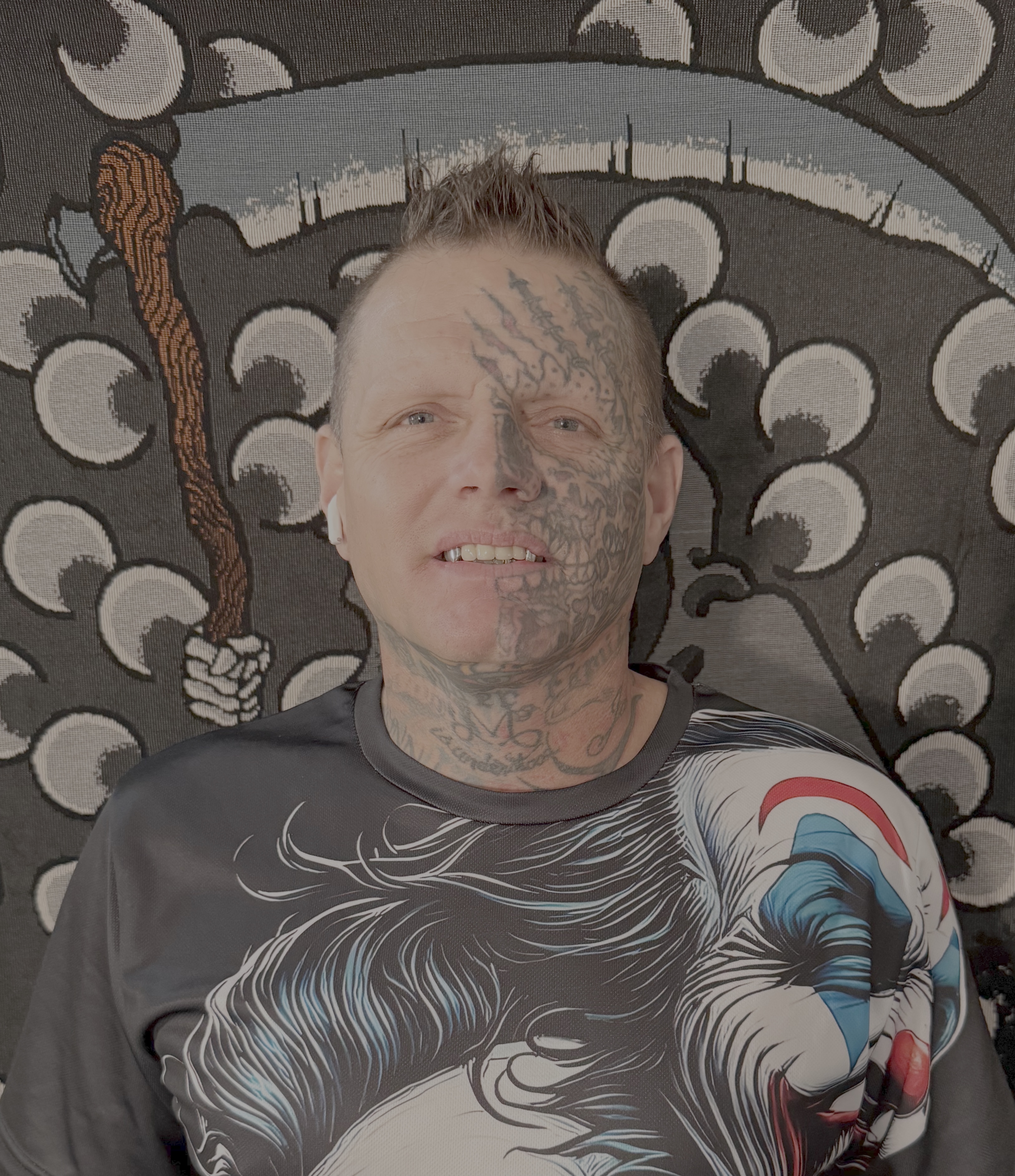
Founder of The Hopper House
Chris Hopper is a pastor, speaker, and founder of The Hopper House, a faith-based recovery community dedicated to helping men rebuild their lives through structure, service, and spiritual growth. After overcoming incarceration and personal loss, he turned his life toward ministry and mentorship, inspiring others with a message of redemption and purpose. Through The Hopper House, Chris continues to guide people toward healing, responsibility, and lasting transformation.