
 YouTube
 Apple Podcasts
 Spotify
 iHeartRadio
 Pandora
 PocketCasts
 Life After Abu Ghraib, an HPD Officer's Knee on My Neck and Losing My Sheriff's Badge
Edwin Henderson is 45, an Army veteran with one Iraq deployment, and a former Harris County deputy who watched his law-enforcement career end on the ground outside a Houston club. He now works in business development at West Oaks Hospital's Patriot Support Program for veterans and runs Chefs in the City as an executive chef on the side.
He grew up the latchkey son of a single mother in north Houston, helping look after an older brother who was born blind while his mom worked hourly jobs and played piano for Pastor John Osteen's Lakewood Church back before Joel took it over. His father was almost entirely absent — Edwin can count the encounters on one hand — but the men of the church stepped in and taught him trades, work ethic, and the bones of an entrepreneur.
He enlisted at 19, was in AIT at Fort Lee, Virginia on September 11, 2001, and deployed in support of Operation Iraqi Freedom — a thirteen-month tour at Forward Operating Base Abu Ghraib in West Baghdad, the base taking rounds at 0300 on a routine. The unit's first translator turned out to be a spy. Edwin came home with night tremors and started drinking in Fayetteville before the deployment patches were unsewn.
Back in Houston he spent two and a half years as a Harris County detention officer waiting for an academy seat, then five and a half years on patrol. The chapter that ended his law-enforcement career started outside a Houston club, off duty: he identified himself to two off-duty HPD officers working extra job, refused to be talked to with disrespect, and ended up cuffed in the gravel with his off-duty weapon pulled — a lieutenant who would later become HPD's Chief of Police standing over him saying "Deputy Henderson, I don't know what you did to be able to piss off my officers." The termination was overturned to a resignation. He never got back into law enforcement.
What followed has been a long, still-unfinished stretch of unrecognized PTSD, drinking he didn't call addiction until he started sitting in on West Oaks treatment sessions and recognized himself in them, and recurring suicidal thoughts he is still actively working on with the VA. The trip that broke something open was a Heroes to Heroes pilgrimage to Israel shortly after — a baptism in the river Jordan that made the language he grew up in real for the first time.
Edwin talks with Matt about being addicted without calling it that for over a decade, the destruction of the family unit and the inheritance left to men in this country, a generation of kids he sees making sober and chaste commitments their own parents never modeled, and why he keeps showing up to a service career that has fired him in every form it could.
EDWIN HENDERSON is a U.S. Army veteran who deployed to Iraq in support of Operation Iraqi Freedom in 2003 and a former Harris County Sheriff's deputy. He serves as Veteran Business Development Representative for the Patriot Support Program at West Oaks Hospital in Houston, and is the executive chef and founder of Chefs in the City — Culinary Institute of America–trained through the Wounded Warrior Project. He is open about his ongoing work with the VA on PTSD and suicidal ideation, and about the long road of being a man trying to take his own advice.
Follow Edwin on Instagram @chefsinthecity713
Connect with Edwin on LinkedIn
Learn more about West Oaks Hospital at westoakshospital.com
Matt Handy is the founder of Harmony Grove Behavioral Health in Houston, Texas, where their mission is to provide compassionate, evidence-based care for anyone facing addiction, mental health challenges, and co-occurring disorders.
My Last Relapse explores what everyone is thinking but no one is saying about addiction and recovery through conversations with those whose lives have changed.
For anyone disillusioned with traditional recovery and feeling left out, misunderstood, or weighed down by unrealistic expectations, this podcast looks ahead—rejecting the lies and dogma that keep people from imagining life without using.
Got a question for us? Leave us a message or voicemail at mylastrelapse.com
Follow Matt on Instagram @matthew.handy.17
About Harmony Grove Behavioral Health
Harmony Grove delivers outpatient addiction and mental health treatment focused on wellness, creativity, and authentic human connection—providing a supportive space for healing that extends beyond traditional clinical care. Find out more at http://harmonygrovebh.com/
Harmony Grove's IOP in Houston, Texas, is more than a program; it's a lifeline for those ready to take the next step in their recovery. We are ready to meet you where you are and find your unique path to change.
If you're feeling overwhelmed or struggling, you don't have to face it alone. Reaching out for support is a sign of strength, and help is always available. If you or anyone you know needs help, give us a call 24 hours a day at 844-430-3060.
Host: Matthew Handy
Producer: Eva Sheie
Assistant Producers: Mary Ellen Clarkson
Engineering: Chris Mann
Theme music: Survive The Tide, Machina Aeon
Cover Art: DMARK
Edwin (00:00:00):
Deputy Henderson, he says, "I don't know what you did to be able to piss off my officers." And that was the lowest moment of my life.
Matt (00:00:16):
I'm Matt Handy and you're listening to My Last Relapse. So tell me about yourself.
Edwin (00:00:22):
So one of those questions that I always try to figure out how to properly answer.
Matt (00:00:27):
Okay. What was your childhood like?
Edwin (00:00:29):
What was my childhood like? I grew up in the inner city of Houston, so on the outskirts of Fifth Ward area.
Matt (00:00:40):
Like north side of it or something?
Edwin (00:00:41):
Yeah, north side of town. Single mother, three other siblings, one of which is a handicap. I was born blind and actually just he had his 48th birthday yesterday. So I was at my mother's house and so we're still taking care of him and doing the family thing there. But yeah, I had to grow up a lot faster than most kids. So there was a lot of responsibility and weight on my shoulders that I didn't really recognize as a child, but it was just the thing to do. That type of thing of having to be home and being that quote unquote latchkey kid where I had to be able to kind of step into the position of our take on responsibilities that the average child really didn't have to take on at a very young age. So I would say that it was a blessing and a curse at the same time because sometimes you don't get the opportunity to properly enjoy your childhood the way that you would like.
(00:01:40):
But I felt like later in life it was something that I look back on and I can say I was appreciative of it because most people, they didn't mature in certain areas or whatever later in life and I had to take on those responsibilities as a kid.
Matt (00:01:53):
Okay. Single parent?
Edwin (00:01:54):
So yeah, single parent. Mother worked a lot of in and out jobs, hourly jobs, things of that nature, but did what she needed to do to be able to lay the foundation for us. And so she was great in an area of the spiritual side of things. Sometimes I think it probably could have been equated to almost being too religious sometimes, but always I'm thankful that that foundation was laid at that particular time because it helped me to recognize. And one of the things that I always say is that when I look at life as itself, many times we feel like that this is just the in and out of going to work and taking care of family. But I think many times we all as humans have had these moments of feeling like there's something more to this existence. And so I believe that's the spirit that's on the inside of us.
(00:02:49):
So she did that at a very young age for all of us and sitting down doing Bible study and she was a piano player. So in the younger years she played piano for Lakewood Church back before Pastor Joel, it was Pastor John Osein, his father, and then went over to play over for some different ministries and things of that nature. But yeah, I mean, I would say it was still fun, but it was also moments where there was hardship. There were moments where we didn't have a lot because my father did not play a significant role in our lives at all. I could count on my hand how many times I probably saw him when I was a kid, thankful that I had an opportunity to establish somewhat of a relationship later in life, but he's actually, and he passed, it's been four years now, probably like a few days ago or so, but it was just me growing up and growing up fairly fast and not necessarily knowing who I was as a young man or as a teenager, but I also had, I was surrounded with a lot of men at church.
(00:03:59):
So I was thankful for that. Of course, they can't replace a father being there, but at the same time they were supplemental in certain areas. So I got an opportunity to learn certain trades and there were certain men at church that I can attribute to certain skills that I have as far as like learning how to wax a floor. And certain men had certain businesses where we go out and clean other establishments. So I learned a lot from some of these men where responsibility and taking care of family and just being able to make an income and them showing me that it could be done. I think that's ultimately what led me to go into entrepreneurship. Even myself is just seeing taking something that you know that you might be gifted at doing and recognizing that I can actually monetize this because it's something that I truly believe that God has placed on the inside of every one of us.
(00:04:51):
But a lot of times we don't recognize what that gift is. It's like we're still navigating life trying to figure out what our purpose is. But the more and more that we can internalize and look within on the inside of us and identify what that is, then we can see that, okay, well, God has gifted me with this. Even if you're working a nine to five, I believe that he's gifted at everybody with something. It might not necessarily be an area of entrepreneurship, but you might have the gift of just being this overly loving person and the gift of being able to encourage somebody and to be able to help them to see life through a better lens. So childhood and teenage years and all of that were fairly good. Outside of just those struggles of not having the financial resources and things that everybody else had back in those days, I'm 45, so this was around the time that starter jackets and the J's and certain clothing.
(00:05:47):
And I don't know if the teens now, I don't recall my son who's currently at UT Austin, he never was necessarily big into materialistic stuff, so I don't know if teens of today are still the same way, but I know back in those days, it's like if you didn't have this and have that, then you just weren't necessarily a part of the in crowd per se, polo shirts and I couldn't afford any of that type of stuff. A lot of my clothes even in high school were hand-me-downs, but I pieced them together as best as I could and kind of rocked out from there.
Matt (00:06:23):
And so how did that lead you into whatever you're doing today?
Edwin (00:06:29):
I would say that a lot of my childhood and teenage years positioned me for everything that I'm doing right now because I recognize through everything that I've done, whether it be from being a Boy Scout and I always say when I think about the TV show, Boys in the Hood, I was a Boy Scout in the hood. I couldn't afford the actual uniform so my mom pieced together the uniform and from the thrift store or whatever, some goodwill or something like that. And there was always this passion that I had for serving other people. I remember a situation where there was the elementary school I went to, Ryan Elementary, which is no longer an active school in the HISD system I was trying to earn my merit badge for food service. And so me being a eight-year-old kid, I didn't recognize that other people were really just as even more impoverished than what my family was.
(00:07:33):
My mom, there were moments where we were on food stamps and things of that nature, but she did what she could to where I don't feel like I really just truly felt the effects of it, like, "Oh, I wish I had this. " She just made us feel like she was taking care of things. But I remember knocking on an elderly later's door and I started with my little spiel about trying to get some canned goods and she kind of looked at me and she was like, "Well, baby, you need to be giving me some canned goods." And I realized that a lot of people were just in these positions where they just didn't have a lot and the whole neighborhood and just area was the same way. So I would say that many of those situations there and seeing that and seeing a lot of people that were strung out on drugs and just a lot of different things where I think that foundation of service is where it became established.
(00:08:24):
And then also I think church became that other avenue that led me into this. So I was very active, very active in church with the youth ministry and the dance team and serving with any department to choir. I sing a lot. So I believe that all of that led to doing those type of things and then just being around some of the men, seeing them serve with their families, I believe is what ultimately led to this and then eventually RLTC in high school and things of that nature. Right.
Matt (00:08:58):
You were in the military, right?
Edwin (00:08:58):
I was. Yeah, correct. I was Army as well and served eight years in the Army, did one deployment in Iraq 2003 when that whole thing popped off. So that was quite interesting in itself. But I think the biggest question that I always had was like, what is my purpose in this existence? What is my purpose in life? And to be honest with you, even into my latter years, that still was a question of my mind because as a young teenager, I was always being told that I was going to be a pastor because for whatever reason, I would go to these different ministries and people would prophesy and say that they see this in me. And so I started thinking to myself, what is this all about? But at the same time, I didn't really sense that that's what I was going to be. I did believe in my heart that there was something different about me because it was odd how some of these situations would happen.
(00:09:56):
I think about being a part of this and picture me being like an all white with like a sequence, gold belt on, like dancing and doing all this stuff. And then the minister from the very front comes to the very back of the church and singles me out of everybody that's around. And I'm only like 14 years old and says some things about me and who I'm as a person and what God is sharing with her about my life and about the direction that I'm going to do and it was all service related. And so I looked in my later years, probably mid 30s, late 30s, somewhere around there, I started thinking like, "Man," I said, "This is what my calling is. My calling is in the area of service." And so for some that might be isolated to one specific thing, like some people might be called to nursing and some people might be called to law enforcement.
(00:10:52):
I didn't believe that mine was in one specific area. I've done law enforcement, I've done the military. I believe that for me it's always been where does God want me at now at this moment? And that moment might end because there are many times there are certain chapters that close and we have to learn how to recognize honestly when a shift has happened in our lives, because as much as we might desire to remain stationary because contentment can set in and you can get to a place where it's like, "Man, I'm comfortable here." But I believe that the most high knows that there's greater in the inside of us and many times we don't see it. And so he will allow us to remain in a certain position many times. But then there are sometimes that it's like, okay, I'm trying to get you to recognize that the shift is taking place and you are resistant to it.
(00:11:49):
That shift has taken place many times in my life, but that shift is taking place in the form of terminations, you know what I'm saying? And for the next person, it might be something different. But for me, I used to always question like, "Man, I wish I would have a career in a certain area for 20 years or 30 years." And I can look back at my life and say, "Man, I've done this, but everybody's trajectory is different." So I'm looking at somebody else's life and how they've been consistent in a certain profession for X amount of years and comparing it to mine, not realizing that the path that God wants to me is very different. Now, maybe certain choices deviated me from going certain places, but I also believe I had to recognize that when doors close in our lives, it's not always a bad thing the way that we many times see that it's a bad thing.
(00:12:44):
Many times it could be the hand of God closing that door and it might come through the form of a termination. And so because you only see it as, "Man, I can't believe I got terminated," because nobody wants to be terminated. I've even been in positions as a manager where I've had to let people go and it's not a good feeling. So I think about if that's happened with me a significant amount of times, what is wrong with me that I can't keep a job? I go somewhere and I'm there for five years and then I go here and then I felt as if the spirit and the inside of me was saying, "Your path and your journey is not the same as everybody else's. I'm trying to get you to a certain place." And even in the midst of it, what's happening is character development is taking place.
(00:13:28):
If you allow it to take place, because what you could do is you could process that, you could become
Matt (00:13:35):
Resentful.
Edwin (00:13:35):
Yeah, very resentful because there was a time period that I was. And I'll be very honest with you that I was, and I'll give you one example when I was with the Sheriff's Department and that job was ripped away from me and it shouldn't have been because there were other people that like I think about all of the officers and deputies that are on the beat right now that probably don't deserve to be on the street. And here I am a guy that I felt like I was very understanding of society, even from my deployment in Iraq and how I dealt with the civilians there. But then I come in here and I start patrolling this area and then I have this said about me to the point where it leads up to a termination. It gets overturned, but then I'm never able to get back into law enforcement.
(00:14:19):
And then I got to the point where I felt like, "Okay, God, I see what you're doing. It's not meant for me to go back." And I had to recognize that that chapter was closed. He allowed me to be there for a certain period to be able to learn a certain thing, but then it was now time to move on. And I kept trying to go back and fight against the grain, kind of like the salmon working upstream and it's not leading me where I need to go. So I had to let it go, but the moment I let it go, so many other opportunities opened up. And then I had this opportunity to go to Israel shortly thereafter and a trip that I took actually with veterans, with a group of veterans through an organization called Heroes to Heroes. And the only thing that I had to do was purchase my flight to New York.
(00:15:04):
Everything else beyond that, they took care of housing accommodations, food and things of that nature. But it was the most amazing, and I wouldn't call it vacation, the most amazing experience that I've ever had in my life because what it did was it brought the life, the Bible in a sense and everything that I had read when I was a child up until the time that I was an adult and it just made it more real. But I also realized deep down inside, like this passion inside of me has always been just, how can I serve? How can I give back? And that ultimately I believe led me into even the position that I'm in now with West Oak Hospital on the mental health side and then with my business as a chef, it's always just how can I serve? How can I be of assistance to other people?
(00:15:52):
Because I identified something when I was going through that struggle of not having staying in this position X amount of years and being terminated here and all of this is that I believe God said on the inside, it's like, "I need you to serve." And so I remember it was like I didn't have a lot of money and I got some food together, got some bottled water and this is at the time my son was like maybe eight years old and then I had my two nephews, which they were like my sons prior to me having my son. And we went downtown and we just started serving folks passing out water. Some people were reluctant because we're in a society now and I get it where kindness is kind of almost like, what's the catch? What do I have to do? I was watching a funny video online the other day and a guy was, he's a comedian, but I think he's fairly wealthy because of some oil and some other stuff.
(00:16:47):
And he just goes around doing kind gestures for people and most of the time people are very taken aback because we've gotten to the place where serving other people is and doing it from a place of genuineness is obscure.
Matt (00:17:03):
Yeah. There is a complete lack of altruistic service.
Edwin (00:17:10):
Yeah. So how can we get back to that? It's how the creator made us. It's on the inside of us, but many times we stifle that feeling because we also still with that same nature of wanting to serve and give, we also have the selfish mentality too. And I think that's just human nature and many times and not to overspiritualize it, but I believe that's the significance of being connected to what many would probably say is that higher power. I always say God is love ultimately. So if God is love and he's the foundation, he's the beginning, he's the end, he's all of these different things, then when we think about our flesh, which is of a nature where it wants to be selfish and many times you want to be able just to me, me, me, me, me. But the more and more you recognize, the more I give, you really do open up the door more to receive and that becomes evident through the parable and the Bible about the sower and this person had this and this and who held this.
(00:18:14):
The more and more that we give, the more and more that we receive. And so I just want to be in a position where for myself has always been, God, I want to be ... I think we all desire to be blessed in life and many times we equate blessings to- Having things. Having things. I don't believe that blessings are having things. I believe those are the byproducts of being blessed. I believe that the blessing is what he has on the inside of you because he's giving you the ability to obtain whatever that thing is you want. So of course, God wants us to all be well off and have certain things and to live and just have whatever that accommodation might look like. For one person, it could be a house, just a one bedroom apartment or whatever it might be. But the thing is we lose sight and we think that the blessing is a material thing and it's not.
(00:19:07):
The blessing is what he's placed on the inside of you that you can serve to makin and then in turn through whatever they purchase from you or however it goes, that's how the byproducts come about. So we misappropriate what truly being blessed is. It's like, I feel like I'm blessed because God, I recognize that you've gifted me with something. Now, how do I identify that on the inside and then I give it to the world? If I never give it, and the way I look at a blessing again, it's like a gift, but it's a gift that needs to be served. And if I never actually go within and then I never serve it to mankind, is it really a gift? If I say to you right now, "Man, I got you a gift, but it's in the car right now and I never give it to you before I leave here," then technically it's not a gift because a gift is meant to be given.
(00:20:01):
And so I believe that what God placed on the inside of us is meant to be given, but what we do is we like to hoard it for ourselves and think that it's, okay, well, and then that puts us into that self, that mentality of, "Well, look at me and I'm this. " And it's like, well, no, you got to recognize that what he's placed on it. Yes, you're talented. Yes, you're this, but it's meant to serve other people. And that's how the world really is, is that we're all here even with me feeling like I'm not necessarily an outgoing person and I like to keep to myself many times, it's more of we're all here to serve one another in some capacity, some shape, form or fashion, we're all here to serve one another, but many times we don't see that because it's always every man for themselves type thing.
(00:20:46):
And so my hopes is that through what I believe that he's gifted me with in whatever capacity, whether it be the gift of cooking, the gift of singing, the gift of serving the homeless or whatever it might be, how can I plant a seed that's ultimately going to render a harvest in somebody else's life? I might not see it the moment that I plant it, but somebody else. You might come along and do something, a kind gesture for somebody that waters that seed that ultimately brings about a harvest in a person's life. And we don't know that one thing that we planted could change the trajectory of somebody's life because that's how God designed us is that we all here. I believe God works as much as we say God is a higher power and that he's all this and he can do everything without us.
(00:21:30):
I believe that's true, but I also believe that God desires to work through makin through the things that we do on this earth and we just have to be sensitive through our spirits to be able to allow that to happen. And so that means you have to stay connected as best as possible to where you're not always thinking selfishly. And sorry if I get long-winded.
Matt (00:21:49):
No, you're good. You're good. You're good. What was Israel like?
Edwin (00:21:54):
Israel. Israel was a journey like no other. I know we started down south in Tel Aviv and then we worked our way up basically through the journey of the footsteps of Jesus. And it was pivotal in so many ways because I saw the spirit of God work actually in one of the veterans that was there and we found out in the process of all of this that his brother had committed suicide and-
Matt (00:22:26):
While you guys were there?
Edwin (00:22:27):
Well, not while we were there, but I think maybe a year prior to him actually taking his trip. We found out his brother had committed suicide.
Matt (00:22:36):
Also a service member or no?
Edwin (00:22:37):
He was a service member as well, yes.
Matt (00:22:39):
The brother?
Edwin (00:22:39):
The brother was, yes. Brother was a service member as well. And so we take this, we're getting ready to get baptized in the river of Jordan, but this one veteran that's before we found the story out, he's only taking a trip because it's like, oh, it's more of a free trip. It's not really like I want to get the experience of Israel from a spiritual standpoint. And so everybody had their various different reasons why, but the premise of the organization was to be able to not necessarily indoctrinate you into Christianity, but to-
Matt (00:23:11):
Expose
Edwin (00:23:12):
... expose you basically. But he was making a lot of jokes, like even from the white gowns that we had to wear. And it was almost to the point where it was pissing me off where it's like you're making a mockery of something that I deep down believe and my heart is true. And I can respect the fact that you might be an atheist or you don't believe in God, but the crazy part about this is that he decided he was going to get baptized,
(00:23:33):
But he's just doing it because he wants to get the robe and you can tell that he's literally saying this, "Oh, I just want the robe." So he gets in the water and interesting thing is he tells one of the lead people that's a part of our group that I don't want the minister that's in the water to baptize me. He says, "He wants the lead guy to baptize him." And so while he's sitting in the water, he shares the story with the lead veteran that's going to baptize him because he's actually a, he was a licensed minister and come to find out that the name of his brother was the same name of the veteran that's baptized him. So it became like really a healing moment for him at that moment where he literally breaks down in the river of Jordan sobbing and came out a new individual, but had that moment, even through the mockery of what he was doing, like I always feel like the spirit of God is always after us, is always seeking after us.
(00:24:30):
No matter what state we're in, even when we're at our lowest moments of life, I believe that the spirit is always seeking after us and then deep down inside we just have to get to a place where we can answer what it is we're filling. So Israel became just that freeing moment of really seeing the Bible come to life and now to go to the ... There was the pool of Bethesda where if you touch the healing waters, so to physically see the pool of Bethesda and to see the place where they said this is the tomb that Lazarus came from. And some places might have been adjusted. And of course they still had people selling things and trying to make money off of it, but no different than when you think about in the Bible when Jesus went into the temple and started tearing stuff up because people were trying to profit off of-
Matt (00:25:20):
The money changers.
Edwin (00:25:21):
All the money changes. Yeah. So that was going to be ... But I would say for me that it just became a journey in the healing because healing to me is a continual thing. So for myself at that particular time, it was what I needed because there were so many moments, I'll be honest with you, man, that I dealt with a lot of suicidal thoughts from my church- Post. Post-military, yes. And even when I was at the sheriff's department, there was a moment where I thought about death a lot. Coming from Iraq, it's already there because it's in the forefront of your mind like, "Man, I don't want to get killed." But then now when you start and you come back into society and now you start patrolling the streets of Houston and you're seeing-
Matt (00:26:09):
What part of Houston were you
Edwin (00:26:10):
When I first started patrolling, I patrolled District three, which is the east side of Houston. So that's the North Shore Channel View Baytown. They consider down south like the Galveston Clear Lake area. So there are areas that are unincorporated parts of Harris County in that area. So I patrolled there first and then I went to Highway six and Clay Road, which is District four. Then from there, I became a contract deputy. So that was kind of like a very chill spot. So I used to just go out and help out the other guys and other beats that were dealing with stuff, but you're seeing suicides and homicides. And so all of this is downloaded into your system and when you really look at it, the human mind, it's not meant to try to handle all of that. And so you have to learn how to be able to decompress and offload and all that, but most of the time you didn't.
(00:27:01):
You just went from job to job, job to job, job to job. And then once you get home, it's like it becomes overload because you've seen so much. And so for myself, it became even more overwhelming because I just couldn't shake this idea of death. And then that was around the time that I was still dealing with a lot of night tremors and things of that nature from waking up in the middle of the night because of our FOB or what they consider a forward operating base in Iraq used to come under artillery attack quite a bit.
Matt (00:27:36):
What base was this?
Edwin (00:27:37):
I was in, my mind just go blank, Abu rape in West Palm. Oh, wow. So I was in one of the hotspots in Iraq and then we had some teams that were in Fallujah, which became very popular in the news. But you think about that, we come to find out later that one of the original, or one of our first translators was actually a spot. So of course, now he gets arrested. We got to deal with him. And then we took on another translator, which a guy named Hider, loving guy and him and I are connected on Instagram and he's now living in the States with his family, but a lot of the translators at that time- As he should be. As he should be because America had promised a lot of things for these translators, but unfortunately many of them didn't even make it back alive. Many of them got killed because once we pulled out, that was just it for a lot of them. So many of them had to try to flee as best as possible.
(00:28:30):
But when you're trying to manage all of those different things, the human body just becomes overwhelmed with the idea of things. And so for me, I realized that I just struggled in that area and a lot of times I just kept compiling things and just putting things over the top of things and not properly dealing with it. And I still really had not properly dealt with things moving forward, thinking that, oh, well, cooking became therapeutic. And it is, and it still is to this day, but I also realized that I needed to be able to talk to someone. And that's when eventually I started seeing someone at the VA, but then I didn't like the group therapy. So then I dropped out of that and I'm like, I don't really want to talk about this because it's almost like with veterans, especially when you get veterans from different campaigns of war from, you got some guys from Desert Storm, Desert Shield, then you got some OIF, OEF guys, and then you got some Vietnam guys, everybody got their award story.
(00:29:26):
So it's kind of like you're competing. And I'm like, I don't want to sit in here and just listen to y'all try to compete about whose gun was bigger.
Matt (00:29:33):
Did you ever have any substance use issues?
Edwin (00:29:36):
I would say at one point in time, I would say I started drinking more.
Matt (00:29:39):
In the military?
Edwin (00:29:40):
Actually, I didn't drink until I got out. Well, no, I will say this. I started drinking while we were in Fayetteville, North Carolina at Fort Bragg. That's when I first started drinking. So keep in mind, like I told you, I grew up in a Christian home and so that was never a desire of mine. I had no desire to drink. I had no desire I could do any of that. I mean, of course, I kind of wanted to go out with friends and go to clubs, but my mama wouldn't allow nothing to happen. So everything that I did was youth ministry driven. But after Iraq, that's when I realized that I started going out and I started drinking and I started going out to clubs.
(00:30:19):
When I think about the term addiction, I used to always say to myself, because I feel like I have control of it. Well, just because you feel like you have control of it don't necessarily mean that you're not addicted. I think that there are different levels again to addiction. From what I do right now with West Stokes, I'm on the business development side, but I'm still, I sit in on a lot of these sessions and I just like to listen and learn. And that's when I started realizing, Edwin, you are addicted. Because if you ever feel the need to when I get home from a long day of work that I got to have a drink, that's an addiction. You might just only have one or two drinks, but it's this craving or this desire or this impulse that you get where it's like, okay, well, I have to have this to be able to relax.
(00:31:03):
And when you feel like you have to have something to be able to relax, then you might want to take a look at what you're doing because then now for some it might go a litle bit further and to the point where it becomes really bad and you're just not able to control and manage life. But I believe that for myself, it became that theme where I realized, dang, if you go back and look at your timeline from when you got back from Iraq, there really hasn't been a week that you haven't had a drink. You might've had one or two during the middle of the week and then you didn't have any more, but the reality is that you feel like you just kept doing it. So I had to start recognizing the scale back on that and make some major changes in that area.
(00:31:42):
And then when you're in the food industry and then you're cooking and I used to have liquor and everything sitting on the shelf in my living room because I just bought it all in advance because I didn't want to have to go to the store when I'm doing catering events. I had to remove that because just the very sight of it. I felt like it was there so it was easily accessible and it's like, okay, no, you need to put this into a tote. It needs to be put away until you have an event. But I had to make some major adjustments because that's what I did. It was going out to the club, it was drinking and I realized it wasn't leading me down the path because there were moments where it was interrupting my sleep. I'm already dealing with PTSD related issues and now I'm thinking that me taking this drink is going to help me and it's really not.
(00:32:29):
And I think deep down the side, we know certain things aren't the best for us, but we still do it because we think at that moment it's going to help us to be able to ease whatever it is we're dealing with.
Matt (00:32:41):
Yeah. So it was military, then the sheriff's office?
Edwin (00:32:45):
Military, then the sheriff's office. And I was with the sheriff's department about five and a half years. I started working in the jail first. So of course, back at that time you had to be a detention officer and-
Matt (00:32:55):
Was it two years?
Edwin (00:32:57):
Well, actually at that time it could have been a year at the time, but I think it just depended upon when the next academy would come up. So for myself, I think I ended up waiting about maybe two and a half years because commissioners court was doing some janky stuff to where we were only having about one academy a year. There were a lot of people that were going over to University of Houston downtown because there was a loophole where if you got your TCOS certification and be a police officer that you could come back and patrol or work with the county- Go straight to the streets. But it was just the thing of if you're doing it at UHD, you're not getting paid the same way that you would go to an academy for Harris County or HPD or larger agencies. So most guys that were doing that route, they were working full-time at the jail and they were going to school on the law enforcement side of the academy and I'm like, "I don't really want to go that route." So at the time I was just working as a detention officer going to school.
(00:33:55):
I decided to enroll back in school. So I wanted to finish my degree. So I started going to Sanjak on the east side of town and just waited for my opportunity and then an opportunity presented itself and then it got pulled away because I ended up, if I'm not mistaken, if I had a family member or somebody that had gotten locked up and it was a situation where I had gotten the authorization to go and visit that person. And of course they said, "Well, you're going to have to take off your detention officer shirt because you don't want to look like an informant or that person is looking this way." But it backfired on me because there was a lieutenant, I can't remember the gentleman's name, but he was a prick and he found out that I'm actually visiting this family member. He pulls me out or he asked one of the officers to pull me out and pulls me into his office.
(00:34:49):
And so of course, I'm extending to him all the pleasantries the same way that I would talk to an officer if I was in the military. I'm standing there, hands behind my back, parade rest. Yes, sir. No, sir. And he's just hammering away talking reckless. And I said something at that moment, there's a side of me where I don't care if you're an officer or not, there's a defiant side of me where I feel like if you're going to disrespect me, then I'm going to say what I have to say. And so still talking at parade rest, but I said what I said because I'm like, I don't understand why you're pulling me away from this visit when I already just got the authorization from the captain, but now you're telling me I can't do it. Who was
Matt (00:35:29):
His superior?
Edwin (00:35:31):
That was his superior, but because he just didn't like the way that it looked, he now takes it away from me. So lo and behold, that pulls me away from going to that academy class because I was already on there. So he did whatever he did to get me removed from that class and I had to wait. And then eventually I get the opportunity to go and then I get on the beat. But then of course, while I'm going patrol and doing my thing, had two different situations take place in life that ultimately one involved alcohol. Now I wasn't drunk or inebriated, but the two officers claimed that I was. And then they said that I tried to assault a police officer. I thought to myself like, I've never in my life tried to assault anybody. And then I also said, well, I know you all got video camera.
(00:36:15):
This establishment had videotape. And I said, "If you pull the videotape," I said, "I can assure you that it's going to show that I didn't do the stuff that you said that I did." I just know it.
Matt (00:36:24):
Videotape disappears.
Edwin (00:36:25):
Videotape was distorted. They provided it, but in the investigation situation, they literally showed me as the aggressor. So it wasn't one of those fluid type cameras. It was a CC TV, it showed the shots.
Matt (00:36:40):
10 Seconds
Edwin (00:36:40):
Here, 10 seconds. So all they showed was me walking towards the officer and then they painted the picture that I was the one that was aggressive and I approached him and I said, "Well, no, I wasn't." I said, "What took place was I was approaching him asking him, why are you talking to me reckless?" Because he had already first came by, I showed my credentials, had the car started, was waiting on a buddy of mine because it was another actually deputy that was with me and him and I had both met there and he now I'd already identified myself, he drives off, he comes back a few minutes later. So
Matt (00:37:12):
They were on the clock and you weren't?
Edwin (00:37:15):
Yeah, correct. But they were pulling EJ, so they were doing extra jobs. So they were basically in an unmarked white Jeep Cherokee, but that establishment had an HPD substation that was on site. And so they're doing their job there. And I said, I get it. I understand because at the time I was working several EJs across the city of Houston. And then I also have a respect level for other agencies, even though there was always this contention between HPD and the county and-
Matt (00:37:44):
Jurisdictional Contention.
Edwin (00:37:46):
Exactly. So I rocked with it, but unfortunately he was just a very disrespectful officer and lo and behold, I found myself face first in the ground in the gravel of the pavement. His knee is in my neck. I had my off duty weapon in my back, my waistband. And next thing you know, he's taunting me while I'm on the ground and he's like, "You're going to lose your fucking job." And just starts, "Oh, you're drunk and you're this and you're that. " And I'm like, "But I'm not drunk." And then I'm pleading also because I have a Titanium plate in my wrist from an accident in the military to where I can only turn my hand over so far. I'm asking him, I'm like, "Man, can you loosen up these cuffs?" Because that's one thing that officers will do when they're dealing with somebody that's defiant or whatever.
(00:38:42):
They think the person is resistant. They going to clench up the cuffs because they know that once that pain inflicts on you, that you're going to be compliant. Oh yeah. Well, I wasn't fighting a guy, but he's just standing over me. Next thing you know, the lieutenant that's on duty, which that lieutenant at the time, fast forward, became the chief of police for HPD. Now he's no longer there. So if you picture who I'm talking about, he stepped down once the new mayor came in, because of course he technically got fired because the new mayor or whatever brings in his own people, but he was the chief of police for HPD, but at the time he was a lieutenant when I was on the beat and he's like, "Deputy Henderson, I don't know what you ... " He says, "I don't know what you did to be able to piss off my officers." And that was the lowest moment of my life, man.That was the lowest moment because I found myself in handcuffs.
(00:39:37):
Now keep in mind, I had never been in handcuffs outside of play handcuffs when I'm a kid, playing cops and robbers and when I went through the academy to learn how to use handcuffs and properly get them off of people and all those different things. So I'm standing there in handcuffs and I said, I'm talking to, again, pleasantries to an officer. I said, "Sir," I said, "I don't know what it is I did wrong." I said, "I'm not inebriated because he starts telling me a story about, he said, you're a young deputy. He says, you might want to be very cautious about being out drinking and this and that. " I said, "You're absolutely right, sir. I understand." But he's also doing his due diligence to take care of his officers. So even though a lieutenant, once you get to that rank that I believe that you should take an objective perspective on assessing the entire situation to find out what's going on, he did what any lieutenant would probably do is take care of his guys first and so-
Matt (00:40:36):
They say that justice is blind, but I think she can see through that.
Edwin (00:40:40):
Oh, absolutely can see through it. And so I end up having basically my off-duty weapon taken from me. They kept it. They told me I couldn't drive my car that night because apparently I was publicly intoxicated. So my buddy that's with me is like, "Hey, I know I've worked with him." My buddy now is actually a lieutenant, recently got promoted, but he's still with the agency now and just went off patrol and went back and working in the jail. But at the time, he's like, "Man, I've been working with Henderson for a long time. We worked double door lockdown. He's a good guy and they're just basically telling him to shut the hell up. He ain't got nothing to do with this. " And so while I'm still, now the officer picks me up off the ground, walks me over to-
Matt (00:41:24):
The car.
Edwin (00:41:25):
I don't even know whose car it was he walked me over to, but he walks me over to a car, he slams me on the hood. And at that moment I recognize, I said, "I see what a lot of society sees now." Of course, I know that there are bad officers that are out there, but the moment that I was handled like that, my face is bloody because of course then he threw me on the ground and what led to me being thrown on the ground is because when he approached me and I said, "Why are you talking to me? " I said, "Dude, why are you talking to me like that? " I said, "I've already identified myself." And he says, "I don't give a fuck who you are. " And so when he said that, another side of me came out. So at that moment, I'm like, "Well, fuck you then." And I don't think keep in mind, I don't even talk like that.
(00:42:06):
Most of the time if I had to say something to somebody that's like, "Hey, bring your ass over here," or whatever it might be, but for me to say that you've got under my skin. So he didn't like the fact that I said it. And when I said it, he throws me into an arm bar, puts me on the ground and then handles me.
Matt (00:42:21):
Yeah, you were being aggressive.
Edwin (00:42:22):
Yeah. And I became the aggressive one at that moment. But I say all that to say is that all of that situation that happened, although as bad as it was, not saying that that scenario per se had to have happened that led me out of the sheriff's department, but I believe that God only wanted me there for a short period of time anyway. And through that moment, that door closed and although the termination got overturned to a resignation, I still wasn't able to get back in. And that's when I recognized, okay, God, you're leading me. Because in my mind, I was just going to retire from law enforcement and then go into teaching because I felt like I always loved working with teenagers and youth. So that's going to be the trajectory of my life is I'm going to retire from being a detective because that was one of my biggest things.
(00:43:06):
My field training officers, my FTOs would always be like, "Man, you really do a great job at getting the information because that's really the primary job of a detective anyway." So most of the time any homicide, suicide or whatever that took place, I got so much information on any call that we dealt with that when a detective showed up, they didn't really have to do any work. I literally gave them a notepad that gave them everything that they needed to be able to go and finish their job without them really having to do anything. But that was something that I always loved. I really wanted to be a detective and I saw myself being it really, but I felt horrible when it got taken away.
Matt (00:43:45):
Yeah. So I have an extensive criminal record, three prison terms in the California prison system. I don't know how many arrests. I mean, I couldn't even guess. And for the most part, criminal mentality, gang involved, all this stuff, it was like cops, I'm not talking to them, but there was always that random cop that was able to get information and it was never like a questioning thing. It was like, okay, I don't even know how they did it, but
Edwin (00:44:19):
Always- It's a certain gift that you have without making a person feel like they're being questioned or they're under the microscope that you just have conversation somehow and somehow you can extract information that becomes vital to the overall case.
Matt (00:44:33):
Yeah. I never told on myself ... Well, I shouldn't say that. The last time I got arrested, the feds came and they had all these pictures on the table and they were like ... I was like, "How am I going to lie myself out of this? " So I was like, "Okay, you know what? For the first time, I'm just going to play ball with them and see how this works out. " And it turned out it really, really benefited me to be like, "Yeah, that was me. This is what I did." They were also looking for a bomb that I said I had and so that could have turned into some other shit.
Edwin (00:45:09):
It really could have. Yeah. You mentioned the term bomb. Bomb is not something to play with in today's society.
Matt (00:45:14):
Yeah. Well, also I robbed a bank and told them that I had a bomb.
Edwin (00:45:18):
Oh, wow.
Matt (00:45:18):
And so they were like, "We don't even care about the bank. We want to know where the bomb is. " And then I was like, "Okay, this could turn into some other shit." So I was like, okay, first of all, the notes that I had a bomb in my backpack, I didn't have a backpack on. They were like, "Okay." And it kind of defused the whole situation. But yeah, they put one picture on the table like, "Do you know who this is? " I looked at myself and I was like, "No clue." They were like, "Really?" It was very, very obviously me, but that was the only time that I told on myself, but it was very beneficial.
Edwin (00:45:55):
But yeah,
Matt (00:45:56):
There was always that cop that was, it was always somehow got more information out of me than I ever intended to give. And it was never integral to a prosecution or anything, but it was like I was famous for giving the wrong name and there were certain cops that it would just work on because I found this name that was similar enough to mine and I would give them my real social and in California they can't use for, I don't know why this is, but they can't, maybe it's the same here too, but they can't use their social to identify people.
Edwin (00:46:33):
Oh yeah.
Matt (00:46:33):
And so is that here too? Yeah. Okay. So I found that out and so I'd give them my real social and I would tell them that my name was very similar, same birthdate, all that stuff, because I was born in Utah. So all of this smoke and mirrors, but yeah, he would get my real name out of me or something. So yeah, I've met you before.
Edwin (00:46:59):
It was good times, man. I mean, it was definitely an experience is what I can say. And I'm thankful when I think about my age and I'm 45, man, it's just I've done a lot in a short period of time, but it's also been very significant, what I would consider very impactful. I mean, of course, do I believe I'm where I'm supposed to be in life? Absolutely not. But I feel like when I look back at things and some of the experiences that I've been given and experiences that I've had just through the area of serving, it's been good, man. I think it just makes life better. But then I also have those dark moments. There's a tattoo that I have here that's a star and before I got this star shaded in, it was just the outline of a star. And when I got it shaded, the meaning of it became most of the time when people see someone that might look like they're thriving in life and things look great from the outside, they don't see those dark moments that the person has.
(00:48:06):
And we all have them. That's what the significance of this shaded in dark star is, is that we are all stars because God has designed us that we're like, we're all that, but a lot of times people just don't see the dark moments that we have. And I have a lot of them. And I think especially as men, we have a lot of them and that's been the hard part, man, is learning how to be vulnerable enough to be able to express those dark moments and also give yourself grace because sometimes it becomes like this ebb and flow of like, I have moments where I have my ... And when I leave here, I literally have an appointment on the VA side, but I'm trying to be more intentional on giving attention to my mental wellbeing because I know I have a lot of overwhelming moments in life where I just feel like I'm about to break down and just thinking about it sometimes becomes overwhelming, man, because we all have them, man.
(00:49:11):
And that's where I just encourage folks to really give their all in relation to themselves. As much as I share that, I always share it with other folks, but I don't do it for my own self. It's like, how can I give everybody this advice and I work in a mental health realm and I'm not even giving myself what I need?
Matt (00:49:32):
Yeah. A landscaper's yard is always fucked
Edwin (00:49:33):
It's crazy, man. And that becomes the most hurtful thing, man. It's just you know what to do, but sometimes you don't do it or sometimes it becomes this internal battle where I think from the spiritual side of things, it becomes like the spirit knows what you need, but which one is stronger?
Matt (00:49:53):
Yeah. Well, so we live in a time ... Yeah, I know you've heard this, the epidemic of silent suffering, but also self cannot critique self. And it's really hard to look in the mirror and be fully objective about what's going on because you are yourself. And so you have the ego and the built up systems and the thought processes that it's much easier to look at this guy and be like, look, this is fucked up. You need to do this and this and this And this. And it's the same shit. But also men in general today, and I just had a three hour podcast on this with somebody, but men today, there's multiple things that count against them, like the destruction of the family, the family unit where a lot of young men don't have father figures in the home. So there's that. But then also we are living in a situation today societally where men are just looked at as bad. Men are bad, masculinity is bad, no healthy masculinity it exists. It's all toxic and there's these talking points. And a lot of it is like downstream effects of political systems,
(00:51:09):
But yeah, the average guy today, it's like we're also fed a lot of inaccurate information around being a man where it's like we're told women want something specific about emotionally in touch men and all this stuff. And then people do it or men do that or give that to them and then they're looked at in a certain way. I have a friend, they're married and they have a very unique marriage. It isn't unhealthy in any way, but she is submissive to her husband. And this isn't normal by today's standard, but if you would transplant them to a hundred years ago, this is a very average typical relationship, right? But people, well, she says that people talk to her and they're like, "How do you put up with that? How do you put up with this guy?" And he mindset around it is, "This guy leads our home.
(00:52:07):
He makes all the tough decisions. I have to sit back and spend his money." Of course he's going to have the right to make these decisions and tell me what to do and tell me what not to do. And it's the whole like, yeah, he controls how you dress. Well, if I want to look to him for instruction and expect him to give it, then I have to respect what he says.
Edwin (00:52:30):
Yeah, for sure.
Matt (00:52:30):
And then also it's like a safety thing where it's like the dressing thing, this can be taken a couple different ways. My strong opinion on this is if you're dressing provocatively and your husband tells you not to and you still do and something happens, that is your fault.
Edwin (00:52:46):
Absolutely,
Matt (00:52:48):
But all of this stuff that I just said controversial. People are going to hear this and they're going to be like, "Oh, he hates women."
Edwin (00:52:55):
And that's the crazy part about our society now because it's almost like we're on two different systems or standards in a sense. And so even when you use that term submission, I know that that's a term that gets used even within Christianity where it talks about why submit to your husbands. And so I see a lot of different podcasts and people talk about it and I see some of the comments of the wisdom and it's like some is positive, some is negative, but I think if we can get back to a place where we can recognize like God has as men created us as the leaders and that's the part where it's nothing against a woman because I believe that women are a driving force in any kind of relationship. So they
Matt (00:53:45):
Always say it, behind every great man is a strong woman, Right?
Edwin (00:53:48):
But we also have to recognize that God created a certain structure and when that structure is deviated away from and then we start doing various different things, then we have women that are having to no different than like my mother because of her being in a single state and being divorced, now you have to step into a more masculine role where you have to now start taking care- And
Matt (00:54:17):
Raise boys.
Edwin (00:54:18):
And raise boys. And technically no woman can raise a boy to be a young man, but women are doing it every single day. It's just we have to get back to how is God designed it and not that we're going to be perfect by any means, but it's like again, that example of the wife dressing provocatively and the man, it's like he should have a right. This is his wife. He shouldn't want his wife being out there unless you all, unless now there are some men or whatever that don't care at the end because they look at their wife as a trophy piece and so you can look however you want, but I believe that there has to be a level of attack, especially like, yes, you can look like that for me while we're at home, but I don't want my wife going out and she has everything exposed.
(00:55:04):
And I still, I want you to look sexy when we go out, but I think that there's a way of tastefully doing it that can be accomplished.
Matt (00:55:11):
Yeah. I think what is informing people's worldviews today and a lot of it isn't based in really anything. It's all subjective preference, right? Whereas obviously your preferences are based in a moral code that's obviously based on something that has foundation, which is God. I forget who it is. He always says that if you are not informing your worldview with God's standards, then it is a hundred percent arbitrary.
Edwin (00:55:40):
Yeah. And you're just literally, you're doing any ... Our society right now, we live in a world where the mindset is that you can do what you want, say what you want, and not really deal with any of the consequences of it. Yeah. And that's so absolutely far from the truth. We can't do what we want. Now, of course, we live in a country where we have freedom of speech, but then even freedom of speech comes with its consequences.
Matt (00:56:05):
Right. And it also comes with ... So freedom of speech is a funny one because people will point to that and be like, "Yeah, well, what about freedom of speech? That's limitless." We could say whatever we want. No, actually you can't. The one that they always use is the yelling fire in a credit to movie theater. You can't do that. You will get arrested for that. I know people that have, I don't know them, but I've heard these stories where people make threatening comments towards the president. And guess who shows up the next day? Secret Service is at your door and you could be in bum fuck Egypt. They're going to show up there. Absolutely. So words have consequences and words are a funny construct because it's like your breath turning into reality and then there's a lot of historical precedent around what God did and how he created us. So we create our realities, but then our actions very, very easily can demonstrate that every action has a consequence.
Edwin (00:57:07):
Correct. Absolutely.
Matt (00:57:08):
Today it is farther from that truth than I think it's probably ever been. Well, I should only, in my lifetime for sure, which I'm only 36, but I've lived through a lot of big changes societal changes because I was raised in the '90s. I was born in the '80s, two different eras. Today is very, very different.
Edwin (00:57:32):
Very.
Matt (00:57:33):
And then you're just 10 years older. That is a massive difference even, right? I feel like your generation and my generation are super closely related as far as mentality and all that stuff, but the generation right after me-
Edwin (00:57:47):
It's very disconnected. It's completely different.
Matt (00:57:49):
Oh yeah. I was probably one of the last part of the generation that didn't have a cell phone in high school. That changed everything because now you don't have to call the girl's house and hope to God her father doesn't answer and then have to make it through that gambit of questions and social interaction is different. And ultimately what this comes down to, I think is the dating interaction has completely deteriorated. There is no courtship anymore. There's hookup culture and all this stuff. And ultimately what it does is it devalued what masculinity was.
Edwin (00:58:25):
Correct.
Matt (00:58:26):
Because now there really is no reason to have traditional masculinity. It isn't rewarded. It isn't looked at as a positive thing and it definitely isn't allotted for what it really is. And I think ultimately the whole point of it is to raise well-adjusted boys into men Because that's going to be who takes ... My generation is about to take control of its country and I'm scared for that. My generation is crazy. What generation are you?
Edwin (00:58:57):
I fit in the ... Actually, I recently found out I actually might be even considered a millennial, but I couldn't be. So I'm born in 80. So to me, 80 is- Oh no.
Matt (00:59:08):
Yeah, I think you are.
Edwin (00:59:09):
But it's always been one of those things where I'm on the cusp sometime, maybe I'm liking both of them. I'm
Matt (00:59:14):
Going to tell you right now. Gen X. Okay, you missed it.
Edwin (00:59:21):
So it is X. And that's what I've always thought. But then somebody made a post the other day and they shared a screenshot of something else. So maybe this particular screenshot was like, well, I could fit in both of them, but I'm like, I've always been a Gen Xer based on what I've known.
Matt (00:59:35):
So generational placement for 1980 is Gen X and that is 65 to 80.
(00:59:43):
The generations are going to be smaller too. It's crazy. But so millennials historically have ... I don't know if it's because we are a product of latchkey kids. We're like latchkey kids kids and then the deterioration of the Family unit and all that stuff. We also lived through the drug wars when we were kids.And then my favorite president ever, Bill Clinton, he was the man. But yeah, socially we're in a really societally, we're in a really weird spot and there's that cycle of hard times. It's like hard times create hard men, hard men create soft times, soft times create soft men. Soft men create soft times soft times create hard men. That whole cycle of soft men creating soft men. Hard men creating soft men. And we're in a soft me part of that cycle right now. And it's part of that cycle that is necessary for things to change, but it does suck because look at what's going on. And then you mix in all this technology that we evolutionarily we're not supposed to have. Nobody's supposed to ... We're like psych boards. It's not a part of our body, but it might as well be. Functionally it is. Access to information. There's a generation after ... So there's millennials, Gen Z, and then Gen Alpha. Have you looked into this generation of kids at all?
Edwin (01:01:19):
Not in detail, but I mean, I've seen them. I mean, I see them on a regular. They're at the hospital, some of the ones that come through to us.
Matt (01:01:27):
Yeah. Yeah. So there is a phenomenon that's happening within that generation. We're talking about two to 12. That's that generation, 2 to 12. They're making informed ... And it isn't because of their parents, because I am their parent. My generation is their parents. They're making commitments to celibacy and no sex before marriage And sobriety and all this stuff. And it blows my mind that that is what's coming out of us. And really what I think it is, is they're pointing to us and saying, "We don't want to be anything like that. "
Edwin (01:01:59):
And that's a good thing though. It's a great thing. Yeah, what I've seen about that, I have noticed that push a lot more. And like you said, it's not even a good thing. It's a great thing because we got to a place where it's kind of like there was a play that my son was in back when he was in high school. I remember there was one particular line where it was just like, you can do whatever you want, say whatever you want. And that's where society was going. But to be able to know that we're getting back to a place of having some type of standard. Because if we don't operate from some place of standard in our life and we're just freely doing whatever we want, it's not going to render any good results. And so what that generation is doing, I ultimately believe it's bringing them back to a place of honoring who they are as humans.
Matt (01:02:59):
Yeah. Well, okay. So for men, we have obligations. As men, we have obligations to society. We have obligations to our family. We have responsibilities that are dictated by those obligations. And for a little while now we've just been taught that there is no obligation. You don't have to do anything. You don't have to perform. You don't have to respect people. You don't have to do any of that stuff. You can just do whatever you want. And the effects of that ultimately is a deterioration of our social contract where it's like it gets to a point where nobody is fulfilling their obligation to the generations after us. And that's the most important part of it is The generations after us. If they don't have a foundation set by the generations in front of them, what is going to happen? Fortunately, and I do think that this is also a ripple effect of having information at your fingertips is it's that swing. It goes really extreme, then it comes back to somewhere central. We swung way out here and we were just out here doing whatever. And now this generation's kind of looking at what we're doing and going, "Okay, we don't want to do that. "
Edwin (01:04:17):
And bringing it back in.
Matt (01:04:18):
Yeah.
Edwin (01:04:19):
That's a good thing, man.
Matt (01:04:20):
I think it's a really good thing. It still blows my mind because they're kids and ultimately, like I said, my generation is raising them and I feel bad for them for that. But at the same time, if anything, if we can be the example by being the bad example, which that is my story. I'm the oldest of 10 kids. None of them followed my footsteps, thankfully. But I think I was that example of like, "This is what you don't do. And so it kind of goes in line with my life at least, but I'm just glad that they're smart enough to pick up like, "Okay, we don't want to do that.
Edwin (01:04:55):
Yeah. I think that's a beautiful thing even relation to your life story because as much as we all have probably had things that have occurred in our lives that aren't the most reflective or the best parts of us is that even through those bad moments that they can still be used for good if we aren't afraid to be able to share our story in a sense. And so I think as much as you've been open about things that you've encountered and having a certain background, I believe that your story ultimately will help someone else that might potentially consider a certain thing or just help them prevent from going a direction altogether because we all need to get to a place where we aren't ashamed of sharing our story. I think too many of us run around portraying a certain image on social media as if we are the best thing since sliced bread, but then when it comes down to it, we're all dealing with some of the same things.
(01:06:00):
Maybe your struggle's not the same as my struggle, but somebody else has the same struggle as I've had. And so if I can open up about that and even be transparent enough to say, "Well, I might still be dealing with that struggle," that will allow somebody else to be able to say, "Hey, let me open up about mine or seek getting help and this and that. " Because if not, then that's when we deal with the isolation and everything that comes along with keeping those things in. Because from a spiritual place, I believe that the objective of the enemy is to take us out of here. He doesn't want you on this earth because there is a purpose that God has for you on the inside of your ... There's a purpose that you're supposed to fulfill while you're here and if you're dead prematurely, you can't fulfill that purpose.
(01:06:48):
And so I think that becomes the downfall and not to speak ill against anybody that's unalive themselves prior, but I think it gets to the point where it becomes all consuming and it just overwhelms them to the point where they don't see the value of themselves no different than I've had those thoughts. Now, I was at the VA a few weeks ago and of course they always ask those same questions to every veteran that comes in. And so she asked me the question and I think the week prior, I was having a bad week. I was just having these moments where my emotions were up and down and those suicidal thoughts had came back because of for whatever reason. Now for myself, I'm honest enough to be able to share that with the nurse practitioner at the time. The next question is always, okay, well, did you do this or did you take the next step into grabbing your what?
(01:07:44):
And so I would always say no, because for myself the overwhelming thought might come, but I've learned how to when that feeling comes is I try my best to be able to start doing some things that will I know- Healthy
Matt (01:07:58):
Coping.
Edwin (01:07:58):
Exactly. Because if not, and I sit there in that thought and I allow it to permeate and just get the best of me and then I start really feeling bad, who's to say that I wouldn't do it?
Matt (01:08:09):
You know who Dr. Shah is?
Edwin (01:08:11):
No. You say Dr. Shah?
Matt (01:08:13):
Yeah. Yeah. Dr. Shah. In my opinion, he's kind of a big deal around here, But he's a neurologist, but he's also in recovery And an addiction medicine specialist. But what he says is a thought supercharged by an emotion is dangerous.
Edwin (01:08:31):
Absolutely.
Matt (01:08:33):
When you can arrest the thought before or when you can properly regulate your emotion, any thought that you have, that is all that it is, is a thought, right? But you supercharge it by an emotion and that's when... And men who cannot control their emotions will be controlled by their emotions.
Edwin (01:08:52):
Absolutely will.
Matt (01:08:53):
And those are truly dangerous men because I always forget that guy's name, but he's like this old grizzled cowboy looking dude and he does these hour long podcasts about masculinity and he's got this giant beard and he sits in this rocking chair with a glass of tea. You could tell this is his life, But if it wasn't, this would be a perfect representation of what people would think of a healthy cowboy is.
Edwin (01:09:26):
Right, for sure.
Matt (01:09:26):
But he always says, he talks a lot about masculinity and one of the things that he says is somebody asked him, "What do you wish women knew about men?" And he says, "I wish they knew that we had 10,000 things going on in our head all at once when they might only have a couple
Edwin (01:09:46):
That's absolutely the truth.
Matt (01:09:49):
Right.
Edwin (01:09:50):
I feel literally like every singer, people ask me what's on my mind and I'm like, "You really just don't want to know because my mind is just constantly..." And I think that becomes a theme with us as men is that most women won't really recognize is that we're, I mean, not that they're not dealing with their own things as well, but as men, it's almost like the weight of the world is on our shoulders and sense. And so it's just constantly just thoughts here. And so that always, it takes me back to a scripture and a Bible that talks about bringing our thoughts into subjection. And if you don't bring that thought into subjection, then it has the ability or the capability to do some damage and ultimately that damage could be you not being here. And so the way that you just put it, I like how it's like a thought that it's supercharged with emotion, it could be the very thing that takes you out of this place and if you don't grasp it the moment that you recognize it, you're in a dangerous place.
(01:10:48):
And then that brings me to another point is that we have to pay attention to what we're feeding ourselves.
Matt (01:10:55):
Of course.
Edwin (01:10:56):
So even in those moments, we have to recognize music is a beautiful thing, but sometimes music can be the most detrimental thing if we're listening to the wrong thing at the wrong time. If we're going through something and we're listening to something that has lyrics that are charged with keeping us in that emotional state
Matt (01:11:13):
Music is an interesting one. Food and music. So if this is a machine, like when you think about a car, if you put the wrong octane gas in there, you can ruin your engine. When you put the wrong substances or the wrong fuel or the wrong anything into this, you can fuck it up. And so music is an interesting one because when I entered recovery and got serious about it, I had to stop listening to rap. I had to because just the influence that I had on my life And then the places that I had been and the things that I had done and the people I'd associated with, it wasn't a healthy thing for me to continue to put that into my mind.
Edwin (01:11:55):
Correct.
Matt (01:11:56):
Food, when it came to food and exercise, changed the trajectory of my recovery. I wasn't conscious about my food. I wasn't conscious about my physical machine and I enter recovery and I was miserable. I was miserable. It was bad. And then I met my mentor, X Navy SEAL, this whole thing and he was like, dude, dude, what are you doing? And now when I look back on it and I'm like, it just makes so much sense. Why didn't I do it? Ultimately I found out I hate going to the gym. I built a gym in my garage, but I hate going to the gym because of comparison by it. I don't like comparing myself to other people. So he goes, look, quit doing everything that you're doing. Whenever you go somewhere and you feel miserable and then you leave and you feel more miserable, stop doing that and go to the gym and pay attention to your just basic things, like pay attention to your macros and just track it and see what you learn about yourself.
(01:13:05):
And I learned really quickly like, oh, I'm putting trash into my body. I'm not taking care of it. All of these things feed into how you feel at the end of the day. Correct. And so yeah, I started working out, started eating better, stopped doing things that made me feel like shit and I was like, "Oh, okay. Okay, this is good."
Edwin (01:13:26):
And then once you start seeing the results of how you feel in those moments, it becomes a thing where I think that propels you to even want to do it even more because you start seeing like, man, when you're in that state of not taking care of yourself, you get complacent and you remain there. But then once you start seeing the good and the byproducts of really just being intentional about taking care of your mental and your physical and everything and how it all ties into one another. There are many times that I'll just do a hard fast and not for the purpose of health reasons, but I believe that many times a fast is kind of like a spiritual reset that ultimately does affect the natural and that's a byproduct of it, but it's many times it's to silence yourself and at the same time to starve yourself so you can get to a place of central balance.
Matt (01:14:19):
Yeah. I mean the base human needs food to work. The machine needs fuel. And so my mentor, he always says, "When you fast, you suffer. When you suffer, you are just by nature of it closer to God." Just period. That's the way it is. The only way to get as close as possible to God is to suffer through it. And you look at historically what happened with the apostles and with Jesus and even these monks that go out there and they do these crazy meditations for days and days and days of they're not eating and stuff like that. They're getting closer spiritually to whatever it is that they identify with, but it's only possible through this door. And so it's an interesting thing, the whole fasting intention because there's unintentional ... Dude, I went years without eating. There was nothing intentional about it. It was buy food or by drugs.
Edwin (01:15:14):
Chose drugs.
Matt (01:15:14):
Yeah. But intentionally doing this for a reason dude is natural.
Edwin (01:15:20):
It taps into a completely different space. And so the older that I've gotten, because growing up again in the church, it was something that we did. And so keep in mind, I'm 13 fasting and there were time periods where we did the sun up to sundown, but then it became more significant as I became older because of course you now experience life, the ups and downs and everything and then you see how it can be. And I realized I'm like, okay, well, this is what I need to do in order to allow my spirit, man, to get back in tune with God. And so I honestly believe that it's something that we should all try to even practice, even if we're doing it once a week or every other week, whatever it might be, because once we can recognize that this flesh isn't ... I mean, the flesh is a real us in a sense.
(01:16:12):
It's technically us, but it's just a temporary housing because when we leave this earth and when we leave this earth, our spirit man is still going to exist. And the thing is, we sense that there's more than our flesh. That's the reason why when we talk about our mind, our will and our intellect and our emotions and all those, God designed just this world and us as human beings in such an intricate way, but we have to get back to a place where we recognize that it's just not this because we live in its natural existence, we get caught up in believing and thinking that everything that we're seeing is just what it is, but we have to also be mindful of the fact that there's something going on in the spiritual world long before it's ever happening in a natural. It's kind of like the idea of even with me as a chef creating a recipe before I actually make it manifest or whatever it starts here with a thought.
(01:17:07):
So it's kind of like the same idea of God speaking the world into existence in a sense. It started somewhere.
Matt (01:17:13):
Yeah. When I first heard the term animating force, I was like, oh yeah, okay, for sure. Because before that it was like conceptually like, okay, there's a spirit, there's a body, they come together, I'm alive and that made sense. But then when somebody said it like, "Oh, you're animating force." I was like, "That makes just the most sense." And then yeah, you think about-
Edwin (01:17:39):
Well, I haven't heard that term, break that down.
Matt (01:17:41):
That your spirit is your animated force.
Edwin (01:17:43):
Okay, gotcha, gotcha.
Matt (01:17:44):
Absent the spirit, there is no life.
Edwin (01:17:46):
Right.
Matt (01:17:46):
Okay. And so when he broke that down, I was like, okay, the animating force is eternal. Energy is forever. And so when you think about it that way, it's kind of easy to scientifically put it together, but when you think about your spirit as the animating force where it's like, and this kind of goes into the whole abortion thing where when you can directly correlate movement of the body with an animating force, then that fetus is alive. It has an animating force from the second it's conceived. And so probably get canceled for that someday, but
Edwin (01:18:28):
Yeah, that's a topic that I'm sure ...
Matt (01:18:30):
But right, it's like-
Edwin (01:18:31):
But true, very true.
Matt (01:18:33):
With absent spirit, there is no life. How else does that make sense? It doesn't make sense any other way because I mean, when people die, that is absent the animating force.
Edwin (01:18:47):
Absolutely.
Matt (01:18:47):
And so when people are alive, that is like ... I could get lost in the abortion hole all day, I guess, but I don't know. It's funny when I watch people try to arrive at spiritual concepts logically, which can ... It isn't mutually exclusive. You can come to a lot of spiritual conclusions logically. It tracks a lot of it. Now there's this percentage of it where it's really kind of between you and God because I've had spiritual ... I've had the burning of the bosom at a Metallica concert and you could line up a hundred different people that have a hundred different religions and they'll all swear that they're in the right religion. It's because of that subjective piece where it's like all of us have had these experiences that point to the truthfulness of whatever it is that we believe in. And it's the same with a lot of things I feel like we believe in a lot more than people realize. There's a lot of faith involved in walking out your front door.
Edwin (01:19:53):
I always say that it's like no different than me sitting in this chair. We exhibit or display a lot more faith than what we recognize because we don't automatically, when we get ready to sit down in the chair, stop and check and make sure all the boats and everything or whatever are tight. We just trust the fact that we look at the chair, unless we see one where it looks rickety, then we make the decision because we know we'll fall. But when we naturally sit down in the chair, we believe that that chair is going to hold us up. So that's already showing you that we have faith already. It's just that's something that we see, but we still don't know for a fact that it's going to hold us up. So I think he's given us all that measure of faith. It's just the fact that how are we all utilizing it and operating it in our lives?
(01:20:37):
Some are utilizing it more than others because the idea comes and then they will step out in faith in a sense and whatever that idea or business idea might be or creative concept is and then they give life to it or they birth it by now saying, I'm going to take what I believe that I've seen on the inside and make it real. And then you have some that will, like myself, there are so many different ideas and concepts, but then sometimes you're afraid to be able to do it and you never put it out there or eventually you do and then you start working it and then it starts developing and growing. But until we can actually put it out there and start working it, it's kind of like the scripture goes back to saying faith without works is dead. It's like, I can say all day long, I believe, I believe, I believe, God, you're going to bless me with a job, but if I never actually fill out a physical application or get online and apply, that job isn't going to manifest itself. I don't care how strong your faith is.
Matt (01:21:37):
Yeah. I used to tell people ... So I ended up in treatment for three years. I was in a residential for three years straight because I robbed this bank to escape it, like the consequences. Anyway, I ended up at this Bible camp and I was there for so long, I ended up working for them and I was a supervisor of a fire mitigation team and part of that was I had to lead Bible studies and at the time I was an atheist, but I had been raised in a very, very Christian home.
(01:22:07):
And so I knew the language, all that stuff and I used to tell people, and they're accessing a level of care that kind of indicates that they have nothing. And so I used to tell people, you can't just pray to God and sit on your couch and be like, God, please give me a job and give me a wife and let me have this car and let me have this house and da, da, da, and expect that you're going to just hear a knock at the door one day and be like, who is it? Good job.
Edwin (01:22:40):
The way I always put it is that it's not, because Tyler Prairie movies are always just the husband shows up for this. I say a husband or a wife ain't going to just show up like in a Tyler Perry movie. So you still got to go out and meet and mingle or do whatever. Even if you got to get on a dating website and swipe, you got to do something. So hell, that time went by fast.
Matt (01:23:02):
Yeah. Okay. I appreciate it. Thank you for coming.
Edwin (01:23:06):
Absolutely, man. Absolutely. I appreciate you having me.
Matt (01:23:12):
Thanks for listening to My Last Relapse. I'm Matt Handy, the founder of Harmony Grove Behavioral Health, Houston, Texas, where our mission is to provide compassionate, evidence-based care for anyone facing addiction, mental health challenges, and co-occurring disorders. Find out more at harmonygrovebh.com. Follow and subscribe to my last relapse on YouTube, Apple Podcasts, Spotify, and wherever you like to stream podcasts. Got a question for us? Leave a message or voicemail at mylastrelapse.com. If you're feeling overwhelmed or struggling, you don't have to face it alone. Reaching out for support is a sign of strength and help is always available. If you or anyone you know needs help, give us a call 24 hours a day at 888-691-8295.
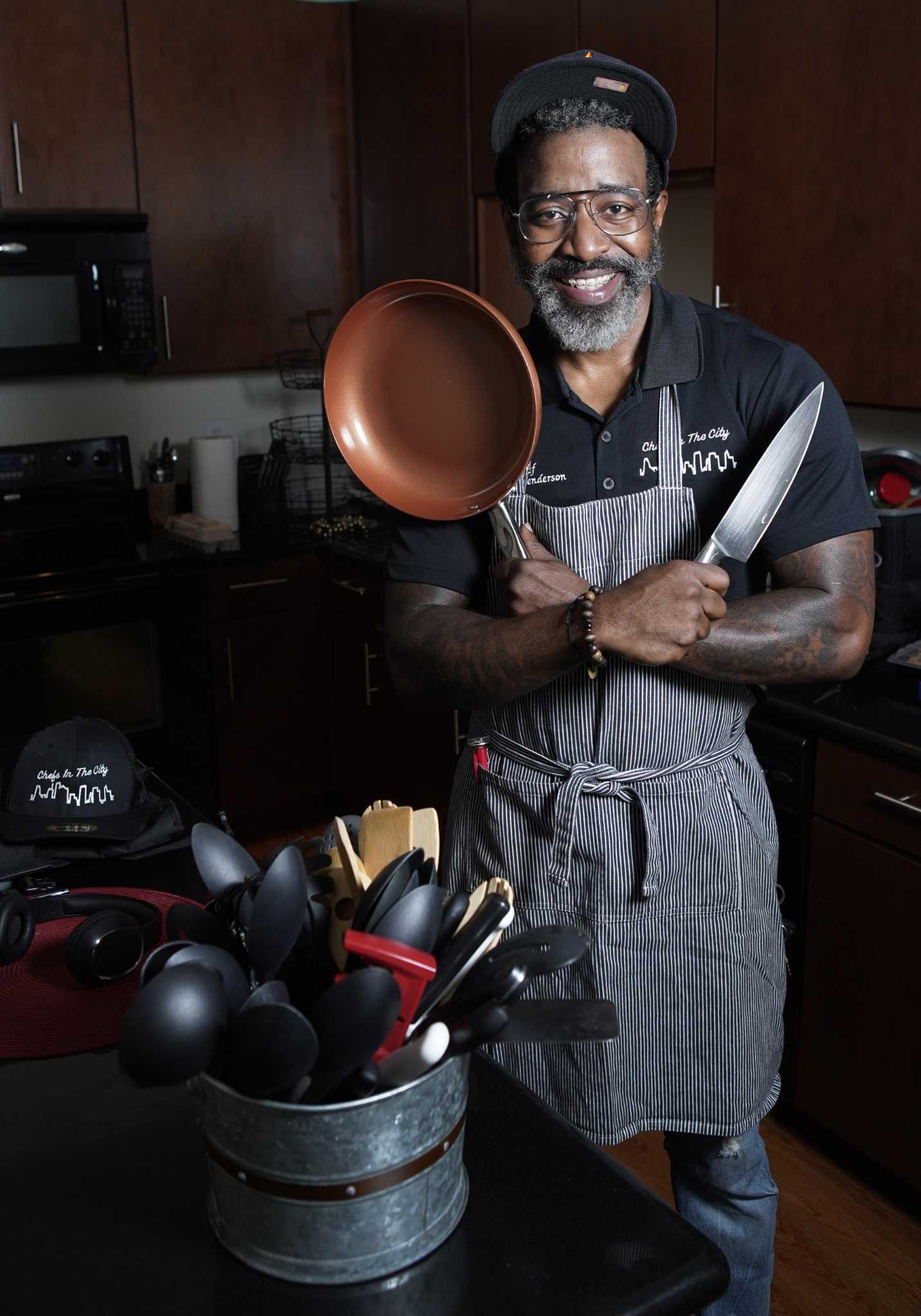
Founder and Executive Chef of Chefs in the City
EDWIN DARNELL HENDERSON is a U.S. Army veteran, former Harris County Sheriff's Deputy, and the founder and executive chef of Chefs in the City, a Houston-based catering and personal chef company. He also serves as the Veteran Business Development representative at West Oaks Hospital, a psychiatric and substance use hospital in Houston, where he supports veterans navigating mental health and substance use treatment. Edwin has appeared on OWN's Ready to Love: Last Resort and has been featured on Food Network.